



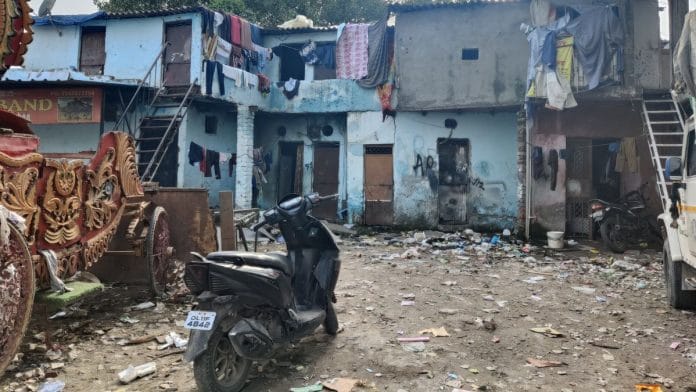
New Delhi: Every time someone from his community tells him they have found work cleaning a sewer, Parveen gives them the same answer.
“Don’t go,” he says. “Find something else. Anything else.”
He knows most of them won’t listen. When work is scarce, and a contractor offers a few hundred rupees for a day’s labour, refusing isn’t always an option.
Eight years ago, Parveen didn’t stop his own brother.
Joginder, 32, climbed into a sewer for work in 2017. He never came back.
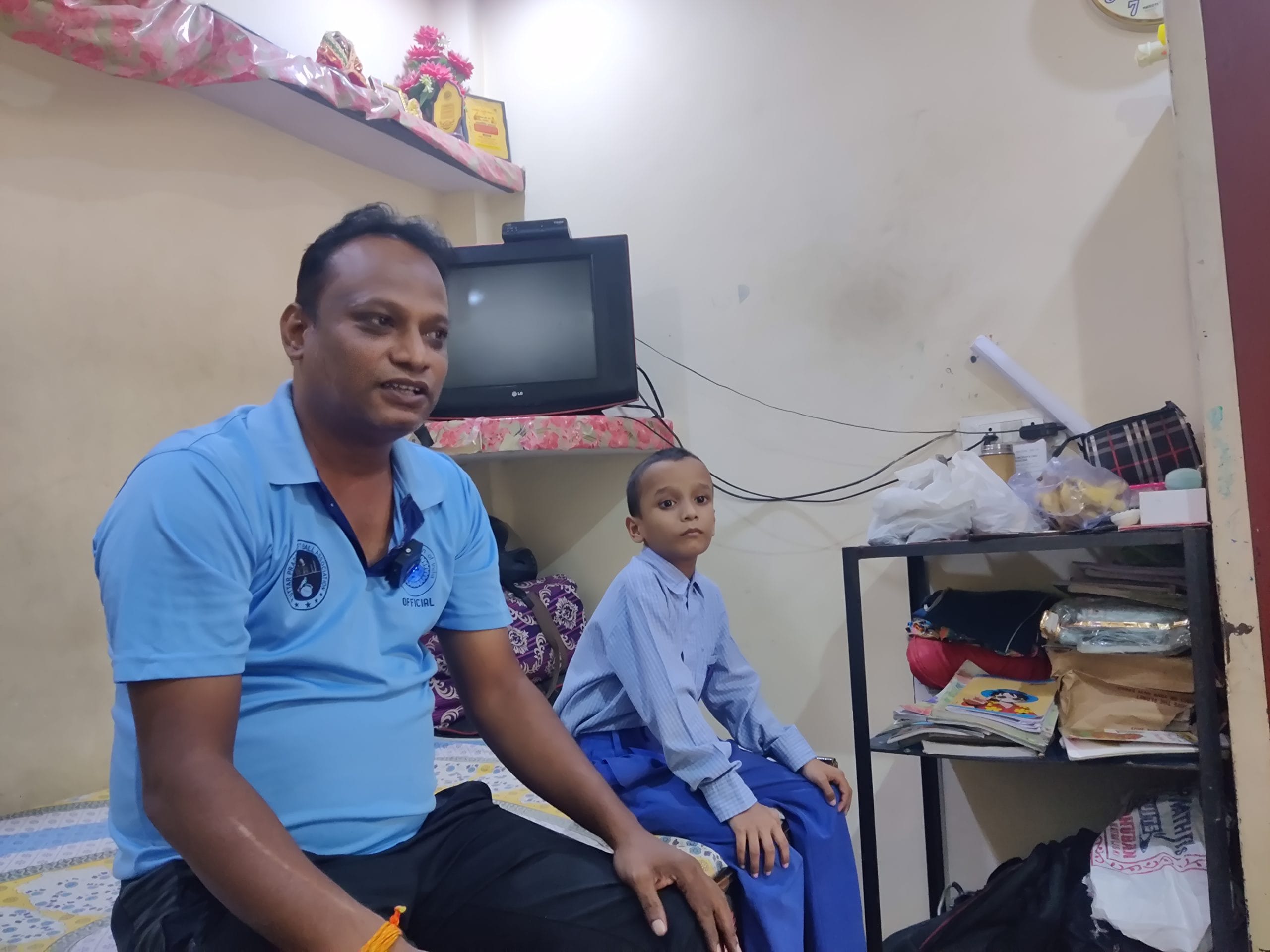
Today, Parveen cannot walk past an open manhole without thinking about him.
He said his family made a decision after Joginder’s death: no one would enter another sewer again. Not his brothers. Not his children. Not his nephews. Not anyone he could convince otherwise.
Sewer and septic tank deaths often make headlines for a day before fading from public memory. For the families left behind, however, they mark the beginning of a much longer struggle. Some children leave school. Widows become the sole breadwinners.
Compensation can take years to arrive, often only after repeated visits to government offices. Many families are forced to leave the cities and return to their villages after losing their only earning member. The impact of the sewer deaths goes beyond the immediate. The deaths scar how they look at society, institutional injustice and state apathy. Others find themselves with little choice but to continue in sanitation work. But some, like Parveen, have made it their mission to ensure the next generation never enters a sewer again.
“When you’re born into our caste and community, people start talking about this work from the time you’re a child,” he said. Parveen belongs to the Valmiki community. “By the time boys are 17 or 18, many have already started.”
Joginder had too. He left school after Class 3 or 4 and began doing sanitation work while still a teenager because there were few other opportunities.
For Parveen, the loss of his brother changed more than his family—it changed the way he sees the occupation itself. What was once accepted as ordinary became something he now spends his time warning others against. For generations, sanitation work was seen as inevitable. After Joginder’s death, Parveen decided that cycle would end with his family.
Their stories unfold against a crisis that continues despite legal prohibitions. Safai Karamchari Andolan estimates that more than 1,726 workers have died cleaning sewers and septic tanks since the anti-manual scavenging law came into force in 2013. More than 100 workers have already lost their lives this year alone.
“The newspapers report it for a day or two and then everybody forgets it,” says Bezwada Wilson, national convenor of Safai Karamchari Andolan. “The families, however, do not.”
A family breaks
A sewer death leaves behind more than grief. It can redraw the fault lines within a family.
For many, compensation—often delayed by years—becomes a source of uncertainty. Families spend months, sometimes years, visiting government offices, collecting documents and pursuing claims. In some cases, widows or elderly parents, unaware of the process or unable to navigate it, do not even know what compensation they are entitled to or whether it has already been claimed by another relative.
Even when the money arrives, it does not always heal.
In Parveen’s family, the compensation that followed Joginder’s death became another point of fracture. The family received government compensation and a vehicle through the Dalit Indian Chamber of Commerce and Industry (DICCI), which Parveen said his eldest brother cornered the benefits. The other siblings received nothing.
He does not speak about it with anger as much as resignation.
Before Joginder’s death, he said, the brothers functioned as one family. Afterwards, financial strain, loss and disagreements over compensation slowly drove them apart. Today, each household lives separately, carrying its own burdens.
“If I had been the eldest, I would never have let this family break,” he said.
Aspirations vs Reality
On the outskirts of Delhi, in Bagdola village, the homes are large and the lanes are quiet. Small bungalow-style houses, dominated by Jat and Yadav families, line the neighbourhood. Amid them, easy to miss, is a lane so narrow that even walking through it is difficult. To make matters worse, ongoing construction blocks the blue house at the very end—a house that doesn’t even have the privilege of a proper approach road. But the house has a distinct address. Years later, it is still known around the neighbourhood as the house where a man died in a sewer.
Inside this crooked, worn, barely-standing blue house live Satyawati, her husband, and their three children. Live is perhaps a stretch—they barely survive on the Rs 10,000 (per month) salary her husband earned as a gardener. The weight of another income disappeared when her brother-in-law, Ashok, died while cleaning a sewer.
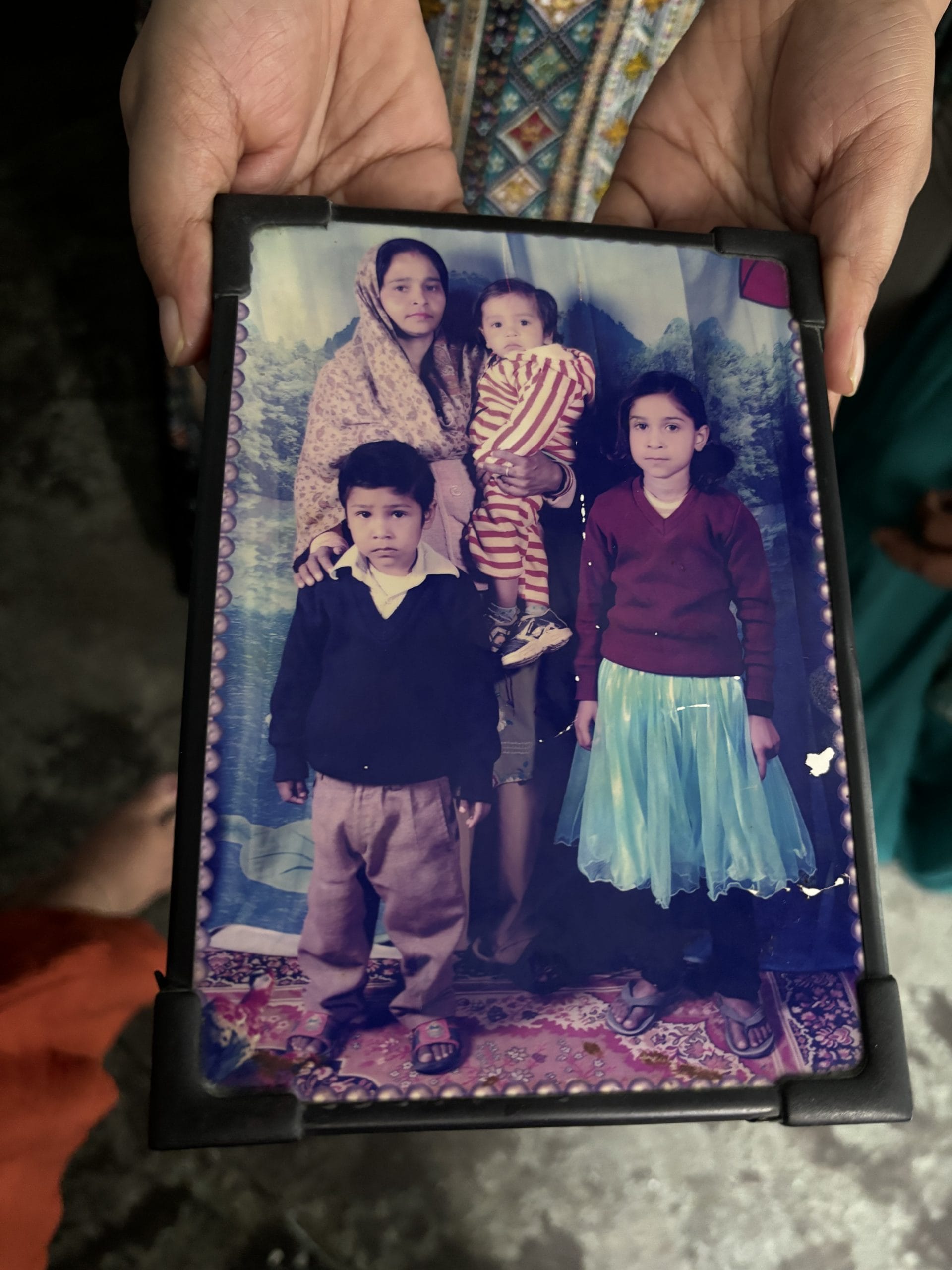
Shortly after, his newlywed wife left the house with their barely two-month-old daughter, who had not even been named yet. The family has no idea what became of them, but they don’t blame her.
“She was young. She had her whole life ahead of her,” Satyawati said.
The idea of a complete family—two brothers earning for their households, their wives supporting one another, and the children growing up to become everything they imagined—was left unfinished. Those dreams, the family’s aspirations, went down the sewer.
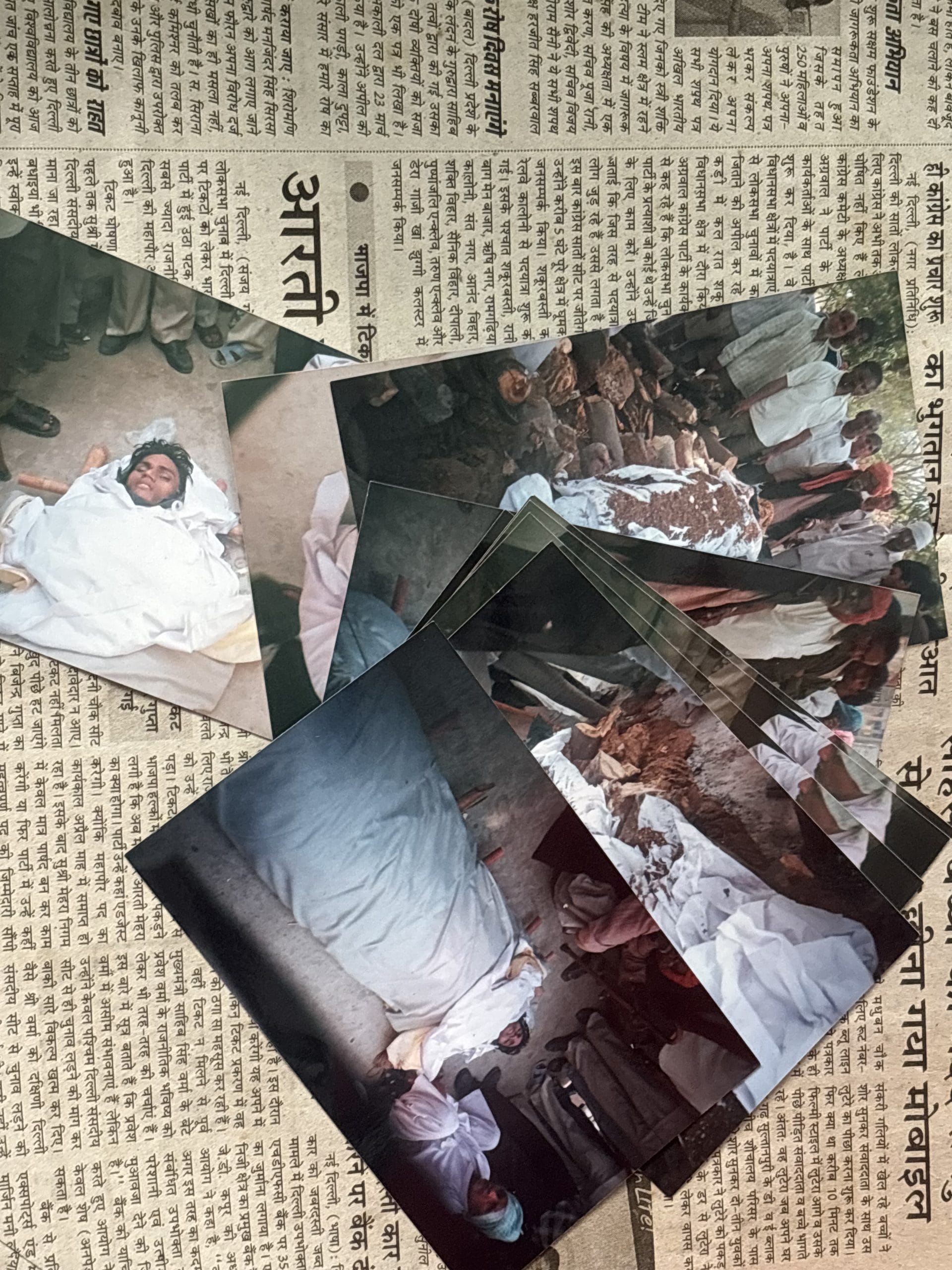
Ashok’s niece, Komal, remembers being carried around and doted on by her chachu. Buying her toys, taking walks around the neighbourhood—everything is fond but blurred. Now 20 years old, Komal enrolled in a Bachelor of Arts degree in Meerut but has had to leave because the family cannot afford the fees.
Her younger brother, Naveen, 18, left school and is now apprenticing at a cycle repair shop, learning the trade but not earning yet. The youngest, Gaurav, dreams of becoming an engineer. But after the family couldn’t pay his tuition fees, he failed Class 9 and has been unable to return to school. He said he cannot imagine any other life for himself.
The family has received neither compensation nor support from the government. They were not even aware they were entitled to any.
A different way of seeing the world
Parveen’s life is not only defined by the work he wants people to stop doing. His brother’s death inside a sewer has changed how he views everything around him. His life and dreams now are defined by the desire to get out.
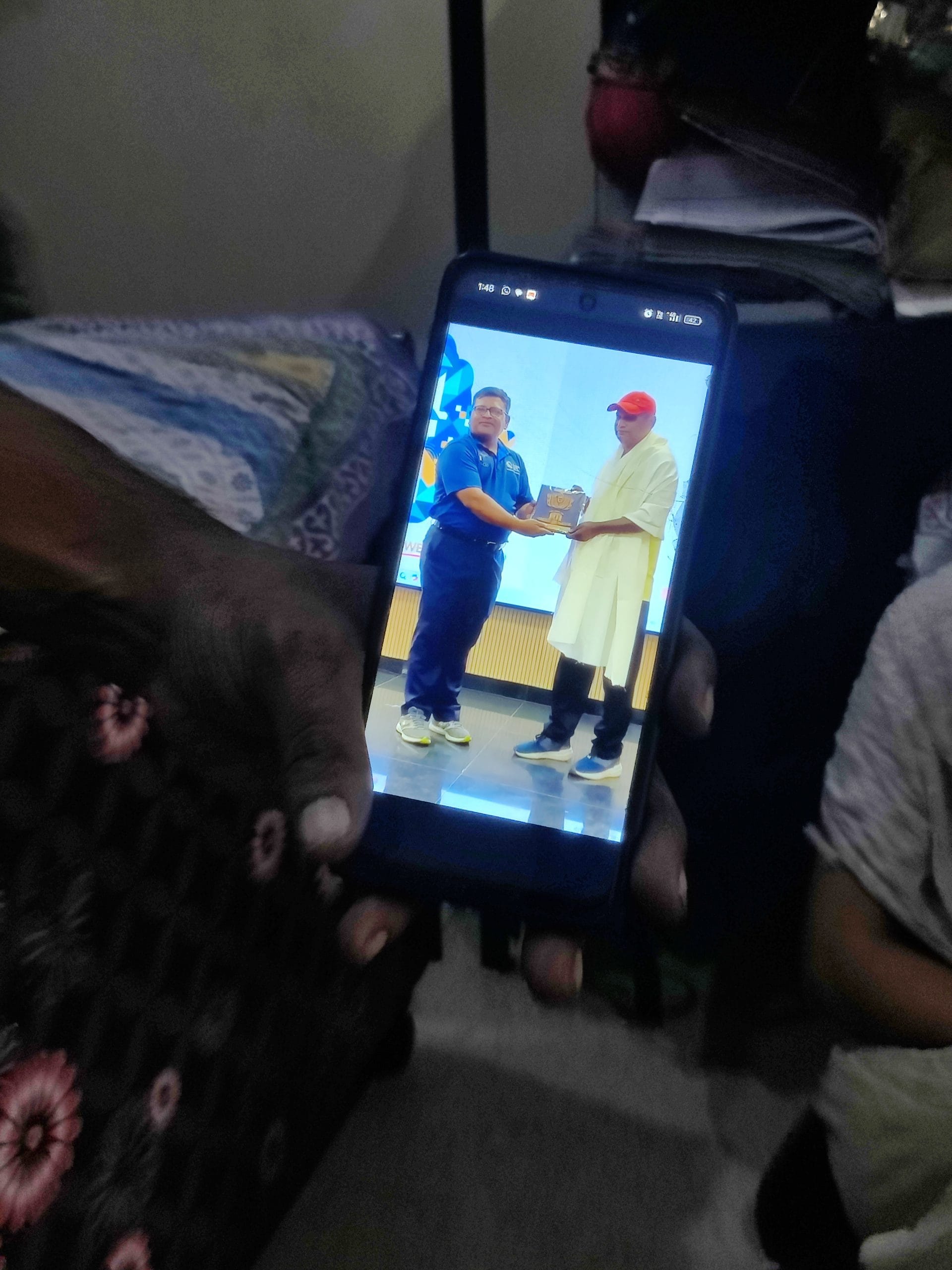
He works as a cleaner at a government school, but for much of his life, the place where he has felt most at home has been a softball ground. People around him know him as “khiladi” or “master”. He started playing when he was young, practising with other children at DU’s north campus. They did not have much money for equipment. The gloves they needed cost Rs 2,000-2,500, so they relied on what they could find.
The college’s players would practise and leave. Parveen and the other children would wait for the opportunity to use the equipment they left behind.
The sport took him places his work never had. In 2004, he travelled to Dharamshala for the Junior Nationals and finished second.
He still talks about those journeys with the excitement of someone who remembers not just the tournament, but the freedom of going somewhere else. There were trips to Indore, Ujjain and Kashi Vishwanath. There were workshops where he taught students studying sports, how to prepare a ground and play the game.
For Parveen, travelling became part of learning.
“Until you don’t come out, you won’t understand the world.”
He has carried that same instinct into coaching–and fatherhood. He wants his two children, his daughter in fifth grade and son in first grade—to have the opportunities he did not.
At 19, Parveen was selected for the Border Security Force (BSF). He had passed Class 12 and had been part of the National Cadet Corps (NCC). But he did not go. His mother, he said, told him to stay. He was the youngest child.
Now the uniform has become something he imagines for his own children. His daughter wants to join the Army, he said, and he wants to see his children enter a life that takes them somewhere beyond the work their community has traditionally been expected to do.
“I want to see them in uniform because I couldn’t wear it,” he said.
For a man who spends his days cleaning, and whose brother died inside a sewer, the distinction matters. Parveen does not describe ambition in terms of becoming rich. He talks about getting out—out of the neighbourhood, out of inherited occupations, out into a world where children can choose what they become. Escape is the beginning of a life he imagines for his family.
A choice that came quietly
For Satyawati, the changes that followed Ashok’s death were not limited to money, work or the future of her children. It affected her religious identity too. Somewhere along the way, they also changed the way she sought comfort.
There was no single moment when she decided to convert to Christianity, nor did she describe it as a dramatic break with the past. She simply began sitting in at the small church in her neighbourhood, listening to the hymns. She returned again and again, until she knew the songs by heart.
For this Valmiki family, life after Ashok’s death has also become a larger reckoning with religion and their place in society. Their home stands out—not just because of its bright blue walls, but because of its crumbling condition.
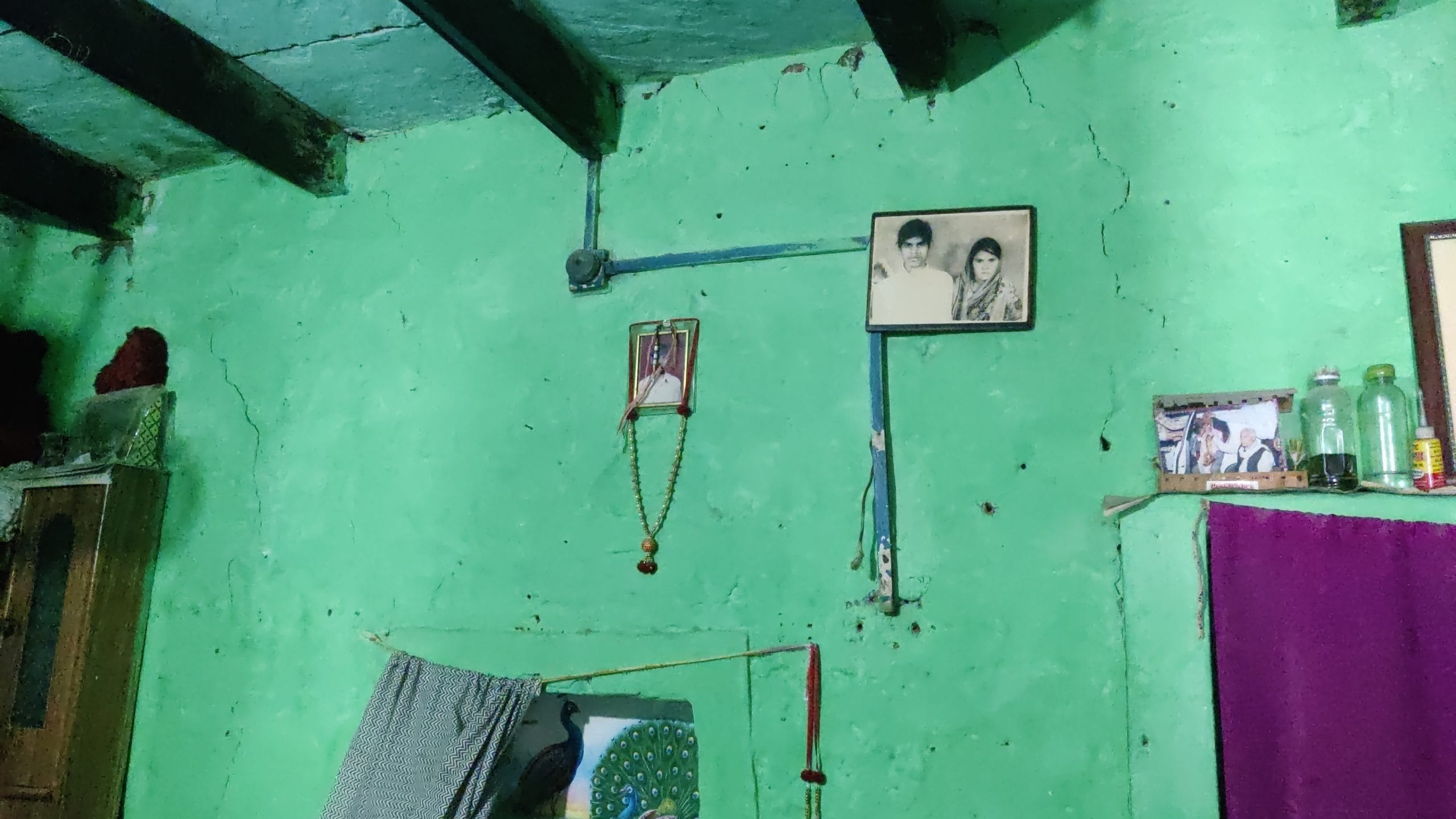
In the main room, a bedsheet hangs across the ceiling to shield them from the harsh summer sun and muffle the constant roar of airplanes overhead. The walls carry old calendars and dusty family photos. There is little else.
High up on the wall hangs a picture of Jesus Christ.
“Every time I went to the temple, I felt I had to take something with me—flowers, prasad, even loose change. But many times I had nothing to offer. That made me feel ashamed and anxious,” Satyawati said.
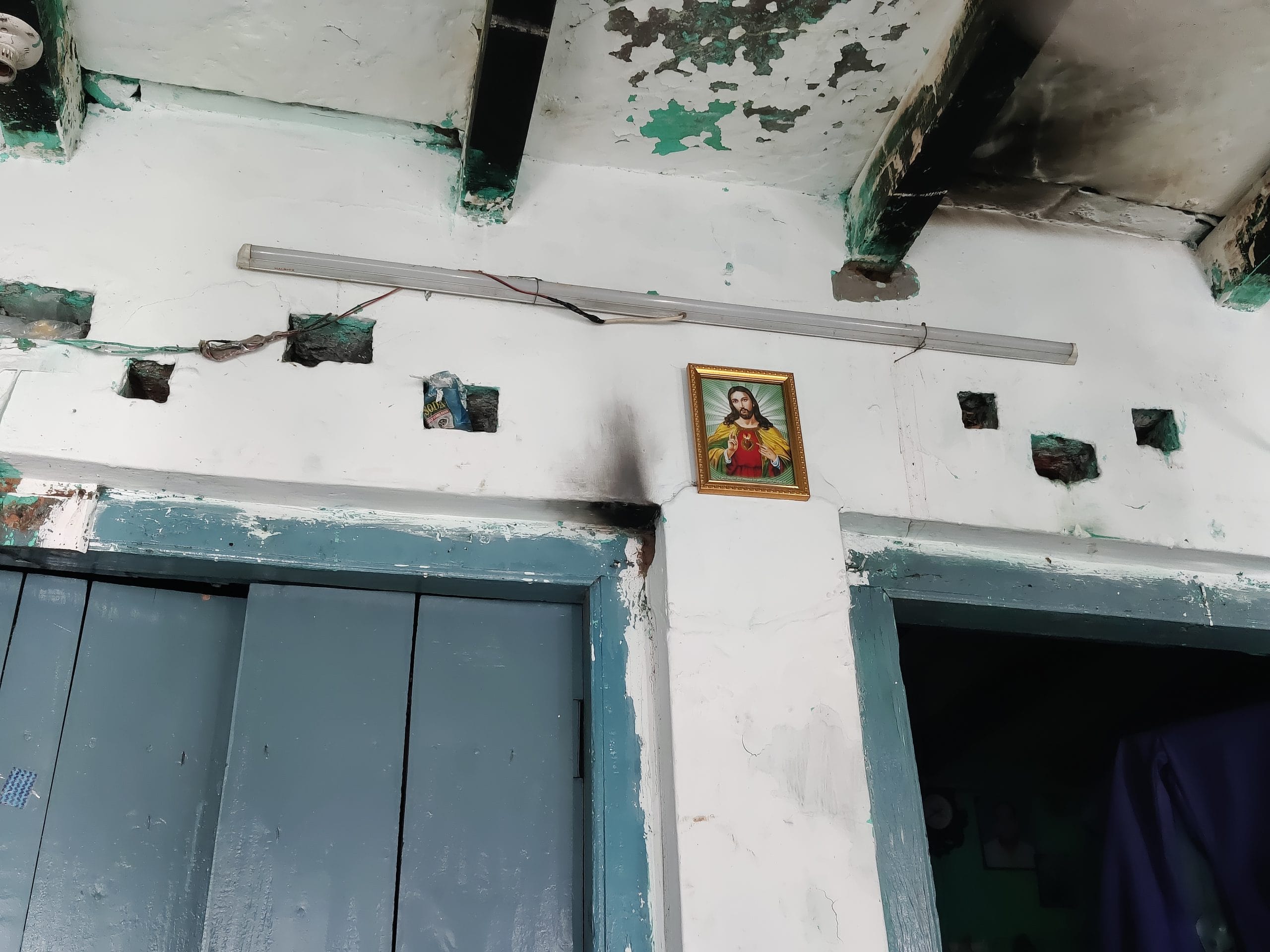
She began visiting the local church. Singing hymns, praying, or simply sitting there became a source of peace. Soon, the entire family started going. Now, caught between fear of what the future holds and the sadness of not being able to give their children a better life, that peace has become a necessity.
It was less a decision made in one day than a quiet habit that grew after Ashok’s death. She says she has not found a large community there. For her, it has remained a personal choice, a place where she can sit, sing and, for a little while, stop thinking about everything that has gone wrong.
Politics of Rs 500
Parveen follows protests and government announcements, but said he has become less interested in who is in power than in how people speak to power.
Even when a large movement takes shape, he said, people remain reluctant to join. They are too divided among themselves, and too occupied with surviving. He watches protests and the anger around him, and wonders why people who face the same problems rarely come together. Even a government as powerful as Prime Minister Narendra Modi’s, he believes, can be challenged, reflecting on the recent CJP protests at Jantar Mantar—but only if people stop fighting among themselves.
“But people don’t become one.”
He is therefore sceptical about whether protests, however large, can bring lasting change. For Parveen, that lack of unity is visible in the way sanitation workers continue to enter sewers despite the machines and laws meant to prevent it.
The problem, he said, is not simply that machines are unavailable. They are expensive, while a worker’s life isn’t regarded so.
“A poor worker like us will say, ‘Brother, give me Rs 500. My house will run in the evening,’” he said. “So he has to get down.”
“People don’t understand that stepping into a sewer is not easy. But it is a decision between whether his family will eat that day or not,” he said
Governments announce machines and schemes, but the worker standing outside the sewer is still calculating what happens if he says no to the contractor.
“There is barely a choice. He will have to get down.”
For him, politics ultimately comes back to this–whether a worker can afford to refuse the work that might kill him.
A son who can’t remember his father
At the opposite end of the city, Rajkumari goes about her daily chores in the long shadow of another sewer death. Seventeen years ago, her husband, Ajit, died while cleaning a Delhi Jal Board septic tank inside a police station compound, leaving her to raise their three children alone.
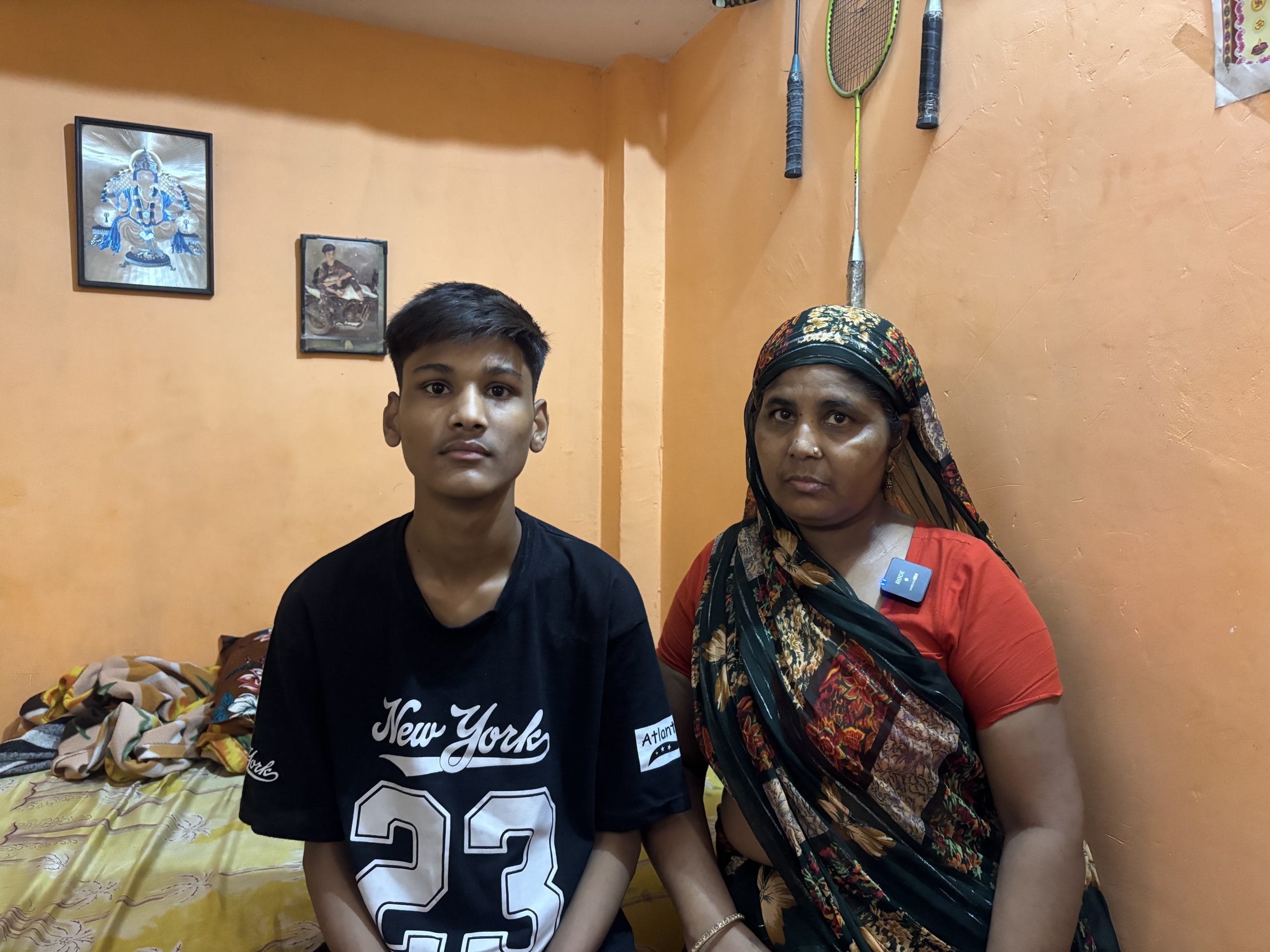
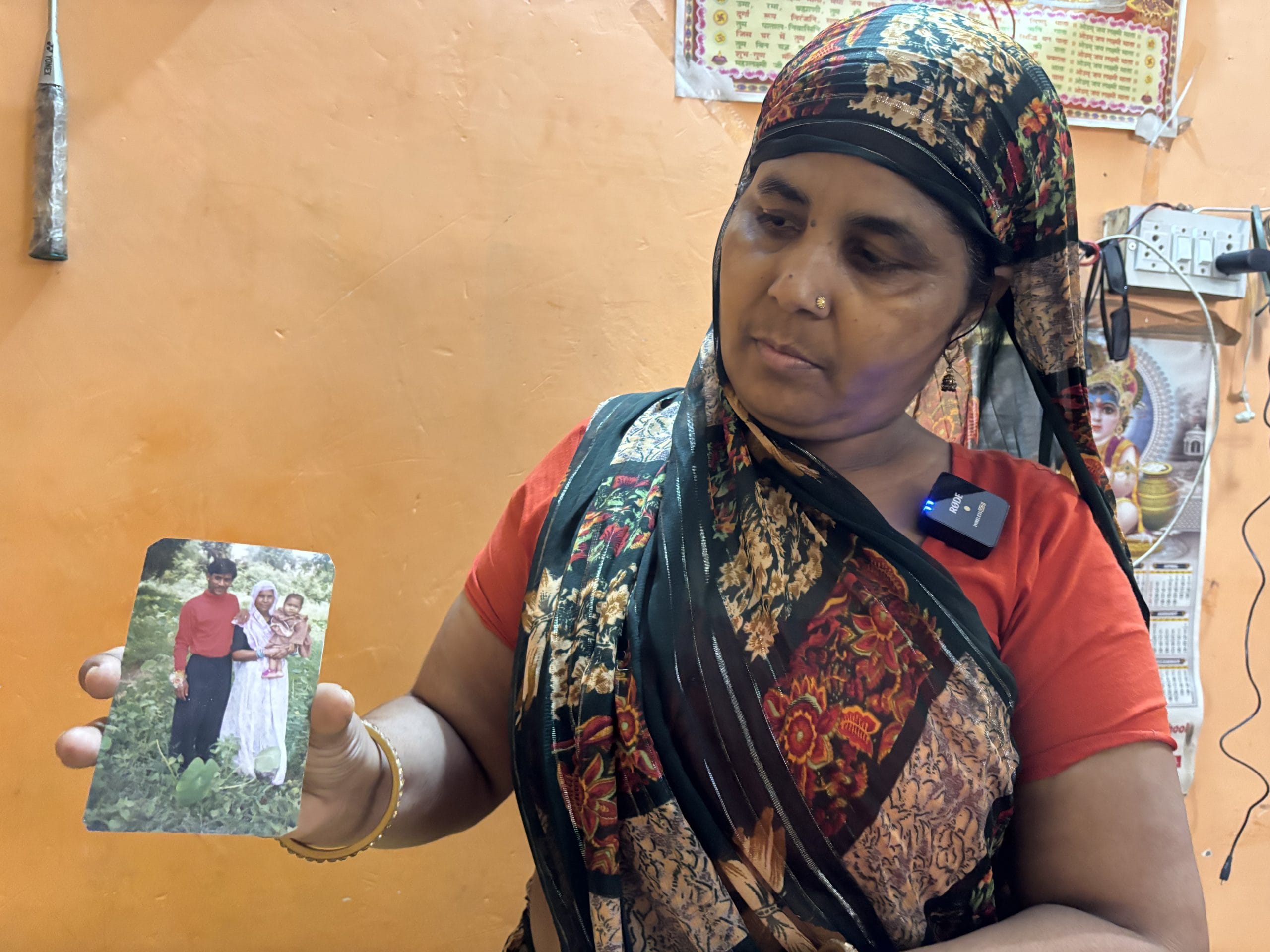
Today, the water supply tanker has arrived, which means it is also the day of tedious work of washing clothes and utensils—especially difficult with her swollen arms. Her youngest son Arun has just turned 18. He sits outside the house with a neighbour despite the afternoon sun. The hot breeze is his only relief. Inside, a cooler sits unused because the electricity bill is too expensive.
Arun was still breastfeeding when his father died while cleaning a Delhi Jal Board septic tank inside a police station compound, leaving behind Rajkumari and their two sons and daughter. They had been living in the police colony, but after an FIR was filed in the case, the police allegedly suppressed the matter and the family was forced to move out.
Her eldest son, now 24, has been taking up odd jobs since his teens and currently works at a jewellery shop. Arun followed soon after. Rajkumari worked as a domestic cleaner in nearby homes until chronic pain and swelling in her arms forced her to stop.
“My sons told me, ‘We’ll manage.’ I can’t afford to go to the doctor, so the only thing they tell me is not to exert myself,” she said.
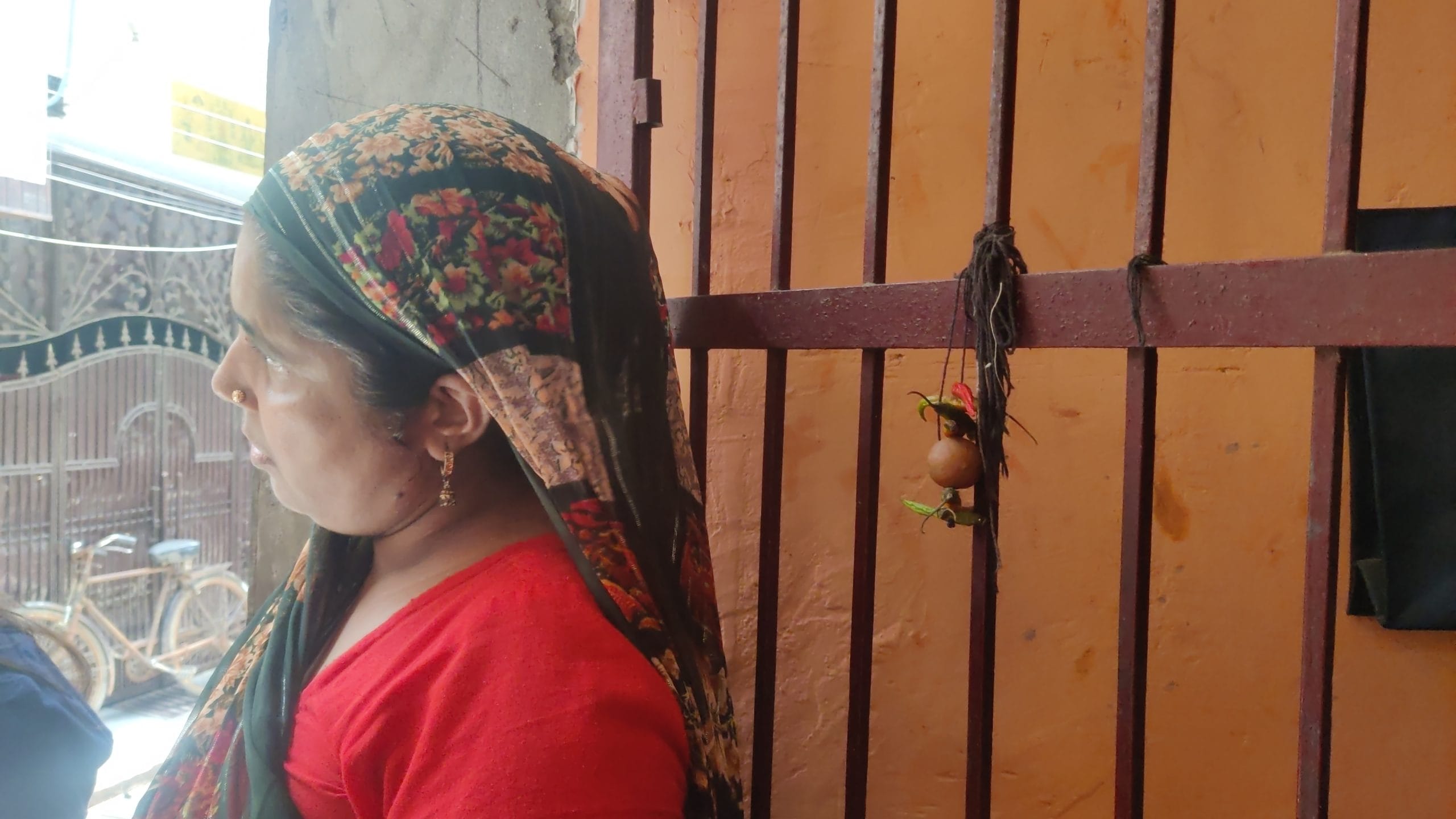
Her days now revolve around household chores in their one-room rented home in Ambedkar Nagar in Sector 3 Rohini.
After her husband’s death, she considered returning to her village. But being a landless widow in a village, she said, is even less feasible than being one in the city.
“My sons told me we could either study or work. But if we chose education, we wouldn’t even have a roof over our heads. So it was never really a choice,” Rajkumari said.
The room has a tiny temple in one corner. On the walls hang pictures of Ganesha, one of her sons, and a badminton racket. There is no photograph of her husband.
“I wasn’t even able to hang his picture on the wall. The day passes in worry, but I miss him at night,” she said. She has only one photograph of him, which she keeps safely under her bed. “I can only cry internally. Who can I share these things with? None of my relatives in the city have supported us.”
Arun doesn’t remember his father. His own existence is the only evidence he has of him. He said he cannot miss someone he has never known. As a child, his mother said, he would ask what had happened to his father and where he was. She never had an answer. As he grew older, he pieced the story together himself, and eventually, the questions stopped. Silence was somewhat easier.
Now, Arun said, there is little to think about beyond finding work. He started working when he was 15 and has since taken up jobs to help with the household expenses. He has quit his latest job at a burger joint, where he worked night shifts, but said he wants to work again. There is no larger plan, he said, because there isn’t much choice.
Even when he worked nights, he would call his mother.
“I tell my mother not to worry about me. I am working,” he said. “But I worry about her.”
The system behind the tragedy
The stories of Parveen, Rajkumari and hundreds of other families are not exceptions. They are part of a pattern that has continued despite laws banning manual scavenging and hazardous sewer cleaning.
The scale of that failure is now also disputed. In a written reply to the Lok Sabha on 21 July, the government said 332 sanitation workers had died while undertaking hazardous sewer and septic tank cleaning across 18 states and Union territories between January 2021 and June 2026.
Safai Karamchari Andolan (SKA), however, puts the toll much higher. The organisation says 593 people died in sewers and septic tanks during the same period, 261 more than the government’s figure. Bezwada Wilson, national convenor of SKA, has accused the government of concealing the deaths and called on the Prime Minister to acknowledge the failure.
According to SKA, more than 1,700 workers have died while cleaning sewers and septic tanks since the Prohibition of Employment as Manual Scavengers and their Rehabilitation Act came into force in 2013. The organisation recorded 93 deaths in 2022, 102 in 2023, 116 in 2024 and 121 last year. By the end of July this year, it had already documented 113 deaths.
“The person entering a sewer is almost always the earning member of the family,” Wilson said. “Nobody goes inside because they want to. They go because there is poverty, unemployment and no dignified alternative.”
After a dip during the Covid-19 pandemic, the numbers have steadily climbed again.
“The death toll has gone up,” said Bezwada Wilson, national convenor of SKA. “That shows whatever measures the government is taking are not sufficient. I can say they are not taking any remarkable measures at all.”
Wilson said the deaths typically increase between March and September, when workers are sent to clear blocked sewers and desilt drains ahead of and during the monsoon.
When that person dies, he said, the consequences extend far beyond the immediate loss.
“Children drop out of school. Even if they continue for a year or two, many eventually have to stop. The wife becomes a widow and often returns to her parents’ home. Families are displaced, some go back to their villages, and everything is reshuffled. It creates such chaos that they cannot rebuild their lives.”
Despite this, Wilson said, many deaths never receive the long-term, sustained attention they deserve. Some go unreported altogether, while others are classified in ways that obscure the circumstances in which workers died.
For Wilson, preventing these deaths requires more than compensation after the fact. It means ending the conditions that force people into sewers in the first place.
“They have to mechanise the entire system,” he said.
“More importantly, they have to delink caste from occupation. Families that have been doing this work for generations must be given dignified alternative livelihoods. Until that happens, people will continue entering sewers because they have no other choice.”
Also read: From guns to the grind, Chhattisgarh’s surrendered Naxals are working as baristas, plumbers, tailors
Eyes on the door
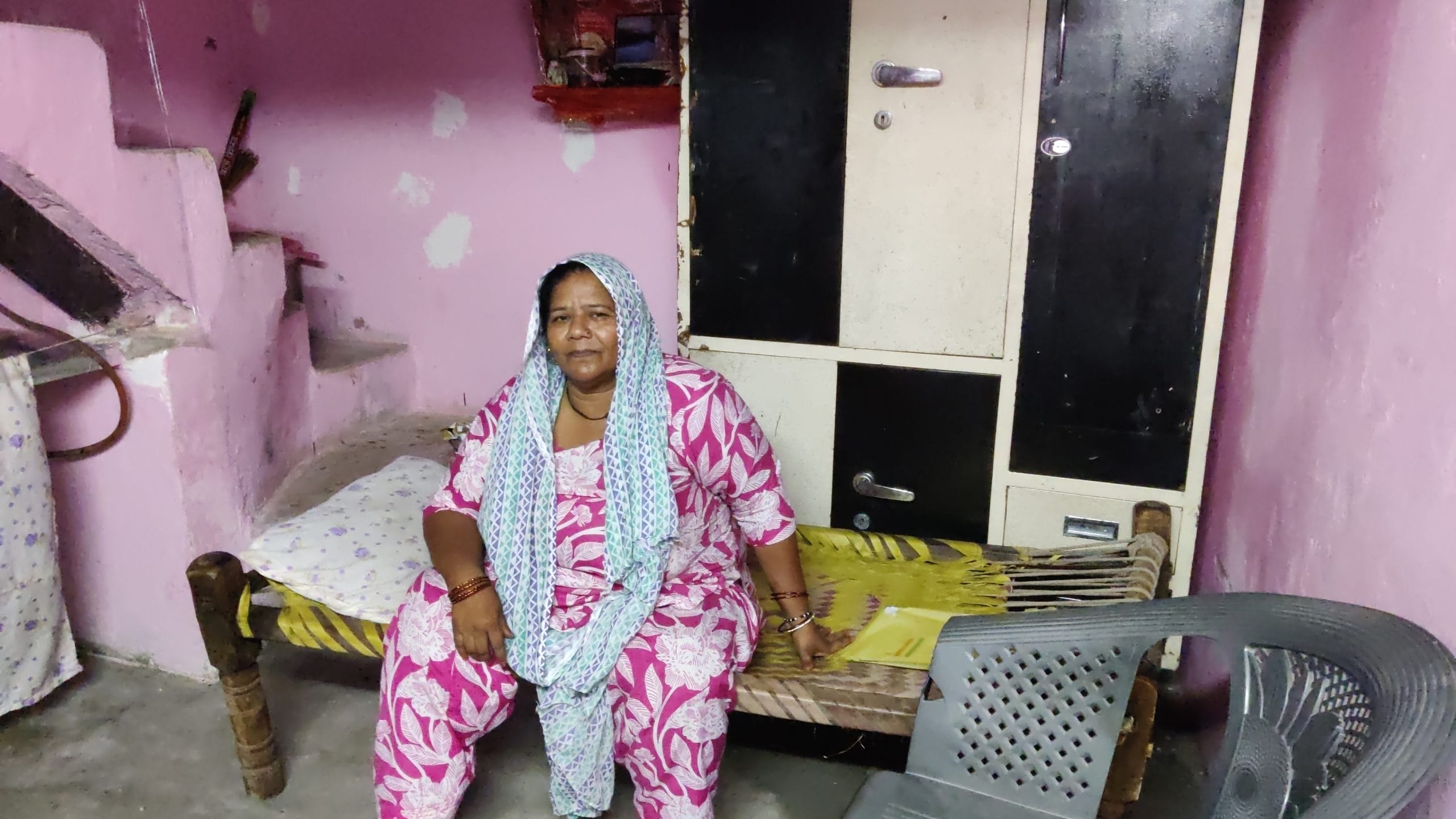
Since 2012, Ram Kali’s world has shrunk to a wooden cot.
When the light comes on inside her one-room home in Rohini’s Sector 3 jhuggi cluster, it falls first on the cot where she spends most of her day. The walls are freshly painted pink. In front of her, the one-year-old grandson Aman toddles across the floor, absorbed in play.
Ram Kali watches him quietly, a soft smile spreading across her face.
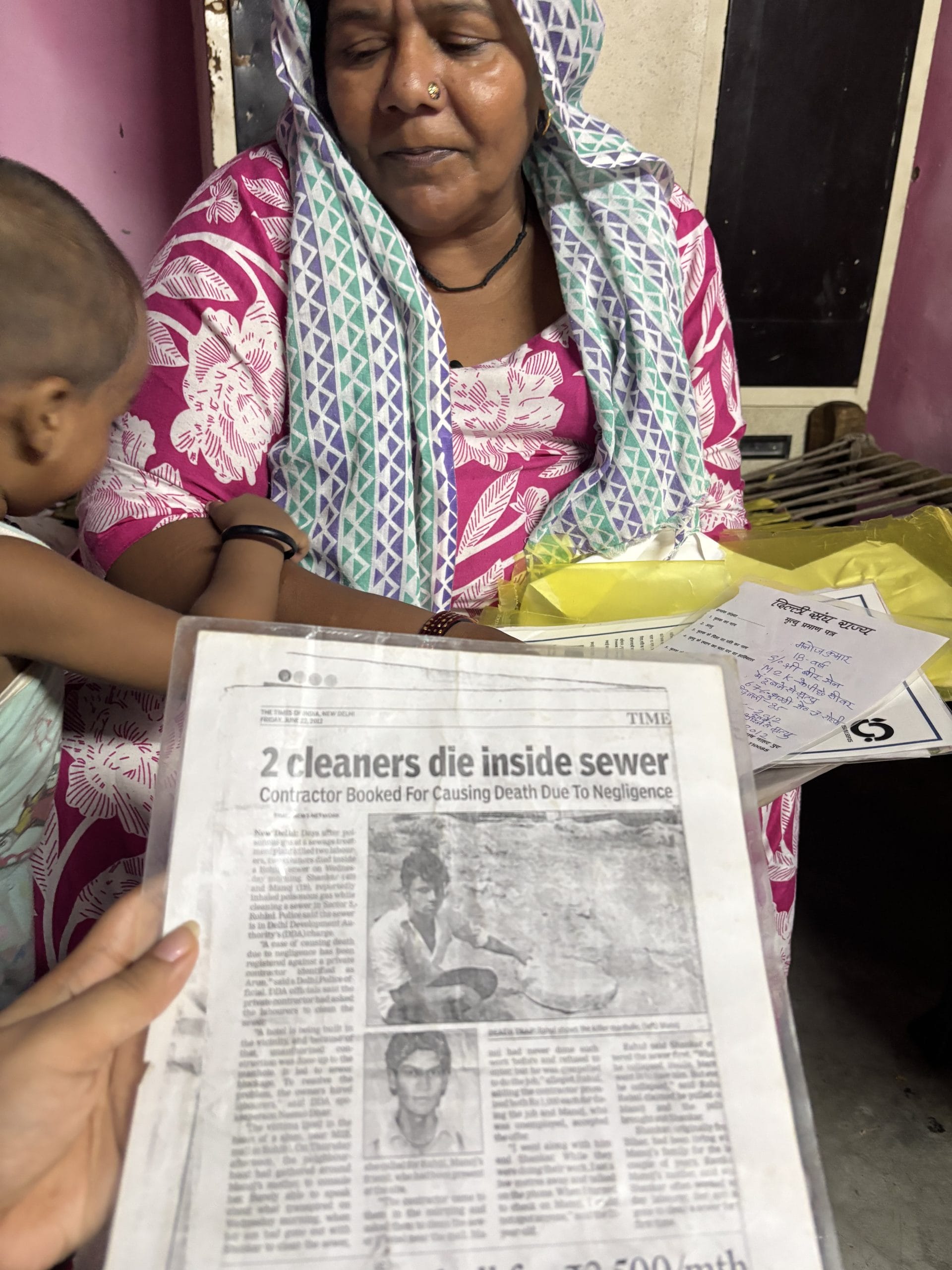
It is one of the few things, she said, that still brings her joy.
Fourteen years ago, her 18-year-old son Manoj Kumar climbed into a Delhi Development Authority sewer for what was supposed to be another day’s work. He never came home.
The years that followed blurred into grief. Her health deteriorated, and she slowly stopped leaving the cot. It was only in January this year—more than a decade after Manoj’s death—that the family finally received government compensation, which helped build the small house where she now lives with her younger son, his wife and Aman.
“There was no other way to earn a daily wage,” Ram Kali recalled. “His friends had taken him along to clean sewers and drains. He used to go every day. Who knew that one day he wouldn’t come out?”
She looks toward the doorway for a moment before turning back to her grandson.
“I still wait for him on this khat,” she said quietly. “I feel he is coming home.”
(Edited by Ratan Priya)