



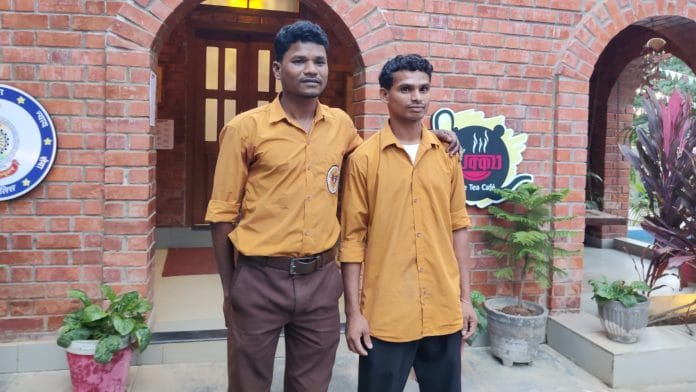
Jagdalpur/Dantewada: For nearly two decades, Lakhmu Poyam lived in the forests of Bastar carrying a gun in what he believed was a fight for jal, jungle, jameen. Today, he begins his mornings sweeping the floors of Pandum Cafe in Chhattisgarh’s Jagdalpur, greeting customers instead of comrades.
The cartridges are gone. In their place are coffee cups, mops and customers. “I am happy I left that life behind. I earn Rs 9,000 a month now. It is a completely new life,” said 32-year-old Poyam.
The Modi government has managed to crush Maoist violence in the region but the hard work is not over yet. Many surrendered Maoist guerrillas and victims of violence must now be rehabilitated. Peace must produce economic opportunities. For the past nine months, the café has become the symbol of that new beginning.
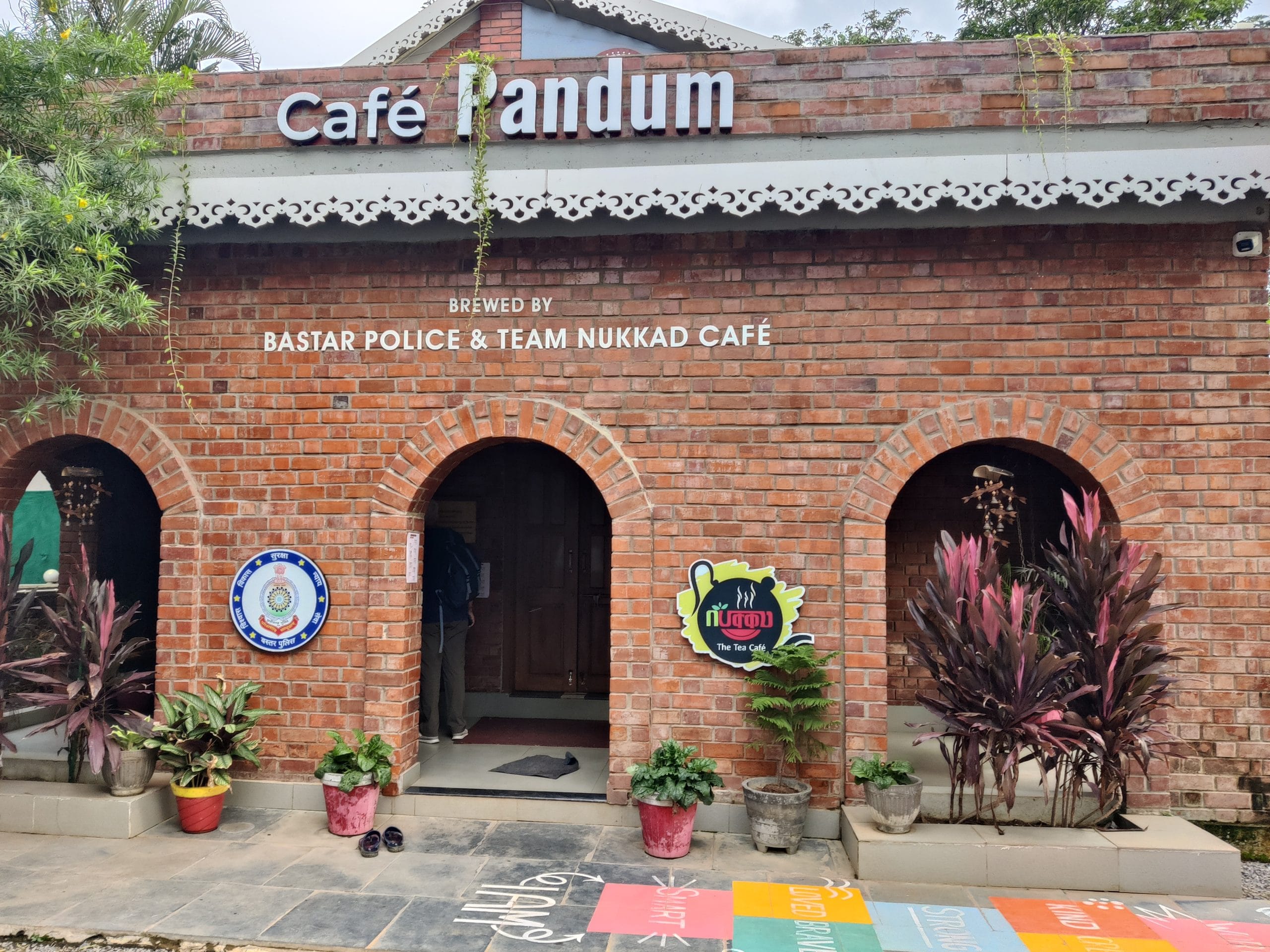
Opened in November last year, Pandum Cafe is a joint initiative of Bastar Police and café chain Nukkad. Its staff includes former Naxals like Poyam, as well as people whose lives were scarred by the insurgency — an unusual attempt to make victims and former rebels part of the same workplace.
The Maoist insurgency dates back to the late 1960s and stemmed from deep socio-economic inequality, land alienation, and the State’s failure to protect tribal rights over natural resources. It was largely prevalent in Chhattisgarh, Jharkhand, Andhra Pradesh and parts of Maharashtra and Odisha. Armed Communist groups promised to defend the homelands of local Adivasis from corporations and the State to earn their support.
A grand re-imagination of one of central India’s most violent belts is now underway. After Union Home Minister Amit Shah declared that Left Wing Extremism (LWE) had been eliminated from India on 19 May at a press conference in Jagdalpur), the Chhattisgarh government has begun projecting a new image of Bastar—not as one of India’s most violent insurgency zone but as a region of waterfalls, forests, tribal culture and tourism.
Apart from schemes and initiatives, the government has rolled out a rehabilitation programme aimed at bringing surrendered Maoists into the mainstream through jobs and skill training.
From Red Corridor to tourist attraction
Fixing public perception about Bastar is the first step.
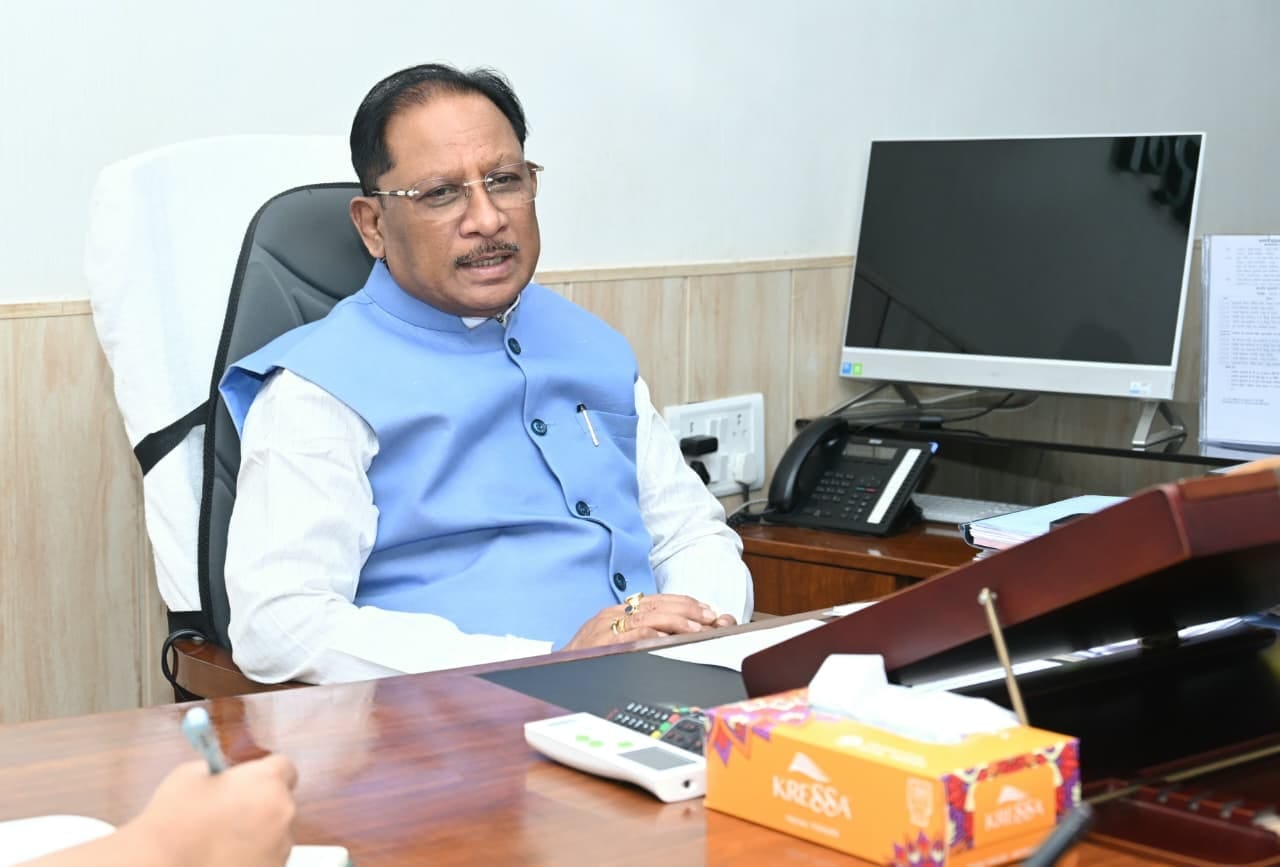
“In the whole country, there was a perception towards Bastar. We are working to transform the region from once a red corridor to a green corridor. Bastar is Naxal-free now and we are bringing peace and development in a manner which suits the local tribals,” Vishnu Deo Sai, Chief Minister of Chhattisgarh told ThePrint.
The makeover follows one of the bloodiest chapters in India’s internal security history. According to Ministry of Home Affairs data, the decade between 2004 and 2014 recorded 17,542 LWE-related violent incidents, killing 1,913 security personnel and 5,019 civilians. The number of LWE-affected districts in India has steadily fallen—from 126 in 2014 to none by March-April 2026. According to official figures, 237 Naxals from Chhattisgarh have been killed, 812 arrested, and 723 have surrendered since January 2024.
Shalabh Kumar Sinha, SP, Bastar, said that while many of the cadres have gone back to agriculture, what was surprising was how easily they were convinced to join Maoists in the first place.
“Most of them are ideologically not aligned with Naxalism and yet they lost the prime of their youth to the conflict. I feel this is the saddest part. Such promising talent and so much potential. If they had not chosen Naxalism in the past, this area would have come such a long way by now,” said Sinha.
The government says infrastructure has been central to the shift. Since 2014, more than 3,240 km of roads have been built across Bastar and 889 mobile towers installed to improve connectivity. Rehabilitation packages for surrendered cadres have been expanded to help them find jobs.
“There is no geographical area in Bastar where Naxals are present. All areas are reachable now. Bastar is very unique and has a lot of potential for tourism,” said Rajat Bansal, special secretary to the chief minister.
Life before and after
For Lakhmu Poyam, however, Bastar’s transformation is not measured by new roads, mobile towers or government schemes. It is measured by something far simpler: every evening, he finishes work at the café, returns home, and sleeps without the fear of being killed in an encounter with the security forces.
The forests, where he spent nearly two decades carrying a gun, never offered that certainty. Pandum Café does. Though the café cannot erase his past, it has given Poyam something the ideological insurgency never could — a future.
Poyam was only 14 when he joined the Maoists in 2006. He grew up in Bastanar, an area that was once under the firm grip of Maoist influence. Meetings by Maoist cadres were a routine part of village life, he recalled. They spoke of jal, jungle, jameen or water, forest and land, and the need to fight for tribal rights.
“Villagers would pool grain to cook meals for them. I also felt inclined to join them at a very young age and served there for 19 years,” said Poyam, who belongs to the Adivasi community. His family largely practised farming. None of them joined the insurgency except him.
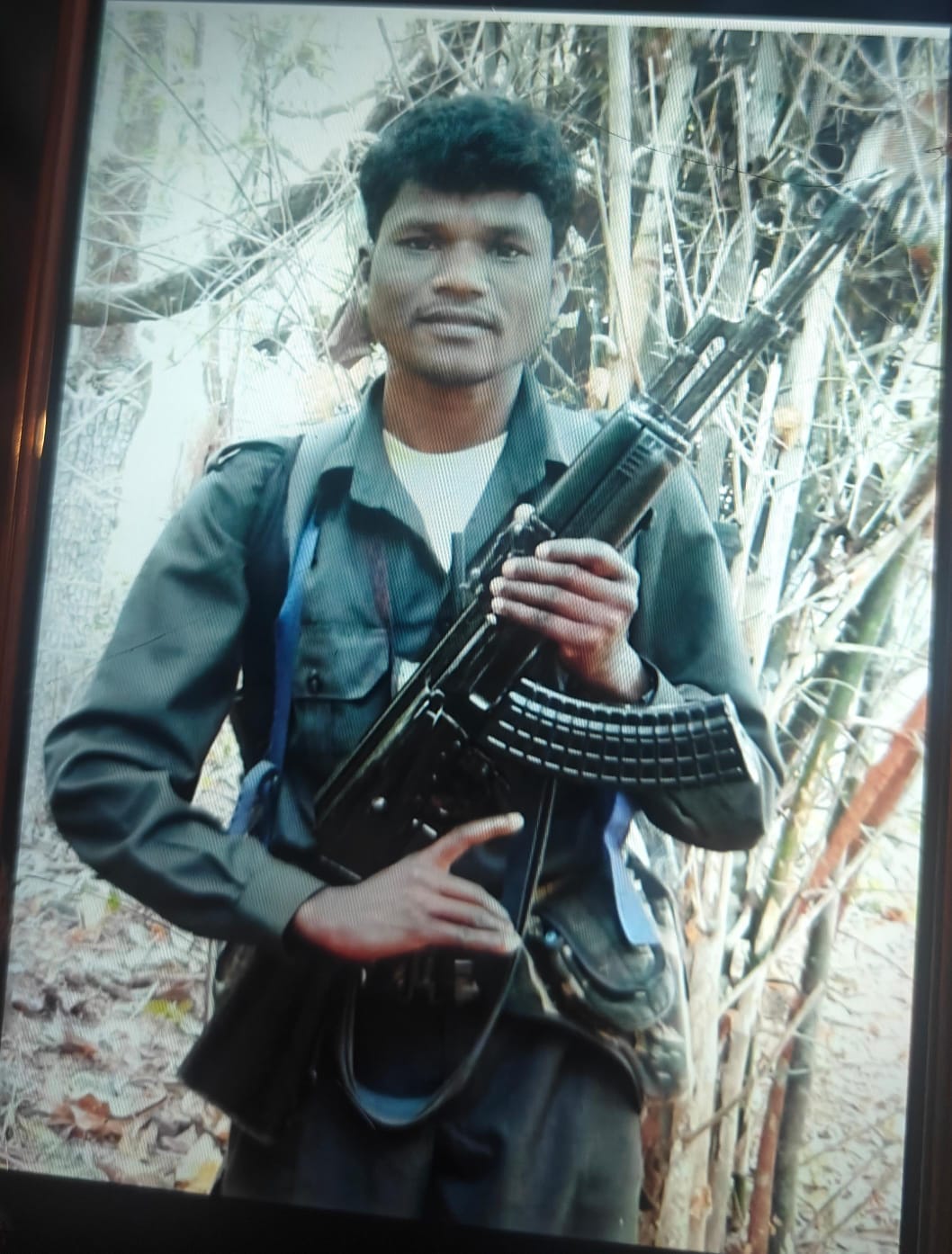
Over the years, Poyam joined the Naxals in the East Bastar division, before being shifted to the Kiskodo area of North Bastar division. Life, he said, was that of a nomad.
“There was no stability. We kept moving from one place to another. But in the last few years, security forces intensified patrols and encounters. Many of our comrades were getting killed. We realised we could no longer operate like before,” Poyam said.
After the Union government announced its intention to eliminate LWE by March this year, pressure mounted. Paramilitary forces penetrated deeper into Bastar, operations intensified, and the space available to Maoist cadres steadily shrank.
For Poyam, the decision to leave came quietly. One day, he wrote a letter to his seniors. “In that letter, I told them I could no longer continue. I wanted to return home and live a normal life,” he said. And that was it. His seniors never tried to contact anyone who left the cadre.
Pandum Cafe: A beacon of hope
At Pandum Café, around 20 former Naxals now work together. The walls of the cafe are full of information about Bastar tribes such as Gond, Dhurwa, Muria, and Halba. A corner is dedicated to the handmade items of Bastar. “Every handmade piece carries a story of its people, its forests and its quiet hope,” reads one of the lines. A wall is full of feedback from the cafe’s visitors. “This is new and very good for Bastar,” reads one.
The newest to join the cafe is Lakshman Mandavi, whose story mirrors a different chapter of Bastar’s conflict.
Mandavi, dressed in a bright yellow T-shirt, moves briskly between tables taking orders. Until last year, there was an 8 lakh rupees reward on his head. His hands are hardened and scarred. They bear the physical imprint of a life spent gripping a rifle barrel.
He had previously served as the bodyguard of Rupesh, a senior Maoist leader, before both of them surrendered in Jagdalpur last October. Like many others in Bastar’s conflict, Mandavi entered the insurgency as a child. He was just 11 years old when he first picked up a gun in 2005.
“My home was burnt during Salwa Judum. I was angry. That anger brought me to join the Naxal movement,” said Mandavi, who belongs to Dunga village in Chhattisgarh’s Bijapur district. Salwa Judum was a state-sponsored civil militia, launched in 2005, to counter the Maoist insurgency in Chhattisgarh. It was led by Mahendra Karma, a tribal leader. In 2011, the Supreme Court declared it illegal and unconstitutional, and it was disbanded.
Manadavi spent years operating in the Indravati region and the dense forests of Maad, some of the strongest Maoist bastions in Chhattisgarh.
Now, during breaks at the café, the 32-year-old often scrolls through shopping apps, such as Amazon and Meesho, on his phone. He compares prices and adding clothes to his wishlist — an ordinary habit now, that would have been unimaginable during his years underground.
Like everything, all politics comes down to the personal. Mandavi doesn’t speak about his job or salary when asked what changed for him after surrendering. “My mother was happy when I came back,” he said, looking up from his phone with a smile.
Around 200 people visit the cafe daily, knowing that they are being served by former Naxals and survivors of the insurgency. The staff were initially a little awkward in dealing with customers, but now they are not. “They are peaceful people and very friendly in nature. It’s a great initiative to bring them back to the mainstream,” said Apeksha Advani, who handles social media for Pandum Cafe.
For the authorities, this is the transformation that the region had been struggling to witness for decades.
“The red corridor is the past now. It existed because of support from locals,” said Sinha, SP, Bastar. He added that they were helping in implementing government schemes at grassroot levels.
Sinha pointed out, however, that hundreds of Naxal cadres have been absorbed into the mainstream in a short period of time and that it is a challenge to rehabilitate them.
“We have to provide facilities in a very structured way and it’s a challenge to give facilities as soon as possible,” said Sinha, and added, “The second challenge is reaching the interiors of Bastar to bring back trust in the administration.”
The administration is also stuck in a loop — one where they must ensure infrastructure projects are completed, but there is no infrastructure to take them to these destinations.
“There are many projects sanctioned for Bastar. The biggest challenge is to implement them on time,” said Akash Chhikara, DM, Bastar. He added that the development projects in the area “will be the sangam (confluence) of tradition and modernity.”
Dantewada training centre
Karti, who hails from Mirtur village in Bijapur district, joined the Maoist movement in 2005. Over the years, he rose to become the spokesperson of the West Bastar division, working alongside senior Maoist leaders such as Hidma, Devuji and Rupesh. While Devuji surrendered in Telangana in February after working 44 years underground, Hidma was killed last year.
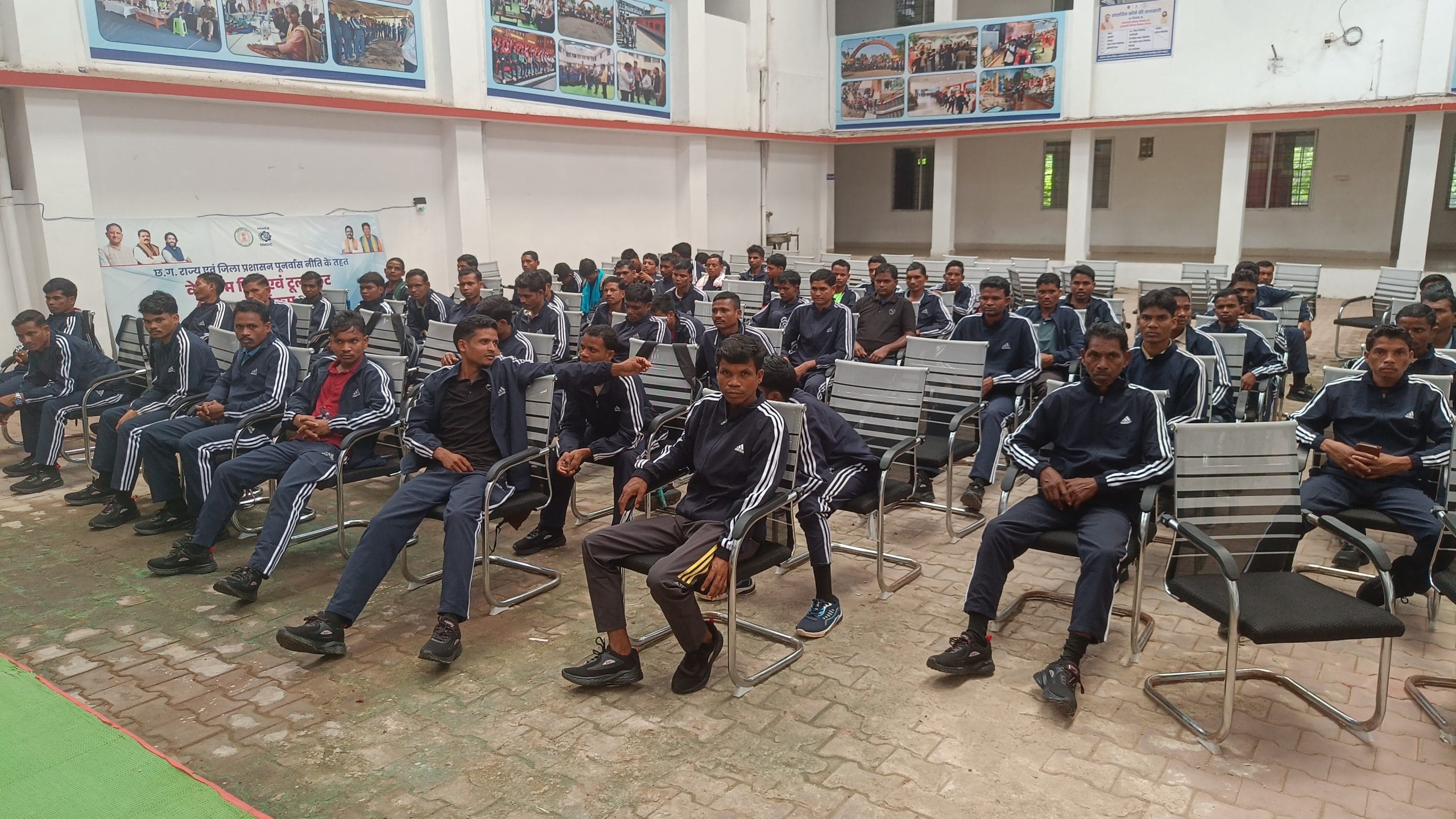
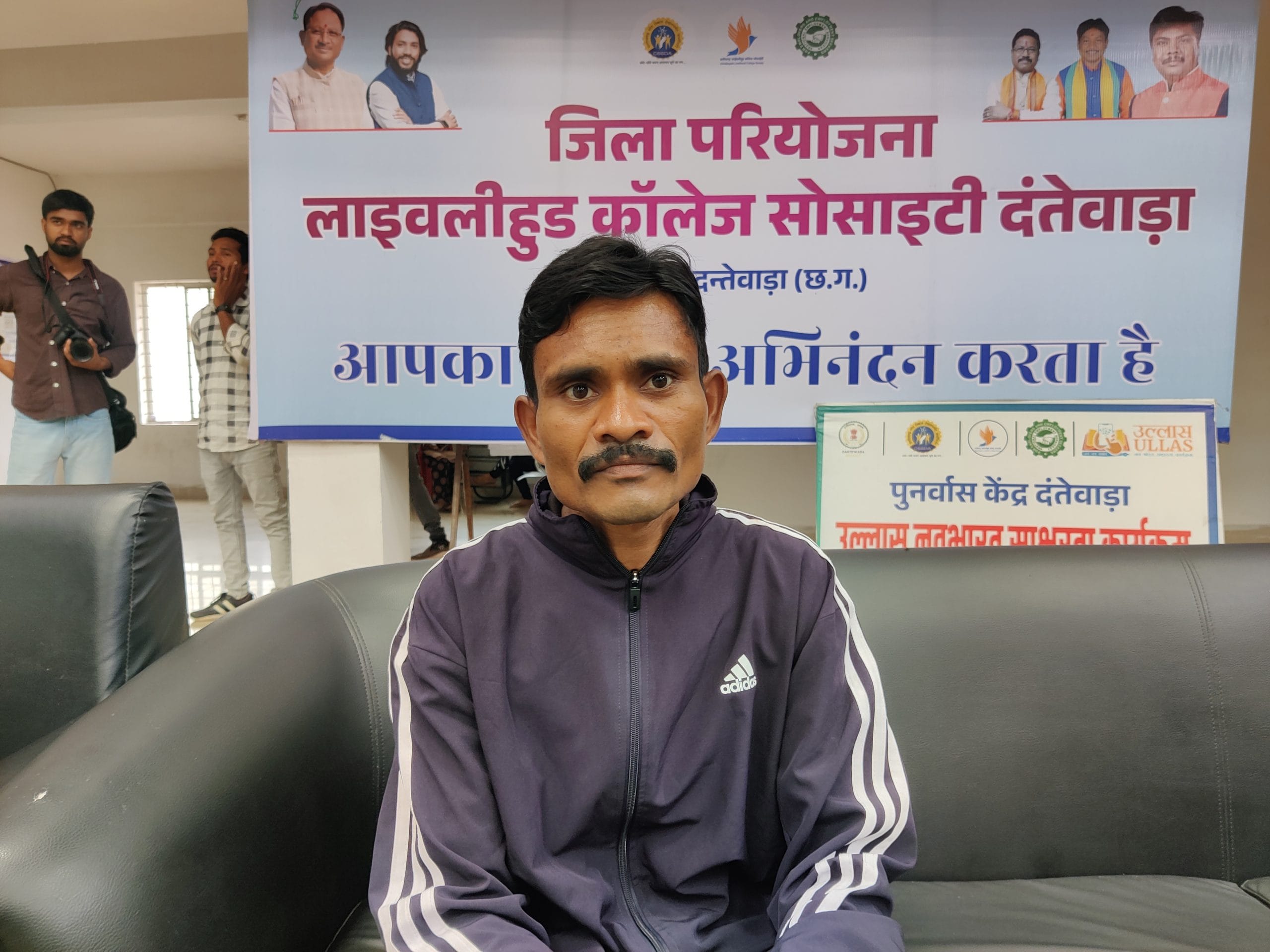
He now sits in a classroom at Dantewada’s Livelihood College, an initiative under the Chhattisgarh government’s rehabilitation programme. Around him, dozens of surrendered Maoists are training to become electricians, plumbers, drivers, masons, welders and technicians.
Karti glances occasionally at the Casio watch strapped to his left wrist. The watch is one of the few possessions that survived both lives.
“Security forces entered deep into the forest and surrounded us from all sides. If we had not surrendered, we would have been killed,” Karti recalled.
Unlike the rifle he surrendered, the Casio never left him.
“We don’t have mobile phones in the forest. This watch was my lifeline,” he said, gently tapping its face. “It has an alarm and a torch. During my Naxal days, it helped me wake up on time and move through the forest at night.” Now, instead of planning movements through the jungle, Karti spends his days learning plumbing.
The transition is not just his.
A month ago, his wife, a former Naxal, completed a tailoring course at the same centre and returned to their village with a sewing machine and a few basic supplies. “She bought thread worth just Rs 20,” Karti said, breaking into a smile. “From that, she earned Rs 500 by stitching clothes. She’s happy doing this work.”
The couple is slowly assembling the documents that mark the life of an ordinary citizen—an Aadhaar card, ration card, PAN card and Shram card—all of which were arranged after Karti’s surrender.
But rebuilding trust, he says, will take more than paperwork.
“The government has made many promises to us. We will trust them only when those promises are fulfilled,” he said. Last year, the Chhattisgarh government approved a new Naxal Surrender and Rehabilitation Policy, which promised to offer an immediate financial aid of Rs 50,000, land or funds for housing, and professional skill training.
Even after leaving the insurgency, some of his beliefs remain unchanged. Karti says he would oppose large industrial projects in Bastar if they threaten forests and tribal land.
“If trees are cut and our land is destroyed, where will we live? We can manage without roads, but if a company comes, we will lose our land,” he said.
That sentiment is not entirely at odds with the government’s current approach. “For now, our primary objective is to build trust and bring development that suits the local people. It will take time, and we are prepared for that,” said Bansal.
A month after laying down his weapons, Mohan Karti found himself staring at something he had never seen before in his life — an airplane.
He had travelled to Raipur to visit the Chhattisgarh Assembly as part of a government exposure programme. For a man who spent nearly two decades moving through the dense forests of Bastar, avoiding roads and security camps, the aircraft flying overhead was a reminder of how much of the outside world had remained beyond his reach.
“After coming to the Livelihood College, we have experienced many things. For the first time I saw the Vidhan Sabha, an aeroplane, and the railway station in Raipur. This was a totally different experience from what we lived in the forest,” said Karti.
(Edited by Aakriti Handa)
Being a plumber, electrician or a carpenter is a really underrated job. Most people don’t realize how well they earn in cities. It’s not considered a fancy job which is why most people won’t pick it up but in the age of AI, it’s not a bad profession to pick.