





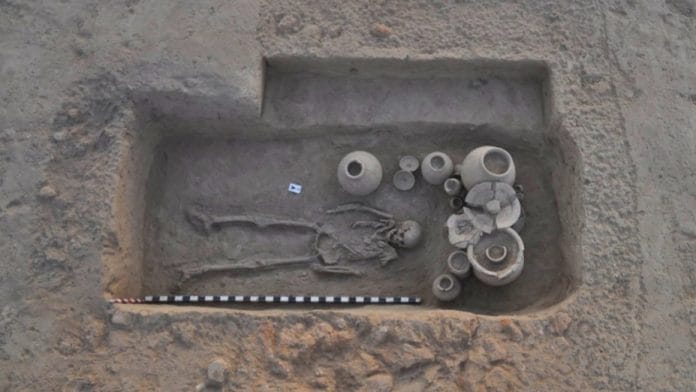

New Delhi: Each time the Harappan skeleton is excavated from the soil, it leaves the archaeologists in a state of astonishment and fresh mystery. They know the feeling only too well. What is well known is that the Harappan script has been a source of head-scratching. But Harappan funerary practices is one of the least researched subjects and continues to befuddle many historians.
The careful scraping of soil, the outline of a skull, the slow appearance of pottery placed beside the dead — the Harappan dead continue to yield new secrets.
Since the civilisation was discovered in 1921, skeletal remains have been exhumed from sites including Harappa, Rakhigarhi, Kalibangan, Lothal, Dholavira and Farmana. But archaeologists, historians and anthropologists are still far from building a complete picture of this millennia-old society — its ancestry, beliefs, diet and migration patterns. Instead, each excavation adds another layer to the mystery.
With nearly 60 cemeteries documented across more than 2,000 known Harappan sites, scholars say India’s ancient dead are not studied adequately, a stark contrast to Egyptian scholarship. What was buried alongside the corpses, where the cemeteries were located, what clues they provide to Harappan hierarchy, and how they imagined their afterlife — all remain a mystery.
“In the last hundred years, archaeologists focused more on locating Harappan settlements. Cemeteries received far less attention,” said Vasant Shinde, the veteran archaeologist who led excavations at Rakhigarhi. “But whatever we have learned from these burials has opened remarkable windows into their lives. We need to study many more cemeteries.”
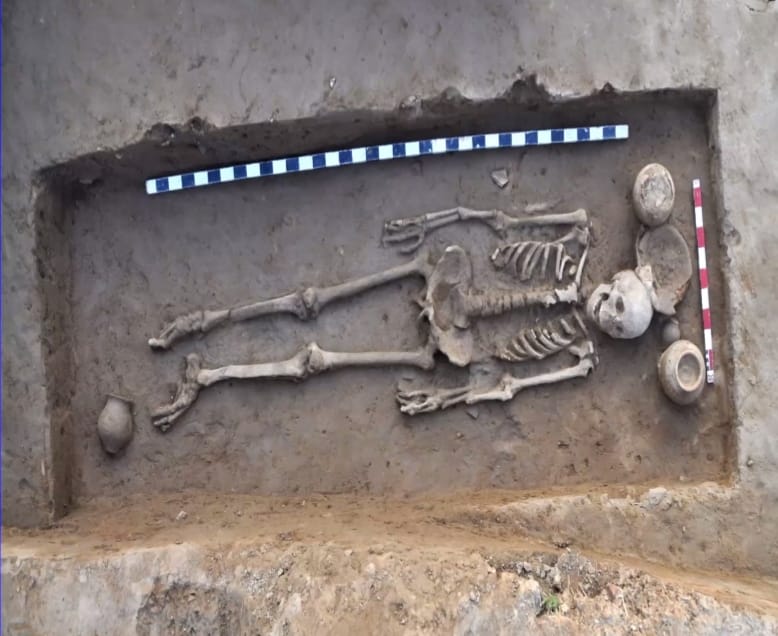
That happened once again at Rakhigarhi, Haryana’s sprawling Harappan metropolis. During the recent excavation archaeologists found up to 40 ceremonial offerings, ranging from pottery vessels, ornaments, and beads accompanying the dead, surpassing the previous count of 22 offerings at the site.
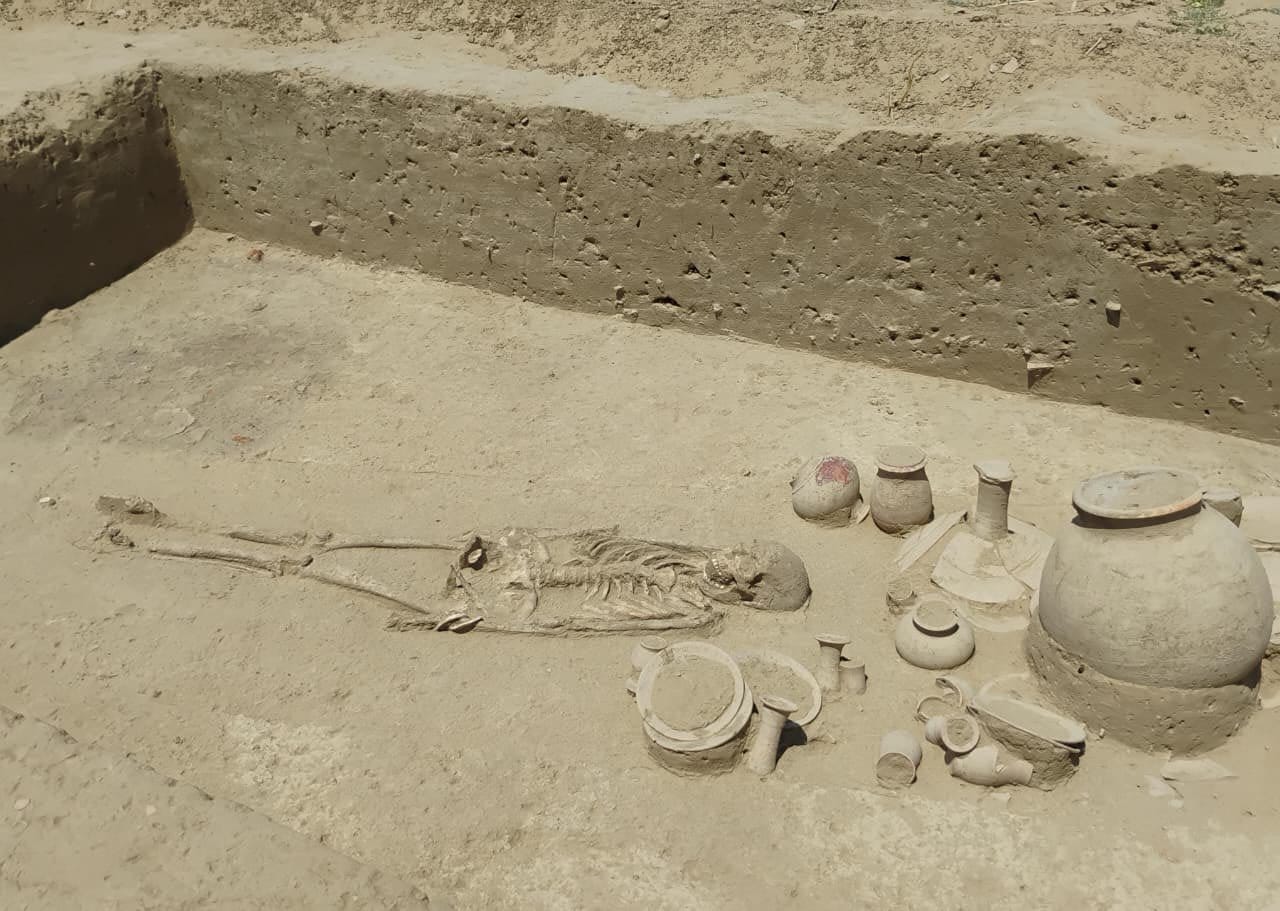
“The variation in the presence or absence [and] quantity of pottery could be seen as a reflection of social status. Pottery was the most common burial good interred with the body,” said P Ajithprasad, former professor of Archaeology and Ancient History at Maharaja Sayajirao University of Baroda.
Now, with DNA testing, there is a new momentum in Harappan scholarship.
For Ajithprasad, the pottery is also evidence that Harappan funerary practices were guided by deeply held beliefs.
“The shared features of the graves and grave goods may not have spread across the vast Harappan cultural domain without such beliefs. The narrative structure seen in some of the seals might be related to these beliefs,” said Ajithprasad.
United in death
For much of the last century, archaeologists were far more interested in finding Harappan cities than scrutinising their cemeteries. As a result, the evidence available today is too limited to fully understand how the civilisation treated its dead.
Much of what we know about Harappan mortuary practices comes from the work of a relatively small group of archaeologists, including Vasant Shinde, VN Prabhakar, MS Vats, SR Rao, SV Rajesh, Veena Mushrif Tripathy, P Ajithprasad and Satarupa Bal. In Pakistan, archaeologist Mohammad Rafique Mughal made significant contributions to the study of Harappan cemeteries, while scholars such as Jonathan Mark Kenoyer and Gwen Robbins Schug have further advanced research on Harappan burial practices.
Even so, the cemeteries that have been excavated point to one striking conclusion. Across a civilisation that spanned more than one million square kilometers, Harappans buried their dead with remarkable consistency, even as local customs evolved across regions and over time.
Whether in present-day Haryana, Gujarat or Punjab, the dead were usually laid to rest in elongated rectangular or oval pits, their bodies placed on their backs with their heads facing north.
“The practice endured through all three phases (Early, Mature and Late) of the Harappan civilisation, suggesting that communities separated by hundreds of kilometres shared a common understanding of how the dead should be honoured,” said DN Dimri, former joint director general of the Archaeological Survey of India (ASI) and a member of the excavation team at Dholavira in Gujarat.
Harappan cemeteries broadly featured three kinds of burials — primary, secondary and symbolic — although funerary practices varied across regions and time. At Kalibangan, veteran archaeologist BB Lal documented ash inside burial pots, suggesting cremation may also have been practised, though it appears to have been rare.
“The Harappan phase exhibit a wide variety of disposal of dead, with completely dominating style of extended inhumations in supine position, some within well constructed cenotaphs of mud-bricks or wood,” wrote archaeologist VN Prabhakar in his paper titled A Survey of Burial Practices in the Late/Post-Urban Harappan Phase during the Second and First Millennium BCE.
Reading society through graves
The differences between Harappan graves are just as revealing as their similarities.
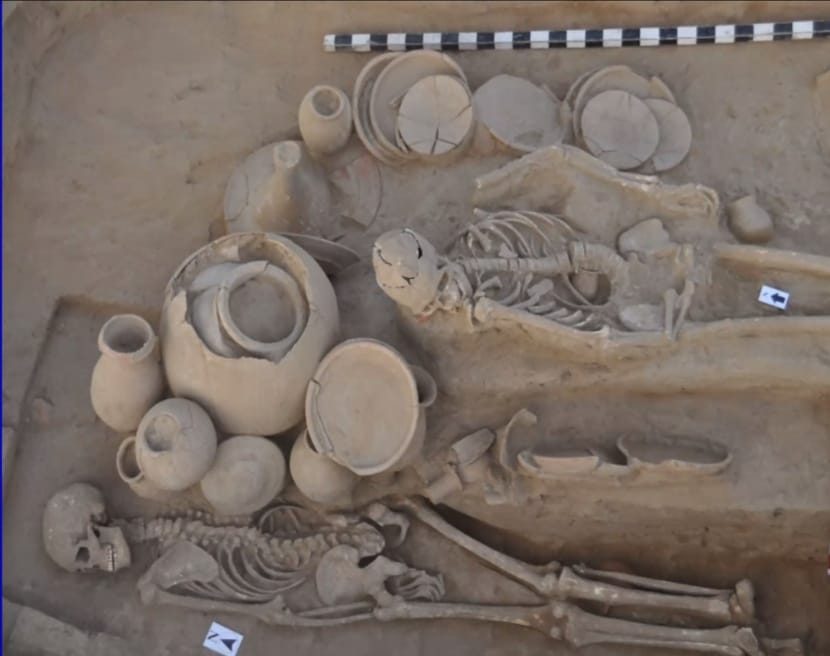
Some contained only a handful of pottery vessels. Others, like the recently excavated burials at Rakhigarhi, were surrounded by dozens. Many included food offerings, ornaments and carefully arranged vessels and pots, usually placed near the head of the deceased. Some graves were lined with bricks or stones, suggesting considerable effort went into preparing the final resting place.
To archaeologists, these were not random objects. They were offerings, perhaps intended for another life.
But one of the enduring mysteries about the Harappan life was social hierarchy and power structure. The Harappans didn’t seem to have royal families and rulers. But the cemeteries do appear to allude to class.
“The quantity and quality of the burial goods vary from one grave to another, and that may indicate the economic status of the deceased,” said Shinde.
But there is evidence of ‘richer’ graves — larger burial pits with elaborate mud-brick lining or wooden coffins made of rosewood or a large quantity of grave goods such as beads, jasper, metal ornaments including gold, and copper mirror. Whether they belonged to more powerful people is harder to establish.
“While individuals buried in such graves certainly received special treatment during the burial process, it is difficult to determine whether they also enjoyed a similar social status during their lifetime,” said Kalyan Shekhar Chakraborty, the former head of the Centre for Interdisciplinary Archaeological Research at Ashoka University.
Where the Harappans buried their dead
Just as revealing as the graves themselves is where the Harappans chose to place them.
Unlike several Chalcolithic cultures in central India and the Deccan, where the dead were buried beneath house floors, Harappans almost always buried their dead outside their settlements. Cemeteries typically lay a few hundred metres away, though at places such as Puthi Seman in Haryana, they were located nearly two kilometres from habitation sites. At Dholavira, the burial ground lies about 200 metres west of the ancient city, while at Rakhigarhi it is about 500 metres from the settlement.
“This may suggest a symbolic separation between the living and the dead or perhaps a physical and spiritual separation of the deceased from the community,” said Chakraborty.
Historian Nayanjot Lahiri offers another possibility. In Time Pieces : A Whistle-Stop Tour Through Ancient India, she argues that Harappans may have regarded dead bodies as defiling and unhygienic, choosing to remove them quickly from living spaces while still treating them with dignity.
Their graves, she notes, were often carefully built and sometimes accompanied by elaborate offerings. At Harappa, archaeologists even discovered a rare wooden coffin made of rosewood with a deodar lid.
“The emphasis on isolating bodies from the living areas was quite strong,” said Lahiri.
For Shinde, the practice feels surprisingly familiar.
“Even today, cemeteries are located outside habitation areas. In many ways, some Harappan traditions continue in our society,” he said, adding that studies of Harappan skeletons indicate they built clean and hygienic cities.
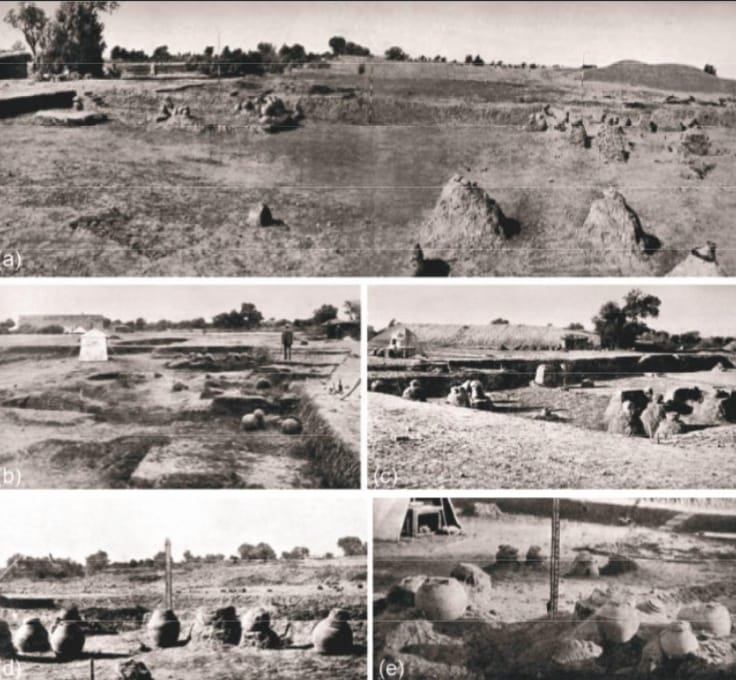
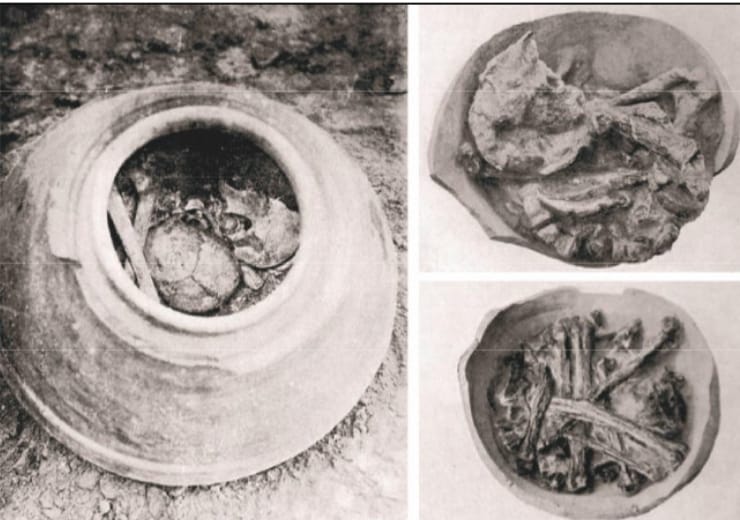
Mohenjodaro, which literally means the mound of the dead, remains an exception. No cemetery has yet been identified there, although fragmented human bones have been found scattered across the city streets.
Regional landscapes also left their imprint on burial practices.
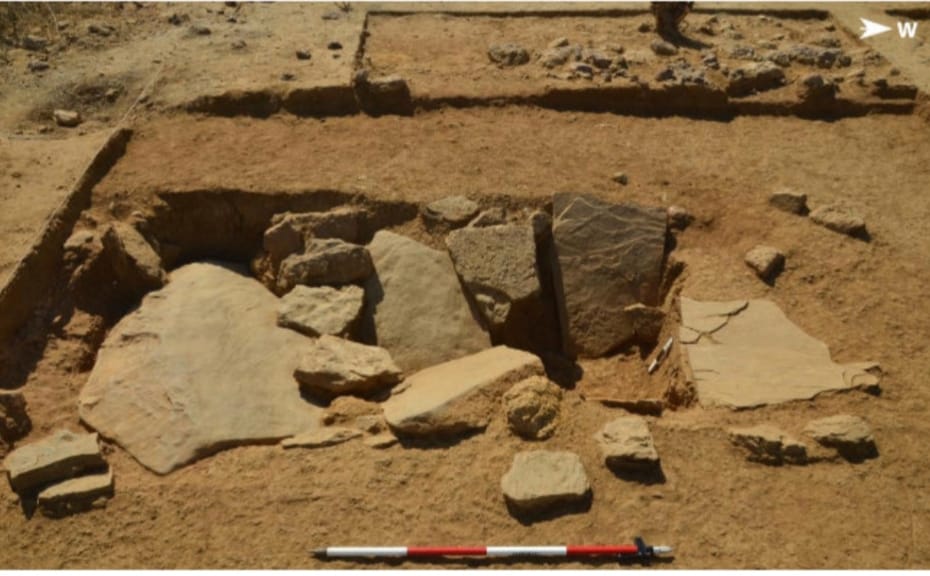
At Kalibangan and Lothal (in Gujarati, ‘Lothal’ means the ‘mound of the dead’), graves were lined with mud bricks. At Dholavira, where limestone was readily available, burials were enclosed with stone slabs.
At Dholavira, many graves contained no skeleton, only grave goods.
“The graves were symbolic and memorial,” said Dimri, who was part of RS Bisht’s excavation team at Dholavira, excavated extensively in multiple phases between 1990 and 2005.
To Dimri, that blend of uniformity and regional adaptation says something important about the civilisation itself.
“Harappans were a very well-connected culture. There is no difference in the burial tradition. What changes is the material people used, depending on local conditions,” he said.
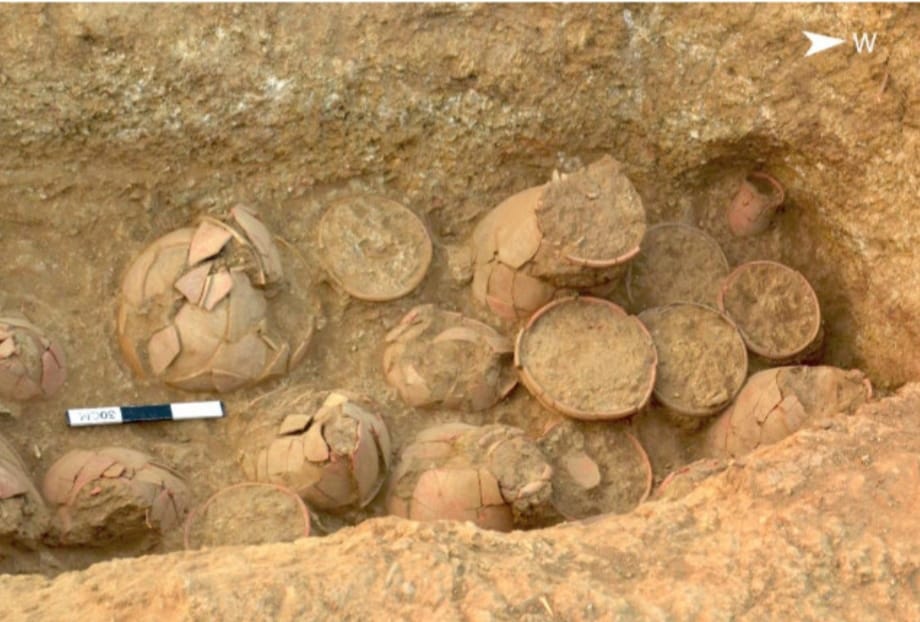
Despite Dholavira possessing one of the largest cemetery complexes in the Harappan world, only a small fraction of its graves has been excavated.
“It’s because we lack scientific temper and training. We dig only for the sake of digging. Why we dig is never the question,” said Disha Ahluwalia, archaeologist and junior research fellow at the Indian Council of Historical Research.
Some discoveries have also challenged archaeologists’ assumptions.
Rare double burials have been found at sites such as Lothal and Santhali in Gujarat, and Farmana and Rakhigarhi in Haryana.
When SR Rao first excavated a double burial at Lothal, some suggested it might represent a Sati-like practice.
“This was shown [to be] wrong by skeletal studies, which confirmed both were male. Double burials may be because of the simultaneous deaths of family members or death during an epidemic,” said Ajithprasad.
Shinde’s team later unearthed double burials at both Farmana and Rakhigarhi.
“We can just assume that they died at the same time and can point towards the relationship between a male and a female,” said Shinde.
‘A lady luck’
Not every Harappan skeleton changes history. But one from Rakhigarhi did.
In May this year, when Tahir Hussain’s team and a group of young men from Sinauli carefully lifted the fragile skeletons from the Rakhigarhi Mound No. 7 — a cemetery along the paleochannel of the ancient Drishadvati river — the remains were packed and sent to the Anthropological Survey of India in Kolkata. There, scientists began the painstaking task of reading a story written not in words, but in bones.
“The findings from the Rakhigarhi remains are expected to contribute substantially to understanding the origins, health, mobility and biological history of one of the world’s earliest urban civilisations,” the Union Culture Ministry said in a statement on 22 June.
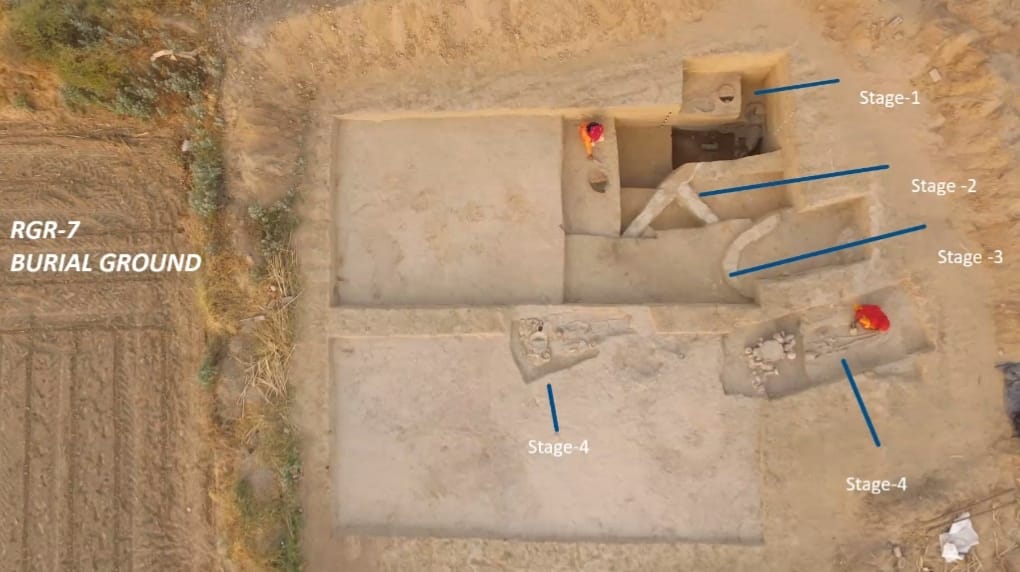
The journey to that point had taken decades.
When archaeologist Amarendra Nath first excavated Rakhigarhi in 1997, he identified skeletal remains in both the cemetery and habitation area. But the excavation was limited, leaving most of the burial ground untouched.
It remained that way until 2013, when archaeologist Vasant Shinde returned to the site hoping to fill one of the biggest gaps in Harappan archaeology. Over the next three years, his team documented dozens of burials, gradually piecing together how the Harappans laid out their cemetery and treated their dead.
This time, Shinde was determined not to repeat a mistake that had haunted him for years.
In 2006, while excavating the Harappan cemetery at Farmana in Haryana, which is 900 metres from the settlement area, his team uncovered around 70 burials. The skeletons remained exposed for nearly two months before samples were collected. By then, modern DNA contamination had compromised the remains.
“It was a miserable failure,” Shinde recalled.
Rakhigarhi would be different.
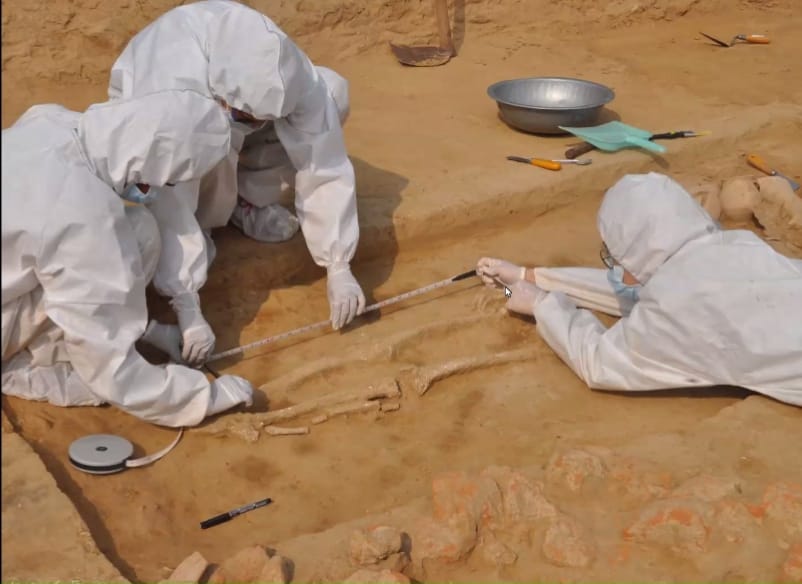
Members of the excavation team worked wearing gloves, masks, gowns and caps, while drones were deployed to map the site from above. Every precaution was taken to keep modern DNA away from the ancient bones.
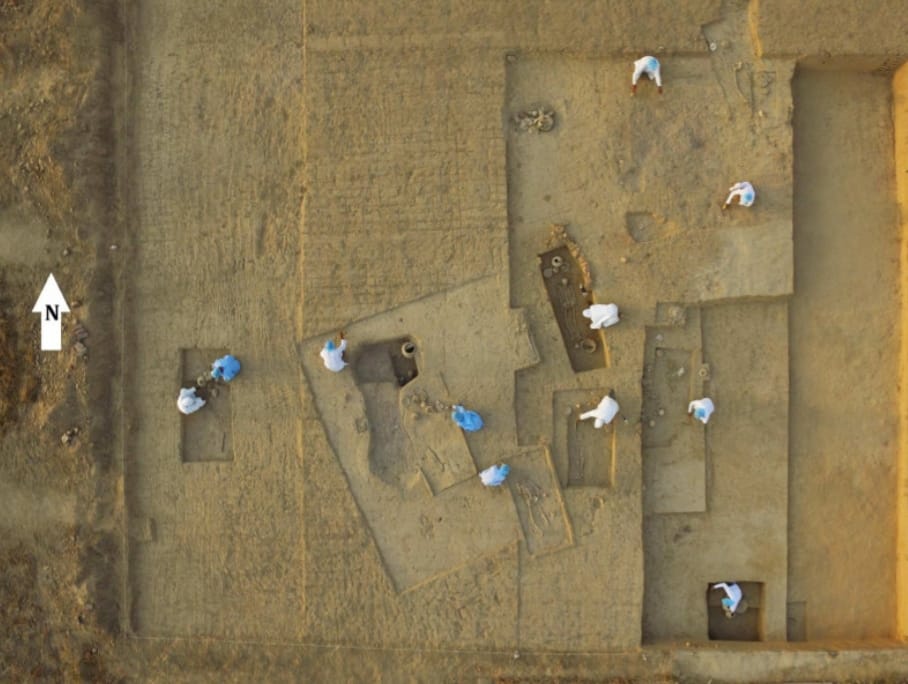
“This shows how sensitive DNA is and, to trace the past, how delicate the work is,” said Shinde.
The precautions paid off.
Shinde excavated 62 burials. Sixty-one yielded no usable DNA. Only one did.
“It was my lady luck,” he said with a smile.
The skeleton — a woman buried with pottery vessels — would go on to become one of the most scientifically significant discoveries in Indian archaeology.
Her DNA was analysed by the Centre for Cellular and Molecular Biology in Hyderabad, a Korean laboratory and Harvard Medical School’s ancient DNA facility. The findings were published in Cell in 2019.
“We found that the Harappans were the ancestors of present-day South Asians and that their roots go back nearly 12,000 years. We learned all this through one skeleton,” Shinde told ThePrint.
The study also challenged the long-debated Aryan invasion hypothesis by reporting no detectable Steppe ancestry in that Harappan-era genome.
“The Harappan civilisation was developed by indigenous people. Most of the South Asians are the descendants of the Harappan. Archaeological as well as genetic evidence indicates continuity until today and neither Steppes Pastorals nor Iranian farmers contributed to the development of South Asian ancestry,” said Shinde.
Yet even today, India lacks a dedicated facility to preserve such discoveries.
Despite the large number of skeletal remains unearthed across the country, the ASI has no specialised repository to store ancient human remains. Some skeletons are transferred to the Anthropological Survey of India or the Birbal Sahni Institute of Palaeosciences, while the rest lie in regional ASI offices.
“Not all skeletons are sent to these institutions. ASI has no specialised budget or facility to store these without DNA contamination,” said Ramnath Fonia, former additional director general of the ASI.
What the Harappans believed
One unusual finding at Rakhigarhi has prompted archaeologists to rethink long-held assumptions about Harappan society.
In a paper titled Archaeological and Anthropological Studies on the Harappan Cemetery of Rakhigarhi, India, Vasant Shinde noted that brick-lined graves, traditionally assumed to belong to important men, were instead associated with young women aged between 21 and 35 years.
“If we accept the hypothesis that the people buried in the brick-lined graves actually belonged to the dominant group in Rakhigarhi society, we must reconsider the social role of some Harappan females at that time,” Shinde wrote.
Researchers, however, say it cannot be established that women held a higher social status during that period.
“We have no written evidence of the Harappans. We can only comment on females on the basis of hypothesis. Any kind of supposition or proposition is incorrect. What we get from data is important, and we have very little data,” said Satarupa Bal, Assistant Superintending Archaeologist, whose doctoral research at Deecan College, Pune, focused on Harappan mortuary practices.
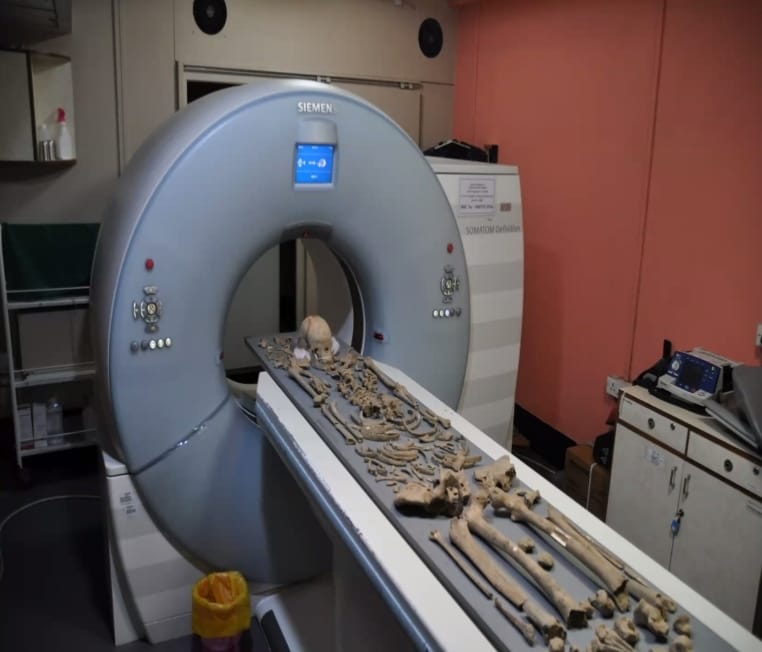
Another unexpected discovery also came from Rakhigarhi.
So far, around 600 prone-position burials have been documented in the Indian subcontinent, most of them involving males and containing few grave goods.
Across the world, prone burials — where individuals are buried face down — have often been associated with people regarded as social outcasts or those feared in death.
According to public historian Eric Chopra, such burials have been linked to individuals considered dangerous, including witches, vampires, wizards or others thought likely to return from the dead.
Shinde’s team found face-down burials containing a large quantity of pottery, many of them belonging to females.
“In Rakhigarhi cemetery, what stands out in prone-position graves is that the individuals appear unlikely to have been social deviants,” Shinde wrote, suggesting they might actually have belonged to the upper classes of society.
The greatest contrast between the Harappans and many contemporary Bronze Age civilisations lies not in whether they cared about death, but in how they expressed that concern.
“In Mesopotamia or Egypt, elite burials were powerful displays of wealth, political authority and religious belief. The Royal Tombs of Ur contained immense quantities of gold, precious stones, elaborate jewellery, musical instruments, and even sacrificial attendants,” said Chopra.
Harappan burials, by contrast, contain relatively few precious objects despite the civilisation’s access to valuable materials.
Shinde argues that that shows a different kind of society.
“Harappan society is more democratic. There is no monarch system as in contemporary Mesopotamia and Egypt, where the society was ruled by king. At Harappan cemeteries, we found evidence of people from all strata of society,” he said.
This contrast became clear one evening in April, when the National Museum opened its doors at night for the first time.
Leading visitors through the Harappan gallery, Chopra paused before the famous Dancing Girl of Mohenjodaro, describing her as the civilisation’s diva. He walked a few steps further and halted before a far quieter exhibit—a woman’s skeleton from Rakhigarhi.
Unlike the bronze figurine, this exhibit carried no glamour. Only questions.
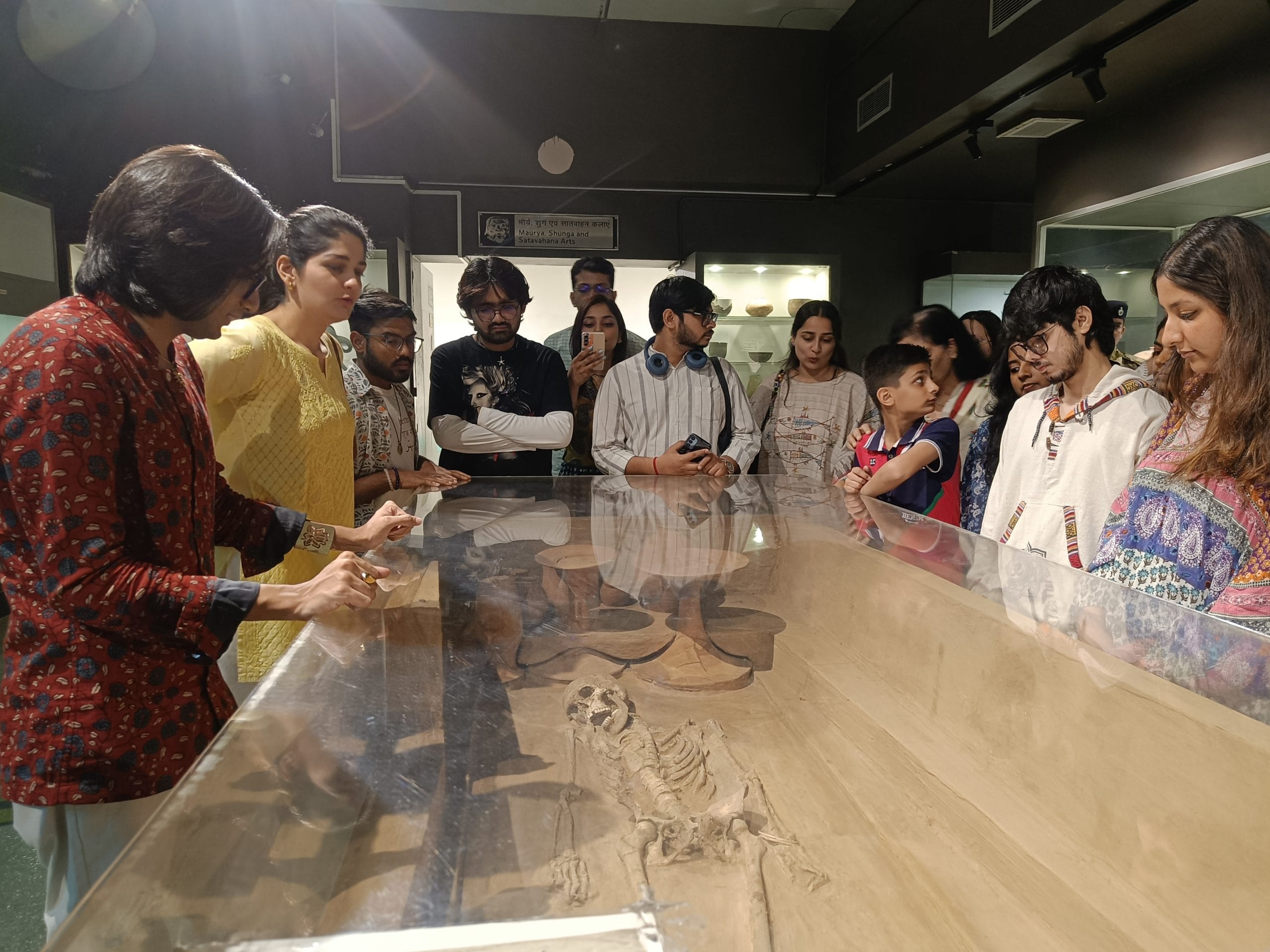
The skeleton, excavated during Rakhigarhi’s first excavation in 1997, was later transferred to the National Museum under the ASI’s policy of moving some of its most significant discoveries into the national collection.
Standing before the skeleton, Chopra turned to the visitors.
Why, he asked, would the Harappans bury a woman with pottery vessels and ornaments?
“Belief,” someone in the group replied. Chopra nodded.
“Just as societies today hold multiple beliefs about what happens after death, there is every reason to think Harappans did as well. Some may have believed in an afterlife, while others may not have. The presence of burial goods certainly suggests that at least some people believed the dead required objects beyond death, whether for practical use, ritual purposes or continuity,” Chopra told ThePrint.
It is one of archaeology’s oldest questions: why do ancient societies bury the dead with objects they can no longer use?
According to historian Nayanjot Lahiri, the desire to believe that the dead continue to exist in some form is nearly universal across ancient civilisations, from the Egyptian and the Sumerian to the Scandinavian and the Asian.
Chopra points to Mesopotamia, where peace offerings accompanied the dead because people believed spirits could trouble the living.
Shinde argued that this belief in ghosts may have been one of the reasons why Harappans built cemeteries outside the habitation.
Back in the museum gallery, Chopra drew attention to something else — two bangles still resting on the skeleton’s arms after more than four millennia.
The woman is often referred to as the “dead bride”. Chopra dislikes the label.
“To associate jewelry with marriage is again a superimposition of our times. To reduce the identity of a woman to a married bride and to remember her that way is actually very reductionist,” he said.
For archaeologists, however, the bigger lesson is one of humility.
“The burials unearthed weren’t able to explain the entirety of the civilisation. If we combine evidence from burial and habitational areas and the script, which is yet to be deciphered, then we are able to understand the Harappans,” said Satarupa Bal.
Until then, every Harappan skeleton is throwing up more questions.
(Edited by Prashant Dixit)
our coverage of the Rakhigarhi ancient DNA findings does a profound disservice to history, science, and the diverse cultural melting pot that India has always been. By cherry-picking statements to falsely claim that the Aryan Migration Theory was ‘debunked,’ you ignored the actual scientific consensus. The peer-reviewed data, including the massive companion study published in Science on the exact same day, definitively proved that Steppe pastoralists migrated to the subcontinent between 2000 and 1500 BCE. The true genetic history of India reveals that we are a multi-source civilization—a beautiful mosaic built first by the indigenous Harappans and later enriched by Steppe migrants. When media outlets prioritize political narratives over scientific rigor, they erase the complex, dynamic, and diverse reality of our ancestors.
“neither Steppes Pastorals nor Iranian farmers contributed to the development of South Asian ancestry,” said Shinde. Many experts disagree with this view.
Modern Indians, particularly those of upper castes & particularly those from north west India have Steppe genes. Steppe Aryans are supposed to have come only 5000 years back, naturally Harappan sites being older will not have Steppe gene. Iranian agriculturalists gene may or may not exist in every skeleton of Harappan sites but no conclusion can be made based a single Raphigraphy skeleton.