



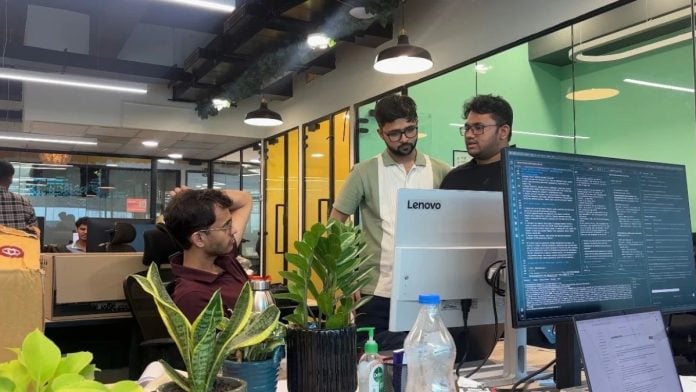
Bengaluru: The first thing the new Bengaluru-born dating app Wavelength wants to know is not what you look like but who you really are.
For 20 to 30 minutes, the AI voice agent behind Wavelength talks to users about their childhood, family, work, friendships, relationships, and the kind of life they want to build. Called ‘Wave’, it even asks follow-up questions. It’s like a real conversation. The AI agent remembers what the users say. And when it thinks it finds someone worth meeting, it doesn’t wait for the users to swipe right or left.
It calls.
“Hey, I have a guy for you,” Wave might say. Then comes the pitch: why the AI agent thinks this person could be interesting, what the two have in common, and what might make the conversation worth having. The user can ask questions about the match before deciding whether to say yes. Only after both people agree does Wavelength introduce them. Photos can come later.
It is a strange inversion of the dating-app ritual, one more suited to Indian cultural habits. For a society transitioning from family-arranged matches to dating apps, the Western apps such as Bumble and Tinder are tailored more for individualistic cultures. They haven’t quite tailored to Indian sensitivities.
In that cultural gap lies an opportunity for Wavelength. Instead of looking at hundreds of faces and deciding who is worth a conversation, Wavelength wants the conversation to come first and the appearances later. It is a dating-app-fatigued world, and AI is here to infuse it with some life, or life-likeness to the banality of search-and-swipe.
The idea is part of a broader shift underway in dating, as AI starts taking over tasks that users have traditionally had to do themselves—writing profiles, filtering potential partners, making introductions and even explaining why two people might be compatible.
Overtone, the new venture of Hinge founder Justin McLeod, is also experimenting with voice-based AI interviews to understand users before making curated introductions and is supposed to launch later this year.
But in Bengaluru, Wavelength is taking the idea a step further: it wants the AI not just to find a match, but to persuade you to give that person a chance. It is your own personal Seema Aunty.
That is the bet behind Wavelength: that the problem may not be a shortage of potential partners, but the way people are being asked to evaluate them.
That makes Wave less like a search engine and more like a matchmaker. The closest comparison is not another dating app at all, but Seema Aunty from Indian Matchmaking—someone whose job is not merely to identify two compatible people, but to convince them that compatibility does not have to mean getting everything on their checklist.
“We realised that persuasion is a critical insight in this space, and persuasion at scale can be done by AI,” said Ishaan Gupta, one of Wavelength’s co-founders.
The bet is that after years of endless choice, people may not need more people to choose from. They may need someone, or something, to help them choose.
How Wave was built
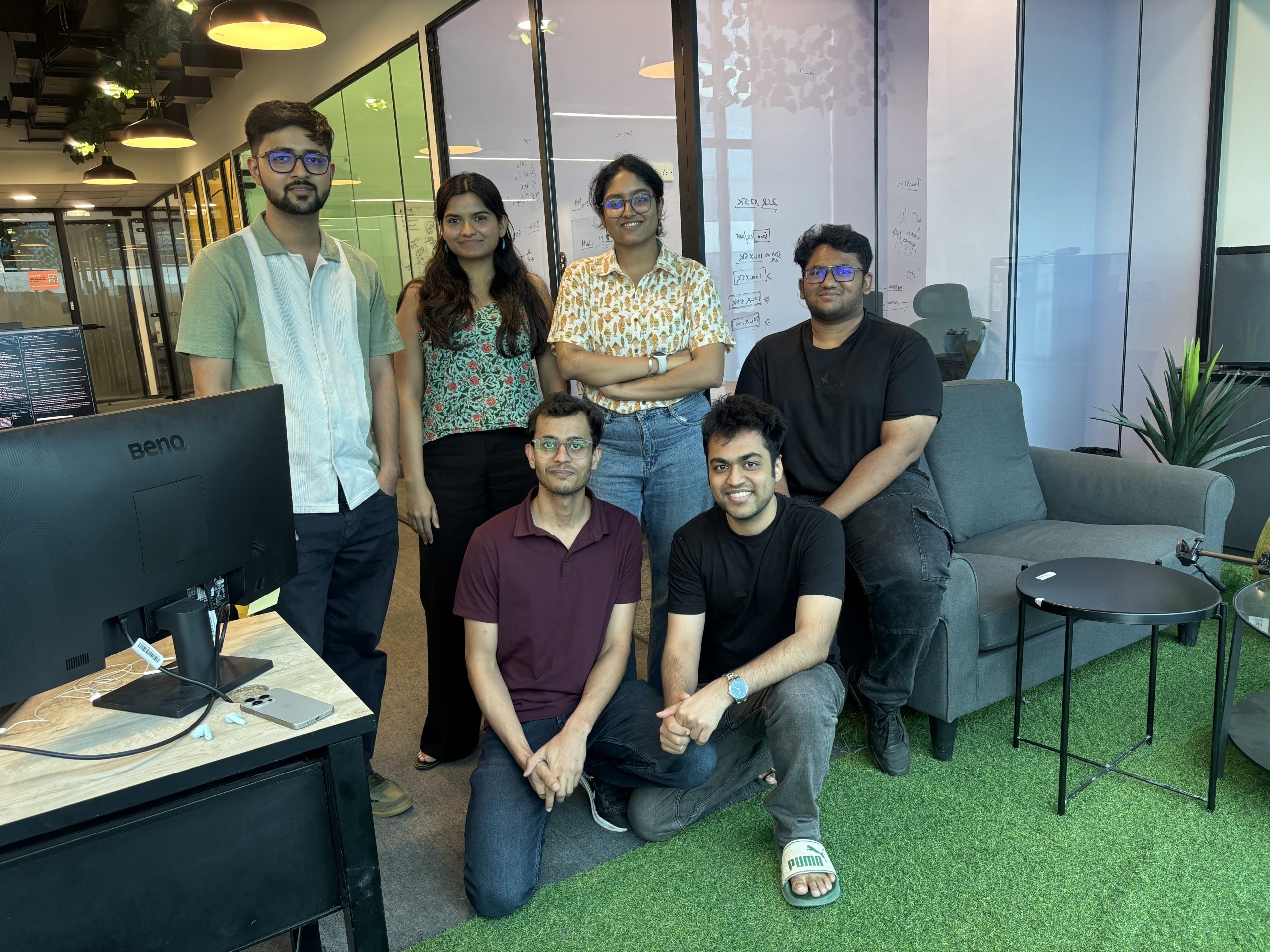
At two long desks in an office shared with another startup, Wavelength’s six-member team is trying to teach an AI how to be a matchmaker.
The founders often describe the process as “bringing up Wave”. They are not just training a model to answer questions, but trying to teach it how to listen, when to probe, when to remember something said weeks earlier, when to push back—and when to leave something alone.
When Ishaan Gupta, Vinit Sarode and Jayanth Emmadi started working on Wavelength, there was no voice agent and little of the product that exists today. The team recruited people through dating platforms and their own networks, spoke to them, matched them manually, and watched what happened.
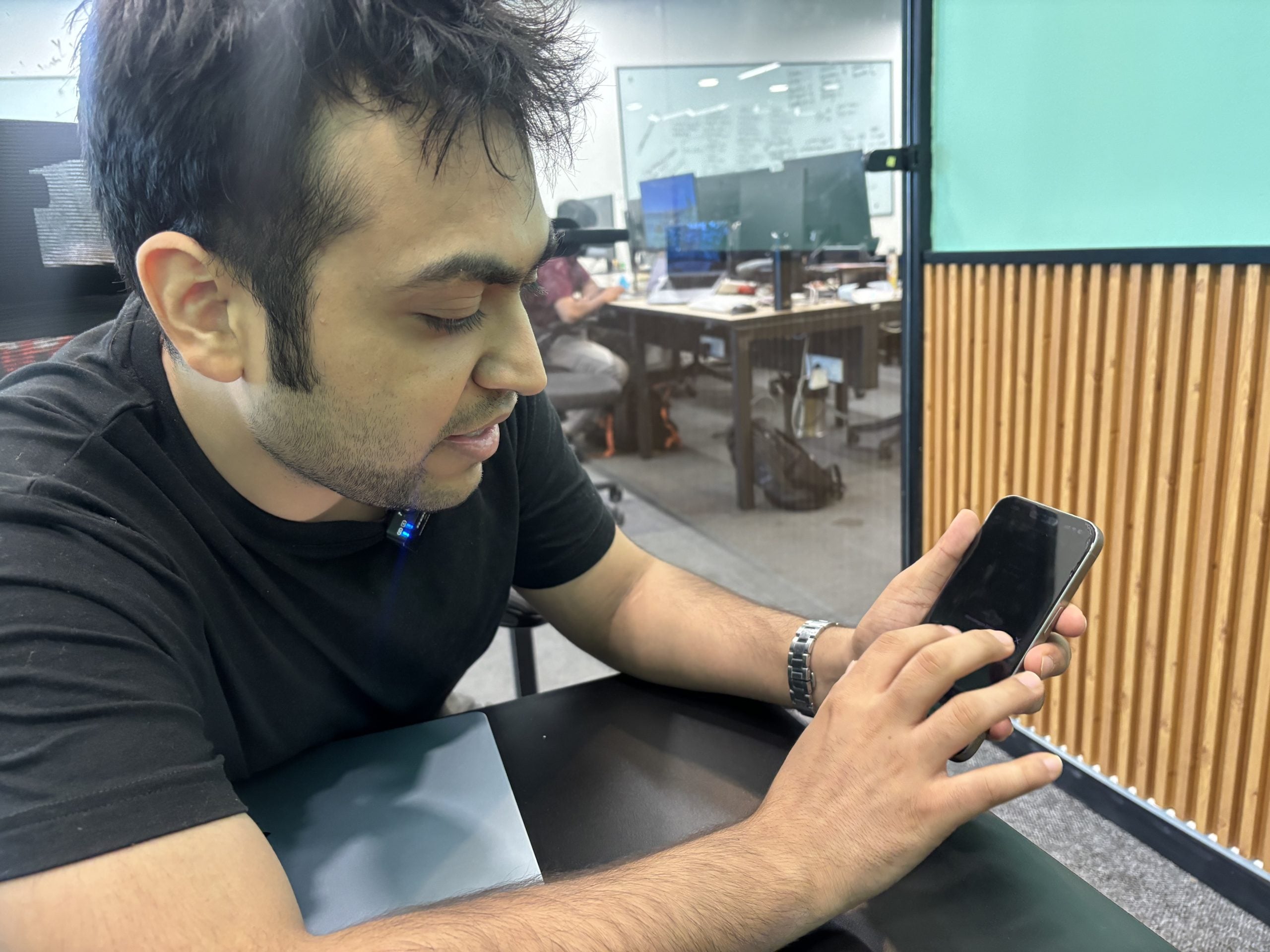
The first version was text-based. The point was to test a more fundamental question: could an AI understand enough about a person to make a meaningful introduction?
The experiment eventually pushed them toward voice. People got bored of typing, the founders found, and they wanted the interaction to feel more like a two-way conversation than a questionnaire.
“India is a more audio-first country,” Gupta said. “People don’t necessarily know how to text, but they know how to talk.”
That became part of the reasoning behind Wavelength’s format. People who work in offices are accustomed to talking through meetings and conversations, he said, even if they may be less comfortable texting extensively, going out on dates or meeting strangers. Voice could therefore make the process feel more natural and personable while also giving Wave more room to ask follow-up questions and understand someone beyond a set of formulaic written answers.
By January this year, the team had rebuilt the product around conversations with Wave.
What they were building was no longer simply a recommendation engine. It was matchmaking in its oldest sense of the word. It was an AI that first had to understand the person before it could attempt to understand who that person should meet.
The problem with dating apps
The problem, as Wavelength’s founders see it, is that dating apps give users too many profiles to choose from, often with too little information about the people behind them.
“Why is dating, something so fundamental to our day-to-day lives, still just a 10 billion dollar industry? Everyone believes someone will eventually crack it. Every year, dozens of new companies emerge. But with AI, we can finally present people based on their personalities first—why they’re interesting and why they might be interesting to you,” Vinit Sarode.
“We can understand someone beyond their photos and prompts: their upbringing, past relationships, current lifestyle, and what kind of person would fit into their life.
On a conventional dating app, the first thing a person encounters is usually a photograph. A few prompts or lines of text follow, and then comes the decision: swipe left, swipe right, move on.
The old model creates an enormous amount of choice. Tinder, for instance, reported in 2018 that its users were making about 1.6 billion swipes a day, but only around 26 million of those resulted in matches, a match rate of roughly 1.6 per cent.
The experience is also uneven. In a controlled experiment, researchers at Tinder created artificial profiles and automatically liked the profiles shown to them. The artificial male profile matched with about 0.6 per cent of the profiles it liked, while the artificial female profile matched with about 10.5 per cent.
Wavelength’s founders argue that the result is a dating market in which attention gets concentrated on a relatively small group of profiles. “The top 1 per cent of men get a disproportionate number of matches,” Sarode said. “Many women end up competing for the same group of men.”
Their broader argument is that the people who do well in this system are not necessarily the people who would make the best partners. Dating apps are “very photo-first”, Sarode said, leaving little room for qualities that are harder to communicate in a few seconds on a screen: someone’s upbringing, relationships, ambitions or habits.
That creates a different problem for people looking for something serious.
“If you’re looking for something casual, you need volume,” Sarode said. “If you’re dating for the first time, you want the excitement of seeing hundreds of people and getting attention.”
But he said that changes after people have spent years on dating apps.
“After using dating apps for one, two, or three years, fatigue sets in. When you’re looking for something more serious, that’s where we found Wavelength provides the most value.”
Ishaan Gupta described the problem more bluntly: dating apps have created an abundance of choice. “You think, ‘This person isn’t right; I’ll swipe twice and find someone else.’ But that’s not necessarily how relationships are supposed to work.”
The founders say they are targeting people who have become tired of that abundance rather than people looking for the fastest possible date. Their ideal user, Sarode said, may be happy with “one or two matches a week” if those matches come with enough context to understand the person on the other side.
Wavelength’s early numbers are what convinced the founders there might be something to this approach. Sarode said women on Hinge might say yes to only 2–3 per cent of the recommendations they receive, while women on Wavelength say yes to around 80 per cent. On the other side, he said, less than 1 per cent of men successfully get matches on traditional dating apps, compared with 55–60 per cent of men on Wavelength.
“Those men are being pitched based on their personality,” Sarode said. “The product is essentially selling the person better.”
From swipe to voice
On screen, a green circle pulses as the AI agent Wave moves between “listening”, “thinking” and “speaking”. But it is the voice that makes the interaction feel different. Wave pauses. It occasionally revises what it is about to say. It remembers details from earlier conversations and brings them up later. If an answer is short, it pushes for more.
“When you think about someone who would actually want to date, what’s the first thing that comes to mind?” it asked.
Or: “Are you afraid of being in a serious relationship since you have never been?”
Sometimes, it simply reflects an answer, rephrasing it or picking up on something the user has said almost in passing. At other moments, it sounds less like a questionnaire and more like a friend who has decided not to let you dodge the point.
“You’re doing it again. Can you just be in this for a bit without solving it right now?” Wave tells one user. “It seems like you’re trying to find out problems in something that is going too well.”
Dating in the Indian context
If Wavelength is trying to change how people date, the founders say it also has to reckon with where they are doing it.
The team initially looked at AI dating products emerging in the West, where some services move quickly from a match to a date. But they decided that simply importing that model into India would miss something fundamental.
“Dating is very culture-specific,” Ishaan Gupta said.
In the West, he said, going on two dates a week might be unremarkable. In India, actually agreeing to meet someone can still feel like a significant step.
“If I’m having a good conversation with someone and developing comfort with them, actually going on a date is a significant step.”
That difference changes the product. Wavelength does not want Wave to simply optimise for getting two strangers into the same room. The AI first allows users to understand who the other person is, decide whether they are comfortable, and only then make the introduction.
Privacy matters too. On many dating apps, photographs are the starting point of the interaction. For Wavelength, that felt particularly uncomfortable in a market where some people may not want their photos widely visible.
There is another layer to the Indian context: dating itself can carry a stigma.
In many families, Gupta said, talking about dating at home can be uncomfortable, particularly for women. “In India, seeking marriage is considered acceptable. Seeking a date isn’t necessarily considered acceptable.”
That distinction matters for a product trying to persuade people who may not even identify with the category of “dating app” in the first place. The founders say many women they speak to are resistant to dating apps and prefer the idea of finding someone “organically”. Wavelength’s challenge, then, is not simply to improve matching but to make the act of looking for a partner feel less transactional and less exposed.
That is also why the company describes what it is building as “slow dating”. People may be looking for companionship or a relationship that could eventually lead to marriage, while others may want a serious relationship without putting a timeline on marriage. The common thread, Gupta said, is wanting someone to “share my thoughts with, and share my day with.”
The result sits somewhere between a dating app and the older Indian idea of matchmaking—except that the matchmaker is an AI.
But Sarode sees Wavelength as a solution to a larger problem than dating.
“Earlier, I was building an AI companion where people would talk to an AI for emotional support,” he said. “We believed that people would talk more and more to AI over the next 10 years. That graph will continue going up.”
“But that doesn’t solve loneliness. Loneliness will ultimately be solved by helping people connect with real humans.”
‘It felt like a digital diary’
For Ishita, 22, an engineer who moved to Bengaluru from Bihar about six months ago, using a dating app was initially a non-starter.
A friend introduced her to Wavelength. “I don’t want to use any dating app; the idea that so many people were looking at my photos was uncomfortable,” she remembers thinking.
What caught her attention was Wave. The onboarding conversation lasted 30 to 40 minutes. Talking to an AI felt unusual at first, she said, but after two or three questions she became comfortable. Some of the questions made her pause and think about choices she had made in her own life.
Then came a week without a match.
One day, instead of talking to Wave about dating, Ishita started talking about missing home and the hectic pace of work in Bengaluru. It was during that conversation that she got her first match.
The first one was, in her words, “not too good but not bad”. Over the next two months, she spoke to 10 to 12 potential matches. She felt the recommendations gradually got better.
What stayed with her, though, was not just the matching. Wave remembered things she had told it and brought them up later. It once returned to a conversation about a previous relationship, something she said she had not been ready to confront even with herself. It is a therapising Seema Aunty.
“Sometimes I felt Wave as a digital diary but with pointers and feedback,” she said.
That kind of use is not unusual at Wavelength, says co-founder Jayanth Emmadi. There is no rigid boundary around what users can talk to Wave about. They can bring up whatever is on their mind, but Wave also proactively nudges conversations toward things it remembers from earlier interactions.
Jayanth gives the example of a user who mentioned that she was preparing for surgery. One or two months later, Wave brought it up again and asked how she was feeling.
The conversations can also move from life back to dating. If two people have been introduced and are struggling to find something to talk about, Wave can suggest a topic based on what it knows about them.
According to the company’s analysis, only around 40 per cent of conversations with Wave are about dating and relationships. About 35 per cent are related to work and professional life—conversations about careers, bosses or colleagues. Another 7 per cent are about health and fitness, while 6 per cent concern mental health and emotions. Users also talk about living in Bengaluru, their day-to-day, spirituality, education, and other parts of their lives.
People are not simply returning to Wave to ask, “When is my next match?” They are returning because they feel the AI understands the context of what they are saying.
That relationship often continues after a match. People come back to talk through a date, ask what to make of a message, or work out whether they should ask someone out. According to Gupta, around 75–80 per cent of users who get a match continue talking to Wave afterwards.
For Ishita, that was part of what made the experience feel different from a conventional dating app. Wave did not simply show her another photograph; it gave her reasons to consider a person—shared interests, similarities and possible points of conversation.
Safety was another reason she preferred the format. She had never used another dating app, partly because she did not like the idea of putting her photographs out for everyone to see. On Wavelength, she could decide whether she wanted her profile revealed after hearing about a potential match.
Also read: ‘Love is not haram’. How Kashmir’s LGBTQ+ community is navigating faith and identity
The problem with making dating too easy
That is also where the larger question begins. What happens when technology becomes good enough to remove some of the discomfort that comes with meeting another human being?
For psychoanalyst Neetu Sarin, meeting another person necessarily involves risk: rejection, awkwardness, frustration or simply discovering that a conversation goes nowhere.
“The whole point of meeting new human beings is to take a bit of an emotional risk,” she said.
Her concern is what happens when AI starts replacing some of that uncertainty.
“The moment any young person finds themselves double-checking their emotional response with AI bots five times a day, please know that’s not good,” she said. “That’s not true dependence. It’s co-dependence.”
Sarin connects this to the idea of “negative capability”: the ability to remain with uncertainty, contradiction and unanswered questions without immediately trying to resolve them.
“The beauty of human relationships is that you always remain mysterious and enigmatic and unknowable.” Sarin added that human personality is dynamic; it changes faster than our ability to comprehend it.
Technology, she argued, can make people increasingly uncomfortable with that fact.
“The more we rely on technology, the more we are marrying certainty. We are no longer comfortable with having a question in our mind for more than five minutes.”
Sarin suggests paying attention to a different set of signals while dating.
“Stop focusing so much on the partner,” she said. “Focus on: How do I feel in the presence of this person?”
It is a question that is hundreds of years old. The answer may just lie with AI. Or at least a shot at it.
(Edited by Ratan Priya)