



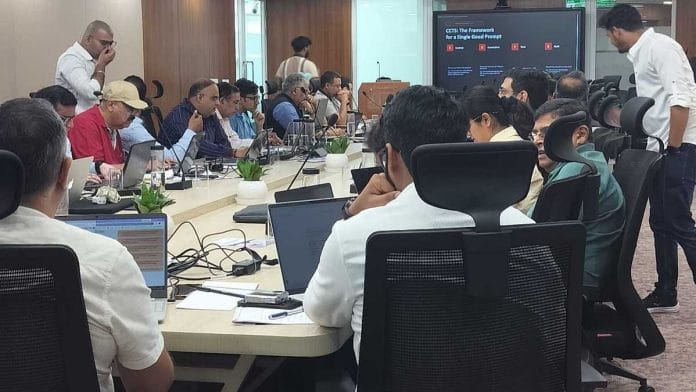
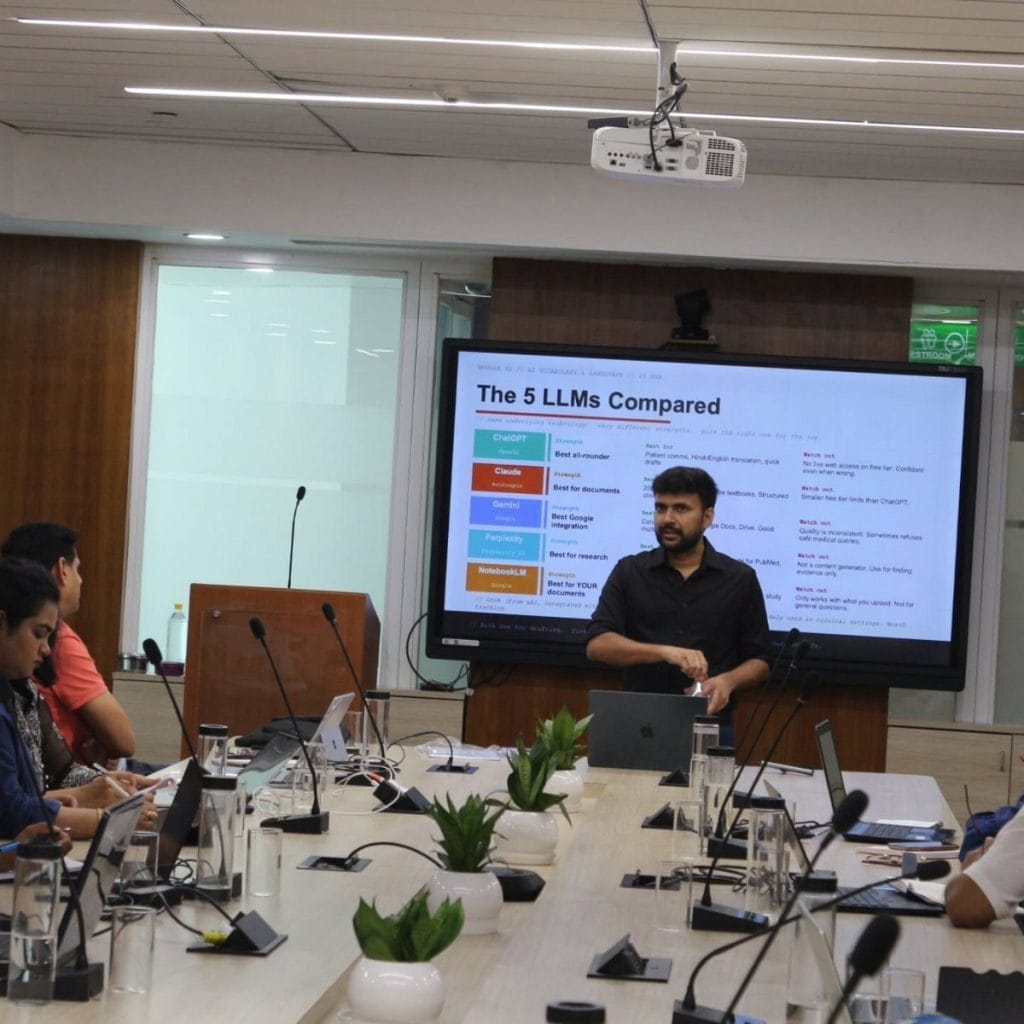
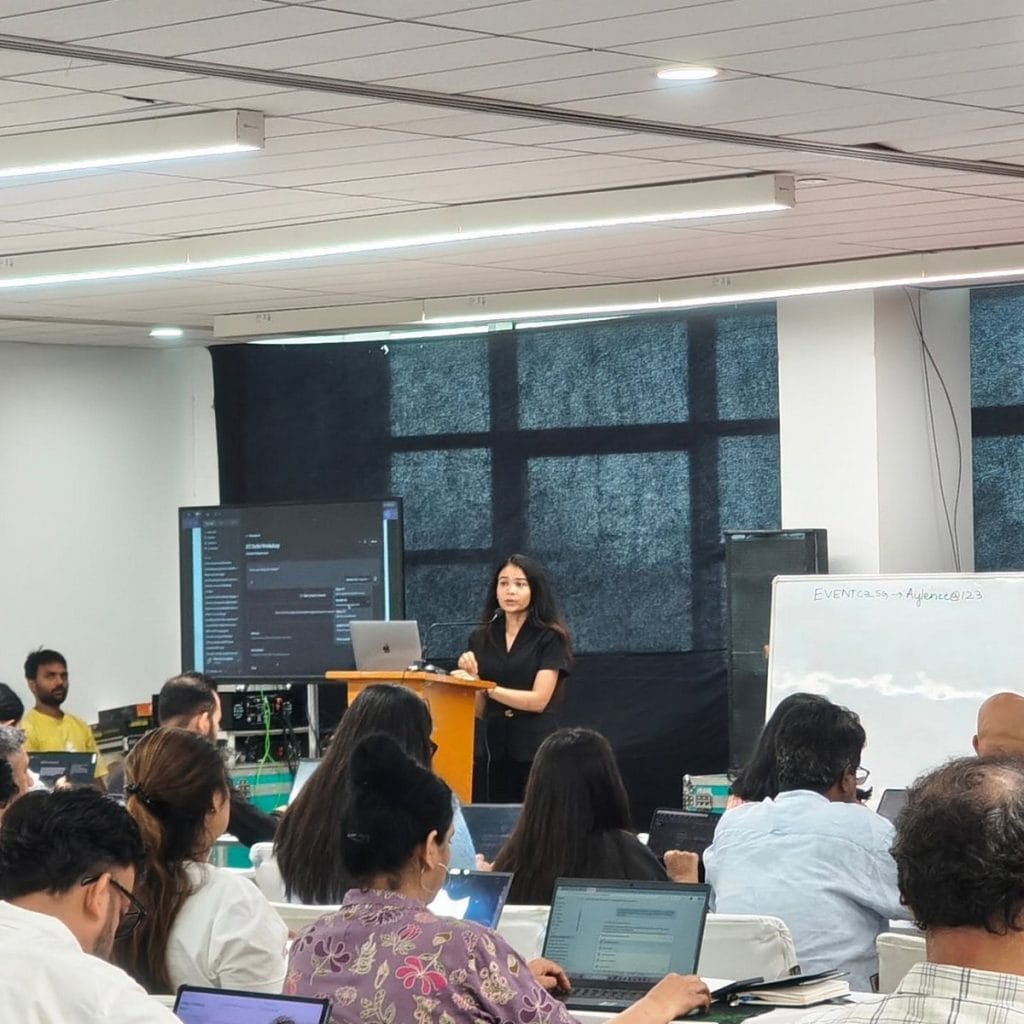
New Delhi: Armed with notepads and Agni gel pens, around 40 advocates and lawyers of the Supreme Court and High Court gathered on a Sunday morning at IIT Delhi’s Research and Innovation Park for a day-long workshop to equip themselves for a brave new world — AI for Lawyers.
On the screen, a PowerPoint slide read: “The anatomy of a great prompt.” It was an important break from their careers of poring over court judgments. A necessary skill upgrade.
The classroom was mostly men, and for some, their inability to connect to the Wi-Fi betrayed their age. The AI wave had turned even senior lawyers into students. Some were looking for a way to work more efficiently, others were on a mission to use AI as a way to analyse the judicial system itself.
“Every judgement is data, and we have 70 years of that data. Using it, we can find a judge’s pattern of making decisions. Then when that pattern is suddenly different, we’ll know if there has been any interference,” said 68-year-old Pramath Nath Misra, Supreme Court advocate who has spent nearly half a century in those black robes.
A few streets away, IIT Delhi students too had ChatGPT and Claude open on their laptops. And they were not just computer science students. Biology, chemistry, management and social science students were using AI too. It’s not any different for the humanities.
From being derided as a shortcut and cheating tool, AI in higher education has entered a new phase. It is now its own area of expertise across fields, taught everywhere from workshops for professionals to university seminars.
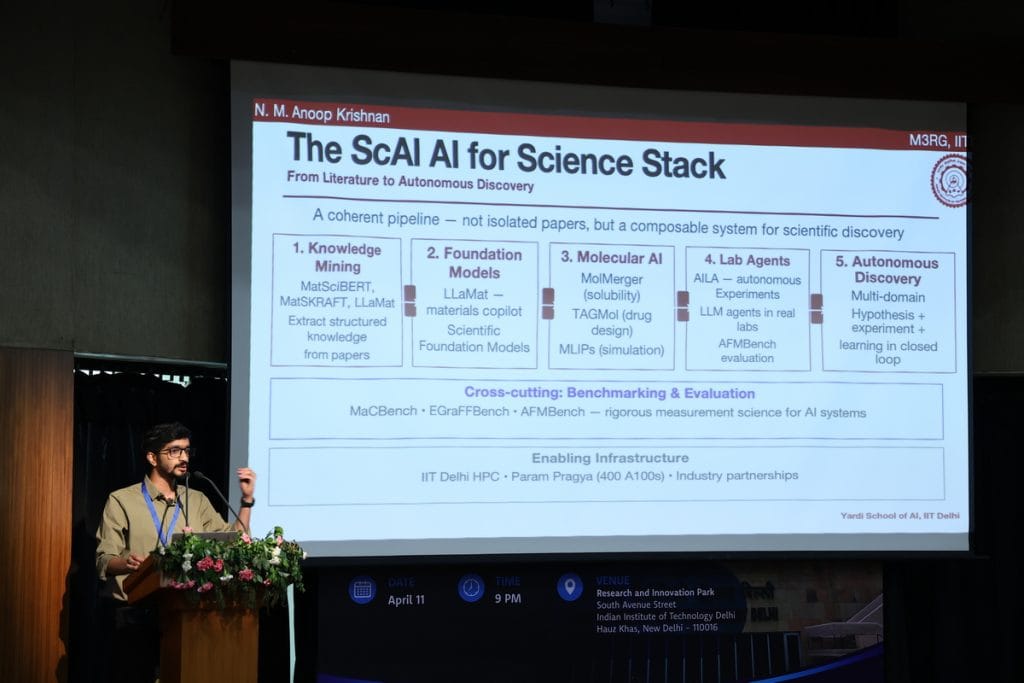
At IIT Madras and IIT Kanpur, faculty are telling students that AI is more than ChatGPT. They are introducing new AI-focused courses and integrating the technology into teaching and research. BITS Pilani now offers AI courses to first-year students across disciplines. At IISER Pune, there is no blanket AI policy, but a professor has begun training young researchers to use it for research.
“The larger goal is not to make every student into an AI expert, but to make sure every graduate is AI-literate. Even civil engineers could use it for infrastructure planning, humanities students could analyse large text collections,” said IIT Delhi director Rangan Banerjee.
There is no national blueprint yet for how higher education should embrace AI, but in many institutions, it is no longer being treated as the preserve of machine learning or computer science students. There is now a palpable panic among students across streams and mid-career professionals to catch up with the transformative power of AI. They don’t want to be left behind in the race.
The goal of AI education should not be just teaching people how to type prompts. The goal should be to teach people how to ask better questions, how to verify the outputs they receive, how to identify mistakes, and how to use AI responsibly. That is where academia has a very important role to play
-Suthirth Dey, computational biologist, IISER Pune
“People get AI FOMO. They see people doing amazing things with AI on Instagram and feel they’re doing nothing. For them, someone has climbed a mountain and they feel they’re just at the base,” said Hemant Bindal, founder of Aylence, which conducts AI workshops for lawyers, doctors, HR executives and other professionals.
There’s now a burgeoning market for AI skill-building. At IIT Delhi, the Continuing Education Programme (CEP) for working professionals offers a certificate course in Generative AI and Applied Data Science at a cost of Rs 1,95,000. IISER Pune runs three-day research workshops on using AI in research, ranging from Rs 11,000 for Master’s students to Rs 23,000 for faculty and professionals. Many students also sign up for Coursera modules, priced at around Rs 2,000, or spend hours soaking in free lectures from universities such as Stanford, Oxford, Yale and Harvard on YouTube.
Different universities will respond in different ways, according to Anil Sahasrabudhe, former chairman of the All India Council for Technical Education (AICTE).
“Each university will make its curriculum based on the needs of the region. A one-size-fits-all approach is neither advocated nor a requirement,” he told ThePrint. “Two-three years back no one had even imagined what the impact of AI would be. Today the whole world is aware of it, including in remote rural areas. So it is a simple matter of demand and supply. The demand from students is there, and universities are responding.”
Also Read: How IITM Pune is trying to crack India’s weather
How IIT classrooms are using AI
IIT Delhi director Rangan Banerjee’s PhD days are far behind him, but academia has made sure he remains a student. Watching the younger generation learn not just to use AI tools, but to unpack what goes on inside the ‘black box’, gave him two new priorities: set up an AI ethics committee and also give students the best of AI tools available.
The institute’s Yardi School of AI, launched in 2020, runs the flagship MTech in Machine Intelligence & Data Science (MINDS). It also offers electives such as
‘Principles of Artificial Intelligence’ and ‘Special Module in Machine Learning’ to students across disciplines.
“We are now looking at having an agreement with OpenAI. We are thinking of ChatGPT, Gemini and also Sarvam AI, where we will pay for the latest tools so that our students and faculty have access,” said Banerjee.
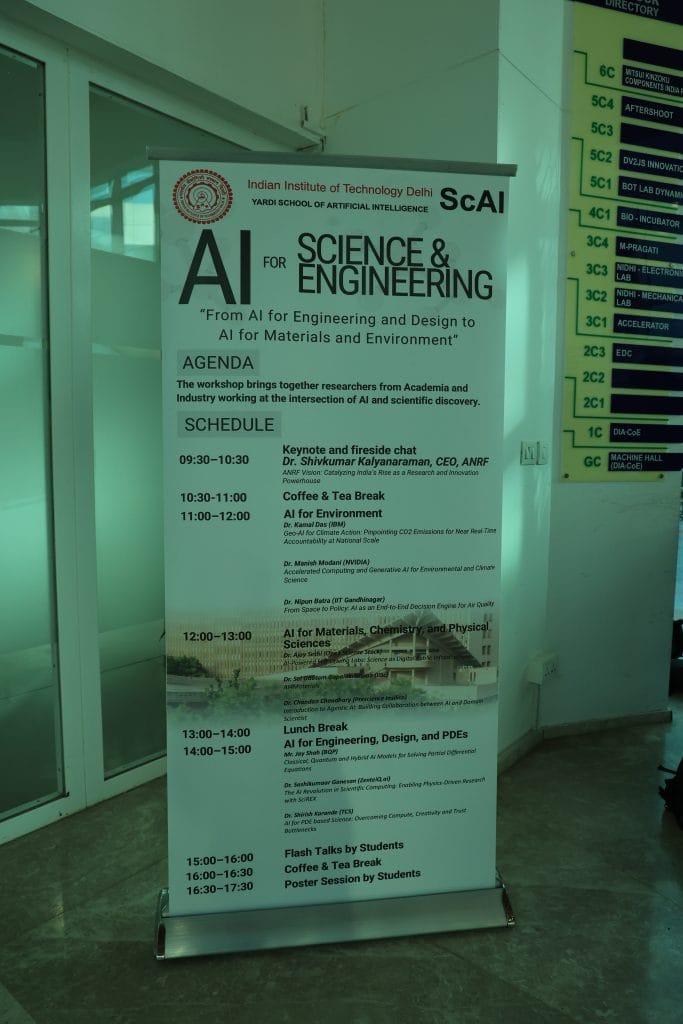
But AI at IIT Delhi is not simply about productivity. One ongoing project, developed with the Ministry of Tribal Affairs, uses an AI platform called Adi Vaani to preserve and support tribal languages such as Santali, Bhili and Mundari to ensure they are not left behind in the digital age. Another recent project is to use AI to assist students from different regions so that a lack of English proficiency doesn’t become a barrier to learning.
“If you need language support, we record all first-year courses and use an AI tool to translate that course into different languages. It’s like watching a French movie with English subtitles,” Banerjee said. “You register, and then you can watch today’s lecture tomorrow. We did it on a trial basis for one course last semester. This year, we are doing it for all first-year courses.”
It’s a learning curve for Banerjee as well, but he also suggests that the human brain must stay in charge.
“You have to adapt to the change. But you have to have your sense of perspective and direction. You can’t leave it to AI and the machine,” he said.
The larger goal is not to make every student into an AI expert, but to make sure every graduate is AI-literate. Even civil engineers could use it for infrastructure planning, humanities students could analyse large text collections
-Rangan Banerjee, IIT Delhi director
A similar philosophy has emerged at IIT Madras too. The institution established the Wadhwani School of Data Science and AI in 2024 and has been among the country’s leading institutions to embrace AI.
“We have courses about AI, but I think every course should get an AI flavour, to see how,” said Karthik Raman, a professor at the Wadhwani School, where his research focuses on computational systems biology, microbiome networks, and metabolic engineering.
Nearly 40 per cent of the curriculum consists of electives, which gives students the flexibility to take AI and data science courses along with their main subjects. A larger curriculum revamp is in the works now.
“The course revamp is planned, but honestly I think people are dragging their feet,” he said.
Meanwhile, at other institutions, individual AI evangelists are leading the way.
AI meets R&D
At IISER Pune, computational biologist Suthirth Dey runs a series of workshops under the banner ‘AI for Research’. The researchers who enroll aren’t taught simply to write better prompts. They learn to use AI to sift through thousands of research papers, spot patterns across large datasets and brainstorm ideas before stepping into the lab.
“The response has been very, very positive,” Dey said. “AI is evolving so rapidly that it is difficult for researchers to understand the current state of affairs.”
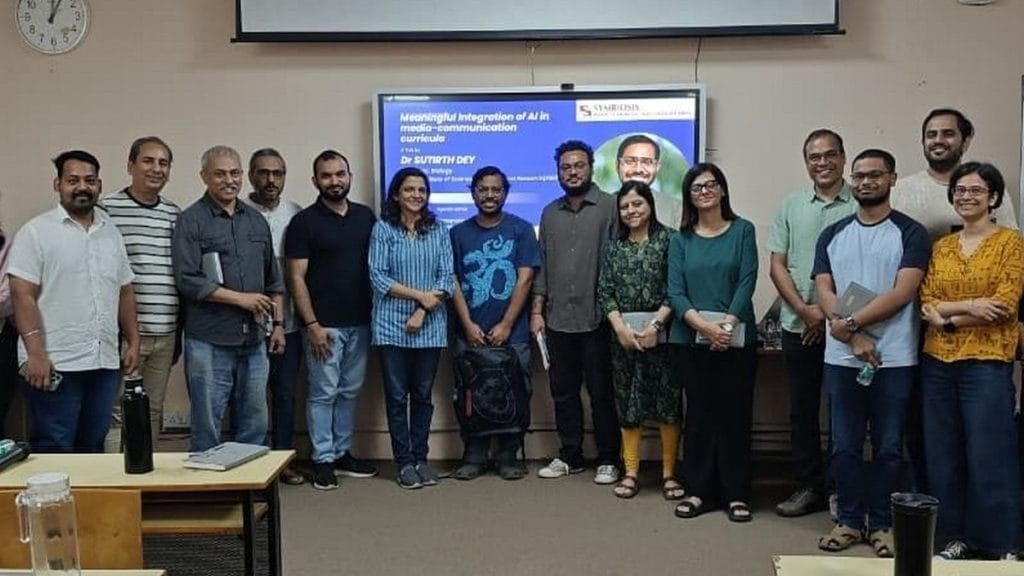
Instead of reading hundreds of papers one after another, researchers can upload a large body of literature into an AI model and ask it to identify recurring themes, contradictions or unexplored questions. Work that once took weeks can now be completed in hours. Dey has also seen it used in the search for drug candidates— compounds that look promising as potential medicines.
“Researchers wanted to discover a drug candidate, so they fired up some AI agents. The agents did all the background work and came up with candidates, which were then looked at by humans,” he said.
One of Dey’s students at IISER Pune, Anish Koner, began his PhD in 2021. Back then, he never imagined he would use AI as much as he does today. Once a student at Ramakrishna Mission Vidyalaya in Kolkata with a fascination for Bengali novels, Koner is now an experimental biologist.
“Back then the only kind of work we could imagine for AI was that a robot would come and do some of our work. But that was so far-fetched. In the last two years things have changed dramatically,” said Koner.
Companions vs competitors
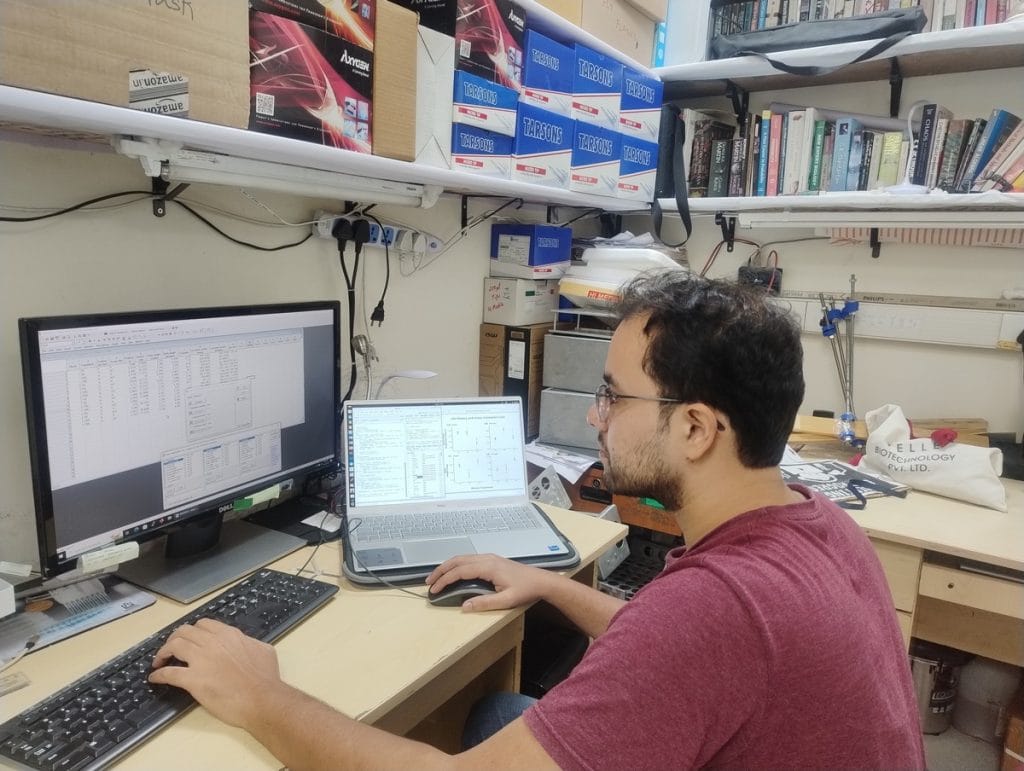
For PhD students like Koner, one of the things AI has simplified is coding. Earlier, when he needed to carry out deep data analysis, he would trawl websites hoping someone had written code he could borrow. Today, Claude does the job for him.
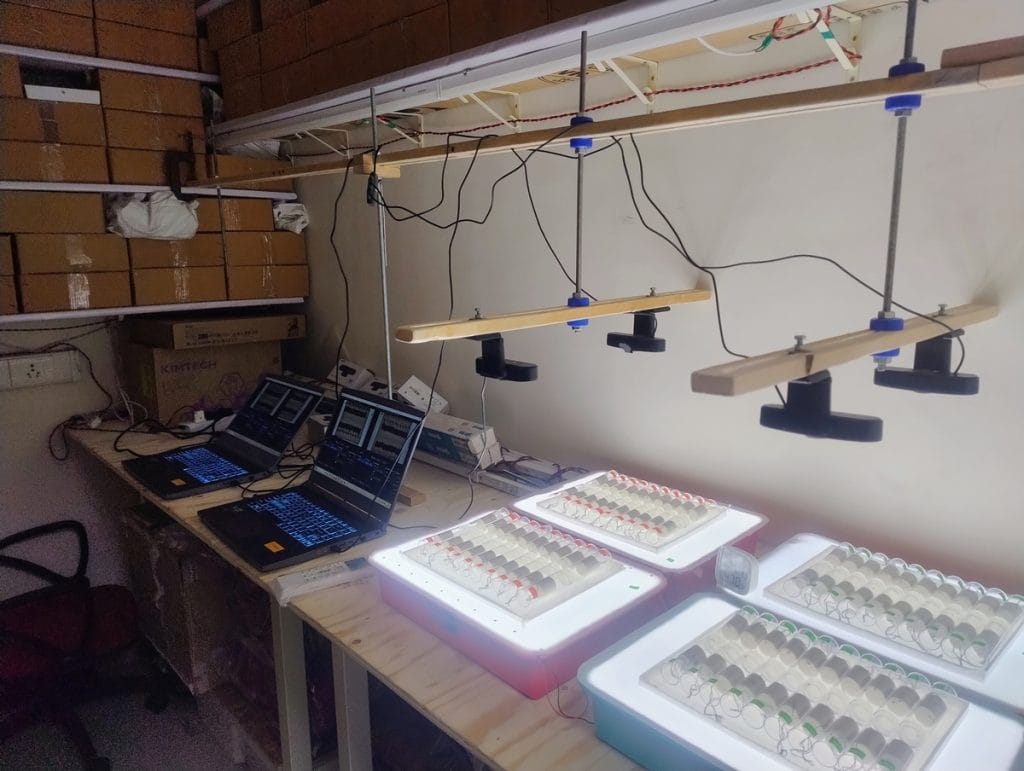
Unlike many others, Koner does not see AI as a threat. AI is Koner’s companion in the lab as he studies the behaviour of fruit flies. It helps him sift through data, insect videos and hours of webcam footage.
“But AI can’t actually capture the fruit flies and put them into experimental arenas,” laughed Koner.
For researchers in theoretical fields, the equation is a little more uneasy.
“Theoretical subjects are the most vulnerable to the danger of AI. They don’t involve a lot of experimental data,” said TR Harikrishnan, a third-year PhD student studying combinatorial representation theory at the Institute of Mathematical Sciences (IMSc) in Chennai. “You have to develop your own theories or prove something with existing data. For now, AI is great at that.”
Harikrishnan recalls that not long ago, AI could barely solve basic maths problems, but recently an OpenAI reasoning model disproved a long-standing conjecture by mathematician Paul Erdos.
Despite his misgivings, Harikrishnan uses AI in his own work too.
“I mainly use AI tools for literature reviews and technical things. Earlier, it would take days or weeks to find existing research papers related to my problem, but now it takes only a few minutes,” he said.
Preparing for the AI natives
For Kavya Jain, a fourth-year student of production and industrial engineering at IIT Delhi, AI has become a routine part of academic life.
“My day-to-day interaction with AI is large language models: Claude, ChatGPT, Gemini. I use AI to simplify my work most of the time… It has changed the traditional way of studying things,” he said.
As his graduation draws nearer, Jain admits that AI is a career necessity now.
“There are more opportunities for data analyst jobs now. From a learning perspective, it is quite good that these courses have been integrated,” he said.
For Jain and many other students across campuses, AI is still more a tool than technology to be built. But this is likely to change soon, says Anil Sahasrabudhe. It won’t be many years before the next-gen AI natives will be enrolling in colleges.
“Right from class 3 onwards, age-appropriate AI elements are being added into courses. By the time this generation is in 10th and 12th standard, they would have learned so many things,” he said. “If they are coming to college or university 10 years down the line, you can imagine what their aspirations and expectations will be. We have to meet their aspirations.”
Preserving the ‘intellectual struggle’
As universities carve out space for AI in their curricula, they’re also being forced to ask what it means for teaching and learning. And indeed, for thinking.
In 2021, IIT Delhi began a major once-in-a-decade curriculum revamp. Google Forms were sent around as the administration brainstormed and sought feedback from alumni and existing students.
“We cannot simply start teaching AI and ignore core subjects, but we realised that some integration was required. So first we made it compulsory that each department would have an ‘emerging trends and technology’ course. This is to see how AI is useful for that department,” said Abhijeet Raj, professor and associate dean, curriculum, at IIT Delhi.
Raj, a chemical engineer, uses thermodynamics as an example. Students analysing reactions through differential equations were once expected to write code from scratch. Today, they are encouraged to use tools like Claude Code to test their solutions.
The institute is also setting up a Centre for Learning and Teaching, which will invite AI experts to train faculty on how to integrate AI tools into their teaching and courses.
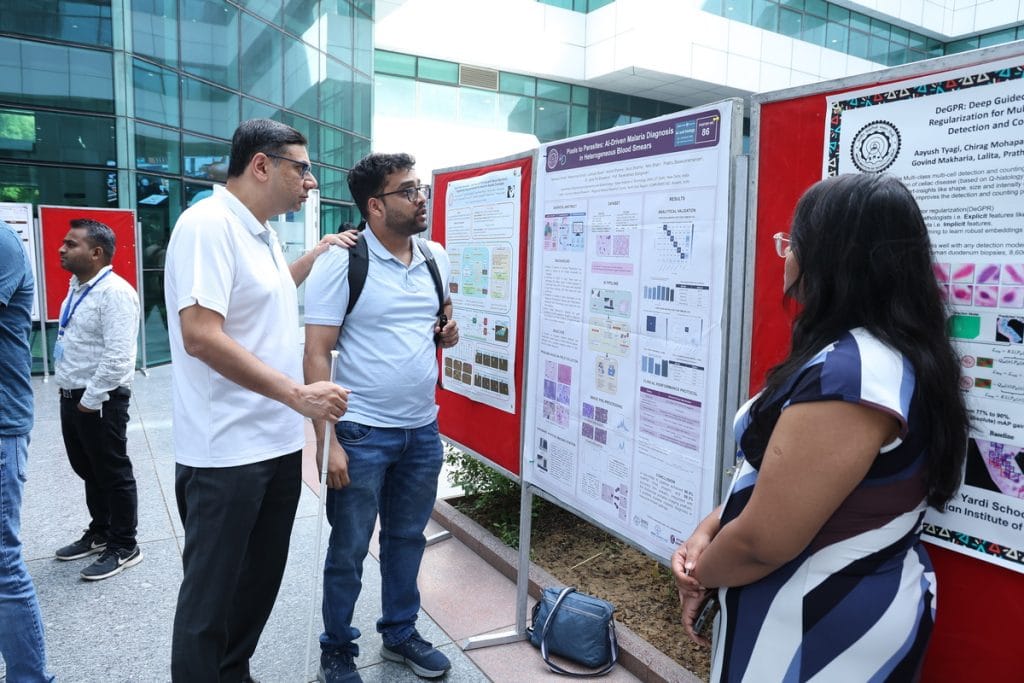
Even before AI shook the world, IIT Delhi had set up the Yardi School of Artificial Intelligence in 2020. It has dedicated students studying AI but also welcomes others from all disciplines to take electives. The boom was a long time in the making, he points out.
Two-three years back no one had even imagined what the impact of AI would be. Today the whole world is aware of it, including in remote rural areas. So it is a simple matter of demand and supply. The demand from students is there, and universities are responding
-Anil Sahasrabudhe, former chairman, AICTE
“If you look at the history of artificial intelligence, it was being studied even in the 80s,” he said. “The processors have just gotten faster.”
At IIT Kanpur, too, a curriculum revamp is underway. But the institute’s director Manindra Agrawal suggests AI is not necessarily the fulcrum.
“The change is not AI-centric but learning-centric,” he said.
BITS Pilani, meanwhile, has earmarked dedicated funds across its campuses to spur AI research. But vice chancellor Rama Gopal Rao says the core challenge is pedagogical.
“Generative AI has forced universities to rethink many long-held assumptions about learning and assessment,” he said. “If an assignment only tests information recall, AI can now produce a reasonably good answer within seconds. This means universities need to move towards assessments that emphasise understanding, originality, judgement, experimentation, design thinking and problem solving.”
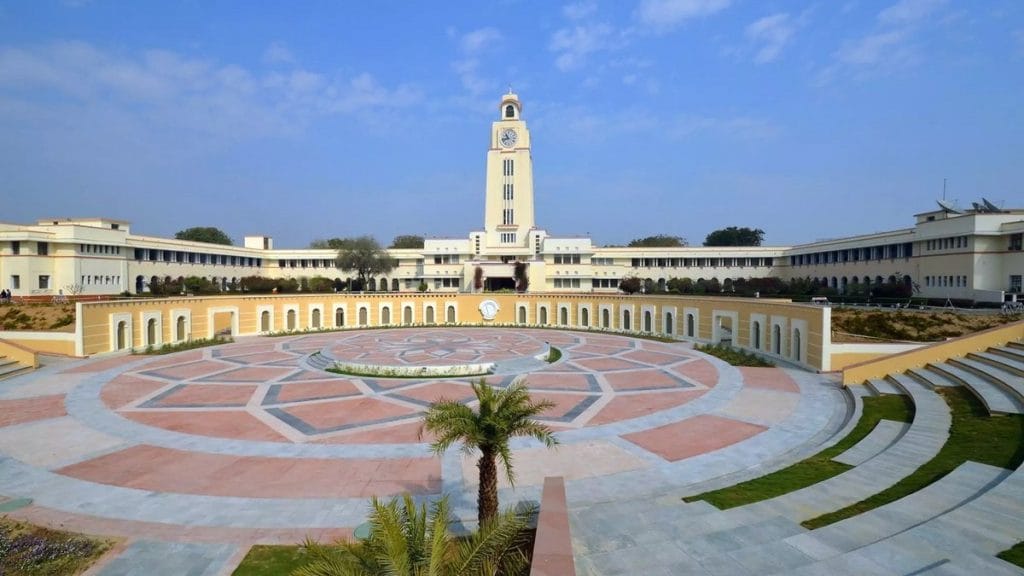
Rao says it is more important to make sure students don’t stop wrestling with ideas and thinking for themselves.
“Universities must preserve that intellectual struggle,” he said.
For Suthirth Dey, too, the idea that AI education is just about teaching people how to coax better answers from LLMs is short-sighted.
“The goal of AI education should not be just teaching people how to type prompts. The goal should be to teach people how to ask better questions, how to verify the outputs they receive, how to identify mistakes, and how to use AI responsibly,” he said. “That is where academia has a very important role to play. Universities have always been places where we teach people not just information, but how to think. AI changes the tools available to us, but it does not change the fundamental purpose of education.”
Also Read: Indian techies returning to Hyderabad from US with expired H1B. Who’s helping them find jobs?
When doctors and lawyers join class
The rush to learn AI is not limited to students. Older generations and working professionals too are returning to classrooms to make sure they don’t get left behind.
“People in school adapted to it. But working professionals did not because they didn’t have any training,” said Hemant Bindal, founder of Aylence. At a cost of Rs 2,000-3,000, it offers courses tailored to professionals from different arenas.
The company started out in digital marketing in 2023 but pivoted to education a year later. The response was immediate. Bindal recalled that their first workshop, organised at IIT Delhi, drew nearly 1,100 people.
“When we first launched, US companies were firing people a lot. There was a lot of fear that AI would replace your job,” said Bindal, adding that each course is designed after consultations with experts from the particular industry or field.
Dermatologist Dr Deepali Bhardwaj, who attended an Aylence workshop a few months ago, says mid-career professionals often enrol out of anxiety. For her, though, the attraction was reducing the burden of everyday tasks.
“AI can be used in my profession as a doctor who is running a clinic, as a small-scale entrepreneur, by automating my staff attendance, by automating the product orders, automating appointments, automating patient records,” Bhardwaj said.
But the workshop she attended focused on prompt engineering, which she found too technical and coding-heavy. She is still looking for an AI course better tailored to her needs.
Back at IIT Delhi’s R&I Park that Sunday, the lawyers at the Aylence workshop had their own little competition: who was the oldest in the room?
AI can be used in my profession as a doctor who is running a clinic, as a small-scale entrepreneur, by automating my staff attendance, by automating the product orders, automating appointments, automating patient records
-Dr Deepali Bhardwaj, dermatologist
As the workshop moved from theory to practice, several of them stopped following the PPT and instead turned to their own screens—typing out prompts and comparing answers.
One clutch of lawyers had arrived at the workshop with a litany of complaints about AI. One said ChatGPT’s Hindi-to-English translation skills are abominable, while others complained about AI hallucinations and the “overconfidence” of LLMs.
“We can’t trust it. I once asked it for a judgement, it made up a fake case,” said one lawyer, asking to remain anonymous.
“Its motto is simple. If you cannot convince us, confuse us,” came a reply, and the group burst into laughter.
By lunchtime, the lawyers were a little better at making ChatGPT and Claude do their bidding. They had also been warned to take AI’s answers with several pinches of salt.
But Pramath Nath Misra was dissatisfied. It’s not enough for him to use AI as an efficiency tool. He wants to know how he can use it to surface hidden patterns in judgments and crack thorny legal questions. He knows there’s a lot more to learn.
“These workshops are just about tools. They are just the beginning. Once we’ve mastered the tools, what we do with them is the real challenge,” said Misra.
(Edited by Asavari Singh)