






Mandwariya, Rajasthan: Sugary, desi ghee-soaked malpuas are at the centre of a bitter battle in Mandwariya, a village off the Sirohi highway in Rajasthan. Two halves of the same community have not sat together or spoken for over two years because of the dispute.
The reason is a funeral feast, the mrityu bhoj, that Rajasthan made illegal in 1960. One group of villagers allege that elders demand that bereaved families feed the entire village and those who refuse are socially ostracised until they pay a heavy fine and host an expensive penalty feast of malpuas, called a jheem.
Around 35-40 families in Mandwariya — one of eight Meghwal-dominated villages in the Barloot pargana — say they are living under “hukka-paani band”, a social boycott imposed after they refused to pay fines and malpua penalties for not holding lavish death feasts and other arbitrary ‘offences’.
“I am trying to liberate the community from this form of servitude,” said Mandwariya resident Ganesh Kumar, a farmer who refused to hold a mrityu bhoj after his mother’s death. “After all, a poor person simply cannot afford to do these things.”
The mrityu bhoj isn’t just Mandwariya’s problem. From villages in Bihar to Chhattisgarh to Rajasthan, bereavement has long brought financial ruin to families who sell land or borrow at extortionate rates to feed their entire village. The penalty for refusing is social shunning, and it can be just as ruinous. No one buys from their shop, comes to their weddings, or lets their children play together. Each death feast can draw thousands of guests and cost Rs 5 lakh-Rs 25 lakh. Sometimes, families even club it with weddings to save costs.
The biggest difficulty is that there is no mechanism to implement the law in Rajasthan. All the police force, all the teams, all the officers belong to the rural lobby… they don’t want to demolish the social structure, because if they do, the public will turn against them too.”
-Ramavtar Singh Chaudhary, advocate
In several pockets of Rajasthan now, people are fighting back. Some are feeding mourners roti-sabzi instead of ‘prescribed’ dishes such as dal-baati, malpuas, and gulab halwa. Others are going to the police or taking the panches to court. Rajasthan is the only state with a law against the practice, the Rajasthan Prevention of Mrityu Bhoj Act 1960, but even the threat of prison for up to one year hasn’t curbed the enforcers of the entrenched rural tradition.
In March 2025, while hearing a case involving caste-panchayat diktats, the Rajasthan High Court set up a five-member commission to investigate such practices. That case later became part of a batch of petitions from Sirohi, Barmer, Jodhpur, Balotra, Jalore, Nagaur and Beawar involving an almost identical pattern of self-declared caste panchayats imposing fines and ostracising families over marriage choices, financial disputes and refusal to fund feasts.
Ruling on the matter in April this year, the Jodhpur bench of the HC flagged a legal vacuum around social boycotts and urged the state to legislate against a practice that can amount to civil death — exclusion so total that it strips a person of ordinary social and economic life.
Advocate Ramavtar Singh Chaudhary, a member of the HC commission, told ThePrint that enforcement is where the law fails.
“The biggest difficulty is that there is no mechanism to implement the law in Rajasthan,” he said. “All the police force, all the teams, all the officers belong to the rural lobby… they don’t want to demolish the social structure, because if they do, the public will turn against them too.”
Mandwariya villagers describe a similar problem in their attempts to seek police intervention: they say the coercion they complain of is simply denied.
Also Read: A Mumbai teen’s mission is helping workers register on e-Shram. Govt site is daunting
Mandwariya’s malpua face-off
At the entrance to Mandwariya, a cluster of earthen matkas sits filled with water through the summer for strangers who stop to drink. Small plastic bowls of grain hang from the trees for birds. It is a village that has thought carefully about the comfort of outsiders. It has been less kind to its own.
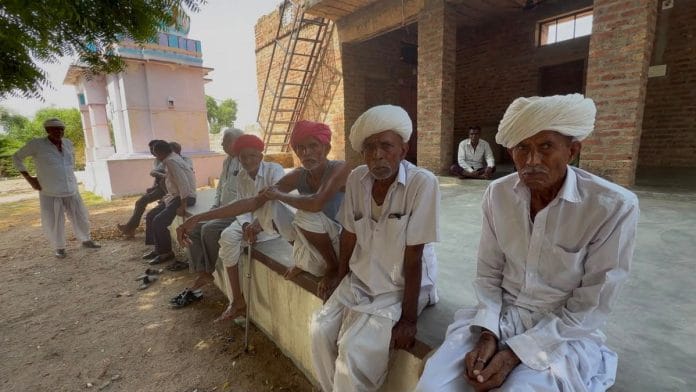
A few hundred metres inside, at the village mandir, two halves of the same community will no longer sit together. On one side of the rift are the panches and their supporters. On the other are the families challenging their authority, from young men in shirts and trousers to their fathers and grandfathers in white cotton kurta-dhotis with paghs wound around their heads.
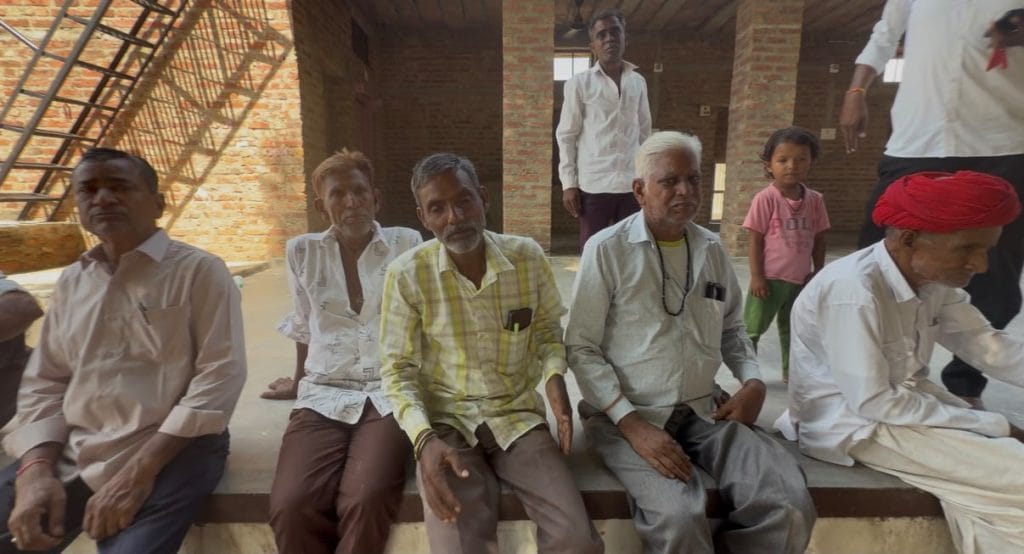
Discontent over community diktats and fines had simmered for decades. But some families began openly defying the panches a few years ago. Ganesh Kumar was one of them. After his mother died, he refused to hold a mrityu bhoj.
“They impose fines on us for various things…such as if someone’s sister elopes, if someone wears a suit to a wedding, or if someone runs off with a girl. On all such occasions we are forced to accept these penalties from the village leadership,” he said. “If we refuse, we are made to provide a feast of malpuas as a penalty; they say, ‘Do as we say, and we will take you back into the community.’”
This is the biggest stigma in our society. It plays the biggest role in keeping poor people poor. We are two brothers, and both of us decided we have to stand against it. If your human emotions are alive, you should not do this
-Baldev Singh “Manav”, social activist and retired colonel
In this village of mostly farmers who grow bajra, maize and moong, there is no commercial street, only a scatter of small home-run kirana shops. Many families struggle even with basic expenses. A large private school opened only a few years ago; before that, much of the older generation had never been to school, and many elders still speak almost entirely in Marwari.
The Meghwal samaj accounts for around 250 households here. Throughout the cluster of villages in Barloot pargana, feast and fine rules are enforced through an informal caste-panchayat structure: village panches make day-to-day decisions, but answer to a senior chief leader who presides over the entire eight-village council.
Such is the power of their hukka-paani boycott that even opponents sometimes give in. If a wedding or death comes up, relatives may be unable to attend or take part in the rites. To get back into the fold, families cough up the fine and host the malpua jheem.
For social activist and retired Colonel Baldev Singh “Manav”, standing one’s ground is the only way out. In Jodhpur district, he and his younger brother Dharamaram skipped the grand feast after their father died last year and instead served mourners a plain meal of dal, roti and sabzi.
“This is the biggest stigma in our society,” Singh said. “It plays the biggest role in keeping poor people poor. We are two brothers, and both of us decided we have to stand against it. If your human emotions are alive, you should not do this.”
A friend I grew up with is getting married, but I cannot attend because my family has been ostracised. Just yesterday, he came to tell me about the wedding. He explained that if he sent me an invitation, he would have to pay a fine
-Daya Lal Meghwal, Mandwariya shopkeeper
The old custom was rooted in feeding family members and visitors during the twelve days of mourning, followed by a modest closing meal for priests, according to him. Over the decades, it has curdled into something closer to a competitive, days-long display of social standing and wealth. He still attends other families’ mrityu bhoj as a mourner, but pointedly eats nothing.
‘This custom will not stop’
Resolving disputes within the eight-village hierarchy is not an easy task. Mandwariya resident Jaisa Ram alleged that families seeking a settlement must first approach the senior community leader, and then placate their local panches, spending money at each stage.
He recounted that he once asked his own panch to stop the practice and was told: “We intend to continue feasting on malpuas; this custom will not stop.”
Jaisa Ram added that he genuinely could not afford the feast even if he wanted to hold one.
“Even if you are poor, you are still expected to serve malpua; fail to do so, and you are cast out of the community,” he said. “I am a poor man. How am I supposed to afford a malpua feast?”
You’re only supposed to feed the village, not the whole world. Nobody here is forced to give malpuas — so why are people lying about it?
-Mandwariya woman allied with the panches
Four months ago, the panches allegedly held a meeting to which only villagers who had never questioned their authority were invited.
“Even if we plead with them for mercy, it doesn’t work,” said Ganesh Kumar.
Many families say they have been paying for funeral feasts in instalments for years. This is even though the Rajasthan Prevention of Mrityu Bhoj Act, 1960, prohibits not only the feasts but lending or borrowing money to fund them. It also requires sarpanches, panches, patwaris and lambardars to report violations to a magistrate. Violators can face up to a year in prison, but Mandwariya residents say the law exists mostly on paper.
Most of the panches and their supporters refused to speak to ThePrint. But one woman who said she was allied with them rejected the allegation that families are forced to serve pricey malpuas.
“You’re only supposed to feed the village, not the whole world,” she said. “Nobody here is forced to give malpuas — so why are people lying about it?”
The boycott in daily life
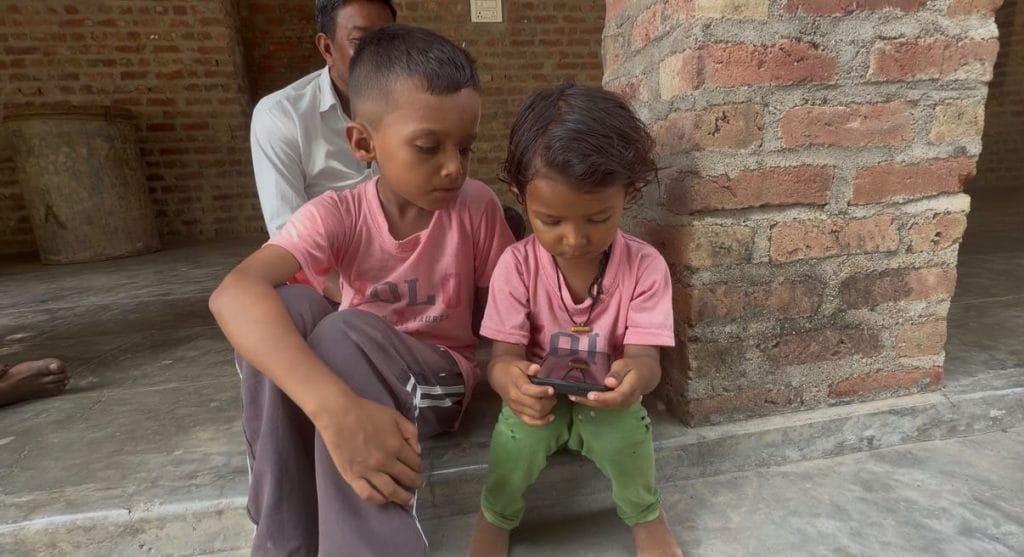
When 35-year-old Daya Lal Meghwal returned to Mandwariya four months ago after years of working in Ahmedabad, he tried to make a go of it with a small kirana shop and a vegetable business. Neither is doing well, and he blames the social boycott of his family, though he refuses to speak about what led to it.
“No one comes to buy anything; even when I started selling vegetables, no one would purchase them from me,” he said. “They refuse to sell us any goods themselves. They have completely excluded us from the community.”
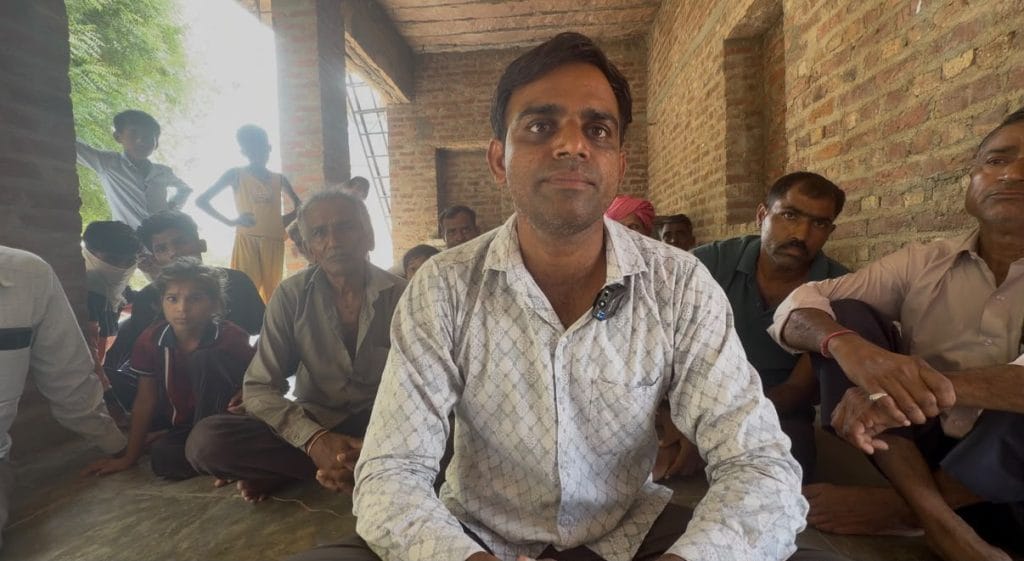
He added that children in the village are kept from playing with his own, and that relatives risk a Rs 11,000 fine if they attend or host any event connected to his household.
Even his dharam-behen, a ritual sister married into the same village, no longer visits or calls them over.
“If she were to invite us to her home, or if we wished to invite her to ours, a fine of Rs 11,000 would have to be paid,” he said. “This is why we do not invite her anymore. Nor does she ask us to visit, even though she used to come over frequently.”
Daya Lal said the boycott of his family has been observed across all eight villages. Even childhood friendships have not survived it.
“Even a friend I grew up with is getting married, but I cannot attend because my family has been ostracised,” he added. “Just yesterday, he came to tell me about the wedding. He explained that if he sent me an invitation, he would have to pay a fine.”
If not malpuas, then alcohol and coconut water
The malpua jheem is a weapon deployed to penalise almost any challenge to the panches’ authority, allege those at the receiving end.
When one elderly Mandwariya resident questioned the custom after his nephew died, his family was fined Rs 11,000. Desperate to restore their standing, they eventually held the mrityu bhoj. But though the panches turned up, they left without eating the malpuas that had been prepared, in what was another subtle form of ostracism.
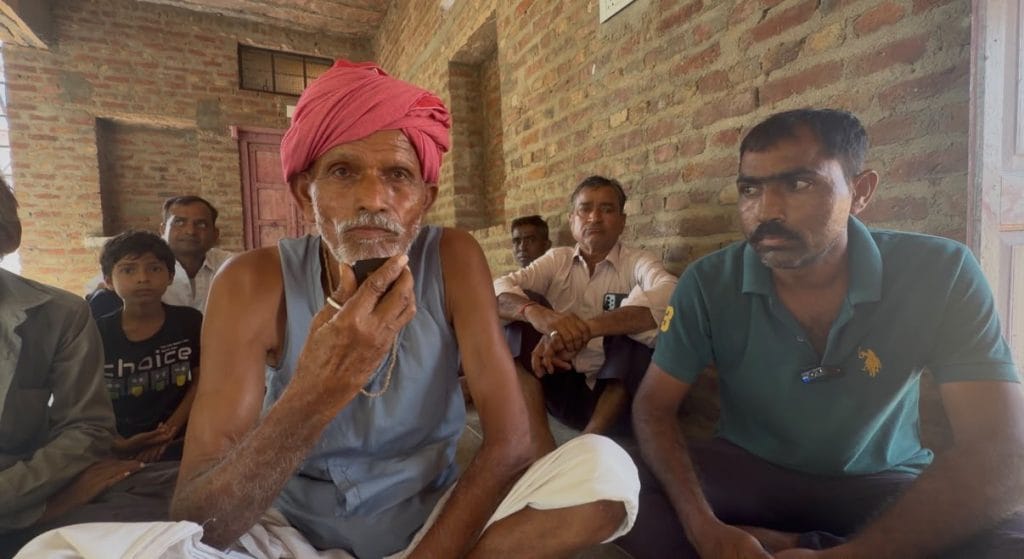
“We are speaking about this here now, but once word reaches the panches, they will be displeased with us,” said the man, with a red pagh around his head. “Set them all straight — tell them not to do such things, to mend their ways, and not to harass the poor.”
Even domestic heartbreaks can rack up a steep bill. Another villager said he was penalised after his daughter returned home when her husband left her for being unable to conceive. The panches treated her return as a transgression requiring penance. When he let it be known he couldn’t afford a malpua feast, he was given a concession — paying the running monthly costs of community gatherings, including alcohol and coconut water. He ended up spending Rs 51,000.
Villagers estimate that a single jheem costs around Rs 1 lakh. They argue that even if a penalty is extracted, the money should instead be put back into the community.
“The money currently paid as a fine should instead be used for constructive purposes, such as for education or to support those who are financially weak during times of hardship. Stop mrityu bhoj and malpua jheem. It is an outdated social evil,” said Daya Lal.
An escalating fight
Fed up with going in circles, the shunned families complained to Barloot police station on 20 June that the panches had shut them out of village life with a hukka-paani band.
“We filed a complaint, but when the police approached the sarpanch, they were told to return in five to six days,” said a farmer in his 80s.
He alleged that the police had urged them to settle instead: “The police themselves are siding with the sarpanch, suggesting that the fine be paid, even if it is just a partial amount, and sending the complainants back.”
They also tried the patwari (village revenue official) and filed a formal appeal, but this did not go anywhere.
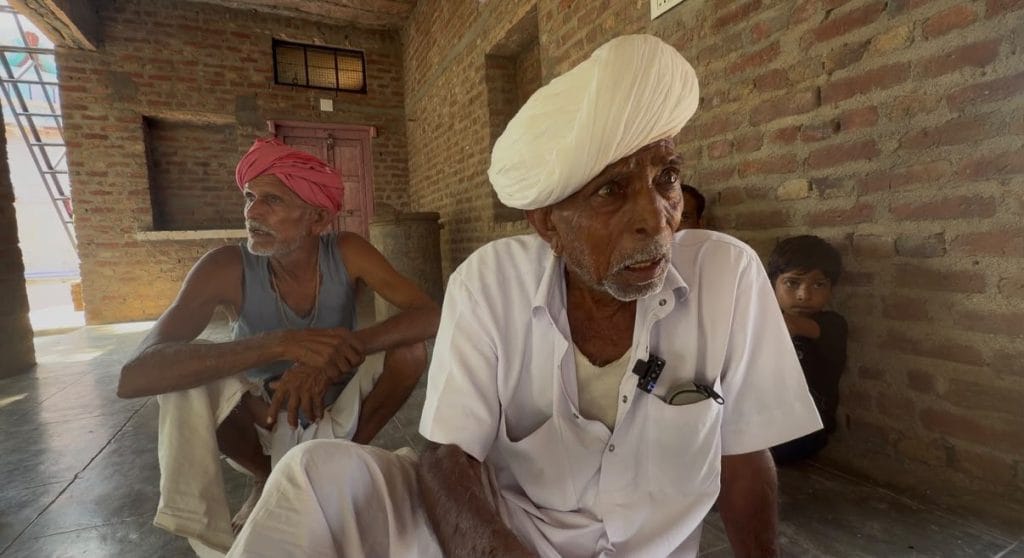
On 25 June, they escalated the fight. More than 30 Mandwariya residents signed or thumb-printed complaints to the Sirohi Superintendent of Police and district collector. They also staged a protest outside the collector’s office.
In the letters, accessed by ThePrint, they complained about the demands for money and malpua, alleging that they had been “tortured” over the mrityu bhoj issue and other perceived transgressions.
“If any member of the community even speaks to us, they too are slapped with an Rs 11,000 fine and forced to host a feast,” the letters read.
They add that a complaint was first filed at Barloot police station, but that no action had followed by the time the collector and SP were approached — and warn that responsibility for “anhoni ghatna” (untoward incident) in future would rest with the police and district administration.
A police complaint receipt from the SP’s office, dated 25 June 2026, records the matter as forwarded for inquiry. Within a day of the protest, the Hindi press published headlines such as “Ghee ke malpue na banane par samaj se nikala” (Expelled from society for not making ghee malpuas) and “Mrityubhoj mein nahi parose ghee ke malpue, 43 parivaron ko bhugatni padi ye saja” (Ghee malpuas were not served at the funeral feast; 43 families forced to pay this price).
Also Read: Jharkhand’s govt recruitment is stuck in a loop—aspirants pay with years of their lives
‘Whose help can we seek?’
As news of the malpua war spread, police and officials from the collector’s office visited Mandwariya on 27 June. But the Sirohi SP’s press note the next day told a markedly different story from that of the complainants.
The statement said 35-40 of Mandwariya’s roughly 120 families were on the complainants’ side, with around 80 on the other. But it said both groups denied any forced mrityu bhoj or malpua feast. The customary funeral meal is dal-baati, it added, and the inquiry found no evidence that anyone’s livelihood had been obstructed.
“There was no mrityu bhoj issue in the village, there was no evidence of any such thing taking place. The case was solved under the SHO before me, and the decision was taken based on testimonies of villagers,” Sirohi SHO Kailash Dan told ThePrint.
The police also disputed the claim of “hukka-paani band”, pointing out that there is no common village well to be cut off, and that every household has a water connection. However, this was an oddly literal interpretation of the phrase, which is a metaphor for social boycott.
The inquiry did acknowledge a two-to-three-year dispute over whether the panches have the right to make binding social decisions.
The burden, according to advocate Chaudhary, effectively falls on the aggrieved parties themselves.
“If the people who belong to a certain caste-based society themselves take the initiative and staunchly say they will not allow such programmes to be organised [they can stop it]. Otherwise, there is no mechanism to implement the law itself,” he said. “The officials generally visit for two hours and come back. The law can only be implemented when there is awareness in the public.”
Every caste panchayat, he noted, operates differently from village to village and area to area — which is part of why documenting, let alone prosecuting, a case like Mandwariya’s is so difficult.
In Mandwariya, the two communities still will not sit together at the temple.
“We are frustrated with every avenue we’ve tried,” said the octogenarian farmer. “What are we to do now? Whose help can we seek?”
(Edited by Asavari Singh)