







Ranchi: For five years, Shweta Pradhan, 39, has chased a government job through more than eight recruitment exams in Jharkhand. She has two master’s degrees, a B.Ed, D.Ed, M.Ed and a PhD. But in a recruitment system dogged by leaks, cancellations, court cases and delays, she is still waiting for a job.
“Sometimes it is a paper leak, sometimes seats are being sold, sometimes the system does not conduct the exam smoothly, the rules change, there are mistakes in paper checking,” Pradhan said, who started preparing for government job exams in 2021. “You name any fault that can happen in a government exam, and it has happened in Jharkhand.”
Jharkhand’s government recruitment system has turned the pursuit of a state job into an endless cycle of waiting, protesting and litigation. From JPSC and JSSC examinations to teacher eligibility tests and police recruitment, aspirants have spent years moving from one hurdle to the next — waiting for vacancies, then examinations, then results, and sometimes appointments — only to see the process derailed by leaks, cancellations, rule changes, disputed evaluations or court cases.
The JSSC Junior Engineer examination was cancelled in 2022 after a confirmed paper leak. The JSSC Combined Graduate Level examination was cancelled in 2024 after the paper was compromised, and its re-examination was later caught up in another round of allegations and litigation. Twelve JSSC recruitments had to be withdrawn after the High Court struck down parts of the recruitment rules. The Jharkhand Teacher Eligibility Test (JTET) was not held for nearly nine years.
The 11th–13th JPSC examination saw repeated answer-key corrections and an almost year-long wait for the Main result. And in 2026, the JPSC’s 14th Civil Services examination came under a CID investigation into alleged manipulation, while several other examinations were postponed.
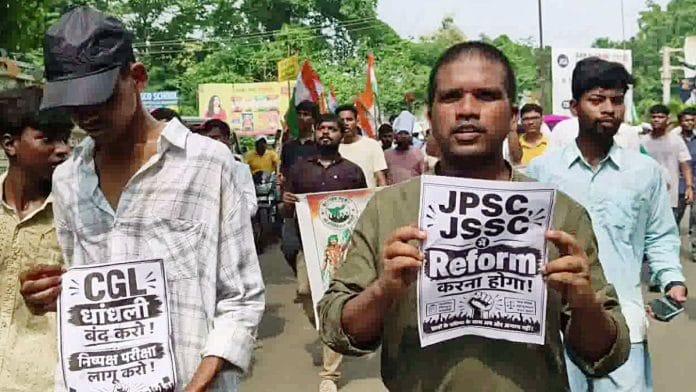
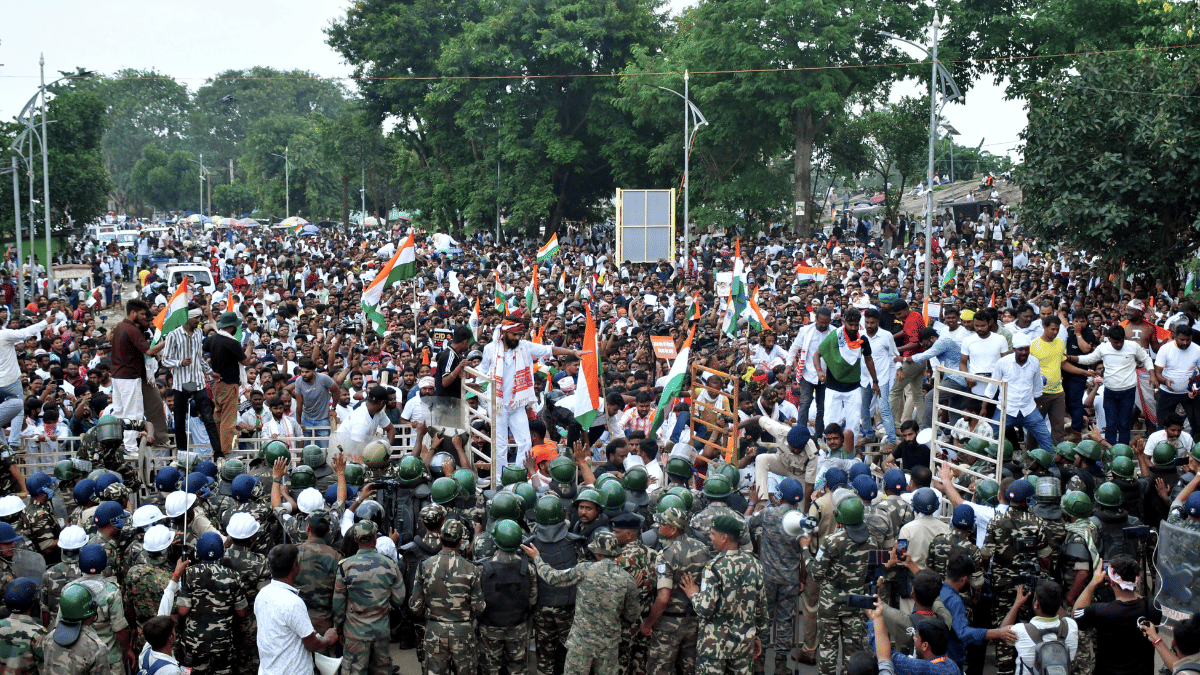
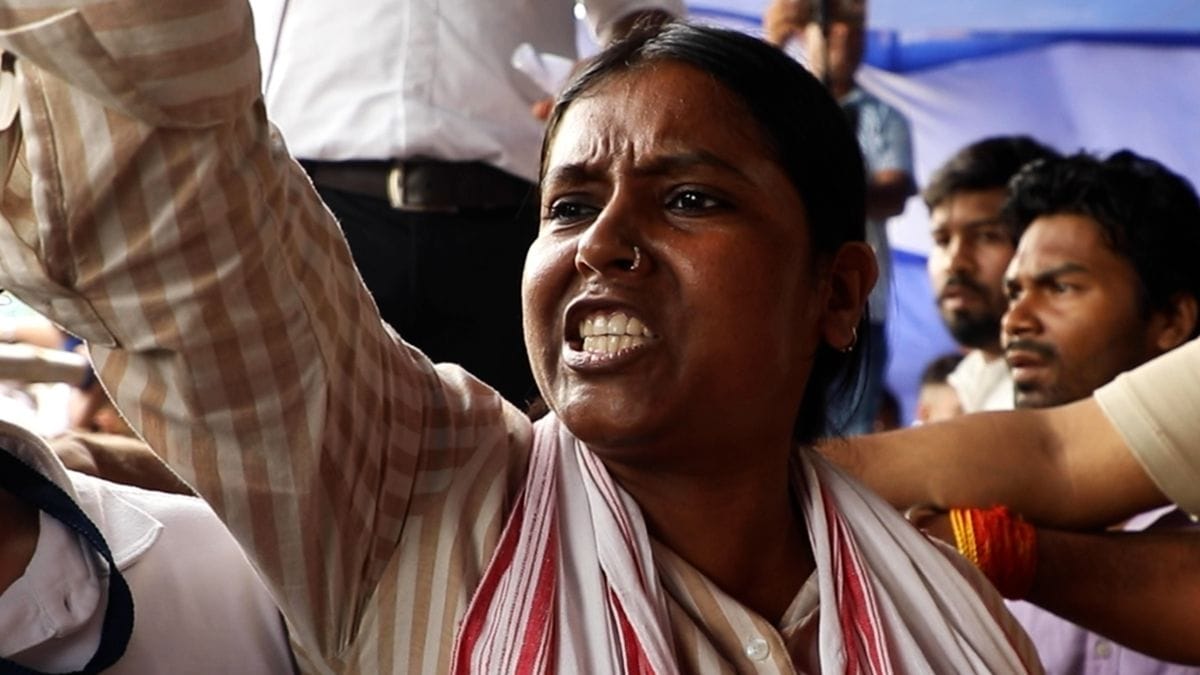
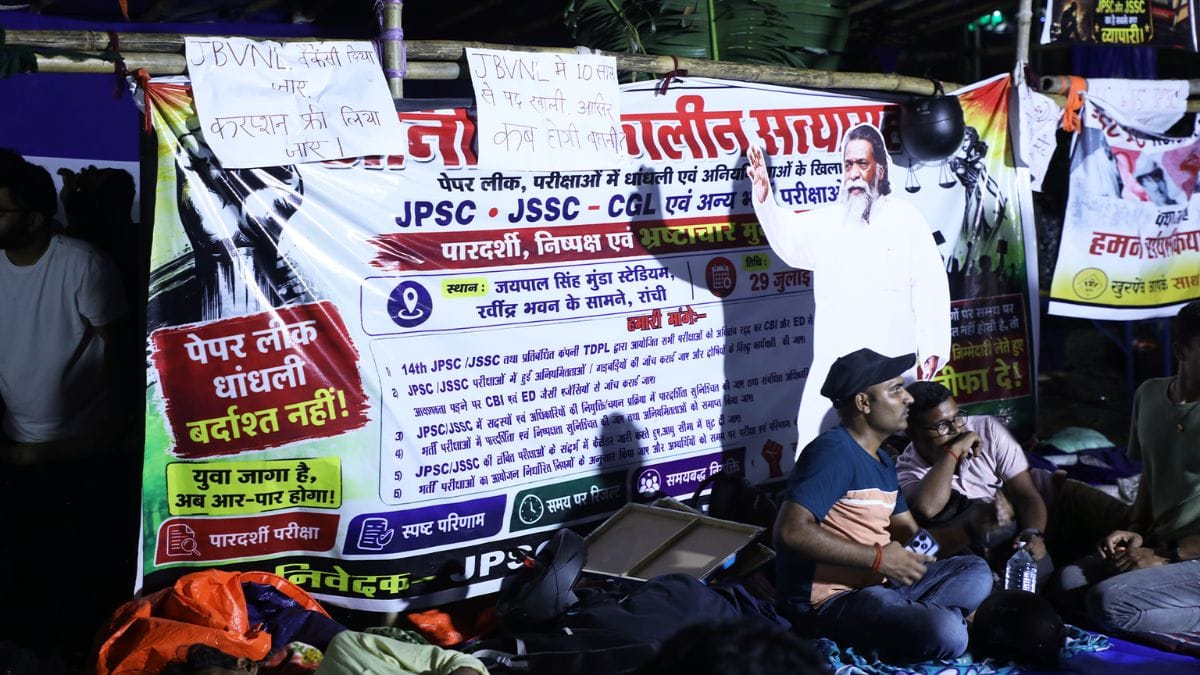
Now, with arrests in the latest JPSC investigation and fresh allegations of corruption in recruitment, the anger built up over years has spilled onto the streets. Students have been protesting in Ranchi for more than 20 days, holding hunger strikes and marches and attempting a Vidhan Sabha gherao. Police used lathicharge when protesters reached the Assembly. The government has accepted some of their demands, but students are pushing for a deeper investigation into the JSSC-CGL episode and a CBI probe, along with wider reforms and accountability.
In a state where government jobs remain among the most sought-after routes to economic security, a recruitment process that takes years can cost an aspirant more than time: eligibility windows close, candidates cross age limits, preparation has to be restarted and vacancies disappear while cases crawl through courts.
Jharkhand is not alone in struggling with delayed government recruitment. Aspirants in states such as Bihar, Uttar Pradesh and Rajasthan have also faced postponed exams, cancellations and litigation, but Jharkhand stands out for the frequency with which recruitment cycles have stretched across years.
For aspirants like Shweta Pradhan, the frustration stems from a cycle that has repeated itself for years.
“First we fight for the vacancy, then we fight so they will conduct the exam, after the exam we fight for the result, and when the result comes, we get to know that it is the money that got the job, not the hard work,” said Pradhan.
Now, with arrests in the latest JPSC investigation and fresh allegations of corruption in recruitment, the anger that has built up over years has spilled onto the streets. Students have been protesting in Ranchi for more than 20 days, holding hunger strikes, attempting a Vidhan Sabha gherao and getting lathicharged by the police. The government has accepted some of their demands, but students are pushing for a deeper investigation into the JSSC-CGL episode and a CBI probe, along with wider reforms and accountability.
Those who have seen the system from within say the rot goes deeper — to the way the recruiting commission itself has functioned.
“The government keeps hiring its people in the commission. Corruption is deeply rooted in the system and even a few chairpersons who were honest and good weren’t able to work. The JPSC is the worst in the entire country,” said Vijay Shankar Dubey, former chief secretary of Jharkhand, who played a key role in the formation of the JPSC.
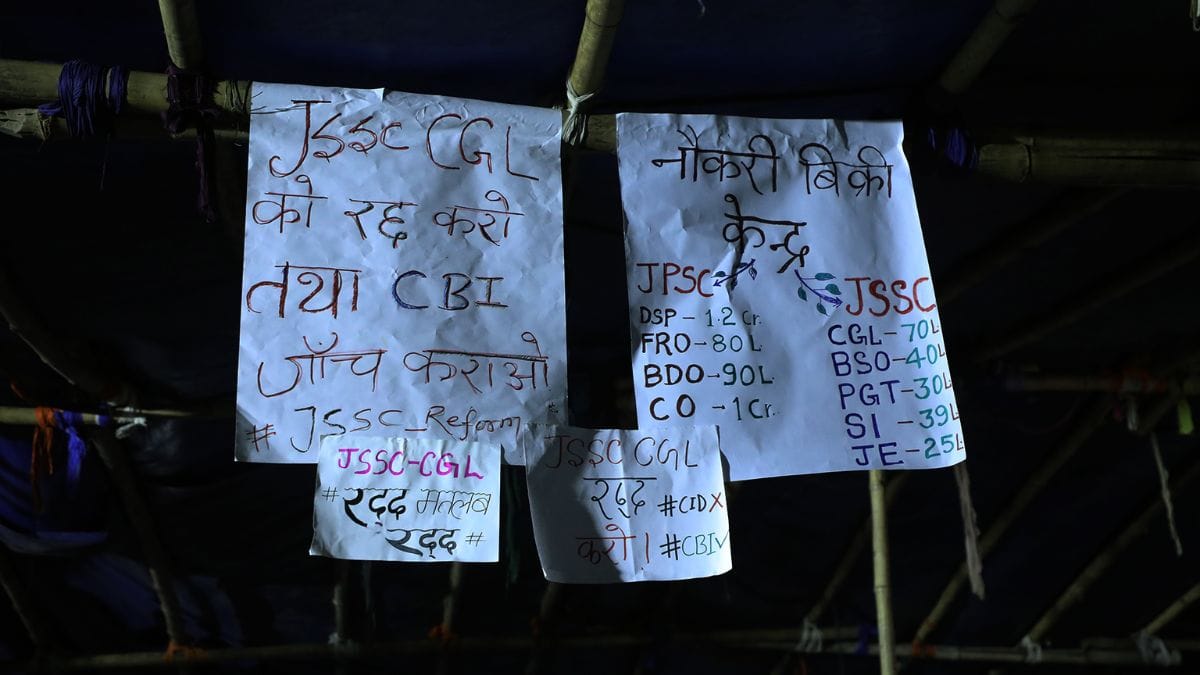
Cycle of corruption
The immediate trigger is the latest recruitment crisis. But the anger is older than the current government, the current commission and the current batch of aspirants.
For 46-year-old Manoj Yadav, it goes back to 2005.
He appeared for the very first exam JPSC conducted. He wrote two Mains (mention what stage this is) and reached the interview stage once. But he never made it into the final list. Instead, he had to take the paper multiple times over and over—he protested against the irregularities and eventually landed in jail.
“I was part of the first protest that happened in 2005. The same issue: corruption. The education minister at that time recruited his relatives. In the initial JPSC exams, candidates got 234 marks out of 200. It was clear proof of error and cheating. Now 20 years later, we are fighting for the same thing. The government changed, but the problems only grew with time,” said Yadav at the Jaipal Singh Munda stadium, the protest site for Jharkhand’s students.
The issues began with the first-ever exam that the JPSC conducted in 2003. In the very beginning, the seats were sold. Around 20 candidates, named in the CBI chargesheet, got into the system by paying money.
“The CBI is investigating. The matter is in court, but the people who bought the seats are still in the service and have spent 20 years in the system. The person who paid a big amount to get in will be an honest officer? He will recover the money he paid and also ruin the system,” said Yadav.
The CBI found evidence of irregularities. From manipulation of marks to favouritism in selections. In the second JPSC case, the agency’s chargesheet alleged that Prelims, Mains and interview marks were manipulated to favour certain candidates. Several of whom were relatives, wards or protégés of JPSC officials, politicians and senior bureaucrats.
The 2003 JPSC exam was conducted for 64 posts. It took the JPSC three years to complete the process.
“The answer sheets were investigated and many of them didn’t have the signature of the examiner. Overwriting was seen, and many people went to jail over this. In the 2003 exam, many candidates from the same centre were selected and OMR sheets had gone missing. Protest took place, an investigation was started, and is still going on,” said Yadav.
The CBI filed its charge sheet and noted major lapses in 2003. It also named 20 officers who were hired unethically. The same situation happened in the second JPSC as well.
The second JPSC Combined Civil Services Examination was advertised in 2005 and held in 2006. Results came out in 2007—came under scrutiny over allegations of manipulation, favouritism and corruption.
“This matter also went to court and in 2012, the Jharkhand High Court ordered a CBI probe after a Vigilance inquiry pointed to cheating, forgery and criminal conspiracy and the CBI said that the marks were manipulated in written exams and interviews,” said Yadav.
Some selected candidates were allegedly linked to JPSC officials, politicians and bureaucrats.
The case dragged on for years. In 2024, the CBI filed a chargesheet against more than 50 people, including former JPSC chairman Dilip Kumar Prasad, commission members, examiners and candidates.
“Almost everyone who joined the JPSC was corrupt. People paid in crores to get the post of chairman and then they do this type of corruption. The foundation of this commission is based on corruption,” said Dubey, the state former secretary.
When it happened the third time, JPSC candidates found marks missing from their answer sheets. They had to approach the High Court to secure revised appointments.
Manoj Yadav fought this battle till the sixth JPSC, when he became older than the required age limit for candidates. Then he stopped appearing for the exams.
“The fourth JPSC became a controversy over the scaling system. Candidates challenged how marks were calculated and the rules of selection. In the fifth JPSC, the dispute was over reservation and qualifying marks. Candidates questioned how OBC candidates were being treated in the preliminary selection,” said Yadav.
The matter of the sixth JPSC went all the way to the Supreme Court.
“The sixth JPSC went through repeated revisions of the preliminary result and then a major dispute over the qualifying paper. The High Court found that JPSC had included marks from the qualifying paper while preparing the merit list and ordered a fresh merit list. The Supreme Court later restored the selection,” he said.
The second part
Shweta Pradhan entered the JPSC system almost two decades after Yadav first protested it. She expected the rules to be clearer and the process more predictable. Instead, her experience has been a compressed version of the same cycle: an examination, a disputed result, court intervention, delays and another wait for the next opportunity.
Her experience with the 7th-10th and 11th-13th JPSC examinations shows how the problem has changed in form without disappearing.
She first appeared for the JPSC examination on 19 September 2021, after beginning her preparation during the pandemic. She calculated her marks against the answer key and expected to make the cut. When the result was declared on 30 October, her name was missing.
The result was later revised after the matter reached the Jharkhand High Court. Pradhan said the general-category cut-off was reduced by 12 marks and she qualified.
But the relief was short-lived. Candidates were given just 20 days to prepare for the Mains, she said. Around 4,800 appeared, and the result was declared within a month — a timeline Pradhan questioned given the number of answer sheets to be evaluated.
“The government completed this exam in 251 days. It is not practical to check the copies of 4,800 students in one month,” said Pradhan.
The next recruitment cycle brought a well-known problem: waiting.
The 11th-13th JPSC examination was held in 2024 for 342 posts. About 7,011 candidates who cleared the preliminary examination were shortlisted for the Mains, held from 22 to 24 June. The result did not come until May 2025 after an almost 11-month wait.
Aspirants protested outside the JPSC office and went on hunger strike, demanding the result. Pradhan said the commission’s evaluation process had itself changed during the wait, including increasing the daily limit for examiners to check answer sheets and bringing guest faculty into the evaluation process.
The final result was announced in July 2025, but the process did not end there. The implementation of PwD reservation was challenged, and the High Court directed JPSC to keep five posts vacant while the issue was reconsidered.
“Such small rules don’t exist in JPSC. They don’t follow their own rules,” said Pradhan.
And it is not only JPSC. JSSC, teacher recruitment exams and other major government recruitments in Jharkhand have encountered the same sequence: an exam is announced, the process is delayed or challenged, candidates protest, and the recruitment gets pushed further down the road.
Beyond JPSC
The Jharkhand Teacher Eligibility Test (JTET) is one of the biggest examples of the state’s failure in conducting exams. In September 2025, the Jharkhand High Court directed the state to conduct the test by 31 March 2026, after nearly nine years of no exams. The deadline arrived and passed, but the examination wasn’t conducted.
“Students wait years for vacancies to come. The system is so mismanaged that when vacancies come, other problems arise, such as eligibility issues. Teacher vacancies came but JTET wasn’t conducted so who was eligible to apply to those vacancies? Such problems trouble the candidates,” said Pradhan.
This delay in the JTET exam also affected teacher recruitment. The Assistant Teacher recruitment, advertised in 2023, became entangled in litigation over eligibility, B.Ed qualifications, scorecards and vacancies. The Supreme Court eventually ruled on the eligibility issue, but parts of the recruitment and appointments remained pending.
The problem goes beyond education.
Another exam was the JPSC Assistant Engineer recruitment. It was advertised in 2019 for 637 posts. It took roughly three years to complete after postponements and litigation over results and evaluation. Although there was no paper leak, there were other irregularities in this case.
“The issue isn’t limited to JPSC. The other commissions are also very much corrupt. All thieves are on the big posts, the future of students is in the dark,” said Dubey.
In another case, 12 JSSC recruitment advertisements had to be withdrawn after the High Court struck down parts of the 2021 recruitment rules. Candidates who had already entered the recruitment cycle had to wait for fresh advertisements under revised rules.
The JSSC Combined Graduate Level examination followed a different route. Its January 2024 round was cancelled after the paper was compromised. A re-examination was held in September, but allegations surrounding it led to protests, an investigation and a court battle. The High Court eventually allowed the result to be released in December 2025, while holding that a systemic second leak had not been established.
Some recruitments never even reached the examination stage. The 4,919-post Jharkhand Police Constable recruitment, advertised in 2023, was cancelled in 2025 after new recruitment rules came into force. A fresh recruitment was to begin under the new rules.
The Field Worker recruitment shows what such delays can mean on the ground. Notified in 2024, this examination was finally held on 19 July 2026. Of about 3.23 lakh registered candidates, only around 86,000 appeared. Candidates complained about late information and examination centres located hundreds of kilometres away from their homes.
The cycle of grave mismanagement continues again and again. During the Excise Constable physical test in 2024, at least 13 candidates died. The state suspended the tests and later changed the physical standards. The recruitment was subsequently hit by a separate alleged cheating and fake-question-paper racket.
The government halted the tests and ordered an inquiry. Preliminary assessments pointed to factors including the strenuous 10-km run, heat, and lack of physical preparation, but no official was publicly held responsible for the deaths. Some rules and safety norms were changed.
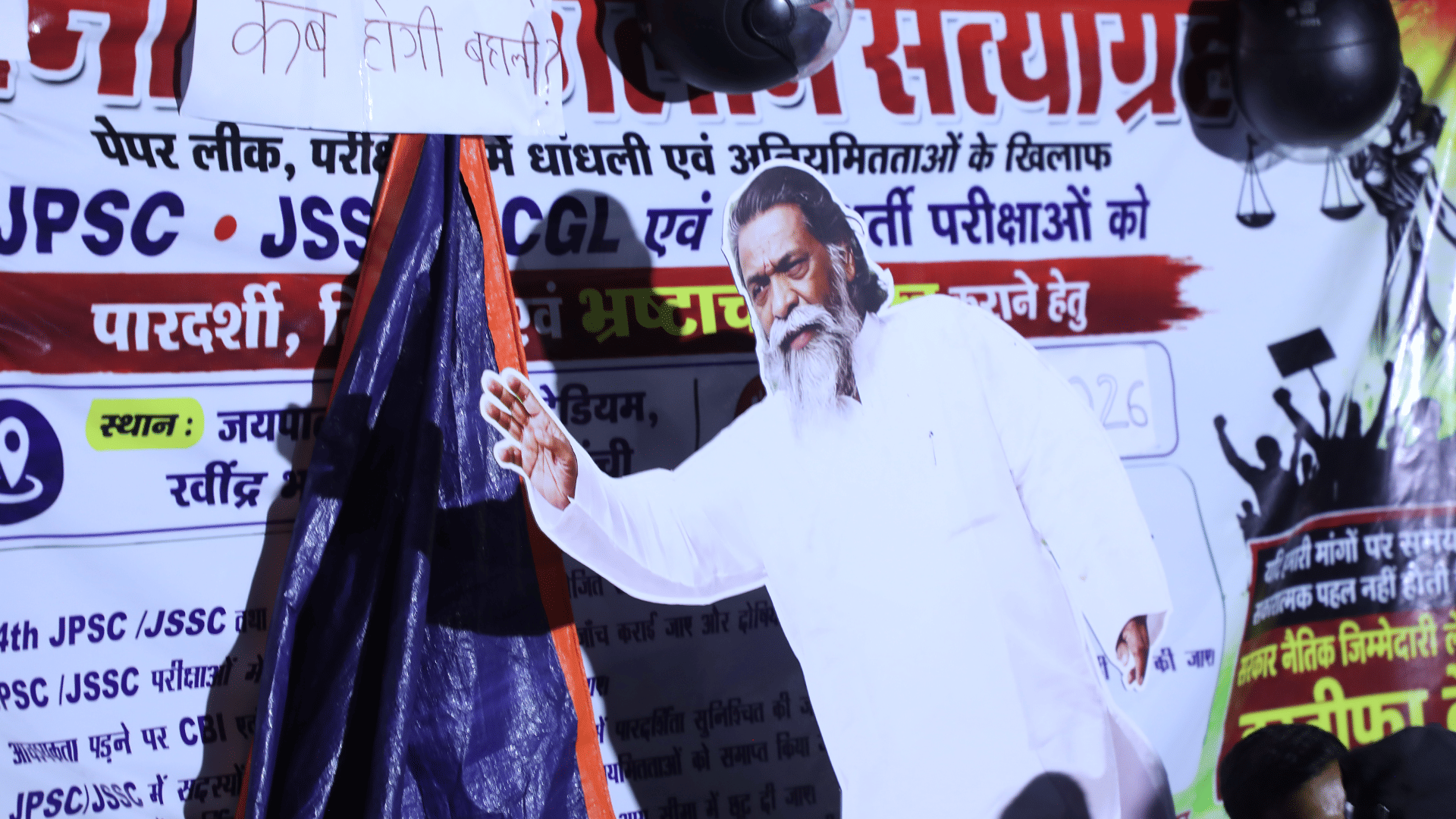
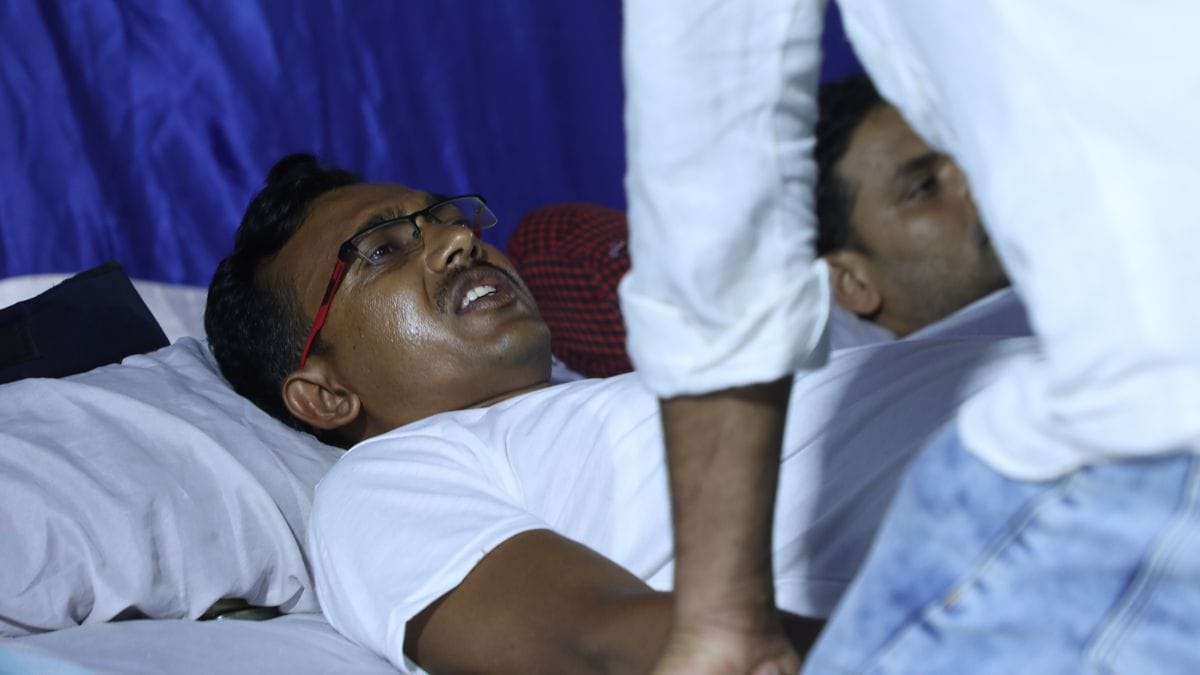
Also read: Jharkhand protest leader’s health worsens after 14 days of hunger strike, says doctor
Demand for reforms
The protests today bring back memories of the first JPSC protests for Manoj Yadav. He was at a similar protest in 2005. He eventually stopped giving exams.
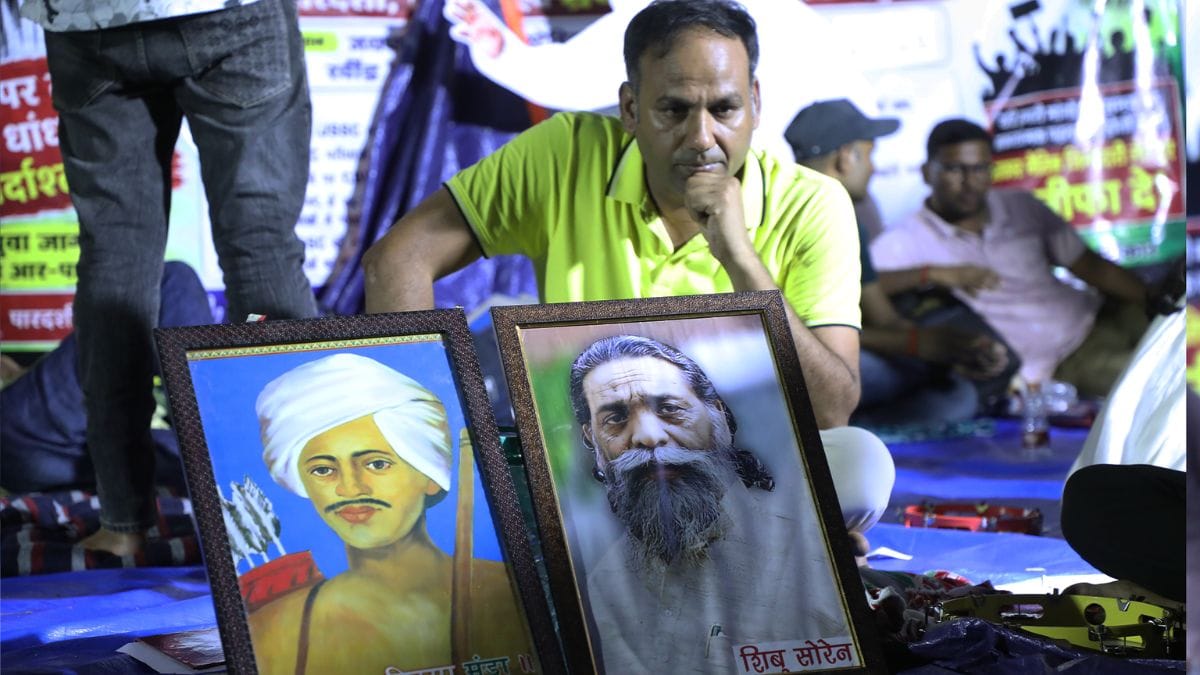
“Protests have happened even before. After every exam, there are protests. This one became big because Delhi’s Cockroach Janta Party protest gave a push, but what will happen? The same corrupt people will come again,” said Dubey.
But for Shweta Pradhan, the hope is alive. She is not fighting just for the 14th JPSC or other recent exams.
“We have spent years fighting the system. This time we don’t just want one exam to be cancelled or one result to be revised. We want the system to change so that the next generation does not have to fight the same battles,” said Pradhan.
(Edited by Ratan Priya)