





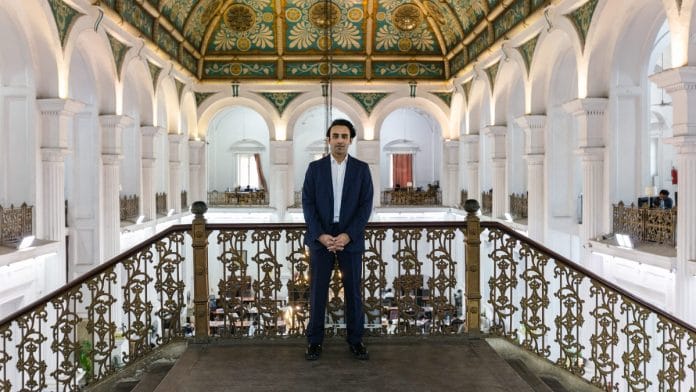


New Delhi: One of Pakistan’s top clerics has issued a fatwa against cryptocurrency—the country’s latest claim to fame in the Trump era. Muhammad Taqi Usmani and other scholars affiliated with Jamia Darul Uloom Karachi have called it ‘haram’. Everyone, including Pakistan Crypto Council CEO Bilal Bin Saqib, is confused.
Reports in the Pakistani media said the fatwa—which covers cryptocurrencies, crypto tokens, and stablecoins—was issued on 10 June. As per the fatwa, cryptocurrencies do not meet Islamic rules of finance and are therefore not recognised as wealth. As a result, purchasing any form of cryptocurrency, including crypto tokens and stablecoins such as USDT, is considered impermissible or ‘haram’.
The religious decree also said that terms such as cryptocurrency, virtual currency, token, and stablecoin all refer to the same category of digital assets. Consequently, the ruling applies equally to all of them. According to the ruling, changing the terminology does not alter the underlying religious ruling.
Following the fatwa, Bin Saqib, who is also the chairperson of Pakistan Virtual Assets Regulatory Authority (PVARA), asked Jamia Darul Uloom on Wednesday to clarify whether its religious decree distinguishes between speculative cryptocurrencies and asset-backed digital tokens, Dawn reported.
Also read: Why is Pakistan going all out on crypto? There’s a Donald Trump angle
Pakistan has around 2 crore crypto users—far more than the 4.2 lakh people who invest in the capital market—placing the country among the world’s top 10 for crypto trading. However, it was previously illegal to use cryptocurrencies. In a major policy shift last year, the State Bank of Pakistan (SBP) agreed in principle to legalise digital currencies, paving the way for the formal legalisation of virtual assets like crypto. It also launched a central bank-backed digital currency (CBDC).
With its economy in crisis and heavily reliant on repeated IMF bailouts, Pakistan is looking at cryptocurrency as a potential lifeline, including through a surprising partnership with a company linked to US President Donald Trump’s family.
In February 2025, the Pakistani government established a Crypto Council. In May, that council was elevated to a full-fledged regulatory body, named the Pakistan Digital Asset Authority, tasked with overseeing and regulating digital assets, including cryptocurrencies and blockchain technologies.
In April, Pakistan entered into a partnership with World Liberty Financial (WLF), a firm reportedly connected to members of Trump’s family. WLF has pledged support to help Pakistan develop blockchain infrastructure, tokenise assets, and navigate the broader crypto industry.
Pakistanis remain unconvinced. “Taqi Usmani will be needing some BTC and he will find a way to make it halal just like islamic banking,” Pakistani X user Anas Tipu jokingly remarked.
Another added: “These molvis declared refrigerator and loud speakers haram too at one point. They will come around eventually. Might even raise chanda for their Masajids with crypto one day.”
(Edited by Prashant Dixit)