





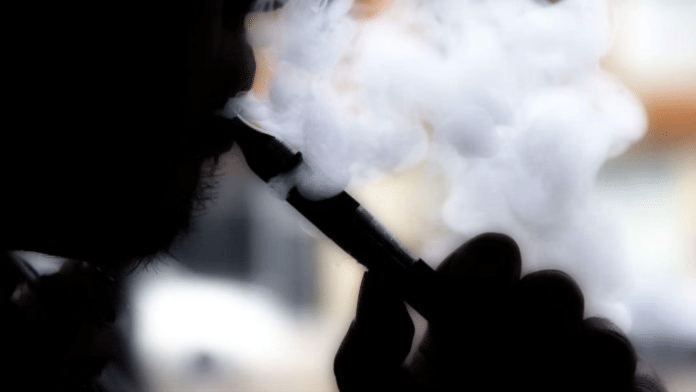


New Delhi: In what is being hailed as a landmark legislation, the UK Parliament has passed a bill that seeks to impose a lifelong ban on the purchase of cigarettes for anyone born after 1 January 2009.
The legislation makes it illegal for retailers to sell tobacco to individuals who are 17 or younger, effectively creating what policymakers describe as a “smoke-free generation.” Now with the Royal Assent, granted on 29 April, ministers will also gain new powers to regulate tobacco, vaping, and nicotine products, including flavours and packaging.
The law will be implemented across the United Kingdom’s four constituent countries: England, Scotland, Wales, and Northern Ireland.
“This legislation marks a turning point for the nation’s health. By ending the cycle of tobacco addiction for future generations, we are taking one of the boldest steps in decades to prevent illness before it even begins…A smoke-free generation is now within reach, and this government is determined to deliver a healthier, fairer future for everyone,” said Wes Streeting, UK’s Secretary of State for Health and Social Care.
The measures form part of this government’s broader effort to address the health impact of smoking, one of the UK’s leading causes of preventable death, disability, and ill health.
What the new law says
As per the new law, vaping will be banned in cars carrying children, as well as in playgrounds, outside schools and at hospitals, extending existing smoke-free laws.
However, it will still be permitted outside hospital premises to support those attempting to quit.
Outdoor hospitality settings such as pub gardens, along with wider open spaces like beaches and private outdoor areas, are not included in the plan. People will also continue to be allowed to smoke and vape in their homes.
As part of tighter regulatory oversight, the law also empowers authorities to introduce a licensing regime for the retail sale of tobacco, herbal smoking products, vapes, and other nicotine products.
The Tobacco and Vapes Bill was also introduced in 2024 under then-Prime Minister Rishi Sunak, who had proposed gradually raising the legal smoking age by one year, every year.
“That means a 14-year-old today will never legally be sold a cigarette and that they — and their generation — can grow up smoke-free,” he had said at the time.
A more structured push to curb tobacco use and limit its accessibility began in 2019, when the UK Government set an ambitious target for England to become “smoke-free” by 2030. The goal was defined as bringing overall smoking prevalence down to below 5 per cent of the population.
This objective was embedded within a wider public health strategy led by the National Health Service. A 2019 consultation document, titled ‘Advancing our health: prevention in the 2020s’, highlighted key health challenges, including the burden of treating smokers who require hospitalisation, alongside efforts to expand the Diabetes Prevention Programme and establish dedicated alcohol care teams.
The document also pointed to steady progress.
Smoking rates in Great Britain, it noted, had halved over the past 35 years, placing the country among those with the lowest prevalence in Europe. This trajectory mirrors a broader global decline, with roughly one in five adults using tobacco today, compared to one in three in 2000.
Other countries who imposed a ban on tobacco use include New Zealand (2024) and Maldives (2025).
Also read: JPMorgan executive Lorna Hajdini accused of drugging, threatening Indian employee. ‘I own you’
Criticism and concerns
The UK law has also drawn some criticism. On social media, some have raised concern that the ban fails to take into account the human freedom to choose for themselves.
One user wrote on X, “Adults are perfectly capable of deciding for themselves if they want to smoke or not. She didn’t wait until she was legal but wants to deny that ability to others. Such patronising and paternalistic tyranny.”
Another user pointed out that the blanket ban will need strict implementation on the ground or the law might drive people to buy tobacco illegally. “We can all agree smoking is not good for you and should not be encouraged, but it’s freedom of choice. All bans do is drive these products to the black market. The danger is they become more popular again especially with young people. Currently smoking rates have declined.”
(Edited by Aamaan Alam Khan)