



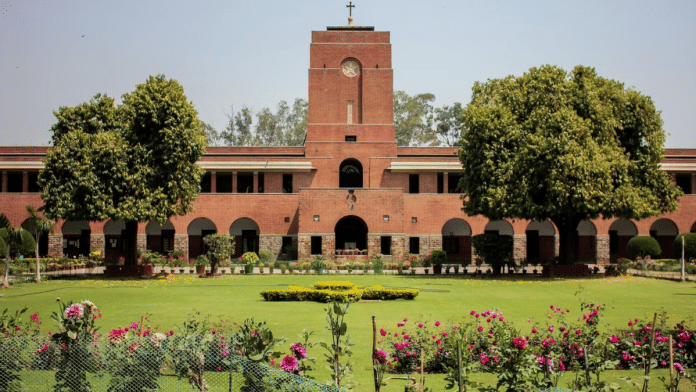
New Delhi: At St Stephen’s College, where the red-brick walls carry nearly a century and a half of institutional legacy, a fresh confrontation has erupted between the minority institution and the University of Delhi.
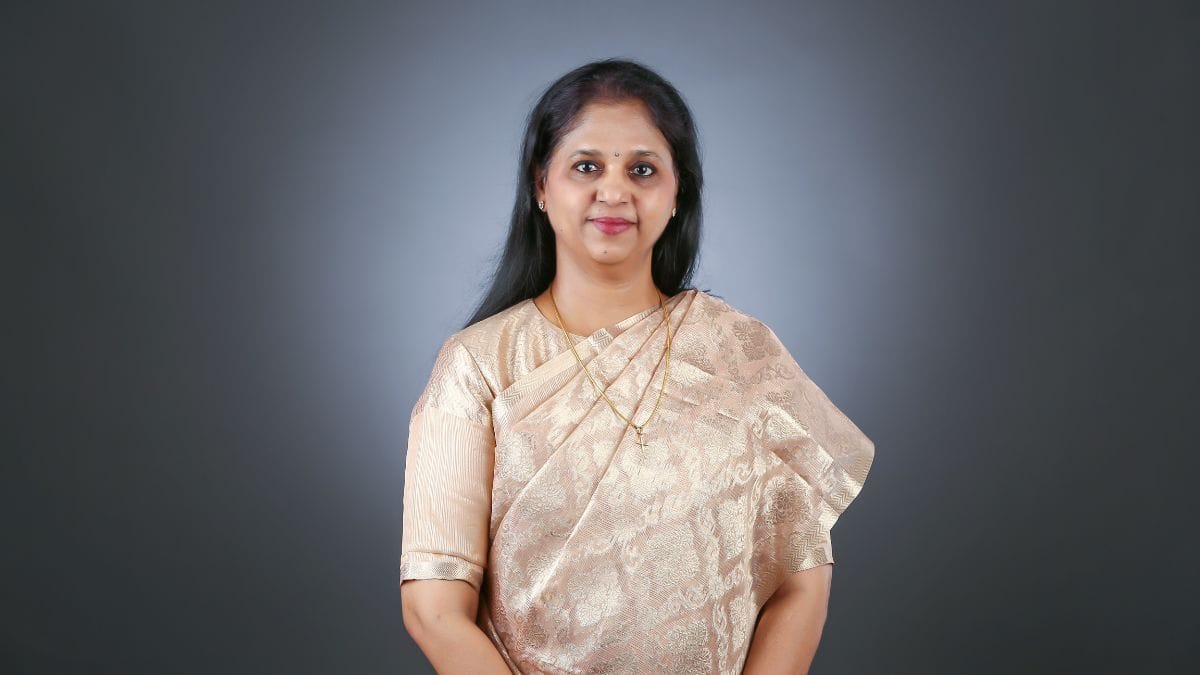
In the latest flashpoint, the University of Delhi directed St Stephen’s College to put Susan Elias’s appointment as principal on hold, citing alleged violations of University Grants Commission (UGC) norms in the selection process. The directive came just a day after Elias was announced as the first woman to head the 145-year-old college.
“We had hoped that with the appointment of the new principal, tensions with the university would ease and some of the long-running controversies would finally quieten down. But that does not seem to be happening,” said a faculty member, speaking on the condition of anonymity.
From hostel corridors and college canteens to alumni circles across the country, Elias’ appointment was initially received as a moment of relief.
For faculty members, it signalled the possibility of stability after years of administrative uncertainty.
“For a lot of students, especially women, it felt important that after 145 years, the college would finally have a woman principal. It felt like St Stephen’s was finally acknowledging that it cannot remain frozen in time while everything around it changes,” said a first-year student at St Stephen’s.
However, the intervention from the University of Delhi now leaves that vision unfulfilled.
The DU registrar’s 14 May letter to the chairman of the college’s governing body claimed that the college’s Selection Committee was not constituted in accordance with Para 2-C of the UGC guidelines of 2018. The regulations require the inclusion of university nominees and subject experts nominated by the Vice-Chancellor or chosen from approved panels. DU says St Stephen’s did not follow that framework.
The faculty, however, says it was largely kept in the dark about the appointment process, which the college’s Supreme Council handled.
The Supreme Council is a six-member body tasked with safeguarding the Christian character of St Stephen’s College and overseeing matters linked to its religious identity. While it does not exercise control over the college’s day-to-day administration, the authority to appoint the principal rests solely with the Council.
“The Supreme Council handled the entire process, but the teachers were never informed about what procedure was followed or how the decision was arrived at. There has been very little transparency around it,” said a faculty member at St Stephen’s College.
Also Read: How humanities-heavy St. Stephen’s found its 1st woman principal from AI background
Minority rights
The dispute reflects a longstanding friction between the college and the university over the scope of minority rights under Article 30(1), particularly regarding admissions, minority quotas and appointment procedures.
St Stephen’s has consistently maintained that, as a minority institution, it has autonomy in administrative matters, while DU argues that affiliation to the university carries binding procedural requirements.
Although Article 30(1) grants minorities the right to administer educational institutions of their choice, courts have repeatedly held that such autonomy is not absolute, particularly for institutions affiliated with public universities.
“If the college disagrees with the ordinance, it is free to challenge it. But once it has accepted the UGC guidelines, it is expected to follow the prescribed protocol. There is still a lack of clarity on why the college chose to bypass those rules,” said a professor at St Stephen’s College, speaking on the condition of anonymity.
Tensions intensified during the tenure of former principal John Varghese, who was first appointed in 2015 for a five-year term ending in 2021. When the college moved to reappoint him, DU objected, calling the extension “null and void” because the process allegedly did not comply with the UGC framework for reappointment.
The college, however, pushed back, maintaining that Varghese “has every legal right to continue as its principal.”
“We have already lived through this crisis for 11 years. During that entire period, there was not a single faculty appointment. And now another such appointment has come back to bite us,” the professor added.
Also Read: AP student wing ASAP wants to bring a different kind of Delhi University campus politics
History on hold
The halt on Susan Elias’s appointment also comes as the Delhi High Court, in a judgment issued earlier this week, halted recruitment at St Stephen’s College after ad hoc teachers alleged irregularities in the process.
The larger battle, many students say, is over autonomy.
In 2017, St Stephen’s Governing Body approved a resolution to pursue autonomous status for the college and forwarded it to a committee set up by Delhi University. The move, however, triggered protests within both the university and the college.
The opposition soon spilled onto the campus grounds, with nearly 30 faculty members and over 700 students gathering outside the college to protest the proposal.
“While the UGC deferred the autonomy in 2018 itself, the move to appoint the principal without consulting DU seems intentional on the part of the college,” said a first-year History student.
Many students admitted that concerns over procedural irregularities could not be dismissed entirely. At the same time, they said the intervention by the University of Delhi created a different kind of discomfort on campus.
“As students, we are aware of the irregularities and the administrative failures that have happened over the years. But despite the controversy, it is about choosing the lesser of the two evils. Many of us still felt more reassured by the college making its own decision than by greater involvement from DU,” said a third-year student at the college.
“We all know about the saffronisation wave across DU, and we do not want that for our college. We want to stay away from the politicisation of education and any atmosphere where freedom of opinion is restricted,” the student added.
In an interview with ThePrint, Elias said it was her background in artificial intelligence, machine learning, robotics, digital health and startup mentorship that likely led to her selection for the post.
“They were looking for a profile which had strong research skills and something that could bring into the campus what is not there,” Elias said.
But at a college long rooted in the humanities, the idea of a stronger push towards AI and technology-driven education has also left some students uneasy.
“We have seen the kind of interviews the new principal has been giving, and honestly, it worries us. AI is already taking over so many jobs, and for students in creative disciplines, the whole essence of our work risks getting diluted if this kind of integration becomes central,” said a second-year BA student at St Stephen’s College.
That uncertainty is not limited to students alone. Several faculty members also say they are watching the transition closely, hoping it could mark a shift in both the college’s internal administrative culture and its prolonged tussle with the university.
“We are quite tired of the administrative direction the college has taken over the last few years, and we hope the functioning becomes more democratic and consultative now,” the college professor cited earlier said.
(Edited by Prashant Dixit)