







New Delhi: The Nilgiris: A Shared Wilderness is the first feature-length wildlife documentary to receive a nationwide theatrical release in India. Now it’s set to have its TV premiere on National Geographic on 5 June. Bafta Award-winning director, Sandesh Kadur, emphasises that this isn’t the story of the who’s who of wildlife.
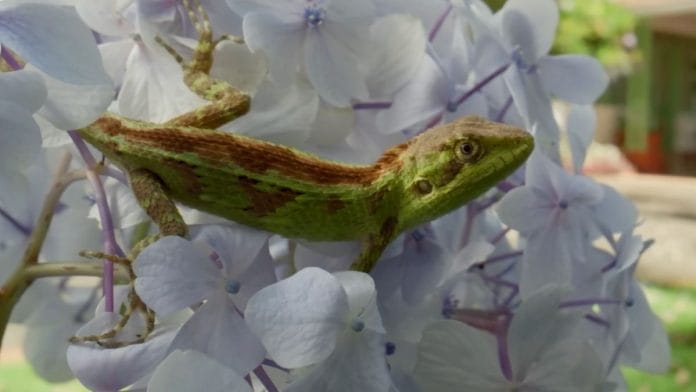
“It’s not the tiger or the black panther that’s the star. It’s a little-known lizard called the Nilgiri salia, which doesn’t live out in the grassland or somewhere in the wild. It lives in your back garden,” Kadur told ThePrint.
The documentary, which he calls his “love letter to the Nilgiris”, first premiered at the National Film Development Corporation Tagore Film Centre in Chennai on 4 November 2024. After several private screenings, it hit the theatres in July 2025. Through the film, Kadur and his team at Felis Creations capture the unique landscape of India’s blue mountains and convey to audiences just how fragile the Nilgiris are.
Also read: It took a village to tame Nilgiris inferno—thermal drones, IAF choppers & 550-plus forest staff
A UNESCO biosphere reserve
The Nilgiris are one of UNESCO’s World Heritage Sites and also one of the world’s 36 biodiversity hotspots. Standing tall, over 2000m above sea level, forming a bridge from the Western Ghats to the Eastern Ghats, they are home to several species which are not found anywhere else on the planet.
As the Nilgiris straddle three Indian states—Tamil Nadu, Karnataka, and Kerala—spanning nearly 5,500 square kilometres of wilderness, conservation policies become complex. However, in Kadur’s experience, it is the efforts from the common people that could make a bigger difference.
This is significant because wildlife in the Nilgiris does not live in contained national parks or wildlife sanctuaries. As the title of the documentary suggests, the area is a ‘shared wilderness’.
“There’s wildlife everywhere. As a matter of fact, 70 per cent of our film, or more than that, 80 per cent of the film was not shot in a protected area. It was shot in a tea garden. It was shot in someone’s backyard. It was shot in the city. It was shot in places that are not designated as government-specified places,” said Kadur.
As climate change seeps into such fragile ecosystems, wildfires rage on, and erratic rainfall impacts tea plantations and agriculture. Kadur’s idea of conserving the landscape lies in the small changes at an individual level.
He urges people to plant native species in their gardens and backyards instead of exotic ones. While he admits that the momentum of the tourism industry is hard to stop, he thinks such tourism could benefit the landscape if it is managed carefully.
Also read: Nilgiris aren’t just for honeymoons—its peoples fought Hoysalas and Haider Ali
Journey to the theatres
What began as a short 20-30 minute documentary for YouTube eventually grew to a feature-length film with the help of Rohini Nilekani Philanthropies. But Kadur was not expecting the kind of attention the documentary gained.
“We thought we might have a one or two-week theatrical release, but the audience, the people across India, have been so kind and so receptive. We had no idea so many people would actually come out to support our film,” he said.
While the filmmakers expected the film to be in theatres for just a week or two, it stayed on the big screen for nearly a month.
The team recalls that the documentary first came out on 18 July 2025, when theatres were running the likes of F1, Saiyaara, and Superman. Nilgiris still found a space for itself.
It was hit on the festival circuit, too. At the 2025 World Film Festival in Cannes, the film won the Best Nature and Wildlife Film. At the WorldFest-Houston International Film Fest in 2025, it won the platinum prize for Documentary features. At the Festival de Cine Santiago Wild, it won the Natural History award in the Stories of Nature section.
As Kadur and his team now look toward the Himalayas for yet another story to tell, he still carries a moment from the last few days of shooting in the Nilgiris, when he witnessed a Great Hornbill chick come out of its nesting hole.
“That one moment was so heartwarming that as soon as we captured it, I knew that this was a beautiful ending to our story. It was hope. And it wasn’t even in the middle of the jungle. It was in the middle of a coffee estate with people walking back and forth,” Kadur said.
(Edited by Theres Sudeep)