



Nilgiris district: A sharp smell of burnt debris lingers heavily in the air across parts of Pykara, Parsons and Singara valley in the Nilgiris, after the wildfires were tamed following nearly a fortnight of intense firefighting efforts.
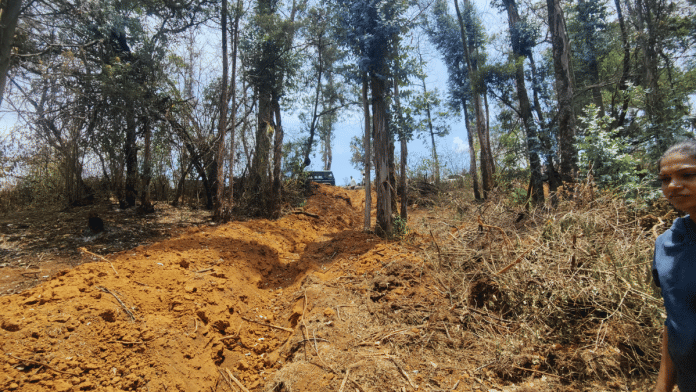
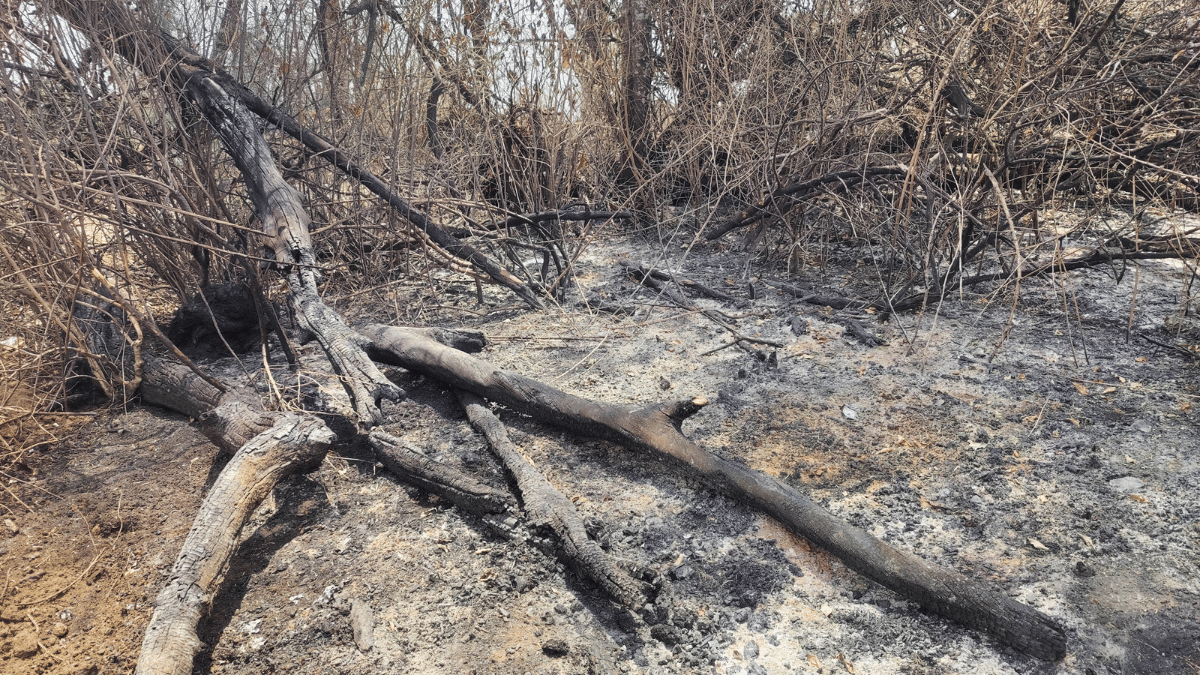
In the scorched hills of Pykara, forest ranger R.Manjuhasini carefully walks along the trenches dug up as firelines (i.e., strategically cleared strips of land). He and forest personnel monitor the burnt debris for any trace of underground fire beneath the blackened ground, stepping over charred undergrowth that crunches underfoot.
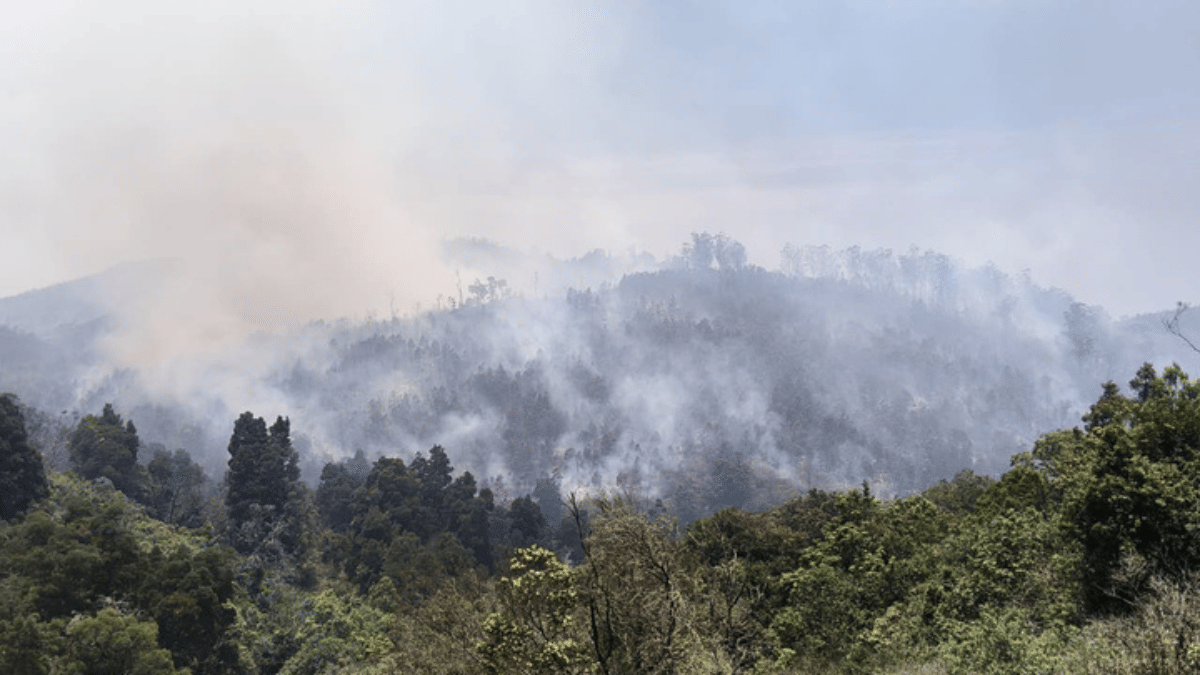
Any faint wisp of smoke or lingering heat from the debris draws immediate attention, as teams remain on high alert for signs of fresh incidents or hidden underground embers. The battle against one of the largest forest fires ever in the Nilgiris began when the first blaze started in Pykara valley on 11 April and later spread across multiple ranges by 15 April, prompting officials to inspect the affected areas day and night.
This inspection was part of the mammoth exercise involving more than 500 forest personnel from Coimbatore, Erode, Salem, Sathyamangalam and other districts. Joining forces were six District Forest Officers (DFOs) with experience in difficult terrain, two teams comprising 60 members from the State Disaster Response Force (SDRF), as well as teams from the fire and rescue department, and 100-plus members from local eco-development committees (EDCs).
“Unlike smaller fires in previous years that could often be handled with routine ground patrols, this blaze demanded a completely different playbook,” Pykara Range Officer R.Manjuhasini tells ThePrint.
Forest fires often break out in the Nilgiris due to a combination of factors: sparks from transmission lines, high temperatures, low humidity, heavy winds, and the accumulation of dry vegetation and debris over years.
The blaze, according to the forest department, turned out to be devastating because of the unusually high temperatures, high wind velocity, steep terrain that aided rapid spread, and a heavy fuel load including invasive weeds and wattle debris (from the invasive Australian wattle trees) that fueled persistent underground fires.
What began as scattered fires quickly escalated across multiple sites. The flames gutted vast stretches of forest vegetation, primarily affecting dry undergrowth, shola fringes, and areas with invasive species and accumulated debris in the Pykara, Parsons Valley, and Wenlock Downs regions. More than 5,000 acres of forest land were affected this year.
Part of the Western Ghats, the Nilgiris are ecologically sensitive due to their unique shola-grassland ecosystems, high biodiversity (including endemic species and habitats for tiger, elephant, and Nilgiri tahr), and for their role as critical watersheds. They stretch across northwestern Tamil Nadu, with extensions into southern Karnataka and eastern Kerala, and are home to protected areas such as Mudumalai Tiger Reserve and Mukurthi National Park.
“There were multiple factors including the climatic conditions of high temperatures, low humidity, and heavy winds that turned dry vegetation into highly flammable fuel. Besides the Nilgiris terrain, with its steep slopes and unpredictable winds, the accumulation of years of debris led to underground fire. The debris was about 1-2 meters in height because there was no forest fire in the last many years so the debris kept piling up,” R. Kiruba Shankar, field director of Mudumalai, told ThePrint.
Also Read: 5,000 acres charred, fresh blaze under control. Why Nilgiris forest fires are more intense this year
Recurrence over the years
From the late 1980s to the 2010s, the Nilgiris Biosphere Reserve reported a declining trend in the frequency of wildfires and burnt areas due to better management, though occasional spikes occurred in between.
Usually reported in the February-June period, the outbreaks were mostly of small scale in nature and contained locally. But in 2021, the region experienced 14 forest fire incidents, with significant damage reported in the Wenlock Downs area from eight of them, even as subsequent rains provided some respite.
This number came down in 2022, with eight fires in summer months. By 2023, it rose to more than 25, of which 17 occurred in the Wenlock Downs area.
The trend continued upward, with the Nilgiris recording 37 forest fires by early April 2024, including a major incident in March that year.
The fire in March 2024, in the Coonoor area, necessitated the deployment of over 150 personnel from multiple forest divisions. The fire raged for over a week before it was successfully contained. Firefighting efforts on the ground involved fire-beating equipment and creating firelines, but the task was complicated by difficult terrain and slope conditions.
After 2024, this year’s incident stands as the largest and most intense the region has experienced in recent years, requiring a significantly scaled-up rescue and firefighting effort.
Underground fire, a challenge
This year, containment efforts had to be scaled up in terms of manpower and equipment with the engagement of several government departments, rescue authorities and even the Indian Air Force (IAF), making it a state-level rescue operation. While the wildfires seemed to have been contained, reports of fresh blazesemerged reported during the noon hours.
Nilgiris DFO Shashank Kashyap gave details of the unprecedented challenges faced in containing the fire.
“We had two major fires, the first one in the Pykara range on the 11th, and we did not anticipate it to be this intense. The other one later erupted in Parsons Valley a few days later,” he told ThePrint. “The buffer areas of Mudumalai Tiger Reserve were also affected and multiple fires led to a wide and rapid spread across various ranges, especially because of the heavy fuel load accumulated over years, extremely high wind velocity, and temperatures touching 28 degrees Celsius, which is unusually high for the Nilgiris.”
Though the fire seemed under control with no flames on the surface, thermal detectors indicated underground fire, aided by invasive weeds like Cestrum, Euphotorium and wattle debris, making it difficult for the staff to dig out the surface and curtail the spread of fire, the DFO added.
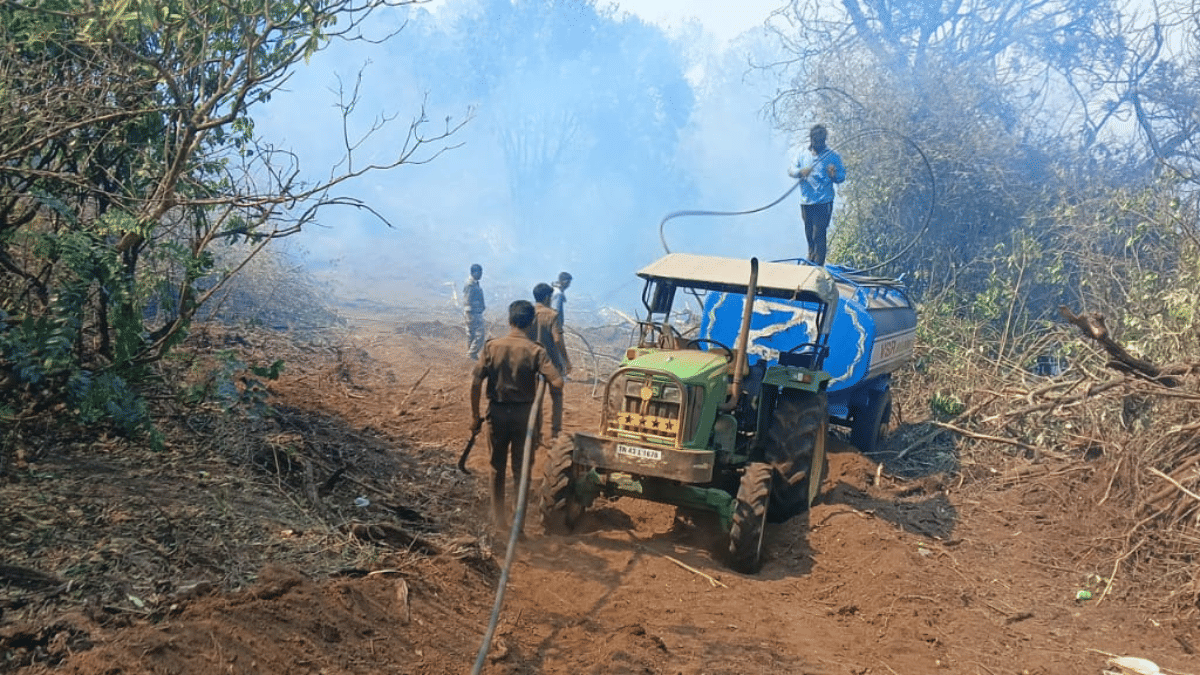
Teams resorted to a combination of tactics—digging up firelines and trenches, deploying motor pumps and newly introduced modern fire response vehicles, and falling back to even manual fire-fighting. A major fireline was created as a containment barrier, especially for the Parsons Valley fire that threatened to spread towards the contiguous Mukurthi National Park.
R.Manjuhasini, Range Officer, Pykara, said even the trenches dug up to make the fireline were not enough to contain the wildfires.
“Firelines usually help in curtailing the spread and restricting the fire to a specific area but by the time we could create them, the fire had already spread. We had to change our strategy and let go of some forest land to make wider firelines at a distance farther away than usual so that there was no further spread. It gradually helped but underground fire is still a challenge because we cannot spot the flames while debris keeps burning underneath,” she explained to ThePrint.
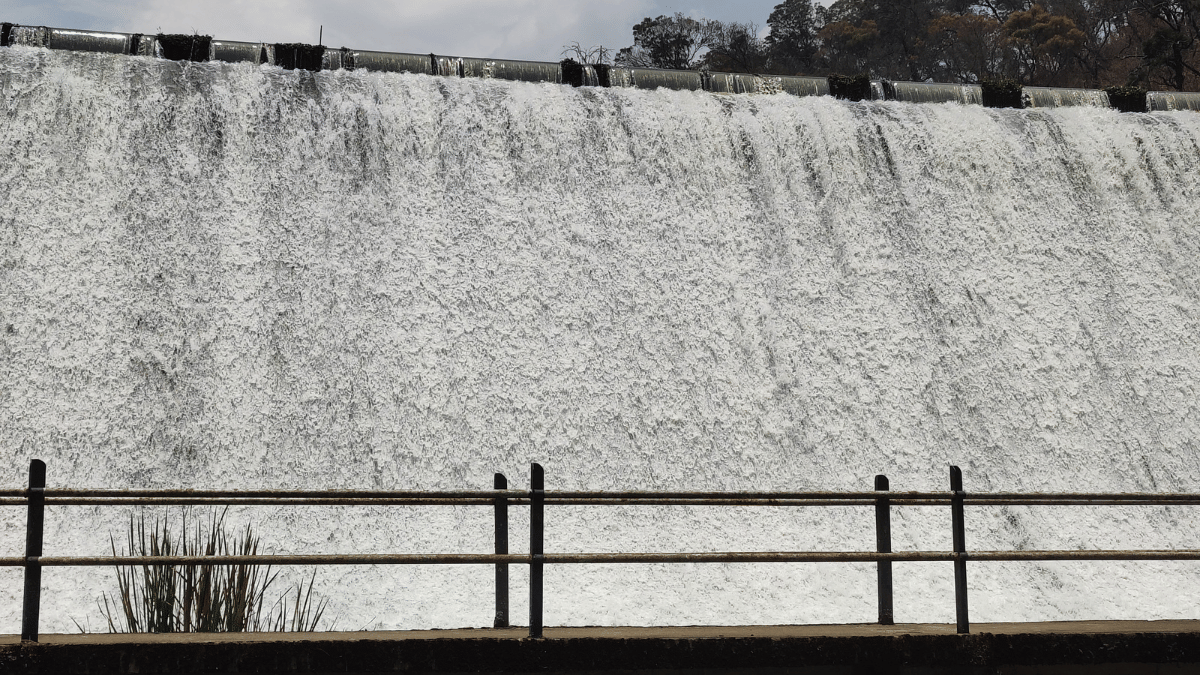
Besides the strong winds that fanned the wildfires, forest personnel also struggled with the terrain. “Pumping water over long distances to higher elevations added to the strain, even though sources like Pykara Lake were nearby. The area affected near the lake could be controlled comparatively earlier but pumping water and carrying it a few kilometres to other places remained a challenge,” a forest ground staff member said.
Given the challenge of the terrain, District Collector Lakshmi Bhavya Taneeru had to request aerial assistance, a first-of-its-kind escalation for the region. On 25 April, two IAF helicopters with Bambi buckets flew several sorties to drop water over the fire-hit zones.
“As accessing certain regions was a challenge, we could use aerial assistance with the IAF’s help. It was used for dousing out fire in certain areas using water from nearby reservoirs,” DFO Kashyap told ThePrint.
The forest department deployed thermal drones for evening scans and observed a daily pattern—fires doused at night would often reignite during peak daytime hours between 11 am and 4 pm due to heat and wind, he said.
In a media statement Wednesday, Supriya Sahu, additional chief secretary, environment, climate change and forest department, said the department had established a State Forest Fire Control Centre in Chennai and a District Forest Fire Control Centre equipped with IT infrastructure under the NABARD scheme. These centres monitored fire alerts on a 24×7 basis, enabling a prompt response. In the Nilgiris forest division, seven modern fire response vehicles were deployed specifically for water spraying during this operation.
Sahu along with the principal chief conservator of forests, and other senior officials also inspected the sites to confirm that the fires were totally contained. Teams, however, continue to patrol the area to prevent any resurgence.
The aftermath
Remarkably, no human or major wildlife casualties were reported. Officials observed that the wildlife appeared largely unaffected, with animals instinctively moving to safer zones.
“Shola patches acted as natural firebreaks, dousing flames that approached them. The assessment of the overall impact of the fire is being undertaken. Human settlements have not been disrupted,” DFO Kashyap said.
Shola patches have vegetation with high water content, thereby making them inherently resistant to burning.
Padmama, a resident from an affected area, said that the fire almost reached local settlements and many routes were restricted for movement.
“We are close to the forest area so we were worried about the wildfire reaching our homes. Even though there are many animals around, there is no protection for us. We have not seen wildfires of such intensity in the recent past. Now, there are high chances of wild animals entering our village. We are only safe in our house, not outside,” the villager from near the Pykara range told ThePrint.
Conservation scientist A. Kumaraguru Arumugam identified human-induced activities as one of the causes of the disaster.
“Fires are set to enable the land for grazing and are even aimed at encroachment of land. The increased human-animal conflict also makes the villagers resentful and they use such tactics. But such a scale was not anticipated,” he told ThePrint.
Padmama, however, denied any deliberate attempts to ignite fires, saying that it only increased the risk to their lives.
As operations shift from active firefighting to damage assessment, rehabilitation, and continued patrolling, the large-scale damage on the surface also necessitates effective prevention strategies against forest fires in the near future.
(Edited by Tony Rai)
Also Read:Phoenix in the wild: An endangered plant in UP’s Terai rises from ashes of forest fires