





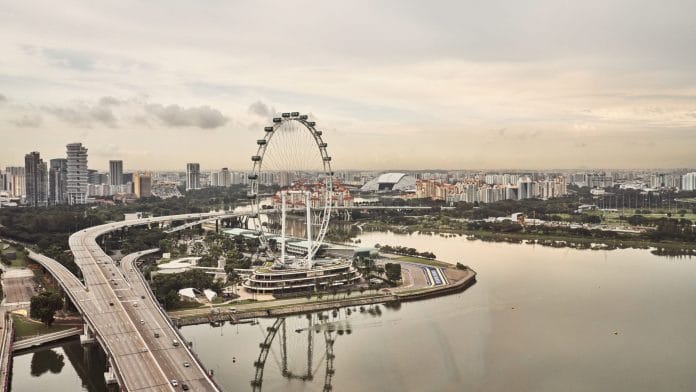

New Delhi: A new global travel study by Go2Africa has ranked countries based on noise-density metrics, placing Singapore and the Maldives among the world’s loudest destinations.
According to the Noise-Free Nations Index, five countries stand out for having the lowest “Quiet Scores”, ranging from 6.78 to 18.13 out of 100, with lower scores indicating noisier destinations, while higher scores indicate quieter and more serene environments.
Singapore tops the list of the world’s loudest countries with a score of 6.78, followed by the Maldives at 8.48.
How the index measures tranquillity
Developed by travel agency Go2Africa, the Noise-Free Nations Index ranks countries according to several factors linked to noise levels and access to quieter environments, including population density, tourist numbers, rural land coverage, protected areas, vehicle ownership and traffic.
Countries are assigned a score out of 100, with higher scores representing quieter and more peaceful destinations.
Why Singapore and the Maldives rank among the loudest
According to the report, Singapore has limited rural land, with only around 30% of its total area classified as rural, making it difficult to find quiet places. The country also has a highly developed transport network, with high densities of vehicles, airport traffic, and railway lines, contributing to its ranking as one of the world’s noisier destinations.
With a score of 8.48, Maldives unexpectedly ranks second, primarily due to rising population density in the capital city of Malé, which offsets the quietness of the isolated islands.
Barbados ranks third among the five loudest countries, with a score of 10.12. Qatar takes fourth place with 15.45, followed by Lebanon at 18.13.
Bhutan tops the quietest countries list
On the other hand, the list of the world’s quietest countries is dominated by Asian destinations.
Bhutan tops the global rankings with a Quiet Score of 89.44, largely attributed to its vast rural landscapes, including more than 39,000 square kilometres of forested mountains and valleys.
The country also regulates tourism through a sustainable development fee, which the report notes helps manage visitor numbers while supporting conservation and local communities.
“The country ranks particularly high for rural land density with 39,041 km² of forested mountains, terraced valleys, and sparsely populated highland terrain and an exceedingly high percentage of protected areas,” the report said.
Namibia ranks second with a score of 86.69. With only 3.83 residents and 0.67 tourists per square kilometre, it has one of the lowest population and tourist densities among the countries on the list. It is also home to the Namib Desert, one of the oldest deserts in the world.
According to the Noise-Free Nations Index, Estonia is the quietest country in Europe, although it ranks 34th globally.
(Edited by Maryam Hassan)