



New Delhi: When Mriganka Sur chose electrical engineering at IIT Kanpur in 1969, he wasn’t abandoning his fascination with the brain. He simply had no other choice. Neuroscience barely existed as a discipline and biology was not even a major. Like many of India’s brightest students of the time, he chose electrical engineering. Half a century later, the MIT professor’s apparent career detour has helped define neuroscience as it emerges as one of the fastest-growing scientific disciplines in the world.
“The language of the brain is the electrical activity of the brain cells. The most important kind are neurons, and neurons generate spikes. Everything in our brain, the fact that you are looking at me, the fact that you are listening to me, is encoded in your brain in electrical spikes. And that fascinated me,” Sur told ThePrint.
Sur’s journey from engineering to neuroscience was a glimpse of what India herself would experience decades later. On this fertile ground for engineers, there was a time when most students grew up to face the ‘doctor or engineer?’ question — and found themselves joining the beeline for an IIT. Now, riding on the coattails of India’s engineering wave is a much younger discipline — neuroscience.
Today, the discipline has caught up with the vision that shaped Sur’s career. Artificial intelligence, advanced imaging, high-performance computing, and engineering have become indispensable tools for understanding the brain. In India too, neuroscience is beginning to move beyond the confines of biology departments.
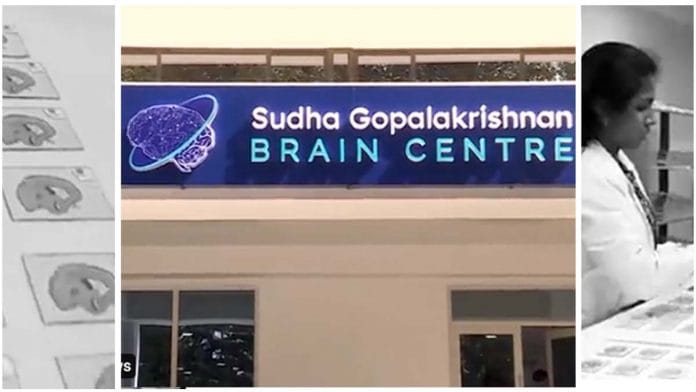
At IIT Madras’s Centre for Computational Brain Research (CCBR) where Sur served as Chair Professor during its formative years, and the Sudha Gopalakrishnan Brain Centre (SGBC), engineers, clinicians, computer scientists and neuroscientists are working together to map the human brain at an unprecedented level of detail. Then there is the National Institute of Mental Health and Neuro Sciences (NIMHANS) in Bengaluru and Haryana’s National Brain Research Centre (NBRC) working on research such as the viral and inflammatory triggers of neurodegenerative diseases and investigating the complexities of brain functions and cognition in health and diseases. Even IISc Bengaluru has a neuroscience department now.
When CCBR and SGBC were set up, Sur looked at neuroscience as more than just a biology discipline —he explored it as a discipline that can draw from models, tools, people, and engineering resources, helping shape what the centre has become today.
According to Sur, India needs more neuroscience research as brain disorders increase sharply.
“There are disorders of brain development which have to do with how brain cells get wired up in the first place in children and then there are disorders of degeneration and aging such as Alzheimer’s and Parkinson’s Disease, which are growing as our lifespan increases. So how do these disorders happen? They’re some of our most profound diseases and disorders – these are a great challenge worldwide but that India in particular needs to think about and solve,” he said.
Blending neuroscience and engineering
When SGBC was just starting out, researchers at IIT Madras, and Infosys co-founder Kris Gopalakrishnan, whose contribution helped set up the centre, had asked themselves one question: Can we blend neuroscience and engineering?
Professor Mohanasankar Sivaprakasam, head of SGBC, says such interdisciplinary neuroscience in India is still at early stages.
“Kris had asked the question ‘can we jumpstart some really cutting-edge brain research work at IIT Madras at the intersection of neuroscience and engineering’? We realized there are not enough people in brain sciences in the country, in particular, human neuroscience. But in engineering, we have a critical mass. So we collaborated globally to bring in various expertise of neuroscience,” he said.
The Sudha Gopalakrishnan Brain Centre was set up in March 2022 with the aim to map human brains at a cellular level and develop the necessary technology that would allow researchers to combine neuroscience, medicine, and engineering.
At the centre, a mission was structured right away to map the brain, and professor Sivaprakasam said they soon realised that because of the scale and complexity of the task, it was essentially an engineering problem. Earlier this year, SGBC released ANCHOR, the world’s most detailed three-dimensional atlas of the human brainstem. Built from thousands of ultra-high-resolution images, it allows scientists to examine structures at the micron level, roughly a thousand times finer than conventional MRI scans.
The maps encompass more than 200 brainstem nuclei and fibre tracts, reconstructed into 3D models using hundreds of extremely high-resolution images. If an MRI allows scientists to look at the brain at the millimetre level, ANCHOR has zoomed in nearly 1,000 times, allowing researchers to look at cells at the micron level. For researchers, it is less a map than a new way of seeing the brain.
So far, medical images have often just confirmed what a patient is already feeling. With photographs at a cellular level, the data opens new vistas for analysis. ANCHOR could help practitioners develop targeted tools or at least deliver medication in a more precise manner. Researchers hope to eventually map hundreds of brains and allow doctors to navigate the brain with the same confidence with which Google Maps allows people to navigate cities.
SGBC is now five years old. The team comprises over 200 scientists, engineers, and technicians of which nearly one-fourth belong to a team of computing and AI experts, who process and analyze the petabyte-sized high resolution brain image volumes.
While SGBC has itself been recognised by several global organisations, professor Mohanasankar, too, was awarded the Rashtriya Vigyan Puraskar in 2025 for his contributions to healthcare technology innovation.
Mohanasankar feels India could do a lot more.
“We could easily imagine 5 or even 10 times of the work that India can do and it is possible. That requires structural interventions. Strengthening existing labs, doing it at scale and, of course, supporting them at scale,” he said.
Unravelling the brain’s mysteries
Long before neuroscience got its time in the sun, Sur was approaching the brain as an engineer would: as an intricate network of electrical circuits whose mysteries could be unravelled through mathematics, computation, and technology.
His work on brain plasticity and neural circuits took him from IIT Kanpur to Vanderbilt University, Yale, and eventually the Massachusetts Institute of Technology (MIT), where he is now the Newton Professor of Neuroscience and Director of the Simons Center for the Social Brain.
At MIT, Sur led its department of brain and cognitive sciences for 15 years before founding the Simons Center for the Social Brain in 2012, of which he is now the director. Most of his research has focused on understanding the principles behind how the cerebral cortex is wired during early development, and how those neural circuits change and reorganise themselves over time. In disorders like autism and Rett syndrome, the brain’s wiring often goes awry, and Sur’s lab tries to understand why.
One of the landmark experiments in his lab was when his team rerouted visual inputs to the auditory cortex of newborn ferrets and proved that even the parts of the brain that were meant for ‘hearing’ could reorganise themselves to process vision instead.
One of the pioneering research to come out of Sur’s lab was about an autism-related disorder called Rett syndrome. Caused by a mutation in the gene MeCP2, Rett leads to not just symptoms of autism but also severe intellectual, motor, and other disabilities.
In 2006, when Sur’s lab was studying synaptic proteins, a diverse group of molecules that regulate how neurons communicate, they found that a certain protein called IGF-1 was needed for synapses, the space between neurons, to mature. Sur hypothesised that maybe Rett syndrome was caused by immature synapses, which could be induced to mature using the IGF-1 protein. When Sur’s lab checked their hypothesis on mice with the Rett syndrome mutation and treated them with an IGF-1 peptide, their condition improved significantly. They published their findings in a 2009 paper, and in 2023, it led to the first ever FDA-approved Rett syndrome treatment.
Sur has received several international honours recognising his contributions to academia. He was elected a Fellow of the Royal Society (FRS) in 2006, one of the world’s highest scientific distinctions, and is also a member or fellow of the US National Academy of Medicine, the American Academy of Arts and Sciences, the American Association for the Advancement of Science (AAAS), and the Indian National Science Academy (INSA). He was also awarded the Distinguished Alumnus Award from IIT Kanpur in 2002.
“Well, I’m a nerd. I only know how to do this one thing: neuroscience. When I chose this path, we didn’t have the internet, we didn’t have email. We would go physically to the library, pick up a book, read it, put it back. And even based on that limited set of resources I was excited by the idea of trying to understand the brain,” said Sur.
Sur is now 72. He has spent half a century in academia, watching neuroscience develop into a field that takes inspiration from molecular biology, anatomy, physiology, imaging tools, computational, and theoretical models. If he found himself entering IIT Kanpur today, even with all the ongoing advances in the world of science, he says he would still choose the same path.
Sur’s fascination with the brain stems from the fact that understanding this one organ better would have implications for human psychology, human interactions, and even the relationship between not only people but nations too, he said.
“My lab develops new tools and techniques and our basic mission for the last several decades has been to understand how the brain wires itself, and how do brain cells connect to each other in order to make circuits that process information. How is information represented in the brain, how is it encoded, how is it decoded, and how therefore can we make sense of what the brain does,” said Sur.
But, he says, the solution to the brain’s mysteries still lies in the brain’s information processing machinery. As brain disorders rise across the world, he is looking forward to a time when he will be able to witness the human brain’s activity at a deeper level in real time.
“A transformative technology would be if we can somehow develop ways to measure, record, and analyse the activity of large numbers of brain cells in human beings through the skull, through the skin and scalp and bone, and figure out how to do that as people are doing human-like things, that would be a major breakthrough to understanding how normal human function occurs and how it might go awry,” said Sur.
Also read: IIT Madras startup unveils India’s first flying taxi. But it’s not for office goers
A surge of data
The brain may often be compared to a machine, but it is the hardest organ to understand. Yet, the brain is not like the heart, blood, kidneys, or liver, which can be understood in certain ways.
Hidden within the skull, there are very few biomarkers of how a human’s brain is fairing, and researchers have to rely on indirect measurements like electrical signals or blurry scans under layers of bone.
This is where tools of engineering have transformed modern neuroscience.
They make it possible to see, measure, and control the brain in ways we couldn’t before. Tiny high-density electrodes and advanced microscopes let scientists watch thousands of neurons at once while animals act. Light-based methods let researchers switch specific neurons on or off to test cause and effect. Genetic sensors and chemical probes show when cells are active and which brain chemicals they release.
Finally, modern computer algorithms help make sense of the huge amounts of data.
Sur said that progress in neuroscience has often depended as much on the development of new tools as on new ideas. He highlights that his research has focused on animal brains, especially mice, since they provide a practical model for studying complex brain function.
“We study mice because they give us a window into the brain using very sophisticated tools and technologies—high-powered lasers, advanced optics, and genetically engineered mice. These technologies allow us to measure the activity of thousands of brain cells at once and even manipulate that activity. It’s these kinds of transformative tools that will ultimately help us better understand the brain, and in particular the human brain,” said Sur.
While the rapid technological advances have transformed neuroscience, some researchers argue that these tools must also be accompanied by equally strong conceptual and theoretical frameworks.
Abhishek Banerjee, professor of neuroscience at Queen Mary University of London and a Wellcome Trust Fellow at the University of Oxford, welcomes these advances but believes they should be accompanied by strong biological and theoretical thinking.
“I think neuroscience is at an important crossroad. We’re entering a period where we need to think carefully about how we make the best use of these extraordinary technologies,” said Banerjee, who also found his way to neuroscience after initially studying zoology and biochemistry.
Technology and AI have led researchers to interesting new questions, but he says the field is still developing a framework for asking the kind of deeper questions that matter.
“This newer generation of scientists, we are increasingly focusing on collecting and analysing data, obsessed with what we can see or measure, without really spending enough time understanding and developing the theory of the framework. Like, how do memories form or how does cognition work?” said Banerjee, who was also a postdoctoral fellow at Sur’s lab at MIT and worked with him on the brain’s microcircuits.
He is a bit sceptical of this data flood. While automation is an important development, he believes there is a risk that biological insight can sometimes become overshadowed by the sheer volume of data being generated.
“Large datasets are already transforming neuroscience, and their greatest impact will come when they are interpreted within strong biological and theoretical frameworks,” said Banerjee.
“In every family you see, someone or the other is suffering from one type of brain disorder or another. My own grandfather, who was a professor of botany, my memory of him in his last days is that a six-foot-tall person has become a tiny person suffering from Parkinson’s Disease,” said Banerjee.
As neuroscience attracts people from all disciplines, they bring their own armoury to tackle its grand challenges. Banerjee has observed that the physicists look at the brain expecting common laws and principles, and the engineers think they can deconstruct it and then construct it again. He believes that academics need to join forces to address its most pressing issues.
“This is a field where anyone can come and contribute. It doesn’t matter which discipline. Mriganka is an electrical engineer. And I’m a biochemist, yet we share a common language to study the brain, and that is something really beautiful” said Banerjee.
(Edited by Aamaan Alam Khan)