



Somewhere in Karnataka right now, someone is having an argument about how much jaggery should be added in sambar. MTR knows this, so they have written the dish its own anthem, and somehow created a hit campaign out of it.
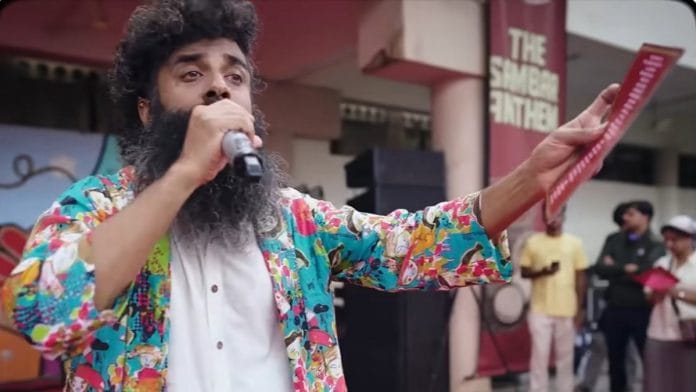
Launched on July 4 in Bengaluru, the ‘Sambar Anthem’ is a collaboration between MTR and folk-fusion musician Vasu Dixit. It is an unusual commission for a masala brand: a full-length original composition built from crowdsourced sambar memories. The lively ode to the classic dish was performed live at a morning concert before it was dropped on Spotify.
The collaboration began with a reel Dixit posted about his own relationship with sambar, which struck a chord with MTR. Beneath the sentiment, however, is a long-standing strategy. MTR already promotes its Rs 5 and Rs 10 packs to make its way into rural kitchens. It also runs separate, more targeted sambar campaigns in Andhra Pradesh and Telangana. Karnataka was the next market to capture, this time with a dollop of emotion.
MTR partnered with Dixit to invite consumers in Karnataka to share personal stories and memories linked to sambar. Those responses formed the basis of the Sambar Anthem, which celebrates the role the dish plays in everyday life across the state. The one-minute-and-44-second song has received nearly 8 million views on YouTube, which is not bad for a track about an everyday lentil dish.
By placing a regional staple within a larger cultural narrative, set to a catchy tune, MTR gives the campaign more emotional range than a conventional jingle.
The anthem also appears in a more conventional MTR commercial. It starts with a boy worrying about a talent show. His mother plays the Sambar Anthem as they prepare lunch together, and, sufficiently inspired, he later performs the song at the competition. Dixit appears as one of the judges, linking the ad back to the original campaign.
Also Read: Coca-Cola’s new ad is about Indian love for football—Kerala to Bengal, Assam to Goa
Why a song was a smart move for sambar
The best part of the campaign is that MTR did not try to manufacture the emotion itself. It let people supply the memories and gave a folk musician room to shape them into something worth hearing.
That is a more meaningful and different move than just slapping a temple bell sound effect over a 30-second spot and calling it traditional or heritage.
The humble sambar is also a perfect pick for an anthem. There is no single recipe for it, so MTR could hardly boast about its own spice blend as better than others. Every household in Karnataka has an opinion, a ratio, a grandmother’s version that is ‘objectively’ correct and everyone else’s is wrong.
For a brand, trying to own that kind of dish is challenging. The smarter move was to capture the argument around it rather than insist on one definitive version through a jingle.
It is, of course, still a very well-dressed ad for sambar masala. MTR isn’t shy about tying the campaign to “preserving and popularising” its legacy in the category. There’s a fairly direct line from “a moving song about mothers cooking” to “buy the powder that makes the cooking easier”.
No campaign is doing it purely out of love. The difference is whether it makes you sit through a boring ad or an entertaining one to soak in the sales pitch.
So, is MTR’s Sambar Anthem brilliant marketing, or proof that Karnataka will drop everything for a decent sambar debate? It’s quite possibly both.
Views are personal.
(Edited by Asavari Singh)