


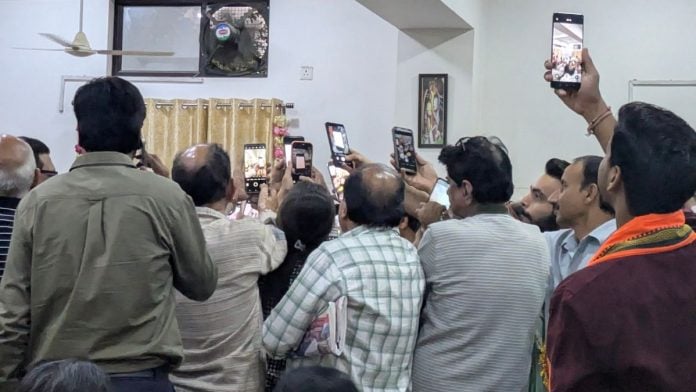
New Delhi: On Sunday, 15 November, the hall above the Shree Gauri Shankar Mandir in Janakpuri buzzed with the energy of a busy bazaar. As famed biodata announcements began, families pushed to the front, held up phones to photograph profiles of prospective brides and grooms, and compared their notes.
“Please come forward and stand,” the organiser, Tilak Raj, called into the microphone as visitors gathered around. “Give the girls’ forms first. Boys’ families, listen calmly, and whoever finds a match, hold a meeting.”
The speaker crackled as he read the biodatas like sales pitches: birth year, family origin, height, profession, and the income expectation a prospective bride expected from her groom. For those who weren’t impressed, Raj promised more options.
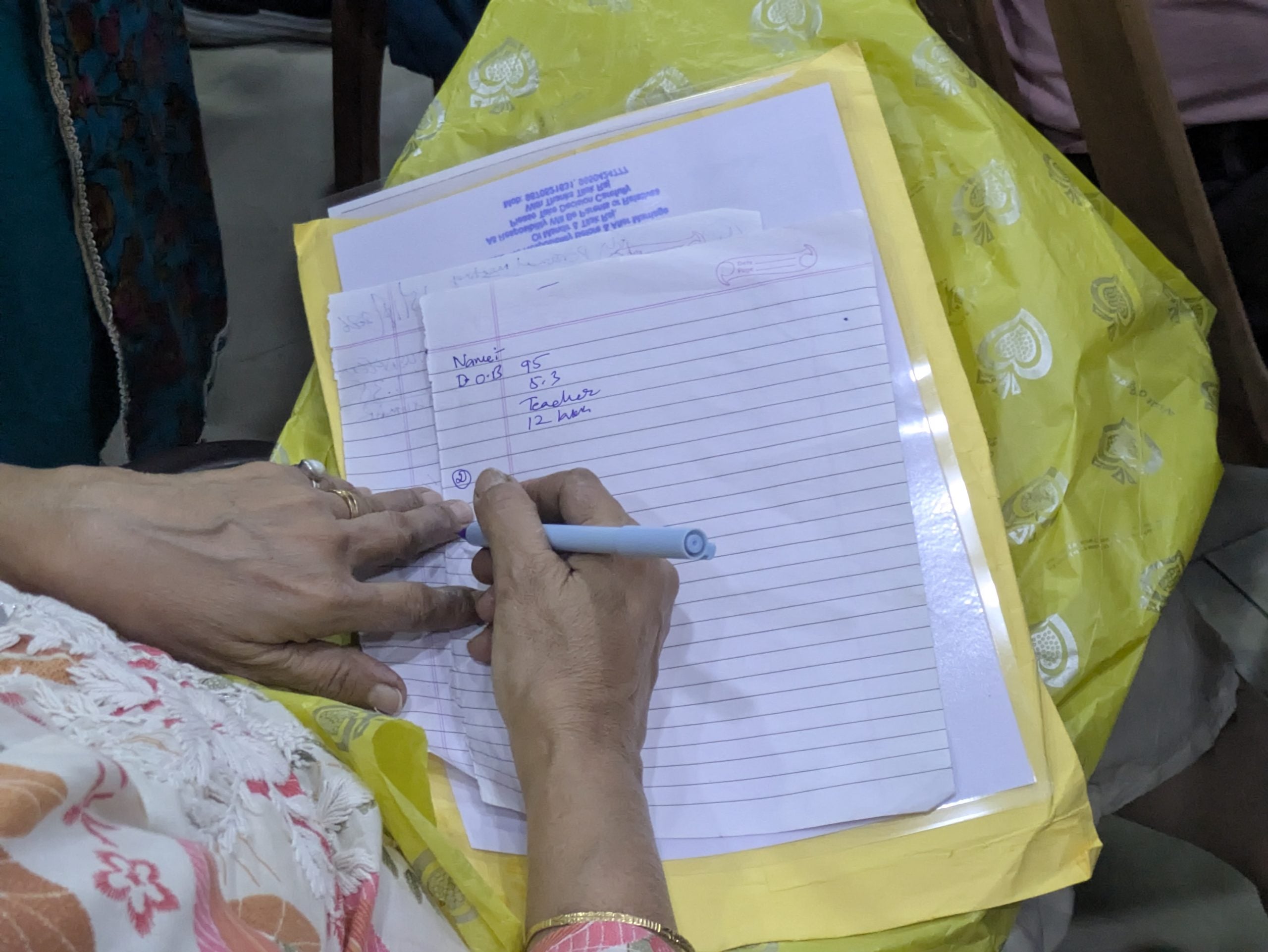
“Born 1995, Punjabi family, height 5 feet 3 inches. The girl is a teacher, near Rohini. She wants a groom earning up to 12 lakh,” he read from the first profile.
It is a swayamvar for the Instagram age, with the parents holding the garlands. Sai Vaivahik Rishte, a matrimonial bureau that has operated in Delhi since about 2021, has taken the old arranged-marriage script online.
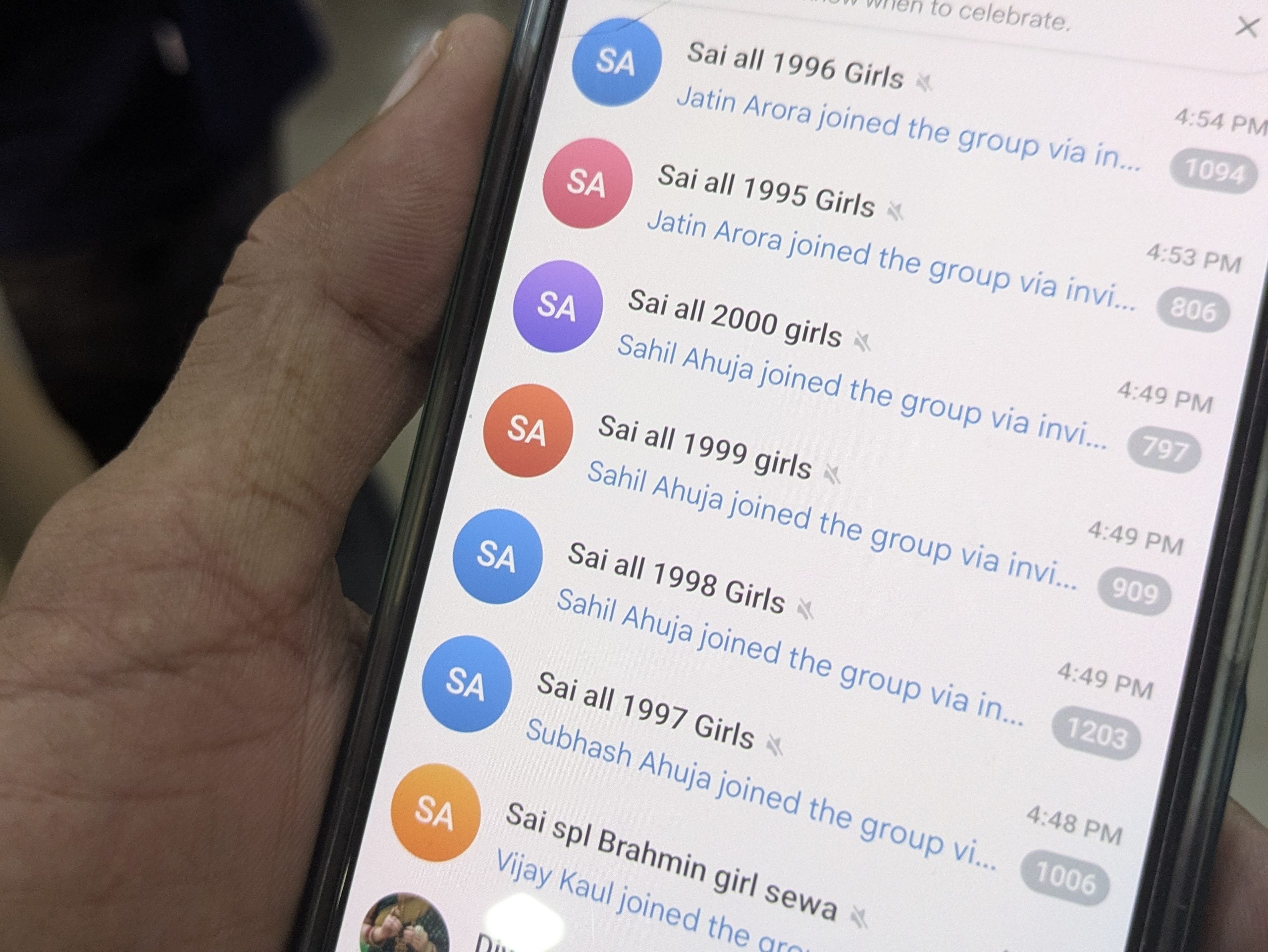
Families register biodatas, join WhatsApp and Telegram groups where profiles circulate, and watch reels in which the organisers post sammelan recaps. On Sundays, they come to a weekly meet-up to browse files, hear profiles read from a stage, and meet other families in person, with several paid tiers on top.
The people actually getting married are largely absent. Parents do the scouting, shortlisting, and negotiating.
Raj, who runs the sammelan, says the Sunday event exists so that families do not have to arrange meetings themselves.
“They don’t have meetings out and about here and there, saving their restaurant money,” he says. “A common programme happens here on Sunday, and families come to it.”
A catalogue of prospective brides and grooms
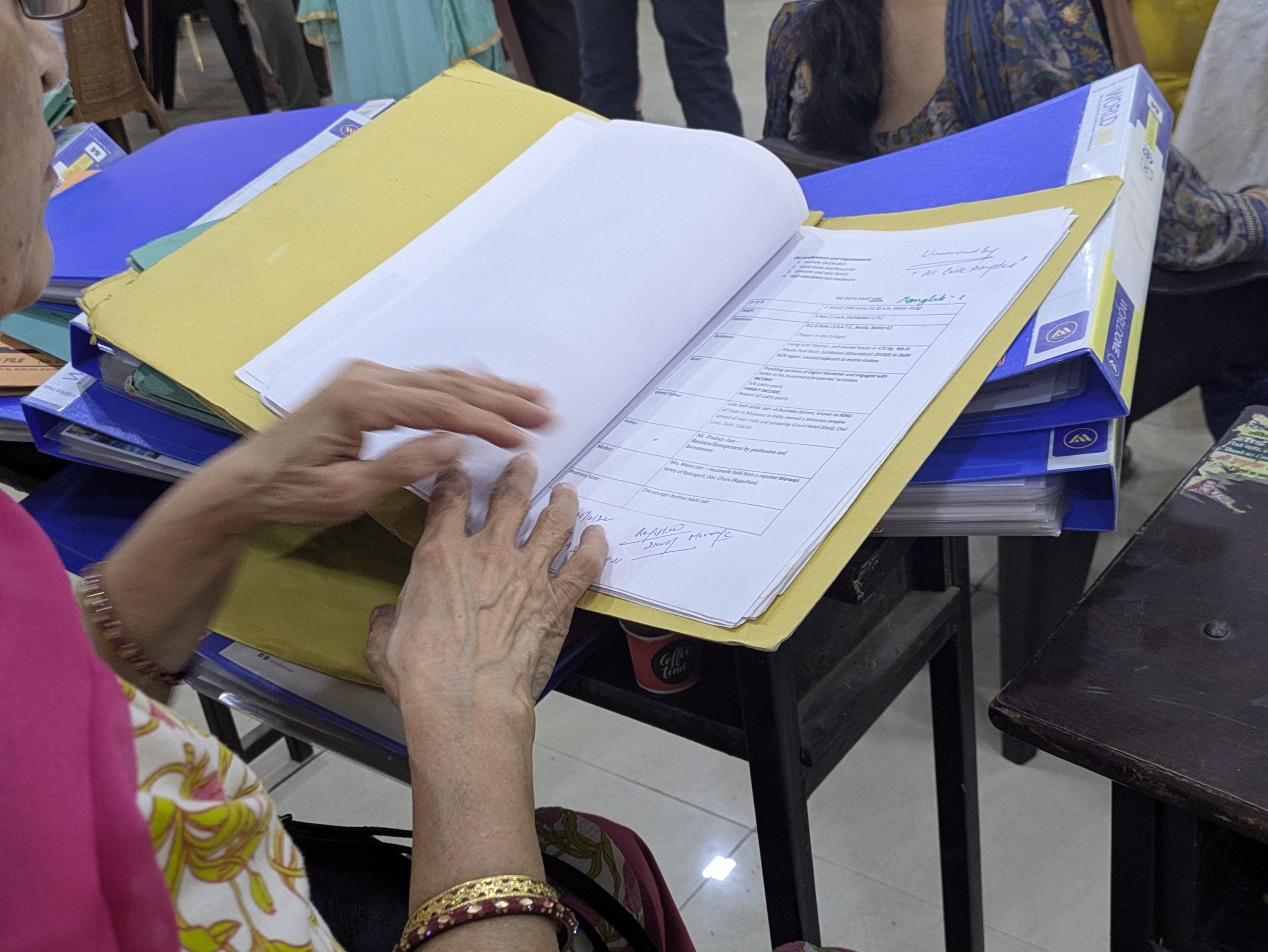
The hall is large and plain, with plastic chairs and tables running its length. A registration desk near the entrance collects biodatas. An adjacent wall displays the biodatas and photographs of successful matches, alongside their wedding dates. A counter opposite serves chai, samosas, and biscuits.
The tables across the room are covered in files, catalogued by year of birth, gender, whether the prospective bride or groom is “manglik”, and whether they are divorced or widowed. Each biodata gives a name, height, caste, occupation, family income and family details. Parents sit with the folders open, turning pages like shoppers browsing a catalogue. Some sit with notebooks and pens, taking notes.
Ram Niwas has come to see how the system works. His 31-year-old son works in Gurgaon on a ₹15 lakh package.
“Everything is fine,” he says. “Just that one thing remains: that he gets married.”
He joined the matrimonial service in May, paying about ₹3,300 after seeing clips of the sammelan on social media. This is his first time at a Sunday gathering. His son has not come along.
“He does not want to participate in all this,” Niwas says, frowning. “But after all, as parents, we need to fulfil our duty.”
The ₹3,300 buys Niwas a stream of biodata files on Telegram, where his family has opted to be in the Brahmin group.
“It’s a matter of matching ideology,” he says. “One doesn’t have to stay in a marriage for just one day. It’s long-term, and a lot of factors need to be considered.”
He insists, however, that the final choice is his son’s, caste included.
Around the room, the conversation follows a familiar script. Parents open with a sorting question: boy’s side or girl’s? If both are from the same side, the discussion ends there. If they complement each other, they move to the next screening round.
“Are you Punjabi?” one man asked another. “Sharma,” came the answer. Height comes up constantly. When a mother sadly mentions that her daughter is 5 feet 9 inches tall, the man she is speaking to suddenly loses interest.
“The height will be an issue,” he says.
There is another imbalance in the room, beyond the scrutiny of biodatas. The gender ratio is lopsided. Families looking for brides far outnumber those looking for grooms, and the loudest complaint in the room is the oldest one in the book: women have started demanding too much.
What do women want?
Some of the fathers looking for brides for their sons have stepped away from the crowded gathering, visibly frustrated with the matchmaking process and what they see as increasingly towering expectations. Their primary grievance is: what do women want?
“The girls have started demanding a lot,” a 57-year-old father from Faridabad says. “A girl herself would earn 6 LPA, but she wants a groom up to 15 LPA. How would that work?”
The man beside him, Pradeep, shakes his head in agreement. “I fail to understand what the ladki wale (the bride’s family) want these days,” he says.
A man who identifies himself as Sharma shares the same grievance. He says families are increasingly looking for grooms earning Rs 12-15 lakh or more, when a salary of Rs 6 lakh would once have been considered perfectly acceptable.
“Everyone cannot earn so much. The girls’ families want a man who is worth crores. But why are the expectations so high? You can meet all your basic needs with a reasonable income,” Sharma says.
For some of them, the problem goes beyond salary expectations. They feel young people, especially women, have become so preoccupied with career growth that they are losing sight of family life.
“It cannot be about chasing a job offer after another — moving here for a better salary, then shifting somewhere else the following year for an even bigger one,” Pradeep says. “If you keep chasing packages, when will you make time for a family?”
Another man lists what he says are now common expectations from prospective brides’ families: a high salary, an open-minded partner, the freedom to live independently and little involvement with the groom’s family.
“What can you do? The parents have to keep running around,” he says.
The question of living with in-laws comes up repeatedly. Alongside it are questions about family members’ marital status, drinking habits, and whether the household follows a vegetarian diet. For many of the participants, finding a match is as much about assessing an entire family as it is about finding a suitable partner.
Age, too, has become a point of contention. Some argue that the age gaps once considered normal are now difficult to negotiate.
“In our time, when marriages happened, a seven- or eight-year age difference was not an issue. Matches happened without people asking so many questions,” one of the fathers says. Now, families often prefer prospective brides and grooms to have been born in the same year.
For many parents gathered in the hall, changing expectations also bring anxieties about delayed marriages and parenthood. They worry that marrying later will mean having children later, leaving them with less time to see their grandchildren grow up.
“In other communities, people become grandparents by the time they are 40 or 45. For us, if marriages keep getting delayed, when will the children grow up?” he says. “What will we leave behind? Unfulfilled dreams.”
Also read: Inspired by Gaza, Noida students develop snake robot to help rescue survivors from rubble
A marriage proposal, broadcast to the room
The announcements are the Instagram-famous centrepiece of the sammelan. Families hand in their forms to the presenter in advance, and he reads the details aloud to those gathered around. Some listen intently; others make detailed notes. Raj describes it as a way of cutting through the crowd.
“Any family that wants its biodata announced can ask us to read it out,” Raj says, explaining the process. “Around 100 families attend each gathering, so it is difficult to know who is looking for whom. Announcing the profiles makes the process easier. If a family is interested in a particular profile, they can raise their hand and arrange a meeting.”
Last Sunday, only girls’ profiles were announced, owing to the higher turnout of families looking for brides, with each announcement following the same template. Raj says a projector is also planned to make displaying biodata easier.
Nobody has to say yes in public. Interested families go to the front and photograph the biodata, which carries phone numbers they can use to get in touch. They can also schedule a meet-up after the announcements, if both parties stay back.
“It feels like an auction,” Usha, who has come to look for a bride for her nephew, says. “‘This one earns this much, this one wants this much, come and take a photo.’ The soft approach of our days is over now. Now marriage is just a commercial activity.”
Several parents say that after photographing a biodata and calling the number, nobody picks up.
“Very often people do not take calls,” the father of a 32-year-old says. “You can keep trying, but to no avail.”
Raj offers a different explanation for the unanswered calls.
“Sometimes if a boy’s income is low or the family does not like anything else about the profile, then the other side doesn’t even respond to the family,” he says.
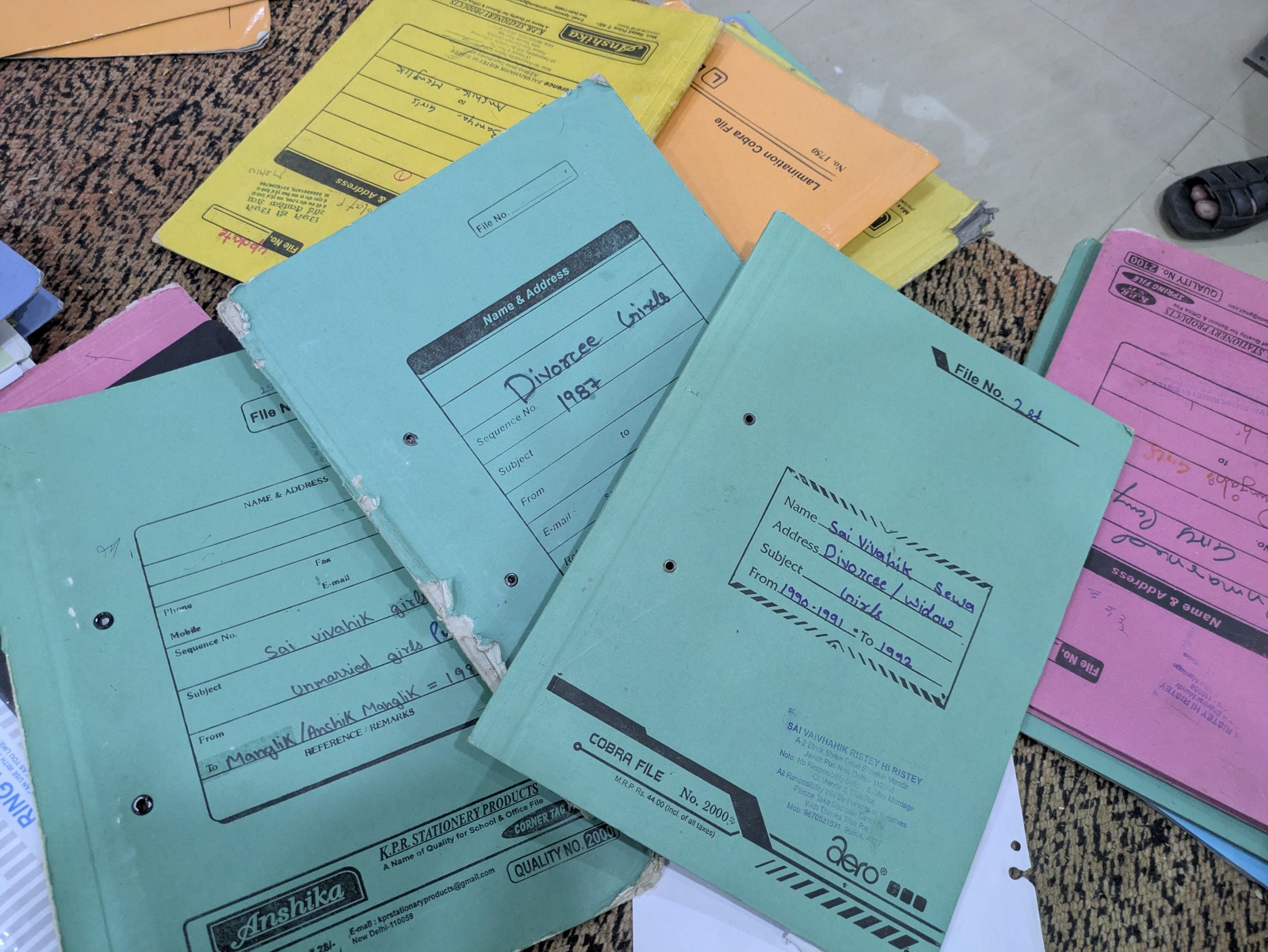
Paying for a match, not necessarily getting one
For families paying to access the bureau, the experience does not always feel worth the money. Complaints range from poor management and too few staff to the absence of a clear system for organising profiles and facilitating meetings.
Some suggest colour-coded files, as in other matrimonial bureaus, with pink for brides and yellow for grooms. Others question why families of prospective brides would come to such gatherings at all when, as one attendee puts it, proposals already come to their homes.
The pricing, meanwhile, is not always clear.
Registration packages range from ₹2,500 to ₹3,500, with different levels of access to WhatsApp and Telegram groups that circulate profiles filtered by age and caste. Announcements at the gathering are included in both. A newer mediator service charges ₹3,100 for registration, with families reporting additional fees of ₹11,000 per meeting and ₹21,000 once a match is finalised.
But paying for access does not guarantee a match. Raj points out that some profiles tend to receive fewer responses, such as those with lower educational qualifications, limited incomes, higher ages, or families living in villages where prospective brides may be reluctant to relocate.
“We make it clear to them beforehand that not many people in the market will like your profile,” he says.
“That’s your wish. If you still want to register, we have no problem. We’ll circulate the profile.”
(Edited by Maryam Hassan)