



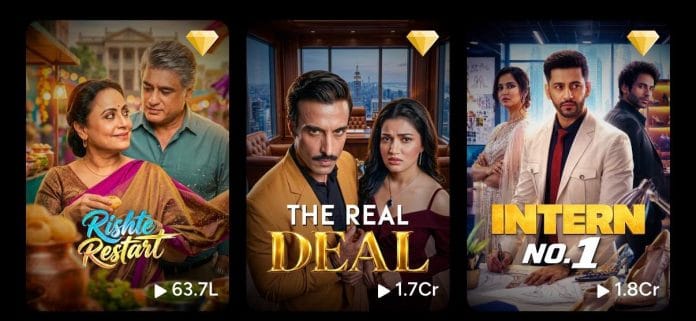

The latest trend reshaping India’s digital entertainment landscape did not originate in Bollywood Mumbai. It began in China and has now rapidly spread to Indian audiences, slowly changing their viewing habits. Less than two years after the launch of Chinese platforms such as ReelShort, DramaShort in India, the Indian microdrama industry is maturing with established film houses such as Yash Raj Films and Farhan Akhtar’s Excel Entertainment stepping in with investments.
“What was largely experimental 12-18 months ago, is now becoming an organised category with dedicated verticals, apps and creator ecosystems emerging around it. The pace of growth is likely to accelerate as more original IP (original storylines) are developed for Indian audiences,” Anuj Gosalia, Founder & CEO of Mumbai-based studio Terribly Tiny Tales (TTT) told ThePrint.
For one generation, convenience came in the form of two-minute noodles. For Gen Z, it may be entertainment that lasts just as long. Designed for the 9:16 vertical screen and the scroll culture, microdramas compress romance, betrayal, suspense and redemption into rapid-fire narratives peppered with twists and cliffhangers. The goal is to keep viewers hooked through one more episode, and then another.
China’s cultural export is finding an audience in India through platforms such as MX Fatafat, Jio Hotstar’s Tadka, Pocket FM, Kuku TV and Terribly Tiny Tales, among others. The Indian microdrama industry is currently estimated to be between $300 million and $500 million, driven by roughly 100 million monthly active users and more than 450 million downloads. And industry watchers are even calling it the “new OTT”. Projections suggest the segment could grow by as much as 91 per cent in 2026 alone, underscoring the extraordinary pace of its rise.
Launched alongside IPL 2026, Jio Hotstar TADKA has since crossed 100 million users, with daily watch time per viewer growing five times since launch, the brand told ThePrint.
Jio Hotstar revealed that the audience story is equally broad-based, with nearly “40 per cent of watch time coming from Tier 2 cities and beyond, while viewers under the age of 24 account for over 42 per cent of viewership.”
Studios that built their reputations on theatrical releases and long-form storytelling are also adapting to a world where narratives are consumed one swipe at a time. In April 2026, YRF announced plans to invest Rs 150 crore in developing a direct-to-consumer microdrama platform. Excel Entertainment has similarly established a dedicated microdrama division, betting that it might be the future of entertainment.
“We’re seeing engagement rates often 30-40 per cent higher in micro episodes than standard branded reels. Instagram is a key platform for us because this format is native to how people already consume: vertical, fast, repeatable, shareable,” Gosalia added.
Also read: Make beer cool again. How craft breweries are changing India’s drinking game
The stories
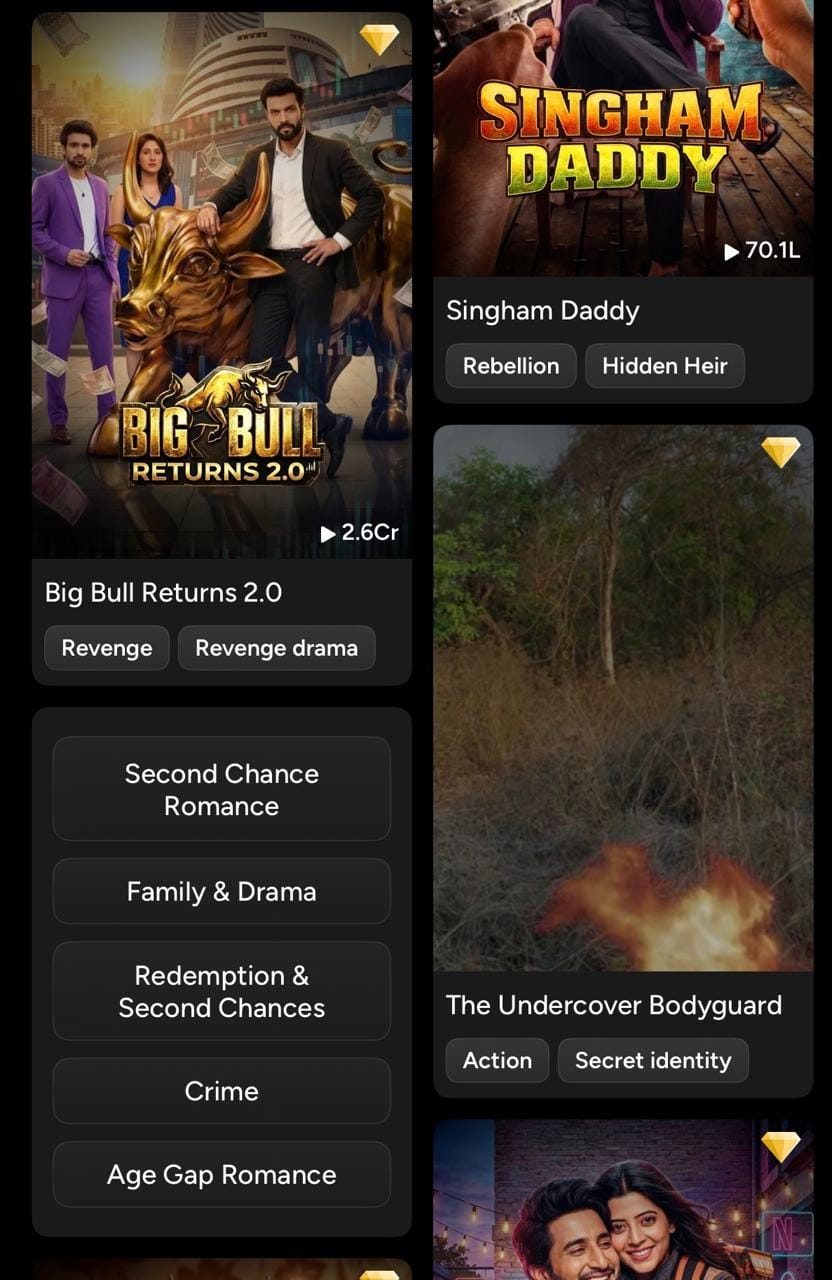
The Secret Khiladi, available on Quick TV, follows a protagonist who conceals his wealth and power. Wake Up King, a 44-episode series streaming on Vahaflix, taps into an equally popular formula: the aspirational hero’s journey.
The format is also prompting producers to rethink existing franchises. Hello Mini, which was a conventional web series, has been reimagined as a vertical microdrama. A growing niche has also emerged around supernatural and fantasy romances, including werewolf-themed dark romance narratives.
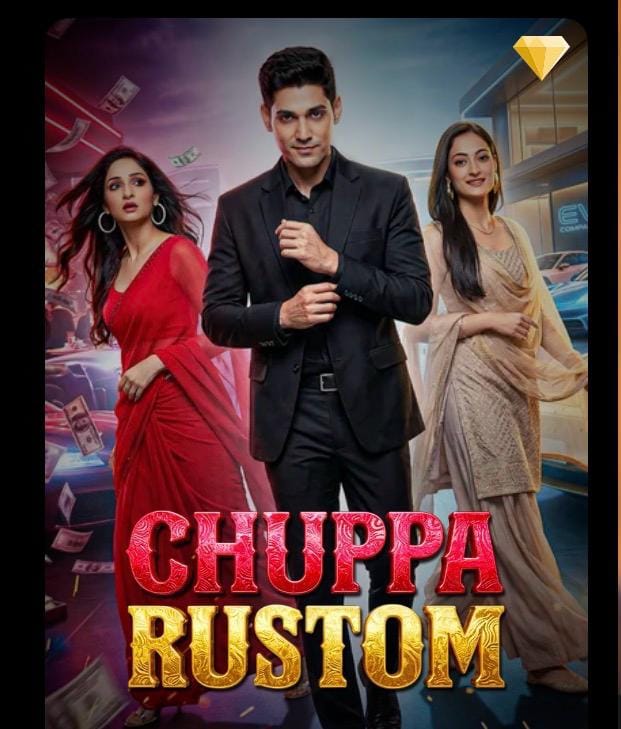
The popularity of these narratives is not accidental. Many of India’s earliest microdramas borrowed heavily from successful Chinese templates, some closely mirroring story structures that had already proven effective abroad. That early trends continue. Certain themes have emerged as near-universal constants: hidden identity, social humiliation, dramatic revenge and shocking revelations of status or identity.
For critics, the stories can feel exaggerated, even formulaic. For audiences, however, the formulas appear to be the point. Like soap operas compressed into two-minute bursts, microdramas offer instant emotional gratification, a betrayal, a confrontation, a triumph, before quickly setting up the next twist.
Yet one aspect of the microdrama boom remains particularly contentious: its growing reliance on sexually suggestive content, which is borderline soft porn.
Several popular titles, including Nafrat on MX Fatafat, as well as Galat on Rocket Reels, have pushed the boundaries of mainstream digital entertainment with intimate storylines and provocative marketing. It drifts in soft-core erotica rather than conventional drama.
Also read: Bhutan asked ‘did you find our toilets clean?’ It’s a question India won’t dare ask tourists
Familiar faces on a new platform
The microdrama trend has also drawn established television actors into the ecosystem. TV stars including Sharad Malhotra, Karanvir Bohra and Navina Bole have appeared in microdramas, lending a degree of familiarity and legitimacy to a format still seeking mainstream acceptance.
“One of the clearest signals of the category maturing is the growing participation of television and digital talent. Actors, writers and directors are increasingly treating microdramas as a legitimate storytelling format rather than a social media experiment,” Gosalia explained.
According to him, television actors bring a household connect that audiences instantly recognise, while also having the kind of digital presence that’s increasingly important today.
Malhotra is one example. The actor, who starred in Galat, acknowledged that he initially had reservations about the project’s unconventional premise.
“When I first heard the story, it felt a little alarming. It wasn’t a regular narrative. I wondered how audiences would react and whether they would accept it. There was definitely some hesitation,” he said.
Galat follows the life of a man in his forties who develops feelings for the much younger daughter of a close friend. The actor said those concerns faded after the series premiered. Messages from viewers, he said, focused less on the controversial elements and more on the emotional core of the story.
“Many people wrote to me saying they connected with the emotions. Some even said they could relate to the characters and the situation,” Malhotra added.
Actor Nitish Kapoor who has appeared on various TV shows and OTT such as Shakti, Hush Hush and Kesari 2 was recently cast as the lead in Pratilipi Films’ new microdrama Aag Se Takkar, where he was required to play an underworld don. Kapoor, who has previously appeared in Kesari and a plethora of advertisements, initially saw the project as an opportunity to experiment with a different genre. However, what he encountered on the set was far from what he had expected.
“It was one horrible experience,” Kapoor said.
According to him, the production schedule was extremely demanding. “The working hours were very long. You’re essentially shooting around 100 pages in three days. Most vertical dramas are completed within that timeframe, which puts enormous pressure on everyone involved,” he explained.
Kapoor added that there was virtually no time to prepare for the role, and that the rushed nature of production often left cast and crew uncertain about what they were doing. “The script is average because the pre-production time is also limited,” he said, describing the overall experience as deeply frustrating.
“This is not why I wanted to become an actor,” he added.
Many of the shortcomings Kapoor describes are evident in the final product. Several microdramas suffer from awkward dialogue delivery, unusual camera angles, and scripts that often feel poorly adapted. At times, it appears as though an English screenplay has been translated into Hindi using AI, without sufficient effort to make the language sound natural or culturally authentic.
Creative director Priyanka Bansal has also expressed concerns about the future of the format. She has warned that microdramas may have a lifespan of only a year if producers continue to prioritize quantity and quick profits over quality storytelling. According to Bansal, audiences today are sophisticated and expect stories that are not only fast-paced but also relatable, coherent, and logical.
Despite these concerns, one factor continues to attract actors to the vertical-content space. And, that is money. Established actors working in Indian vertical dramas typically earn between Rs 1 lakh and Rs 3.5 lakh per project, with shoots often wrapped up in less than ten days.
For actors still trying to find feet in the entertainment industry, microdramas act as a bridge. But many newcomers complain of lower wages. They become part of small budget stories, which are tight on budget, typically ranging between Rs 5 and Rs 10 lakh. Nitish Kapoor has worked in three microdramas so far. He said that the makers were cutting corners in the shoot and production. And for everything, they had a one line answer: “we don’t have the budget.” Kapoor was paid Rs 15,000 for three days of shooting.
India is still a long way from achieving fair pay in this emerging industry.
The SAG-AFTRA Verticals Agreement, introduced in late 2025 in the West, established minimum daily rates of $250 for lead actors and $164 for supporting performers on low-budget vertical productions costing under $300,000. However, such standards remain largely aspirational outside union-backed productions.
“India’s microdrama industry continues to operate largely without union regulation. If an industry association were established, it could help improve working conditions,” Kapoor said.
Several popular titles, including Nafrat on MX Fatafat, as well as Galat on Rocket Reels, have pushed the boundaries of mainstream digital entertainment with intimate storylines and provocative marketing. It drifts in soft-core erotica rather than conventional drama
Also read: Arinar Black, the young rapper from Bihar who is out to ‘make the system uncomfortable’
Branded deals in microdramas
On TTT, each story is engineered to hook viewers within the first 5–6 seconds and sustain attention throughout, resulting in completion rates that are 1.3–1.5x higher than standard short-form benchmarks. A significantly higher percentage of viewers watch their microdrama videos till the end, compared to their usual short videos like the seven-part video series, Khujli, starring Jackie Shroff or the 11-part video series, Bapu.
“Average watch time for these microdramas has also increased by 20–30%,” Gosalia said, highlighting their focus has been on building IPs in order to stand out.
Indian microdrama platforms operate on a model similar to American apps such as DramaShort, ReelShort, and Candy Jar. Viewers typically have to wait 24 hours for the next episode to unlock, although they can bypass the wait by purchasing in-app coins to gain immediate access to additional content.
To expand their reach, many Indian platforms also release portions of their shows on YouTube. On Instagram, they often share the first three or four episodes of a microdrama before ending on a dramatic cliffhanger, a strategy designed to pique curiosity and encourage viewers to download the app to continue watching.
In fact TTT is already using the concept of microdramas to promote brand deals.
Microdrama format suits branded story telling too. Recently, TTT launched Kabhi Kabhi Urvashi, a four-part YouTube micro-series created for NIVEA’s lip care range. The story follows a young talent manager juggling demanding creators, career anxiety, and the chaos of being in your twenties.
“We believe the real opportunity lies in creating stories that feel culturally rooted and relevant to Indian audiences rather than simply recreating global templates. As the category matures and more creators enter the space, we’ll see a much richer mix of genres, voices and original storytelling emerge,” he said.
On the other end, Jio Hotstar’s Tadka aims to create a robust original content pipeline rather than rely only on acquisitions. TADKA works with an expanding network of more than 50 production partners, commissioning stories specifically for the micro-content format.
“The ecosystem is intentionally open, with no exclusivity requirements, allowing creators and production houses to participate freely and helping the category scale more rapidly. The objective is to create an environment where both established and emerging storytellers can experiment with the format and develop a creative language that feels native to mobile-first audiences,” the brand said.
TADKA launched with a library of more than 100 original titles and plans to expand it to over 1,000 by the end of the year. Meanwhile, Kuku, which currently produces around 150 shows every month, is aiming to increase that number to 1,000 monthly productions over the next two years with the support of AI-powered tools.
However, Kapoor argued that the industry’s long-term success will depend less on the sheer volume of content and more on the quality of storytelling.
“The industry needs to move beyond the race for producing more. They should invest in stronger, better-crafted stories. High-quality content is what will keep audiences engaged and help establish micro-dramas as a credible and sustainable entertainment format rather than just time pass,” he said.
(Edited by Anurag Chaubey)