



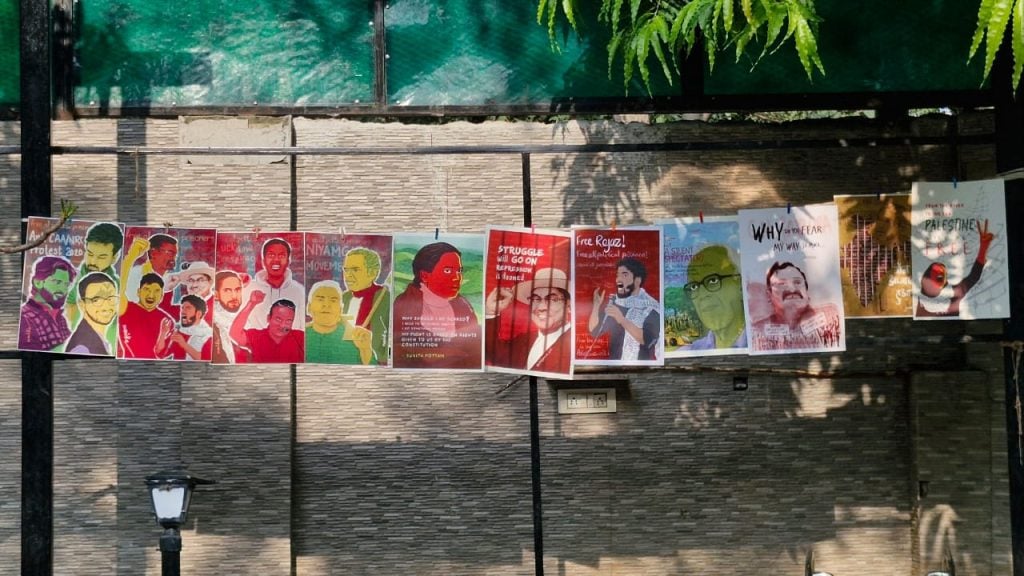
New Delhi: By 3:20 pm, half the chairs at the Press Club of India were still empty. Not for a dearth of an audience, but because half the room had gathered opposite the stage, reading the walls.
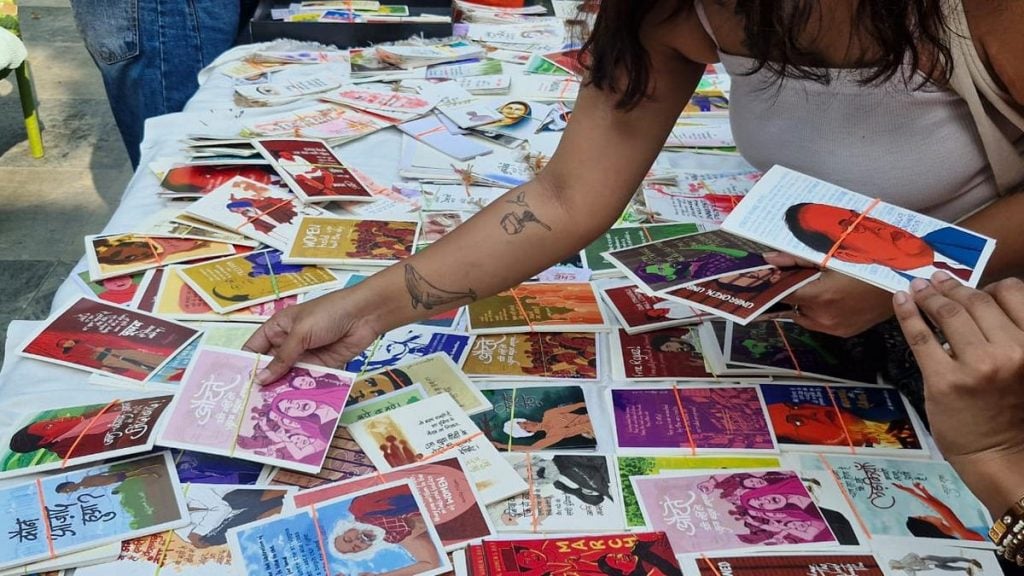
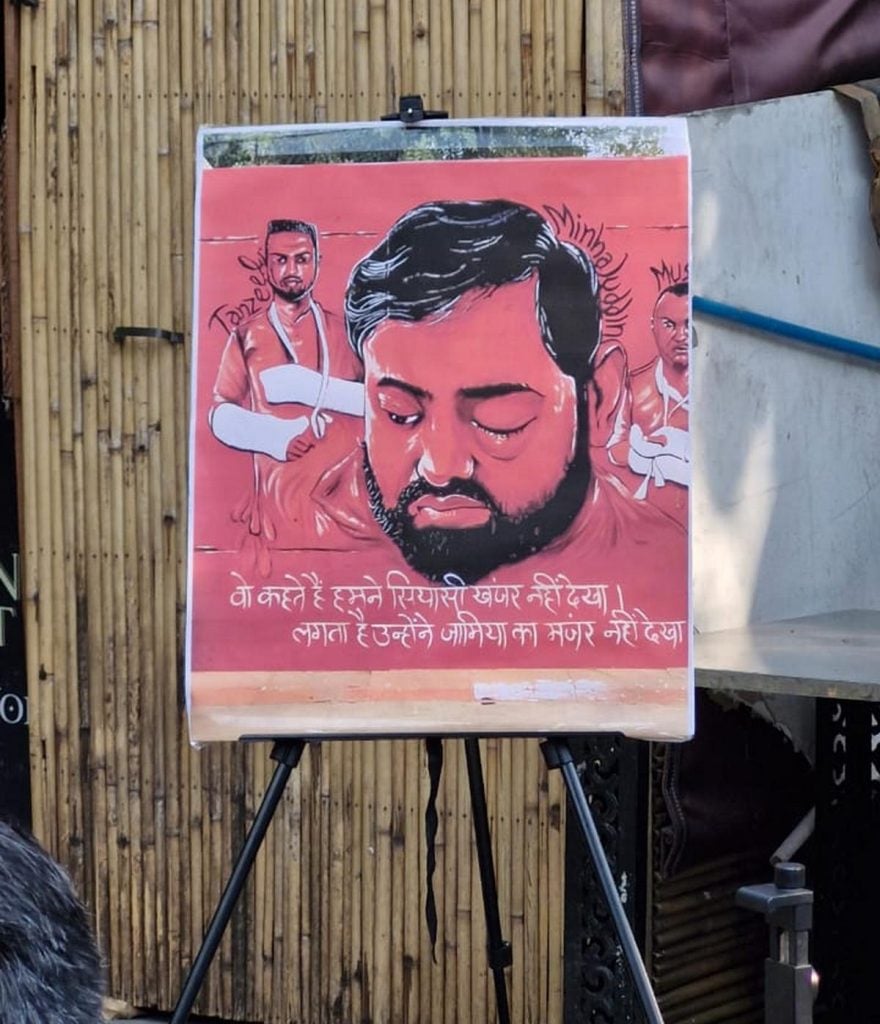
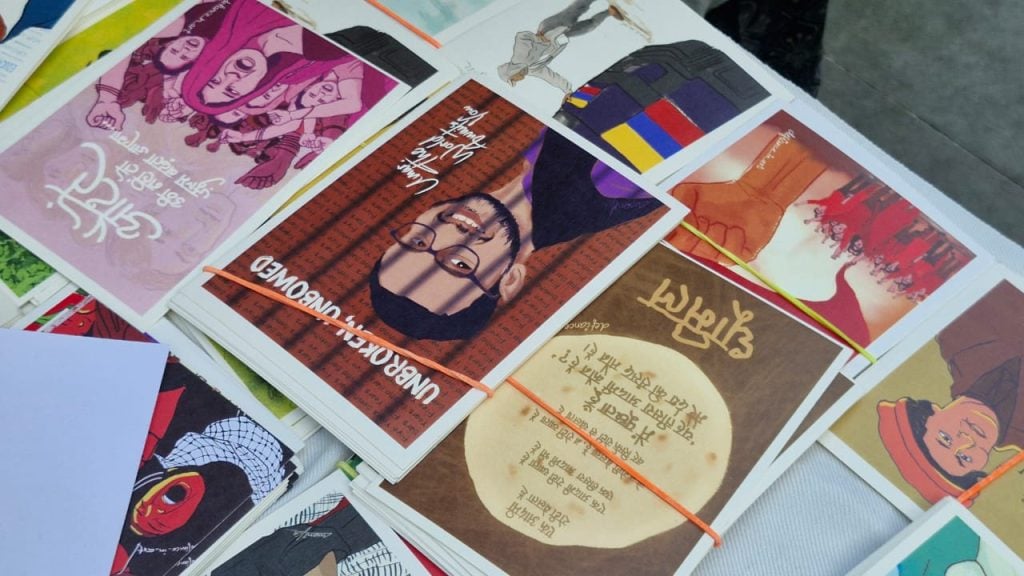
Posters and placards had filled every available surface, featuring Umar Khalid, Sharjeel Imam, Mohammad Minhajuddin, Rejaz Sydeek and others associated with the anti-CAA protests. People moved sideways in the narrow aisle to let strangers get a clearer look, the way one does in a gallery. Many were even buying the placards.
On stage, more images of Umar and Sharjeel were still being propped up. By the time the performances began, the Press Club did not feel like a room waiting for a programme to start. It felt like a room that had already begun speaking.
Hum Dekhenge: An Evening of Cultural Resistance, organised by the Association for Protection of Civil Rights (APCR), brought resistance songs, protest poetry, nazms and recitations to commemorate the sixth anniversary of Umar Khalid’s arrest on 13 September 2020. He is still in jail after being booked under the Unlawful Activities (Prevention) Act, or UAPA, in the Delhi riots conspiracy case.
An APCR member anchoring the event opened by pointing out the oddity of the date.
“It is strange how this date has become an important part of our independent Indian calendar — as necessary as 15 August and 26 January.” On those two dates, he said, the country remembers the independence it won and the Constitution it wrote. On 13 September, it remembers where both currently stand.
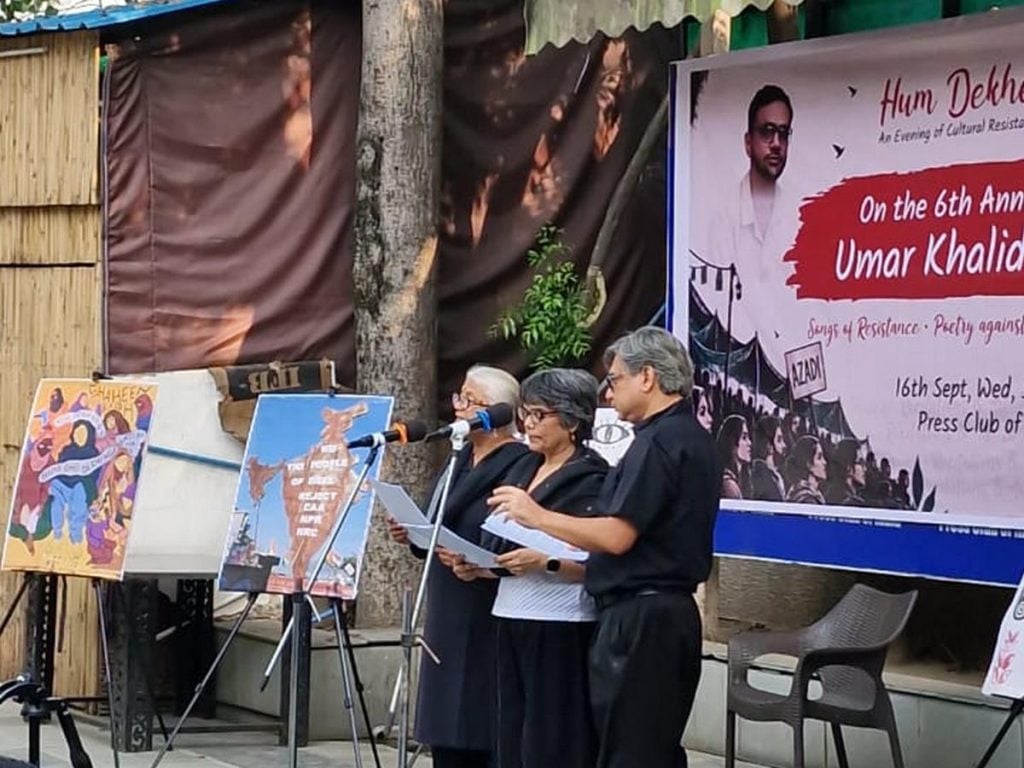
The first performers on stage were Chemegoiyan, a performative reading collective featuring Alka Ranjan, Purva Bhardwaj and Raza Haider. They started with a passage from Khalid’s prison diary, A Day in Tihar.
“Khalid, utho, haath hilaao. Khalid, abbay zinda hai?” (Khalid, get up, move your hand. Khalid, are you alive?) Raza Haider recited the opening lines, his voice echoing Khalid’s words.
Then, the three took turns reading from the passage, passing fragments of Khalid’s normal day in jail. One voice spoke of the morning headcount and waiting for basic facilities, another of reading censored newspapers and making five-minute calls, and the third of fellow inmates, shared meals and the small routines that make up a day behind bars.
There were no grand declarations, only the details of a life continuing inside a place designed to stop it from moving forward.
Also Read: ‘Umar Khalid’s new book is an opportunity to know him,’ says his mother
From prison diary to protest poems
After the three voices had carried the diary through its hours, the same call with which the day began came: “Khalid, utho.”
The room held its applause except for a few hesitant claps scattered here and there. It was difficult to know what to clap for.
Then came poet Adnan Kafeel Darvesh’s Mushkil Dino Ki Taiyari, which imagined a world where even ordinary days begin to feel threatening, where people retreat indoors as violence gathers outside.
But the poem was not simply about fear. It was about learning to live with the possibility of difficult days without surrendering to them.
“Abhi se thoda-thoda karne laga hoon, jaise apne aansuon ko bachakar rakhne laga hoon” (I have already begun preparing, little by little — as though I have begun saving my tears), Kafeel recited.
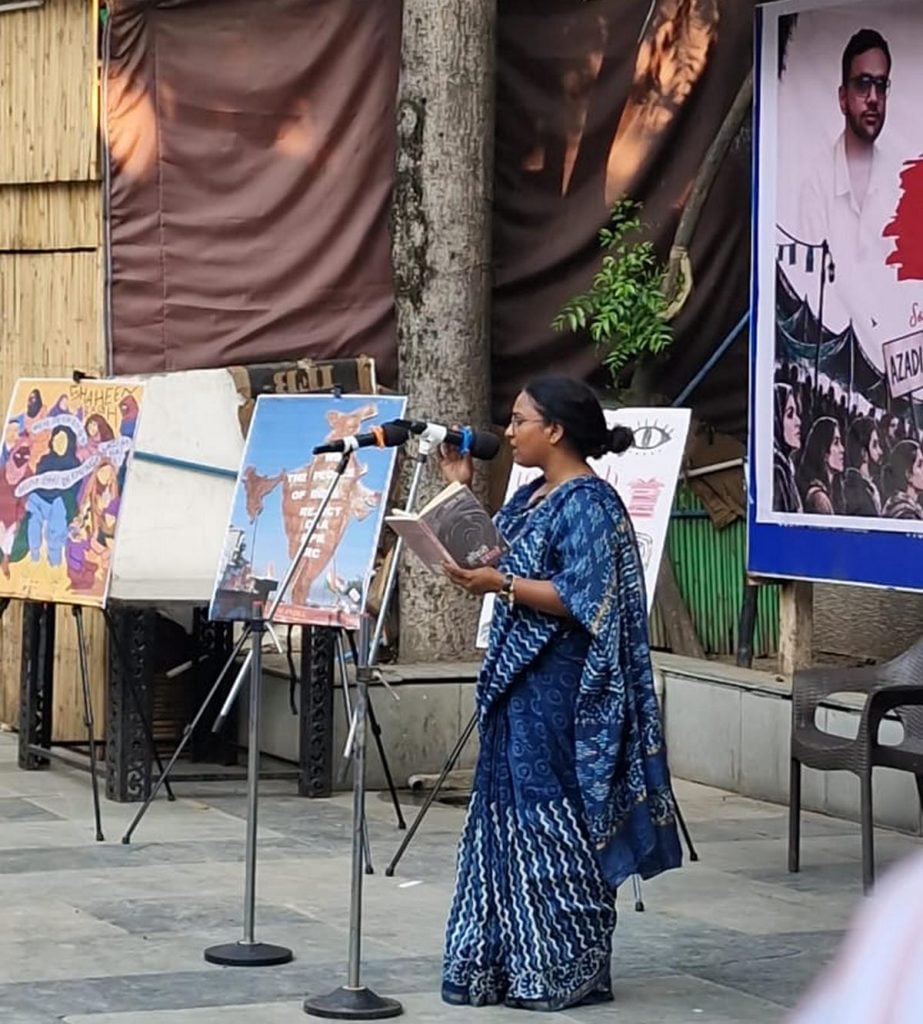
Poet Anupam Singh, who followed him, asked a simple question through her verses:
“Kyun chhod doon is sheher ko, jahaan maine haath ka ghera bana kar police ki maar se bachaya dost ko, December ki shaam water cannon se bheeg, thaane mein rihaai ka geet gaaya”—Why should I leave this city, where I shielded my friend from police blows, got drenched by a water cannon on a December evening, and sang freedom songs inside a police station?
Singh’s poem recalled December 2019, when a group of women locked arms around a friend crumpled on the pavement as policemen swung batons over his head; the video that briefly made Ayesha Renna and Ladeeda Farzana the face of a movement neither had asked to lead.
More than six years on, Singh’s poem carried that image from the streets to Tihar, where faces of the movement remain in jail, still waiting for the “rihaai” she recites about.
Songs from Faiz, Sahir Ludhianvi, Haider Saif
After the poetry recitation, the mic was tested twice and a guitar was tuned, preparing to turn the evening’s questions into songs.
“You’ve heard the expression, firing a gun from someone else’s shoulder,” said storyteller Asshar Haque, gesturing at singer Haider Saif beside him with a laugh. “Today I’ll be the one firing it through Haider bhai’s shoulder.”
Haque, who had been invited to perform a dastaan (storytelling performance) by himself, had decided against it.
“When you’ve gone to this much trouble to avoid long speeches, why should I be the one to spoil it?” Haque said, adding that Haider would sing, while he would “connect the threads” between the songs.
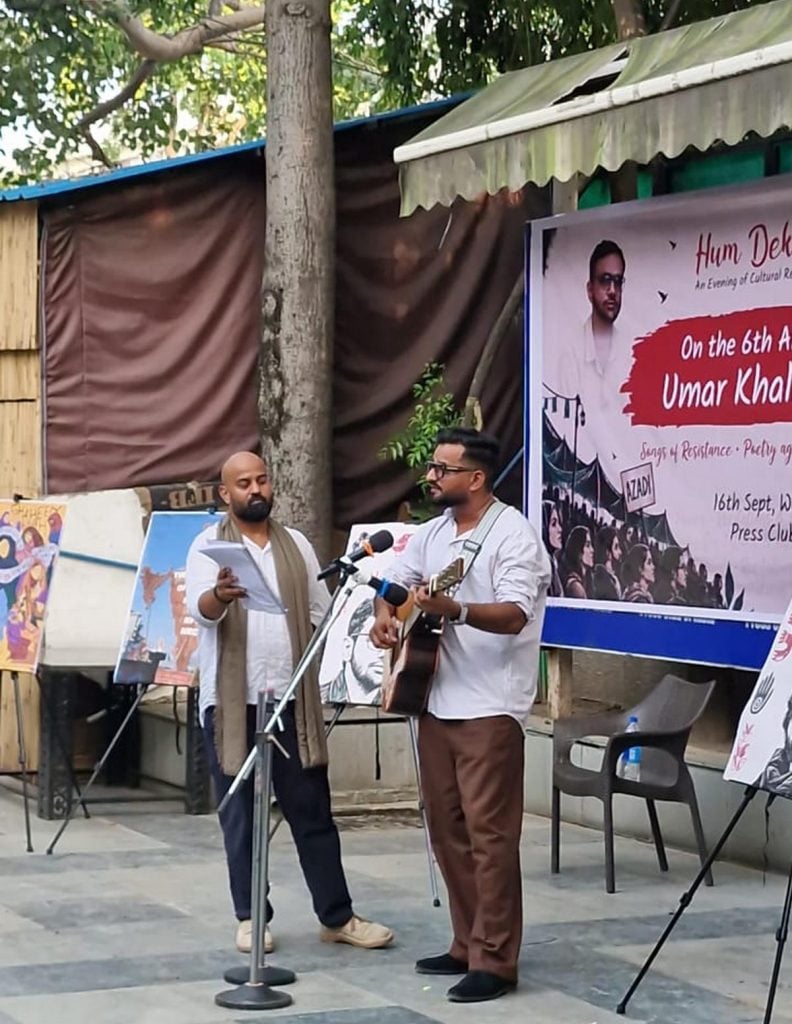
His first thread was Faiz Ahmed Faiz.
“Aaj ke naam, aaj ke gham ke naam,” he recited from Intisaab — a poem dedicated to those who bear suffering, including workers, the marginalised and people caught in violence.
Remembering such people, he spoke of Umar and his habit of asking questions about humanity, freedom, minorities, and how far a democracy permits you to raise your voice.
“Perhaps that is his crime. He questioned,” Haque added.
Following this, Haider Saif began his first song, Hafeez Merathi’s Zanjeerein, dedicating it to “Umar bhai”.
The song’s image of chains was not simply one of captivity. In Merathi’s words, “jab tak deewane zinda hain, phoolengi-phalengi zanjeerein”—as long as the passionate remain alive, the chains will continue to grow.
That idea of resistance stayed with Asshar Haque as he moved to the translated recitation of Palestinian poet Muin Bseiso’s Pratirodh Karo — Resist.
Haider then followed with Faiz’s Chand Roz Aur Meri Jaan and Sahir Ludhianvi’s Khoon Phir Khoon Hai, including the latter’s famous line: “Zulm phir zulm hai, badhta hai to mit jaata hai”—Oppression is oppression; when it grows, it eventually destroys itself. The room moved from patience to defiance in the space of these two songs.
Then Asshar Haque took a personal turn. As Khalid completed six years in jail, Haque noted that his daughter turns six this year. He recounted that she recently came home from school with a question he said they had never discussed with her: “What makes me Muslim?”
“But I don’t have an answer to that question,” Haque said. “And five years from now, there will be more of them.”
This story brought the evening’s larger question down to a six-year-old’s perspective. Haque added that what Umar and Sharjeel had taught younger generations was not simply to seek answers, but to have the courage to ask.
Questions still hanging in the room, Haider picked up his guitar to sing Hum Dekhenge. The room clapped in sync without being asked to. Many knew the words to the song, their lips and heads moving.
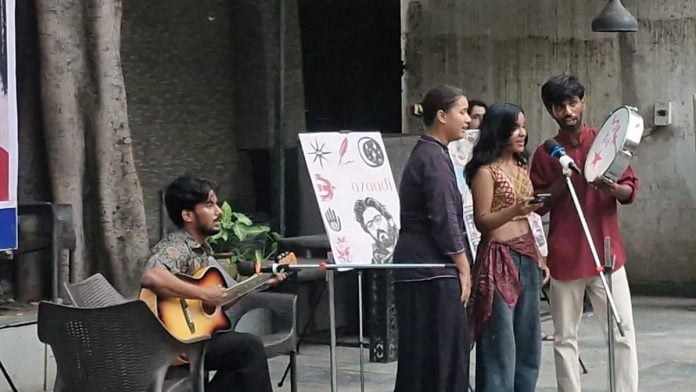
By the time the artists’ collective Hashiye Se took the stage to perform Ali Sardar Jafri’s Kaun Azad Hua, the audience was no longer just listening, but was singing rapturously.
The nazm’s old question, “kaun azaad hua hai, kiske maathe se siyaahi chhooti?” (Who has truly been freed? From whose forehead has the ink been wiped away?), brought the question of freedom back to the room, and the audience answered by singing along. Their hands moved in sync with the dafli.
Launched during the anti-CAA and NRC protests, Dastak, a student cultural forum, closed the evening with Waapas Jao, its Hindi adaptation of Bella Ciao. It was a song written for the winter of 2019 protests, sung again in the humid September evening, because the winter, in some sense, never really ended.
At the end, musicians coiled cables and shut cases. The crowd, though, had drifted back to where it had started — the table of placards opposite the stage, where Umar, Sharjeel and others were looking back from paper and paint.