



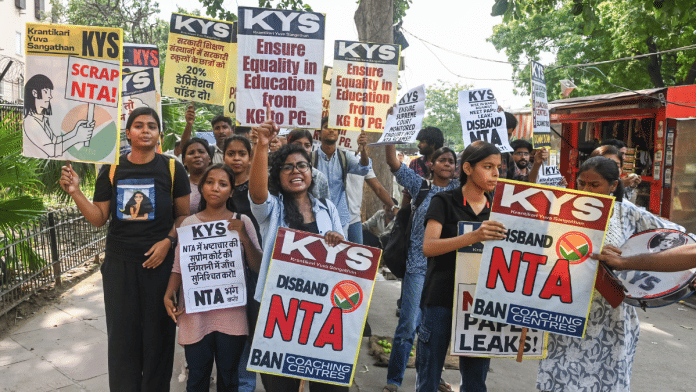
New Delhi: A month after sacking around 600 subject experts following the NEET-UG & UGC-NET row, the National Testing Agency (NTA) is rebuilding its expert pool through a stricter four-stage vetting process that includes subject-matter assessment, background checks and a detailed confidentiality undertaking.
The overhauled empanelment process comes after the CBI chargesheet alleged that three NTA subject experts were among the primary sources of the NEET-UG paper leak and identified gaps in the agency’s handling and monitoring of experts in its confidential section.
After reconducting the NEET-UG exam following the paper leak, the NTA had to also re-conduct UGC-NET papers in English, Commerce and Sociology after an expert committee found factual, typographical, translation and language-related errors, as well as repeated questions.
Last month, the Union education ministry had said that NTA would introduce a four-tier question-paper checking system to strengthen scrutiny of papers.
The agency Wednesday released an Expression of Interest (EoI) for hiring new experts, setting out four separate filters that academics must clear before they can become part of the question-paper-setting pool. Alongside this, the NTA is hiring translation reviewers as it shifts to AI-assisted translation of examination papers.
Also Read: Ghost of UGC-NET returns to haunt NTA. Centre orders audit of exam processes
Four layers of scrutiny
At the first stage, NTA will verify the application, eligibility, educational qualifications, experience and supporting documents. Applicants have to provide identity and employment-related documents, including details of their current employment and a No Objection Certificate where applicable. They also have to submit confidentiality and conflict-of-interest declarations.
The second stage moves beyond documentary qualifications to assess the applicant’s actual subject expertise. NTA-constituted subject expert committees will evaluate academic standing, research record, previous experience in setting examination papers and overall expertise in the relevant subject.
Those who clear this assessment will then undergo a separate background-verification exercise. This will include checks of academic credentials and employment history, as well as scrutiny of integrity declarations and possible conflicts of interest.
Only after these stages will an applicant reach the fourth stage — formal empanelment for specified subjects, examination levels and types of examination-related work. The panel will remain valid for three years, but NTA can terminate an expert’s empanelment for breach of prescribed conditions, subject to the terms of the EoI.
The tighter system also comes with extensive conflict-of-interest and confidentiality requirements. The EoI places restrictions on experts’ links with coaching and test-preparation organisations and requires them to maintain confidentiality around examination-related material.
“The work entrusted to empanelled experts is of the most confidential nature. Any breach of confidentiality, intentional or otherwise, can compromise an entire examination, affect lakhs of candidates, and damage the public interest. Empanelled experts are therefore expected to maintain the highest standards of confidentiality, professional integrity and academic ethics,” the NTA document states.
Stringent confidentiality undertaking
As part of the new empanelment process, the NTA has introduced a detailed undertaking that experts must sign before taking up examination-related work.
The declaration requires them to maintain absolute confidentiality about every assignment, question developed or reviewed, reference material accessed and any other information obtained through their work for the agency—including after their empanelment ends.
The undertaking places restrictions on experts’ links with coaching and test-preparation organisations. Applicants are required to disclose potential conflicts of interest and cannot have certain commercial associations with coaching or test-preparation entities.
The confidentiality obligations extend to the handling of question papers and other examination material. Experts are required to comply with the NTA’s prescribed security protocols and restrictions on copying, photographing, recording or retaining confidential material.
The new EoI explicitly bars experts from having a commercial association with candidate-coaching entities for two years after their last NTA assignment, describing this as part of the agency’s “cool-off norms”.
(Edited by Tony Rai)
Also Read: Exclusive: In CBI chargesheet, details of how NTA ‘shortcomings’ set stage for NEET paper leak