



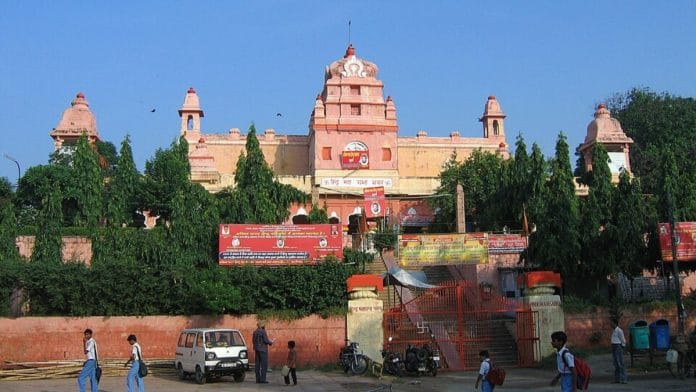
New Delhi: The Hindu Mahasabha appealed for British assistance in the 1952 general elections—the first in independent India—to push back against growing communist influence, declassified diplomatic records held in the United Kingdom’s National Archives at Kew have revealed.
The Hindu Mahasabha’s appeal was made in a confidential letter dated 27 August 1951, which was delivered to the British Deputy High Commissioner in Kolkata by Ashutosh Lahiry, then serving as chairman of the party’s parliamentary board.
“To save the province from the certain victory of the pro-communist forces, you have to actively range yourself behind the only party which holds promise of a large measure of success in the next election, or which in alliance with other anti-communist groups, can prevent the formation of a pro-communist ministry,” said Lahiry’s letter.
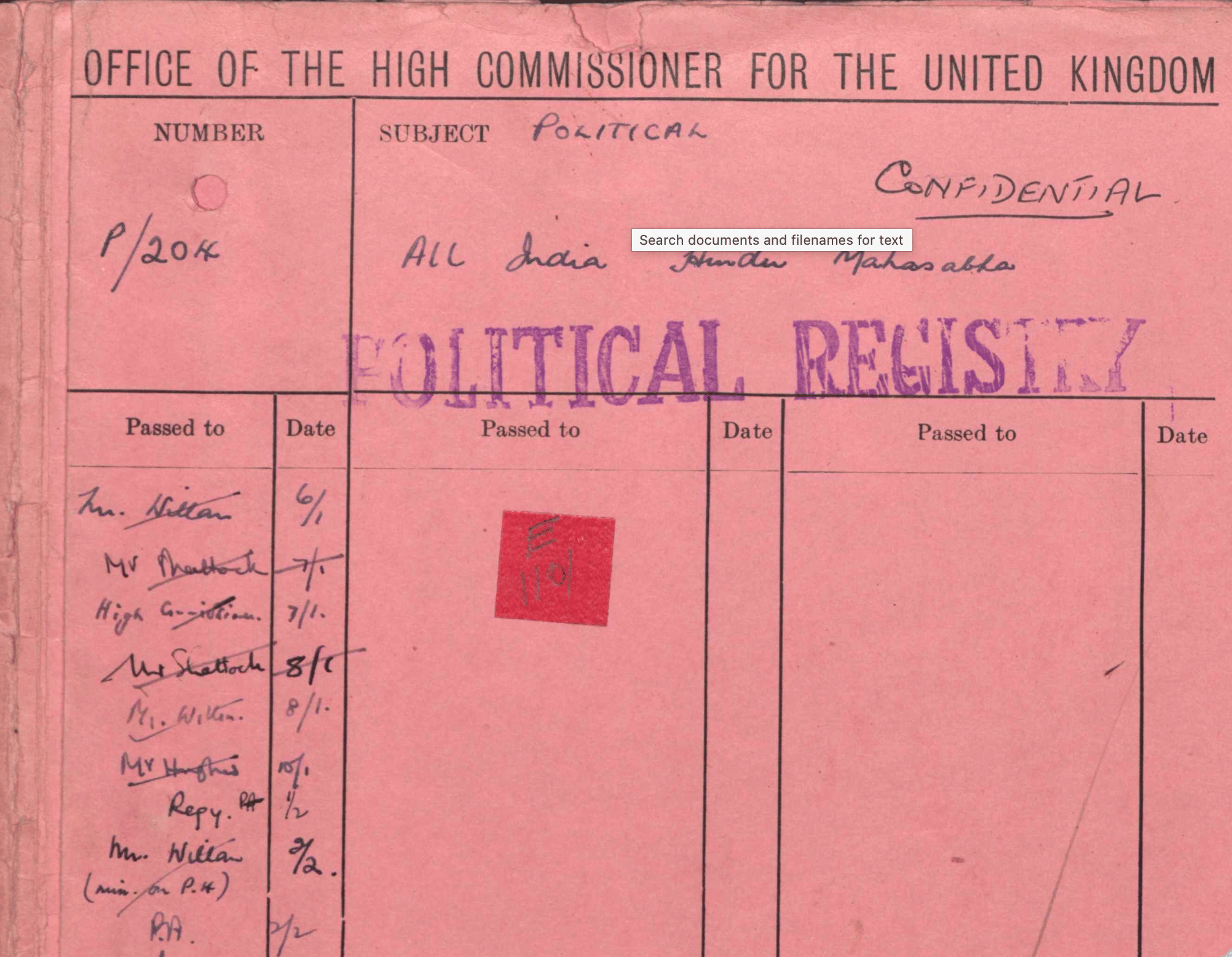
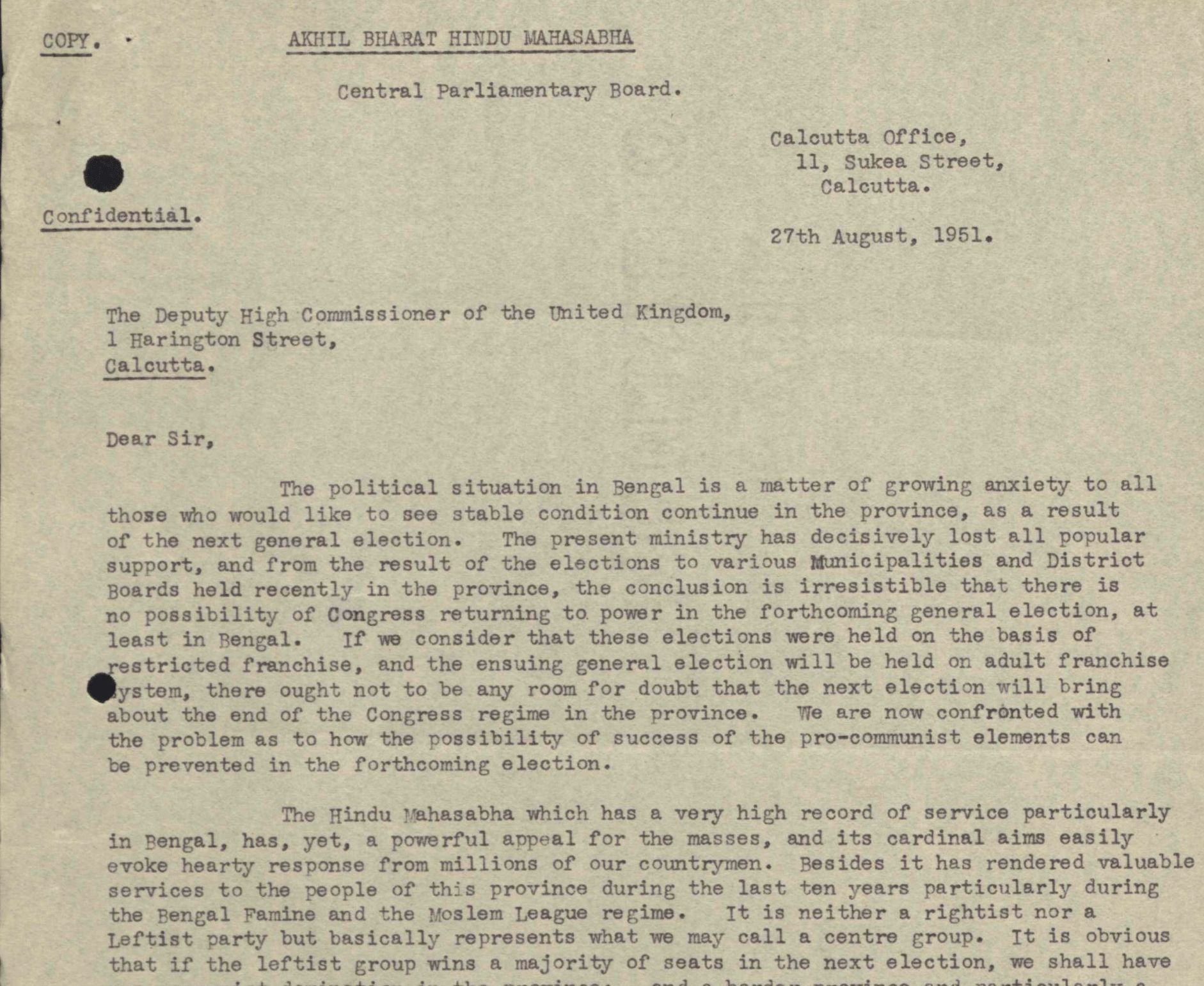
It called for “the full weight” of British influence.
“The British Government must decide whether they should have a hand in influencing the course of the forthcoming General Election,” Lahiry wrote. “I appeal to you to lend us the full weight of your influence and extend to us your whole hearted support,” the letter states.
Lahiry was a well-known figure in the freedom movement, who was imprisoned in the Andaman Islands from 1915 to 1922. He joined the Hindu Mahasabha in 1924. Then, in 1932, he was held—but not prosecuted—in connection with the attempted assassination of Alfred Watson, the editor of the Kolkata Statesman. The Hindu Mahasabha leader was again arrested in 1950, and held under the Preventive Detention Act on charges of inciting communal hatred. The Supreme Court struck down the detention.
High Commission officials responded with a brief note drafted on 4 September 1951, saying that “the High Commission is not in a position to take part in party politics.”
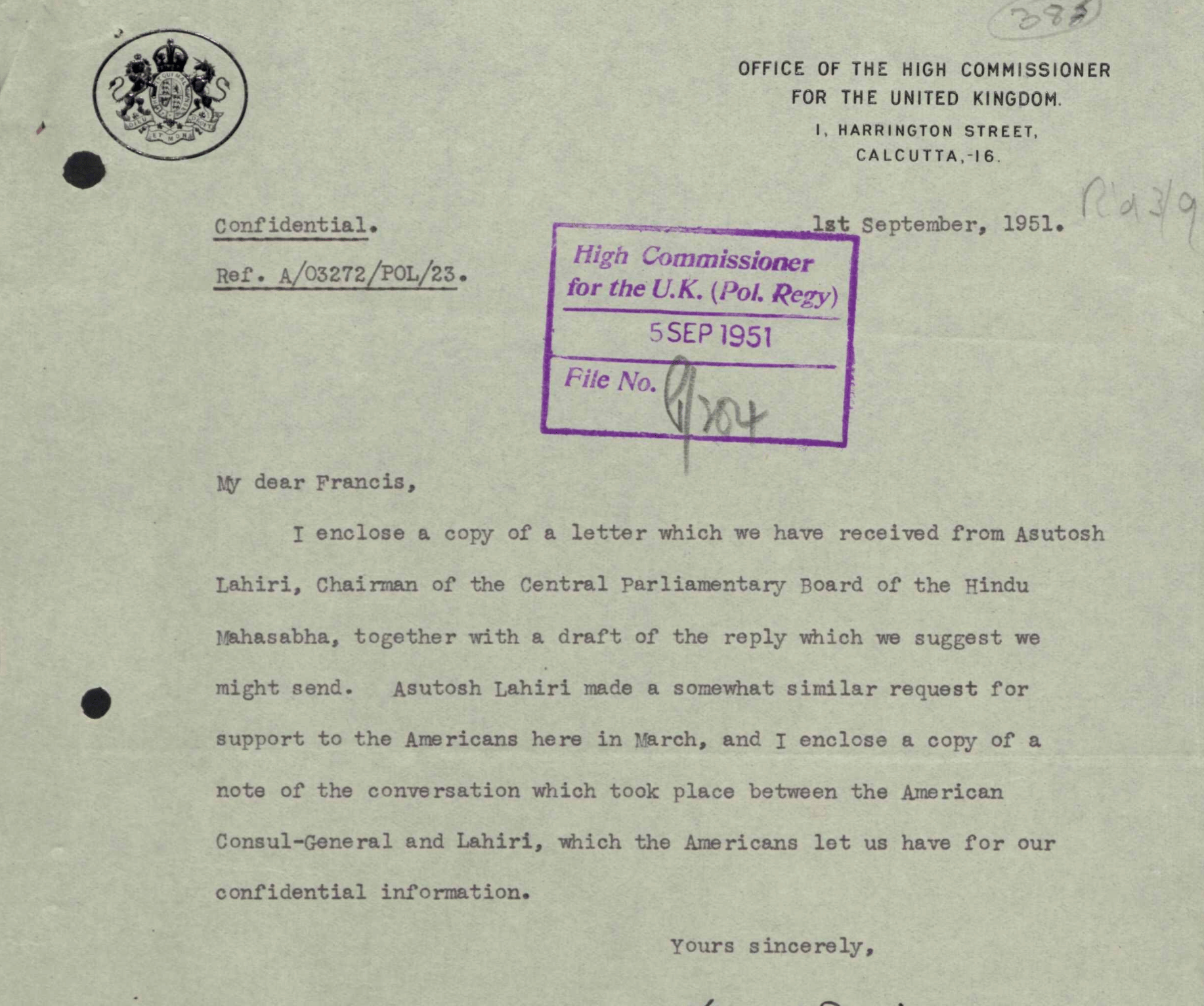
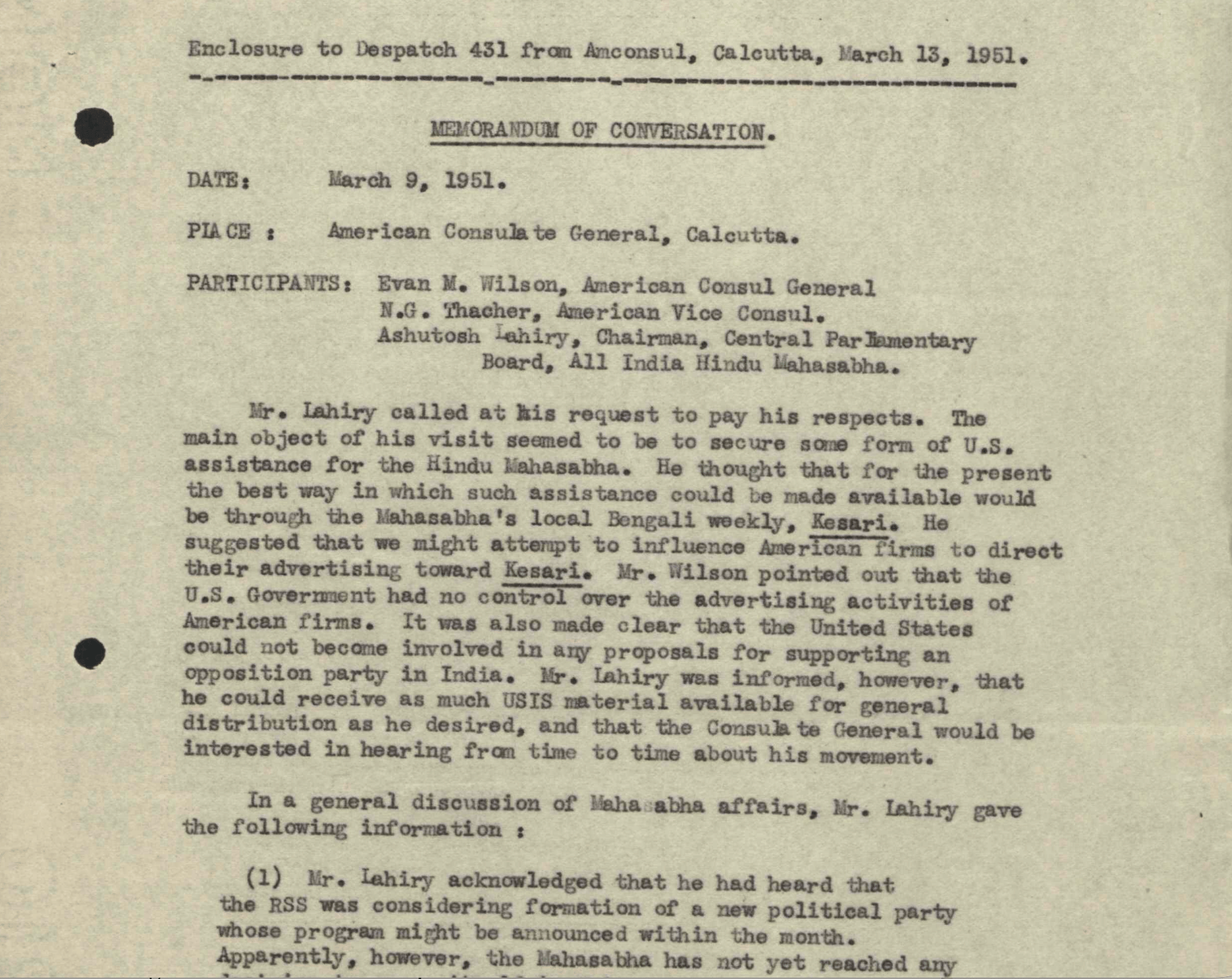
Five months before writing to the British High Commission, the documents show, Lahiry had met with American Consul-General Evan Wilson and NG Thacher, the Vice-Consul. A memorandum of their conversation on 13 March 1951, which was shared with the British High Commission, recorded that Lahiry had sought advertising from American firms for the Hindu Mahasabha journal Kesari.
Also read: Pakistan, Turkey, Saudi pact is not diplomacy alone. It affects India’s military strategy
Freedom fighters turned CIA assets
Evidence that the Hindu Mahasabha sought support from India’s colonial rulers comes on the back of research showing that political parties in the newborn republic continued to reach out to the United Kingdom and United States for support even as they decried foreign interference. The two other major parties of this period—Indian National Congress and the Communist Party of India (CPI)—also received extensive foreign support, archival research has shown.
The CIA believed the Telangana insurgency, which began soon after independence, was receiving significant foreign assistance, with one secret cable claiming wireless broadcasts were being made by operators with Slavic accents.
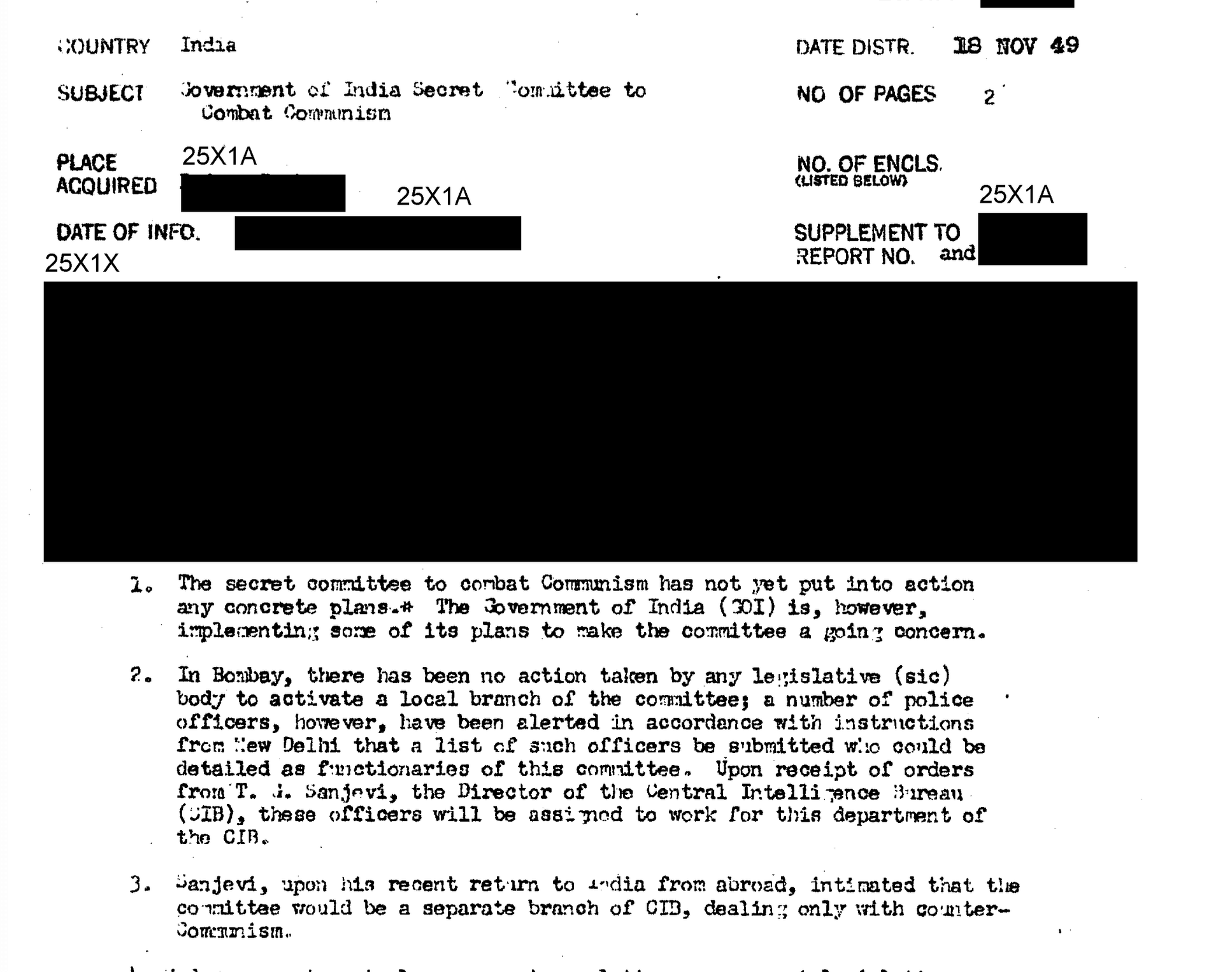
Leaders of the Congress shared this assessment, and coordinated closely with the UK and US intelligence services. Late in 1949, the Congress told the CIA that it was forming a new political party in Hyderabad in an effort to marginalise the CPI. The Intelligence Bureau set up a covert anti-communist group in Kerala’s Malabar region, taking care to keep the CIA informed of its progress.
Former US Ambassador to New Delhi Daniel Patrick Moynihan admitted in his memoirs that the CIA had funded anti-communist parties in Kerala in 1959.
“We had twice, but only twice, interfered in Indian politics to the extent of providing money to a political party. Both times this was done in the face of a prospective Communist victory in a state election, once in Kerala and once in West Bengal,” he wrote.
Moynihan claimed that one tranche of money was “given to [former Prime Minister Indira] Mrs. Gandhi herself, who was then a party official”.
For its part, the Soviet Union provided a regular flow of funding for propaganda operations in India. Lack of funds, though, limited the Soviet Union’s reach. As early as 1924, the British Indian Intelligence Bureau reported that there was “no evidence at all of the existence in India of a well-financed [communist] organisation”.
Even though the High Commission maintained a distance from such requests, the historian Paul McGarr has written, the UK’s Secret Intelligence Service, or MI6, showed no reticence.
Through 1948-1949, McGarr wrote, MI6 “expended £350,000 on covert propaganda in India and the Middle East”.
“The bulk of this money was spent on printing and publishing propaganda material… [and] bankrolling ‘whispering campaigns’ that aimed to expose local politicians as being ‘directed’ by the Soviet Union; and operations designed to sow dissension within local communist parties,” McGarr noted.
Archibald Nye, who became High Commissioner to India in 1947, expressed admiration for the government’s tough handling of communist agitations in Telangana, Kerala, and West Bengal.
“They have dealt with the communists with a firmness, indeed one might say with a ruthlessness and brutality, which we ourselves never at our most difficult times showed in this country,” Nye wrote.
(Edited by Prasanna Bachchhav)