



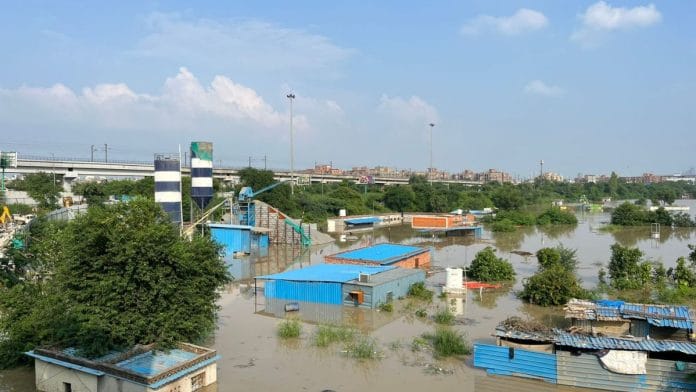
New Delhi: When the Delhi government introduced the term ‘O-Zone’, a large stretch of land along the Yamuna, in 2021, it was just another town planning jargon. But on 23 May, the Delhi High Court held that residential colonies in the protected floodplain were “completely impermissible”.
While the court’s directions sparked unrest amid the 90 colonies that live in the O-Zone, CM Rekha Gupta on Tuesday clarified that existing structures on the floodplain would not face any consequences and that the court’s orders were only for any new construction in the area.
What is the ‘O-Zone’?
Under the Delhi Master Plan 2021, the government declared a 9,700-hectare area from Wazirabad in north Delhi to Okhla in the south as the Yamuna floodplain. The 165-square-kilometre stretch, which contains nearly 15 lakh homes, was classified as environmentally sensitive because during extreme rainfall it could absorb water, reduce flood risks in other parts of Delhi, and help recharge the ground water.
The sudden classification came after the Yamuna’s deteriorating condition was visible for all to see. Urban planners felt that preserving the floodplain was essential for the security of Delhi’s ecology.
At the time, the government banned any construction or colony development within the O-Zone. However, over time several colonies had already settled along the Yamuna flood plain. The authorities now estimate that there are around 90 to 100 unauthorised colonies within the O-Zone. Many of these settlements don’t have proper sewage systems and leak large volumes of untreated waste water into the Yamuna.
However, most of the homes have been spared from immediate demolition drives until December 2026 due to several temporary protection acts which have been extended repeatedly. But on 30 April, the DDA issued a public notice announcing it would remove all encroachments from the O-Zone, except the ones that have been covered under the PM-UDAT scheme.
The matter has gained more attention after the Delhi High Court’s recent comments and since the National Green Tribunal too told the authorities in March this year to speed up the process of physically demarcating the Yamuna’s floodplains.
In response, the DDA began conducting drone surveys and installing several signboards across the floodplains to mark the O-Zone’s boundaries. This has left thousands of residents in the area uncertain about where they are headed.
Also read: Pakistan’s spy satellite network watching India has grown faster than ever in just 16 months
Demolition anxiety
While some of the colonies in the area were converted into legal settlements under the PM-UDAY scheme, the majority were not. One such area is Yamuna Bazar, home to nearly 310 families or 1,100 people across 32 ghats. The residents of ghats and their lives are intertwined with the river itself. With eviction notices from the government, many are questioning where they will go and what they will now do.
Residents and their supporters argue that many of these settlements predate the recent planning regulations. Some of these communities have existed there for generations and such demolitions would displace large populations.