



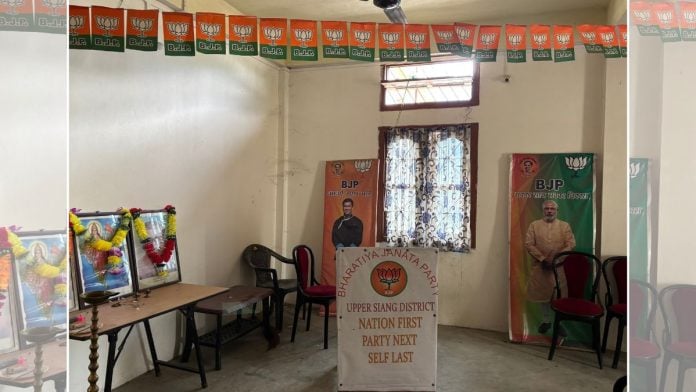
Yingkiong: The BJP office in Arunachal Pradesh’s Upper Siang district has remained locked these days. The fear of it being vandalised or its workers being attacked hangs over the party’s local unit, whose members say they are increasingly finding it difficult to defend the government’s push for the proposed Siang Upper Multipurpose Project.
Inside, however, the discussions have not stopped. Party workers talk about the growing opposition to the dam, but also about a larger sense of neglect. Upper Siang, a district home to eight tribes, does not have a ministerial berth in the state government, BJP workers say. They complain that the district receives little attention or funding, even as they are expected to carry out the party’s campaigns on the ground.
There is also frustration over the deployment of security forces in the region and the pressure this has placed on local resources. One example the workers bring up is the shortage of cooking gas cylinders, which they say have become more difficult to procure as supplies are being taken up by the Central Armed Police Forces (CAPF) deployed in the area.
The mood among the BJP workers is one of frustration, and at times, resignation. They find themselves caught between their allegiance to the party and their ties to the land and communities that are opposing the dam.
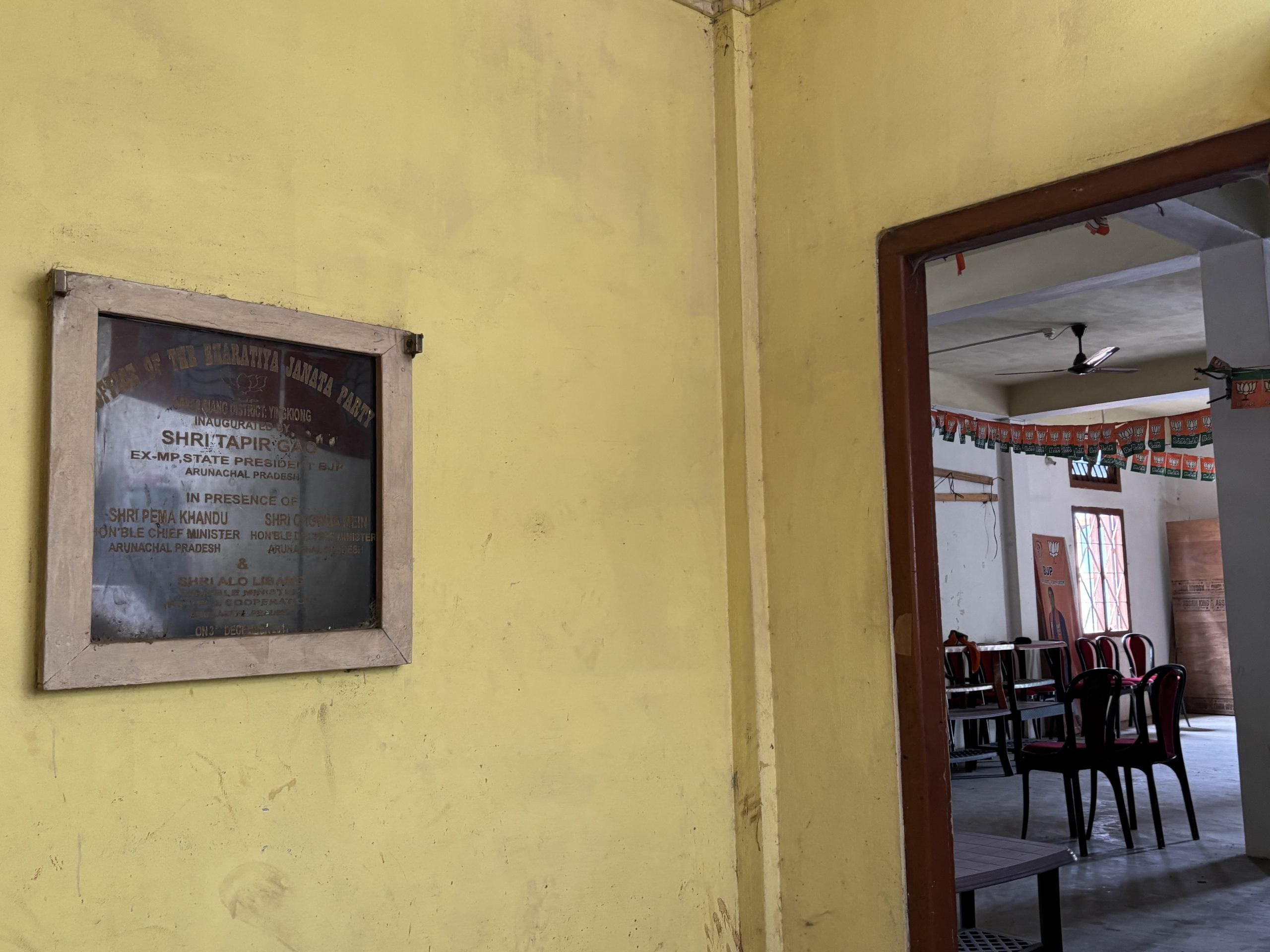
“We can’t speak freely about the dam because we are associated with the BJP and need to follow what comes from above. But if you see, we are also from the same villages, this same land. This office we are sitting in will also go underwater after the dam is built. Nobody wants that. But our hands are tied,” Tago Jijong, general secretary of the BJP’s Upper Siang district unit, told ThePrint.
Jijong said the party’s state leadership has instructed local workers to campaign in favour of the project, describing it as a matter of national importance.
“From the BJP state office, we get the orders that this dam has to be built; it is a national issue. You have to go from village to village in Siang and Upper Siang to campaign and convince people,” he added.
Campaigning quietly
Carrying out the campaign openly has become difficult, he said. Instead, workers have been trying to do it discreetly, aware of the resentment they could face from people in their own villages.
“We are doing it on the down low. This kind of thing can’t be taken publicly,” Jijong said.
One of the main arguments party workers have been asked to make is that the proposed dam is necessary to counter China’s hydropower project upstream. But even this argument invites questions from villagers.
“People ask us, what if the China dam breaks? Will our dam be able to hold then?” Jijong said.
The BJP workers say the government’s approach to the project has also left them frustrated. They believe there has been little meaningful engagement with villagers before the government moved toward the pre-feasibility report (PFR) stage.
During his election campaign in 2024, local MLA Alo Libang from the BJP spoke against the construction of a dam. But after his victory, workers said, pressure from the government changed his stance.
“People look at us differently now. The party people don’t understand the struggles of being on the ground. Most of our work is self-funded,” Jijong said.
Also read: Who is NK Singh once the mask drops? An economist who loves Hindustani music
‘This will spread beyond Arunachal Pradesh’
For Ojing Peyang, president of the BJP’s Upper Siang district unit, the situation marks a reversal of the politics he has witnessed in the region over the years.
He recalls being in the Opposition around 2012-13, when the party he was associated with campaigned against the dam. The arguments then centred on the value of land that had sustained generations of families.
Peyang remembers proposing that the land in the affected areas, then valued at around Rs 200 per square metre, should be compensated at Rs 6,000 per square metre.
But the political positions have since shifted, he said.
“Any government that comes wants a dam. And by default, the Opposition becomes anti-dam,” Peyang said.
The workers also discuss the changing political landscape around the agitation, including the election of Nobeng Boreng, a PPA leader and former MLA candidate, as president of the Siang Indigenous Farmers Forum (SIFF), which is leading the opposition to the project.
The discussions eventually return to the growing protests against the dam. One BJP worker says the presence of security forces in the region has only deepened the anger, making any attempt at dialogue more difficult.
“This is a democracy. Now protests have happened in Itanagar, and it will happen in Delhi too. We don’t even have to go there. People of the Northeast and Arunachal, and students, are there. They will come out,” the worker said.
According to them, there is a strong possibility of the agitation spreading beyond Arunachal Pradesh.
“This system and the way this issue was raised is not right. We will have to start from zero. This thing will spread. No peace talks can happen with the Army and all present,” the worker added.
For the workers in the locked office, the problem is not simply how to defend the BJP’s position on the dam. It is how to do so when the people they are expected to convince and the land at the centre of the dispute are both their own.
(Edited by Prasanna Bachchhav)