



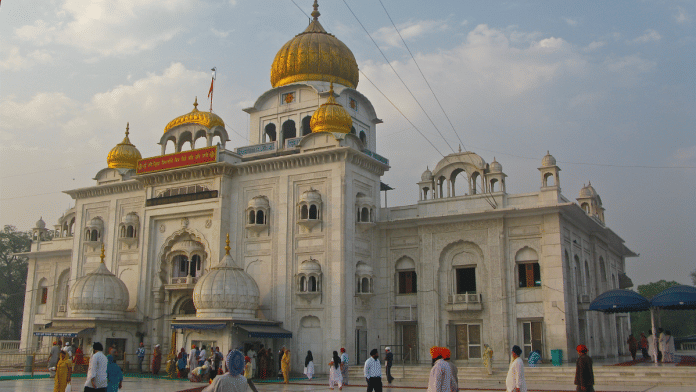
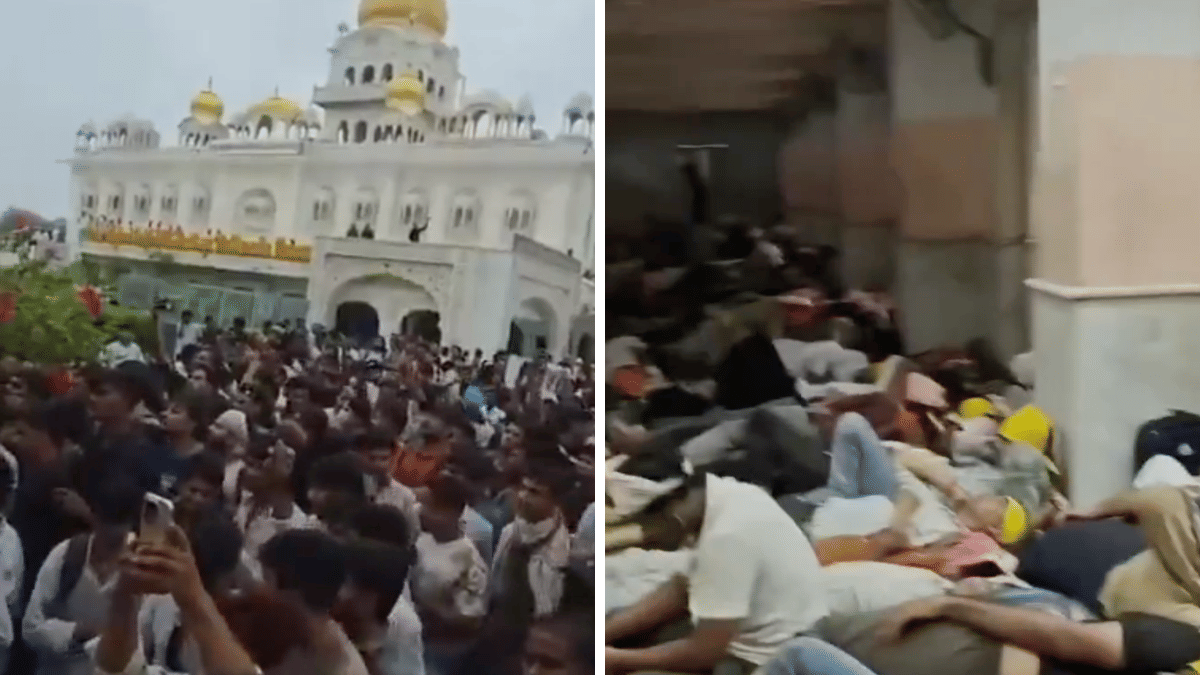
New Delhi: As thousands of protesters continue to pour into the streets of Delhi, one of the city’s oldest sanctuaries is doing what it has done for centuries — keeping its doors wide open.
In the heart of the city, Gurdwara Bangla Sahib is offering hot meals, first aid, drinking water and a place to rest for thousands of protesters.
For this grand 17th-century haveli-turned-shrine, playing host in times of turmoil isn’t unique. Long before it became one of Delhi’s most revered gurdwaras, Bangla Sahib had already earned its place as a refuge for the distressed. Ideally located, the gurdwara has sheltered many during riots, diseases and disasters.
Bangla Sahib was never merely a place of worship. For generations, through every historic storm, it has been a sanctuary of hope for the hungry, the homeless, and the distressed.
When the bloody lines of the Partition resulted in thousands of refugees pouring into the city’s streets, the gurdwara was a refuge and comfort.
It was always built to serve. Decades later, remaining true to its core mission, Bangla Sahib rose to the occasion once again when the brutal first wave of COVID-19 brought the country to a standstill. In the scorching Delhi summer heat, volunteers stood for hours preparing massive meals and opening its gates to healthcare workers.
The face of crisis has changed over years, but the spirit of Seva and the fire of its kitchen, remain unchanged even centuries later.
This marble complex, crowned by its majestic golden dome, was once the royal residence of Mirza Raja Jai Singh of Amber, a powerful Mughal General, originally known as Jaisinghpura Palace. It later came to be called Bangla Sahib deriving its name from “Bungalow” or “Bangla.”
In 1664, while Aurangzeb still ruled from Delhi, the city was crippled by devastating smallpox and cholera epidemics. It was then that the eighth Sikh leader, Guru Har Krishan, turned the general’s haveli into a haven for the sick.
The struggle for the Gaddi
Apart from being a place of pilgrimage, the famous Connaught Place temple also sits at the centre of one of the most tumultuous chapters of Sikh history.
Rana Safvi in Shahjahanabad: The Living City of Old Delhi (2019) details how barely two weeks before his death, Guru Har Rai named his five-year-old son Har Krishan as his successor, making him the youngest Sikh Guru.
It was a decision that overturned the long-held convention of primogeniture.
Ram Rai, the expected heir to the Sikh throne, saw his destiny unravel at Aurangzeb’s court. Defying his father’s command never to compromise the Sikh faith, he altered a verse of Gurbani to please the emperor.
As Surjit Singh Gandhi writes in History of the Sikh Gurus Retold (2007), the price was steep — Guru Har Rai excommunicated his elder son and bestowed the “gurgaddi” upon the young Har Krishan.
Humiliated and unwilling to accept the decision, Ram Rai turned to the Mughal emperor. Already in Aurangzeb’s good books, Ram Rai persuaded the emperor to summon the young heir to Delhi.
Guru Har Krishan, however, had vowed never to appear before the emperor. The task of persuading the young Guru, therefore, fell to the king of Amber, who wasted no time and dispatched his minister, Paras Ram, with a letter inviting the Guru to Delhi.
Reluctant though he was, Guru Har Krishan saw this as an opportunity to dispel the misconceptions spread by his brother’s followers and strengthen the Sikh morale. In February 1664, he left Kiratpur for Delhi.
Entrusted with the young Guru’s safety, Jai Singh made elaborate arrangements for his stay and welcomed him as a guest of honour at his grand Delhi residence. Soon, devotees began flocking to the palace to catch a glimpse of the young Guru.
However, remaining resolute to his vow to never meet the Mughal emperor, Guru Har Krishan stayed away from Aurangzeb’s court. Instead, Prince Muazzam visited him. Struck by the young Guru’s wisdom, he returned to the court filled with praise.
Caught between the Guru’s overwhelming popularity among the Sikhs and glowing reports from his son, as well as Raja Jai Singh, Aurangzeb dismissed Ram Rai’s claim. However, he refrained from publicly acknowledging Guru Har Krishan’s rightful claim.
Also Read: Chai, mattresses & first-aid—Delhi gurdwaras open doors to CJP supporters after police action
Serving the sick
It was during Guru Har Krishan’s stay in Delhi that the city was gripped by devastating outbreaks of smallpox and cholera. Fearlessly, the young Guru moved among the afflicted, tending to the sick, cutting across faith, earning him the title “Bala Peer” or the Child Saint.
Yet, his generosity came at a cost. Guru Har Krishan succumbed to smallpox and died on 30 March 1664, at just eight years of age.
Devotees accompanied his funeral procession to the Yamuna River, where his last rites were performed by Bhai Guruditta. The cremation took place where the young Guru had camped to avoid Aurangzeb’s visit to Jaisinghpura.
At the heart of the Bangla Sahib complex lies the hallowed tank or sarovar. Believed to have been blessed by the Guru himself, its waters are revered as amrit or nectar and are said to have cured thousands during the epidemic.
As he lay on his deathbed, wrote Gandhi, the Sikhs, restless to avoid another succession dispute asked the ailing Guru who would lead them after him, even as Ram Rai continued to plot at the Mughal court.
The young Guru asked for five paisa and a coconut, the customary symbols of succession, and uttered just two frail words — “Baba Bakala.” With that, he indicated Guru Tegh Bahadur as his successor.
In 1783, Maharaja Baghel Singh, who led the Sikhs against the Mughals, built a series of gurdwaras to commemorate the Gurus’ visits to Delhi, such as Gurdwara Bangla Sahib and Gurdwara Sis Ganj.
(Edited by Insha Jalil Waziri)