





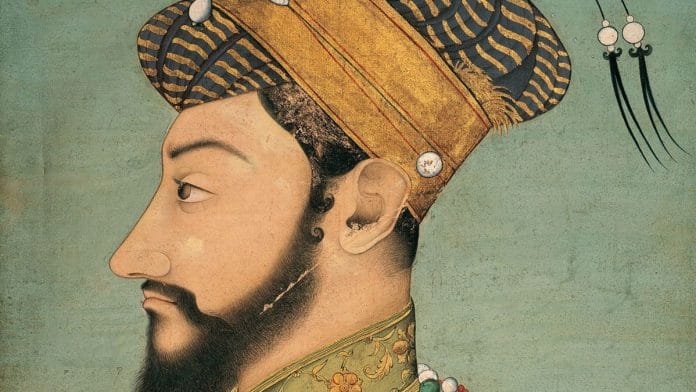


New Delhi: In his new book Aurangzeb ‘Alamgir and the Mughal Empire – A History Retold, historian Munis D. Faruqui rethinks the reputation of the much-debated historical king Aurangzeb ‘Alamgir’.
One revealing chapter examines emperor Aurangzeb’s significant but unsuccessful efforts to curb the making and trade of eunuchs. This highlights the tensions between his Islamic religious beliefs and the practical demands of ruling the Mughal empire at its zenith.
During the first decade of his reign, beginning in 1658, Aurangzeb showed more concern about the castration and trade of eunuchs than any previous Mughal ruler. Between 1658 and early 1670, he issued at least three orders directing officials to stamp out the “heinous” (shania) practice in provinces such as Orissa, Awadh, Allahabad, and Mughal-controlled parts of the Deccan. In 1673, as a part of a larger edict, he ordered the flogging and imprisonment of anyone responsible for castrating “a son of another person.” The guilty party was not to be released until they repented and performed penance.
Faruqui notes that Aurangzeb’s orders for the Deccan give insights into his reasoning. The emperor invoked the Islamic concept of bi‘dat or unlawful innovation to condemn the injustice of forceful castration. This echoed earlier religious objections, including those articulated by ‘Abd al-Qadir Badauni nearly 80 years before Aurangzeb’s rule.
Badauni argued that only God has the right to alter the human being. He said that castration denies the ability to marry and procreate, limiting the growth of the Muslim community, and that preventing reproduction goes against God’s order. He concluded that there can be “no castration in Islam” (la khisa fi al-Islam), and that doing so threatens the very foundation of the Muslim society.
Many in Mughal society believed that castration made a man more “irascible, headstrong, and belligerent” rather than docile, as is the case in animals. Eunuchs also faced social stigma and being called a eunuch was considered a grave insult, while castration was seen as one of the harshest punishments, second only to death, symbolising weakness and diminished status.
Also read: The hidden newsroom of Aurangzeb’s court
Vital eunuchs
Despite these objections, Aurangzeb gradually stopped enforcing the ban after the late 1660s. While Islamic law, particularly the Hanafi school, condemned both castration and the employment of eunuchs, the strict gender segregation in elite Muslim households, especially the imperial harem, made eunuchs essential.
Aurangzeb’s grandfather Jahangir, who was also opposed to eunuch trade, had issued a similar ban in 1608, calling castration a “hideous” practice, but had continued accepting eunuchs as tribute. Under Aurangzeb, too, the trade continued. Records show that 14 eunuchs were transported from the Golkonda-held port of Masulipatam to Delhi in 1662. As late as 1700, castrated boys from Orissa were brought to the Deccan court, and the man who procured them was rewarded by the emperor.
Faruqui identifies several reasons for this dependence. The main one was to protect the sanctity of the imperial harem. Eunuchs played a vital role in controlling access to the emperor and ensuring order at court. There is also evidence that senior eunuchs, such as Khidmatgar Khan III, actively urged officials to supply “new eunuchs” for imperial service.
Efforts to stop the trade were also weakened by local officials. When ordered to crack down on the practice in Orissa, one official avoided enforcing the order by claiming no such trade had ever existed in the province.
Through these episodes, Faruqui shows the challenges Aurangzeb faced in balancing his religious beliefs with the reality of governing a vast empire. While some eunuchs rose to influential positions at court, the practice of creating them carried significant stigma, and few hoped for such a fate.
(Edited by Janaki Pande)