



New Delhi: Racist comments targeting Indians surged in Singapore after the Nepal-Tibet flash floods and Singapore Airlines’ involvement with Air India. The online hate is also targeted toward Singaporean citizens of Indian ethnicity, as well as Indian tourists.
Across social media platforms, the comments under news posts questioned whether the nine missing Singaporeans in the Nepal floods “were really Singaporean”. The remarks focused on their Indian-sounding names or appearance.
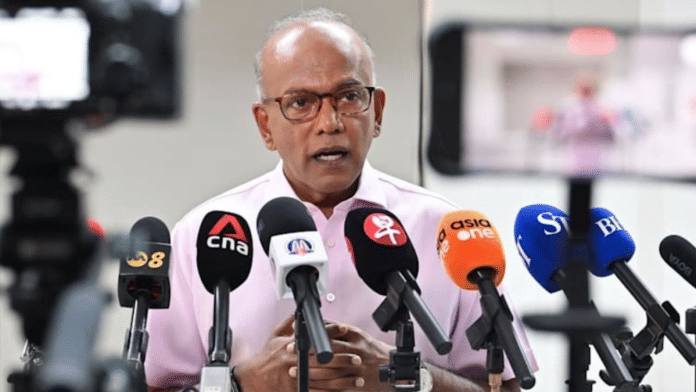
Specific examples cited by Singapore’s Minister for Home Affairs K Shanmugam included, “No, they are not our own”; “I only see Indian faces here. Skip. Rescue cut.”; and “All ABNNs look the same, how to AI?”
ABNN is a derogatory term historically used in Singapore and Malaysia to refer to people of South Asian/Indian descent. It derives from gibberish mockery of Indian accents or speech patterns, such as “Abu Neh Neh” / “Ah Bu Neh Neh” (or similar phonetic nonsense like “Yennapunahnah”), which has long been used to ridicule Indian languages.
Other reported remarks included “good riddance” and preferences for “pure” Singaporeans. Singaporean Members of Parliament such as Alex Yam and Dinesh Vasu Dash publicly urged compassion and called out the racist rhetoric.
“While families wait desperately for news of their loved ones, a loud minority of people apparently looked at the names and faces of those missing and decided that this was the moment to ask whether they were really Singaporean,” Yam wrote on Instagram.
“Let us be clear: Using a person’s name, race or appearance to question whether that person is truly Singaporean is racism. It is wrong, and it must be called out,” Dash told The Straits Times.
The floods, triggered by a glacier/ice-rock collapse on 26 August, killed more than 1,200 people, with thousands still missing. To aid with search and rescue and find their missing citizens, Singapore sent police and other officers to assist, and the Singapore Red Cross raised over S$3 million for relief. The Gurkhas from Nepal have long served in Singapore’s forces.
Air India and anti-Indian abuse
Meanwhile, reports that Air India was seeking roughly $1.5 billion in fresh equity from shareholders, including SIA, triggered another wave of anti-Indian abuse. Comments invoked crude stereotypes such as “snakes,” “curry,” “prata,” and “black magic”.
Global investment company Temasek CEO Dilhan Pillay Sandrasegara, Singapore-born and of Indian ethnicity, and other senior management were among the many attacked online with claims that he would favour Air India because of his race. Temasek has noted strong returns from its India investments.
The Ministry of Home Affairs later shared around 20 examples of such comments, many already removed by news outlets. Other slurs appearing in related online discourse include “CECA faces”, referencing the Singapore-India Comprehensive Economic Cooperation Agreement and associated immigration debates.
According to The Straits Times, Shanmugam described the comments as “shameful, nasty and totally unacceptable.”
“These people should be unmasked and dealt with, rather than be allowed to hide behind online anonymity,” he said.
He added that the Ministry of Digital Development and Information has asked platforms to remove content breaching community guidelines.
Senior Minister Lee Hsien Loong called the racist and hateful remarks directed at the Indian community “deeply troubling.”
“When incidents like this happen, leaders must speak up with force and conviction to call out what is happening, condemn the manipulation of base emotions, and call on all Singaporeans to stand together,” he said.
Prime Minister Lawrence Wong noted that prejudice should not be allowed to become normalised in the multiracial city-state, adding that instead we should have robust debates.
“We should never use seemingly legitimate arguments as a cover to fuel prejudice against any community or hostility towards foreigners,” Wong said.
He added that racist views expressed online did not represent Singapore as a whole and warned against dismissing them as harmless.
“If such behaviour goes unchecked, it can become normalised, deepen mistrust between communities, and pull us apart.”
(Edited by Insha Jalil Waziri)