





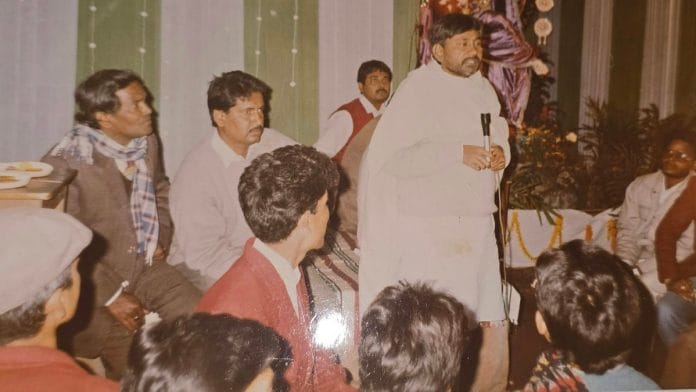


New Delhi: Long before Nitish Kumar became known as the governance-focused ‘Sushasan Babu’—or was mocked by critics as ‘Paltu Ram’ for his political flip-flops—he was a young JP Movement activist shouting slogans on the streets of Patna. Those fiery origins of the 75-year-old former Bihar Chief Minister had all but vanished from public memory, but a digital rescue operation is now underway.
A new website called Nitish Archive is digging up those forgotten years in an attempt to digitise Bihar’s political memory. The project started as a Facebook page last month, pulling up Kumar’s rare speeches in Parliament, newspaper clippings from the 1990s, and interviews with his old friends. Every phase of his career is getting an airing—from his days in the Samata Party to his tenure as Union railway minister to his numerous stints as CM.
“Nitish is one of the biggest leaders India has produced. These days he is unwell and all his friends from the JP movement are very old. So we decided to make an archive to document Kumar through the lens of those close to him,” said Nitish Archive founder Sanjeev Kumar, a Patna-based researcher and author of Jatigat Janganana: Sab Hain Raji, Fir Kyun Bayanbaji, a book about the Bihar caste census.
The Nitish Archive joins a growing list of unofficial online museums-cum-tributes to political leaders. Some are popular fan-run pages on X and Instagram, such as Nehruvian and Modi Archive, while others are anchored by families, parties, or institutions. In November 2025, the Jawaharlal Nehru Memorial Fund rolled out the Nehru Archive—a free, fully searchable database containing all 100 volumes of Nehru’s Selected Works; the project was spearheaded by Congress leader Jairam Ramesh, a trustee of the fund. Then there is the Charan Singh archive, launched in 2015 and run by the former PM’s grandson Harsh Singh Lohit.
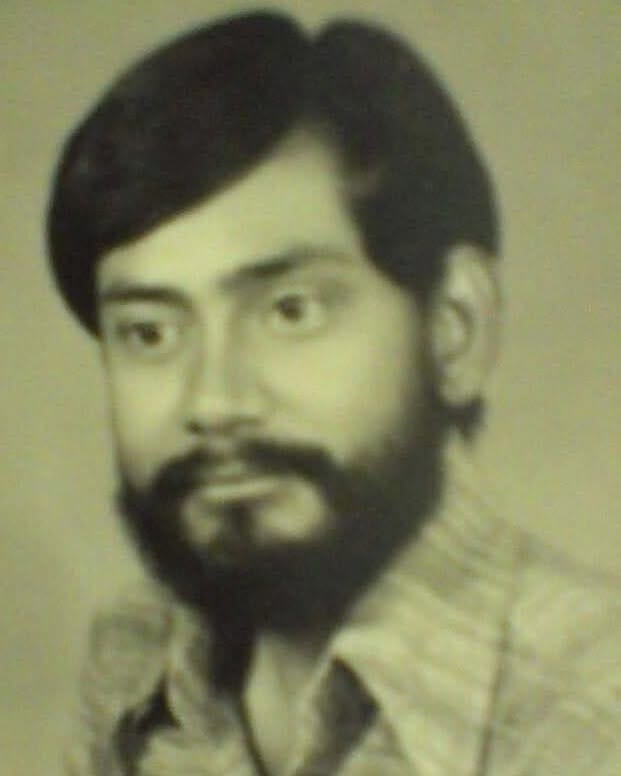
But though the Nitish Archive did get a ‘launch’ from a JD(U) leader on 17 May, it is an independent project and not hagiography. Unlike many political fan pages that focus on commentary or praise, the Nitish Archive seeks to function more as a repository of different eras in Bihar’s political history.
“Instead of analysis or opinion, Nitish Archive lets old footage speak for itself and in doing that, it forces a conversation about how much Bihar, and its longest-serving CM, have changed over three decades,” said Sanjeev, who runs the platform with a team of three-four researchers, Jyoti Kumar, Shashikant Kumar, Kundan Kumar and Shruti Dhar.
In less than a month, the Facebook page has already attracted 20,000 followers. The project is also gaining traction on Instagram, where the handle recently shared a message from a Jamia Millia Islamia PhD scholar who called the material “invaluable” for his research on Bihar’s caste and politics.
Also Read: Long arc of Nitish Kumar: From Modi-baiter to BJP’s bridge in Bihar
Opening an old album
For Gen-Z audiences who know Nitish Kumar only as Bihar’s former chief minister, the archive is a dusted-off family album of state politics.
There are photographs from political campaigns in the 1990s, snippets of parliamentary speeches, accounts of internal battles within socialist politics and anecdotes from friends who knew Nitish long before he occupied the chief minister’s office.
In the first week of June, members of the archive team made their first field visit to Muzaffarpur, where an event had been organised on the birth anniversary of the late George Fernandes, with whom Nitish Kumar founded the Samata Party in 1994. Several of Nitish’s colleagues from those days were present.
“In the later years, Nitish had a bad relationship with Fernandes. Documenting [the recollections of] those older people gave a new perspective about Nitish,” said Sanjeev Kumar.
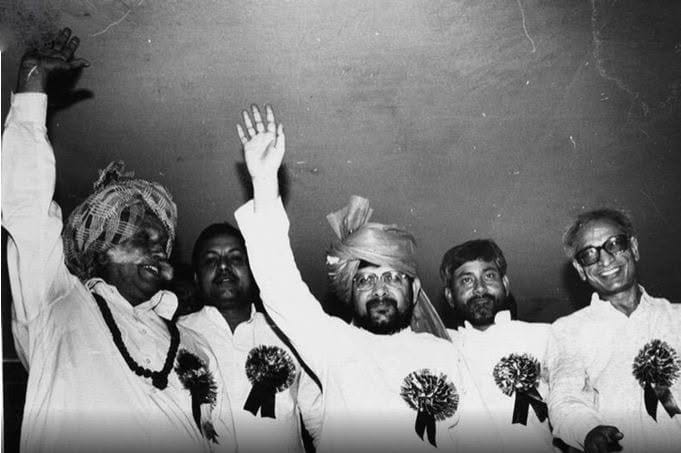
Among the archive’s posts are stories about Nitish’s years as railway minister, the political partnership he once shared with Fernandes and behind-the-scenes accounts of the Samata Party’s expansion across Bihar during the 1990s.
One post features a rare photograph of a young Nitish Kumar visiting the home of Professor Jagat Ranjan in Darbhanga. At the time, Nitish was touring the Mithila region to strengthen the newly formed Samata Party, and Ranjan’s residence had emerged as an important centre of regional political activity.
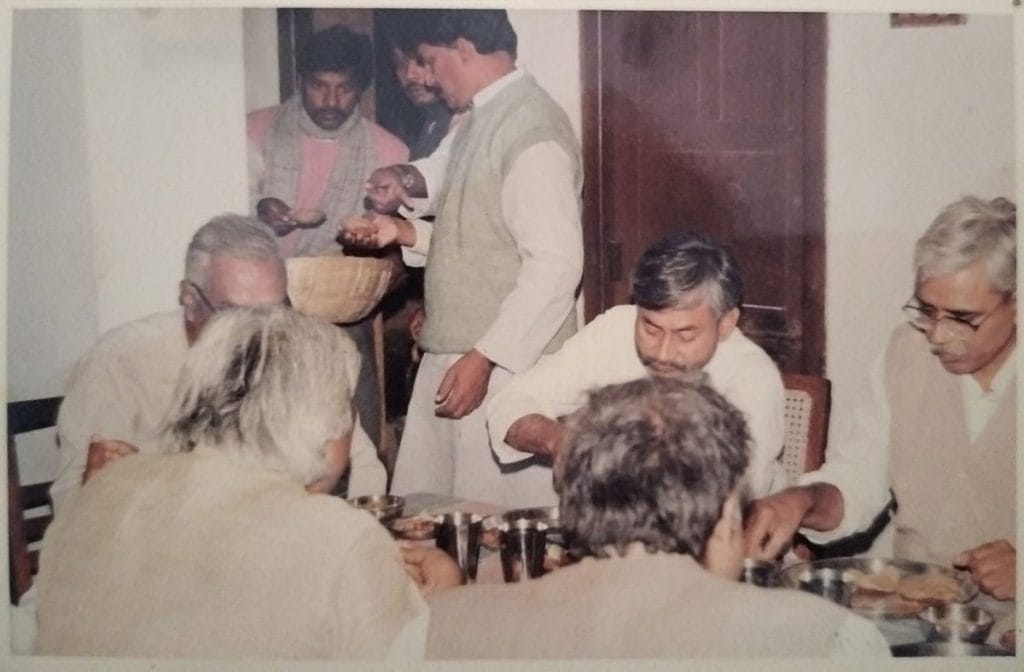
The archive draws upon multiple sources—newspaper reports, parliamentary and assembly records, personal collections and, most importantly, oral histories passed down by people who witnessed those events.
“In less than a month, family members of Nitish’s old friends have sent us his old photos. It is a program based on public cooperation and participation,” said Sanjeev, adding that the team planned to reach out to the JD(U) leader’s surviving old friends in the coming months so that more “hidden stories” could come out.
For him, the real urgency lies not in preserving official records but in capturing memories.
“There are many people who possess first-hand accounts. My aim is to record these stories before it is too late,” said Kumar.
One such recollection comes from veteran politician Saryu Rai, who studied with Nitish Kumar at Patna Science College in the mid-1960s. Later, their politics diverged—Nitish worked with the Samajwadi Yuvjan Sabha, while Rai was with the ABVP—but their personal equation endured.
Rai said that after he lost the 2009 election in Jharkhand, Nitish repeatedly asked him to come to Bihar, even offering to make him a minister or send him to the Rajya Sabha. “I told him I had lost once there and would win from there the next time. For five years, he kept taunting me before friends, saying, ‘I keep asking him to come with me, but he won’t,’” Rai recalled.
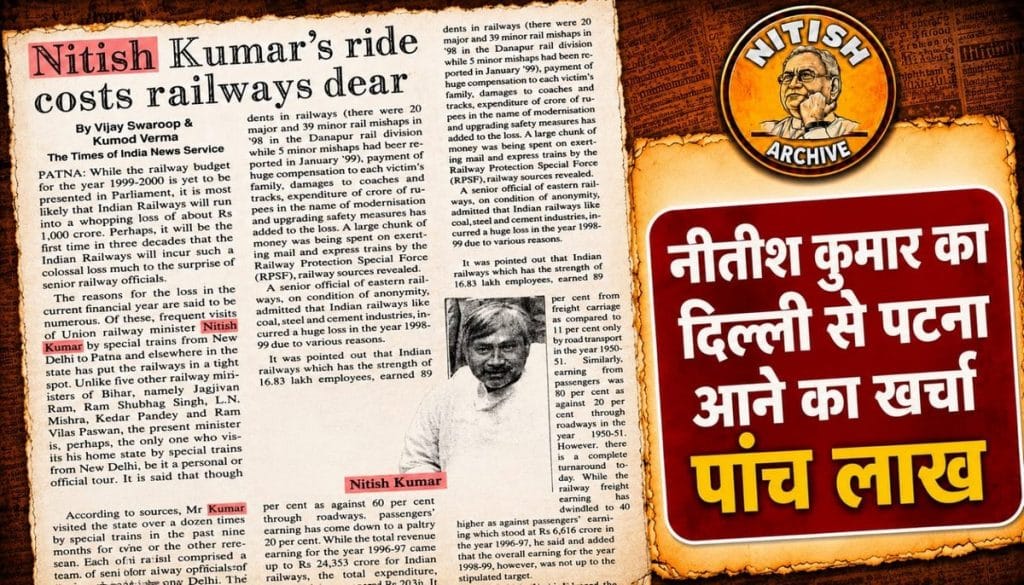
Old controversies are occasionally resurrected too. One post about Nitish’s years as Union railway minister revisits the claim that his trips from Delhi to Patna by special train cost around Rs 5 lakh each.
“Nitish Kumar’s ride costs railways dear,” says a newspaper clipping from the time.
In another post, Nitish, speaking in Parliament, captures a faultline of Indian politics in the 1990s.
“There are two types of Hindus in Hindustan. One is Mandal and the other one is Kamandal,” he said—Mandal standing for caste-based social justice politics and Kamandal for Hindutva mobilisation.
Also Read: Mamata, Naveen, Nitish used Vajpayee-Advani’s BJP to climb up. They must pay back to Modi-Shah
Karpoori to Nitish to Lalu?
Two months before the Modi government announced the Bharat Ratna for former Bihar chief minister and socialist icon Karpoori Thakur in January 2024, Sanjeev Kumar was in Karpoori Gram, researching him.
The idea of documenting Nitish’s life emerged there. Sanjeev found that many of those who had known Karpoori personally were no longer alive. Later, when Santosh Singh’s book, The Jannayak Karpoori Thakur: Voice of the Voiceless, was released in May 2024, what it left out struck him.
“When I read, I realised that there is no account of his friends or close ones in the book. All the details are based on public documents or leaders’ voices,” said Kumar.
It made him realise that if Nitish’s political life had to be documented through the memories of those who knew him closely, the work had to begin now. Else, the same thing that happened with Karpoori could happen with Nitish.
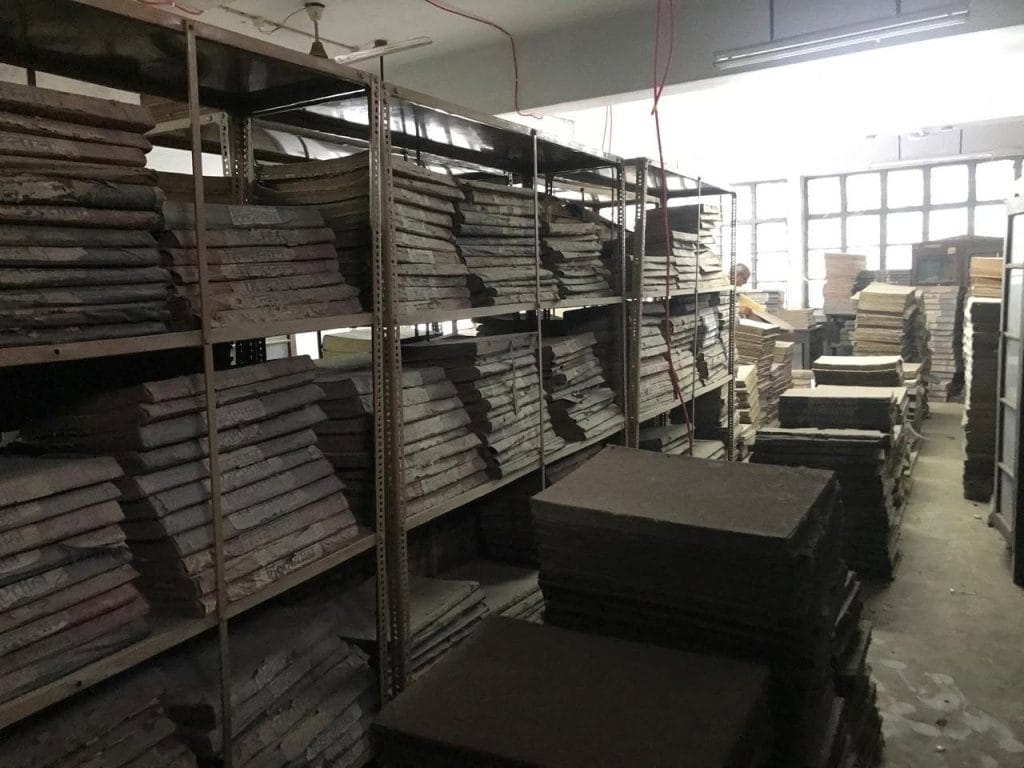
Turning that idea into reality, however, took nearly two years.
From the beginning, Sanjeev says, he wanted the initiative to remain independent rather than become a formal party project. At the same time, support from people within the Janata Dal (United) was necessary to access material and networks.
He reached out to JD(U) MLC Neeraj Kumar, who went on to launch the archive during a press conference on 17 May.
“The Nitish Archive is not merely a documentation project but a historic initiative to preserve the political, social, and ideological journey of Bihar,” said Neeraj Kumar. “Throughout history, significant memories associated with many great leaders have been lost over time; the Nitish Archive is a concerted effort to prevent this historical oversight.”
Sanjeev says he does not want to stop at Nitish. He describes him as one of Bihar’s “modern architects”, but insists the aim is documentation, not praise.
“This won’t be limited to Nitish Kumar. Lalu Yadav could be next as both are stalwarts of Bihar politics,” he said.
(Edited by Asavari Singh)