




New Delhi: Madhya Pradesh has four main polluting regions and each one has a different sector driving emissions, found a recent report.
The study, titled “Non-CO₂ Emission Reduction Pathways for Madhya Pradesh: A Multi-Sectoral Assessment” was conducted by the Environmental Planning and Coordination Organisation (EPCO), the department of environment in Madhya Pradesh, in partnership with the Institute for Governance and Sustainable Development (IGSD), Gateway Research, and The Energy and Resources Institute (TERI).
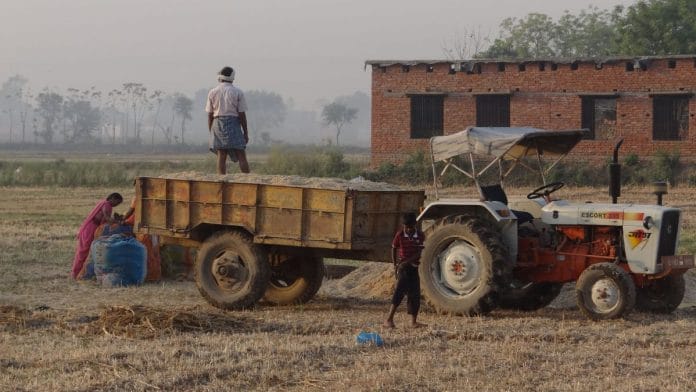
The satellite based assessment found that in Indore, Bhopal, Gwalior and Jabalpur, urban and industrial transport were key polluters. In Singrauli, coal mining was a major pollutant, especially due to the methane emissions from the process. In Sagar, Morena, Rewa, Khargone, and Chhindwara, livestock were major pollutants. The fourth pollutant, agricultural burning, was not mentioned in the study in any one particular district, but it contributed to nearly 47 per cent of the state’s black carbon emissions in 2019.
“Assessments like these are critical because they indicate the micro-challenges we face today and also delve into macro-economic issues. They help us to anchor our environmental planning as well as evidence-led empirical data analysis. These district-level data analyses give us precise information on the sources of our pollution and the risks we face today,” said Dilip Ahirwar, minister of state, department of forest and environment, in a press release.
Also read: Two keys, one dilemma—the story of Modi’s slum neighbours evicted to new homes 50 km away
Reducing emissions
Although heat stress is common across the globe, by 2030 Madhya Pradesh’s average maximum temperatures are projected to rise by 1.8 to 2 degrees Celsius and minimum temperatures by 2 to 2.4 degrees Celsius. This makes it even more urgent for them to reduce the emissions of their short-lived climate pollutants (SLCPs).
According to the report, livestock account for nearly 60 per cent of methane emissions. The study recommends that improving fodder management could cut these emissions by 10 to 15 per cent, while natural farming could reduce rice methane.
The study found that cooking food by burning organic materials such as wood, charcoal, agricultural crop residue, or animal dung lead to the largest source of Non-methane volatile organic compounds (NMVOCs). Solar cookstoves, biogas and LPG could cut this by around 80 per cent and black carbon by nearly 100 per cent by 2047.
The report also highlights that Madhya Pradesh already had a 3,022 MW solar capacity in 2023 and will build on existing EV policies and renewable energy policies to further reduce emissions.
“Policy is only as good as the evidence behind it. What makes this study useful is that it combines a high-resolution emissions inventory with spatial analysis and then takes the next step of asking what different policy choices could achieve. It gives us a practical decision-support tool: where emissions are concentrated, which sectors need priority and where existing policies can be strengthened. This can help us align action across departments and sharpen the next phase of Madhya Pradesh’s climate and clean-air planning,” said Harshan Pancholi, IAS, executive director of EPCO.