





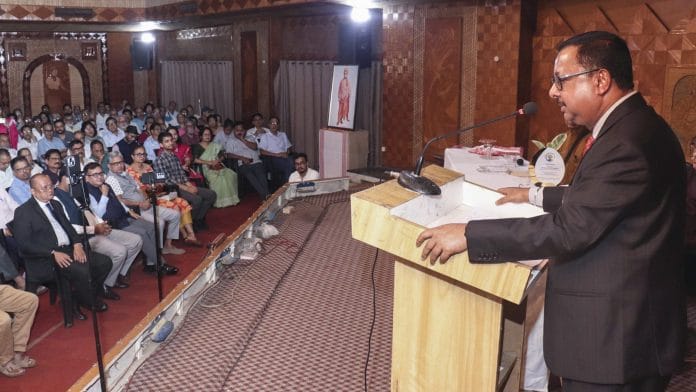


Below is an excerpt of an 8 August speech by Supreme Court judge Ujjal Bhuyan on ‘Balancing development and sustainability: Recent trends’ at the Vivekananda Kendra in Guwahati:
Today we would confine our discussion only to environmental jurisprudence. Of course, there is no denying of the fact that because of the emergence of public interest litigation, environmental jurisprudence in India got a big boost.
Though we had the statutory framework before and after the Stockholm Conference in the form of the Water (Prevention and Control of Pollution) Act, 1974; the Air (Prevention and Control of Pollution) Act, 1981; and the Environment (Protection) Act, 1986, it is the Bhopal gas leak tragedy of 1984 which really galvanised the Supreme Court into action. In one case after the other, Supreme Court either developed newer and newer principles or applied internationally acknowledged principles to the Indian context. Thanks to these judgments, the right of a person to a pollution free environment has become a part of the basic jurisprudence of our country, acknowledged as a fundamental right traceable to Article 21 of the Constitution.
Let me briefly touch upon some of these principles.
In the famous case of Union Carbide Vs. Union of India, based on the Bhopal gas leak tragedy, Supreme Court developed the doctrine of absolute liability. This doctrine is based on the principle that when an enterprise involves inheritably dangerous or hazardous activity and harm results to anybody because of a mishap relatable to the enterprise or activity, for example, by accidental release of poisonous gas, the enterprise would be obligated to repay each one of the injured or affected individuals.
The polluter pays principle was introduced by the Rio Summit of 1982 and was applied for the first time in India in the case of Indian Council for Enviro-Legal Action Vs. Union of India where there was emission of sulphuric acid from the industry causing terrible effects on the crops and the aquatic ecosystem of the area. The polluter pays principle demands that the financial cost of causing pollution and remedying damage caused by pollution should be borne by the person or undertaking which caused the pollution or which produced the goods which caused the pollution. The reason behind this principle is that the government should not be burdened with the cost which would be required to undo the damage caused by the polluting enterprise as such cost would ultimately be passed on to the taxpayers who have no causal connection whatsoever with the pollution creator; therefore, they should not be penalised. Rather, those who caused pollution should be penalised.
In the case of Vellore Citizens’ Welfare Forum Vs. Union of India, Supreme Court declared that the precautionary principle includes three major conditions: the State must anticipate, prevent and attack the cause of environmental degradation. It is a preventive principle based on precaution.
In my dissenting judgment in Confederation of Real Estate Developers of India (CREDAI) Vs. Vanashakti, which reviewed the original Vanashakti judgment, I have said that precautionary principle is the cornerstone of environmental jurisprudence. Polluter pays is only a principle of reparation. Precautionary principle cannot be given a short shrift by relying on polluter pays principle.
In other words, if at all there has to be a grading of the environmental principles, precautionary principle has to be placed above the principle of polluter pays.
The principle of sustainable development means that the State must make efforts to maintain a balance between the environment and development. In Vellore Citizens Welfare Forum, Supreme Court pointed out that it is very important to maintain the balance between industrial development and environmental protection; hence, the need to promote the construct of sustainable development. In this case, it has been held that precautionary principle and polluter pays principle are essential features of sustainable development.
Sustainable development has come to be accepted as a viable concept to eradicate poverty and improve the quality of human life while living within the carrying capacity of the supporting ecosystems. Sustainable development means development that meets the needs of the present without compromising the ability of the future generations to meet their own needs. As a balancing concept between ecology and development, it has been accepted as a part of the customary international law.
In the case of M.C. Mehta Vs. Kamal Nath, famously known as the Span Motel case, Supreme Court developed the concept of public trust doctrine and held that the Himachal Pradesh government had breached the public trust doctrine by leasing out ecologically sensitive land for profit making ventures. While Span Motel had to bear the cost of compensation and had to face penalties under the polluter pays principle, it was Himachal Pradesh government which was pulled up for breaching public trust.
Public trust doctrine primarily rests on the principle that certain resources like the air, the rivers, the forests etc. have such great importance to the people as a whole that it would be wholly unjustified to make these resources a subject of private ownership, enterprise and profit. The doctrine enjoins upon the government to protect such resources for the enjoyment of the general public, rather than to permit their use for private ownership or commercial purposes.
In this famous case, Supreme Court also emphasised on the principle of inter-generational equity holding that the present generation has a duty to protect the environment for future generations. Inter-generational equity is based on the principle that the present generation has a moral and legal obligation to manage natural resources sustainably so that future generations can enjoy the same quality of life and access to resources that we enjoy today. It is based on the idea that we are not the owners of the earth but its custodians, and that we have a duty to pass it on to our children and grandchildren in a condition which we had inherited from our forefathers.
From these court judgments and there are many more, we can safely reach the conclusion that Supreme Court has played a major role in developing such a wide, expansive and inclusive environmental jurisprudence in India. If Indian environmental jurisprudence has a parent, it is the Supreme Court; it has nurtured environmental law from its infancy.
But having said that, I ask myself, today do these decisions look very distant.
My former colleague in the Bombay High Court Justice Gautam Patel has done an analysis of the Supreme Court judgments dealing with environment and published it in an article titled Consistently Inconsistent: Environmental Law and the Supreme Court. This essay has been included in the book ‘[In] Complete Justice, the Supreme Court at 75, Critical Reflections, edited by Justice S. Muralidhar.
In his critical analysis, Justice Patel finds that by and large Supreme Court has supported the environmental cause raised by nongovernmental organizations; except one exception. He says Supreme Court has not shown the same degree of support to cases challenging infrastructure projects. Justice Patel says it is precisely this area that an intervention of the Supreme Court is vital and yet it is here that we find a reluctance to come down on the side of the environmentalists. He says the jurisprudential inconsistency is apparent when one sets these decisions against the principles that the Supreme Court itself repeatedly enunciates in the broadest possible terms and it is that consistent inconsistency that exacerbates the threats to the environment rather than resolve it.
During the last one month, I have travelled to four institutes of higher learning including National Law Universities and the Indian Law Institute. I have been urging the university community to critically examine various issues confronting the community from the legal and constitutional perspective including critically examining various Supreme Court judgments. Criticism of a judgment does not amount to criticism of a judge. Unless our universities and centres of higher learning engage in such exercise, they will never be able to compete with the global universities.
So it is left to two Ivy League universities, Yale and Columbia, to carry out a global environment assessment. They have developed the environmental performance index (EPI) which is a score card that ranks countries on their environmental performance. Environmental Performance Index (EPI) Report, 2026 has since been released. As per this report, India ranks second from the bottom, only above Laos, taking the 176th position out of 177 evaluated nations. It is not that all developing countries are struggling. Brazil, for example, a member of BRICS is placed at the 50th position. In so far India is concerned, a significant indicator, as per this report, is the tree cover loss in key biodiversity areas which recorded a negative score of -3.92.
I am not saying that this report should be accepted as gospel truth. But, at least, it should be the basis or the starting point for some serious study and debate. This is the stark reality of India today.
The uncomfortable truth is that environment and environmental degradation are not issues which can fetch political dividends in the way subsidies, jobs, or identity politics are. There is no major vote bank to be gained by addressing the concerns of environment. Therefore, issues concerning the environment are not a priority for the politicians or political parties or the political government. It is, therefore, for the citizens and the courts to take up issues of environment.
This brings us to the final leg of my speech. I ask myself: is there any conflict between environment and development? The answer, according to me, is an emphatic no. Three decades ago, Supreme Court itself had observed in that Vellore Citizens case that the traditional concept that development and ecology are opposed to each other is no longer acceptable. In my Vanashakti review judgment, I have said that it is unfortunate that a false narrative is being created pitting environment against development. It is a completely untenable binary in as much as ecology and development are not adversaries. Both are part of the constitutional construct of sustainable development. There is no antinomy between development and environment.
There can be no development or model of development which is based on the destruction of environment. In fact, worldwide environment or environmental protectionism is an important index in the development trajectory. Therefore, we need to look very closely at the model of development itself. As I have said, it is no development which degrades the environment for immediate gains. True development is that which improves the quality of life for the people without compromising the ability of future generations to meet their own needs. We must adopt a new paradigm of development; one that is sustainable, inclusive and respectful of the environment.