


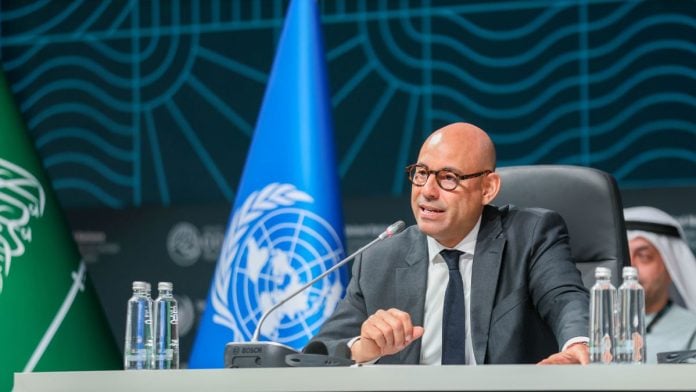
New Delhi: The first day of UNFCCC COP31 in Antalya, Turkey recognised climate change as a health crisis, calling for climate-resilient health systems to be every country’s priority. On Monday, 9 November, United Nations Climate Change Executive Secretary Simon Stiell addressed the Health Day Ministerial Roundtable Meeting and spoke about how public health belonged in the heart of climate action.
More than 200 countries are currently in Antalya to participate in the 31st United Nations Framework Convention on Climate Change (UNFCCC) Conference of Parties (COP). The 10-day long annual summit on climate change is being hosted jointly by Turkey and Australia this year.
“Climate risk finds every vulnerability in a health system and widens it — turning a power cut, a staff shortage or a long journey to care from strain into crisis,” said Stiell, during his speech on 9 November.
Day 1 of the summit was titled ‘Food, Agriculture and Health Day’, with the World Health Organisation saying that between 3.3 and 3.6 billion people live in areas highly vulnerable to climate change.
Also read: COP31 president calls for action as climate meet opens in Turkey
Health and climate
To commemorate the focus on health and climate, COP31 President Turkey launched the Antalya Initiative for Health Resilience (AIHR), a global, voluntary platform to share knowledge, research and experience on building resilience in healthcare systems. This exchange of information will be supported by the Alliance for Transformative Action on Climate and Health (ATACH), a WHO-led network, set up during COP26 in Glasgow.
Moreover, Stiell also spoke about new research on how climate change is increasing health problems in pregnancies and infant care. At a pre-COP summit in Fiji on 5 October, the Wellcome Trust had released a report showing how extreme heat negatively impacts pregnant women and newborn babies across the globe.
“At the pre-COP in Fiji, I described pregnancy and birth as a new faultline in the climate crisis. You can’t ‘stay cool’ when there is no cool place to go,” he said in his speech.
Apart from Stiell’s speech, Health Day at COP31 also saw financial pledges in the Climate and Health Funders Coalition, which was set up last year at COP30 in Brazil. This year, the Coalition awarded more than $225 million from its original $300 million fund to 20 different programmes and initiatives working on clean air, heat, and other climate resilience solutions.
During a session on dynamic and resilient health systems, Brazil also pushed for a financial framework for the Belem Health Action Plan, which is a global framework launched in COP30 by WHO and Brazil, to integrate health adaptation in the UNFCCC Global Stocktake.
(Edited by Janaki Pande)