




New Delhi: A shift to only zero-emission vehicle sales in the next 25 years in India could prevent more than 1.7 million deaths between now and 2050, said a new report by the International Council on Clean Transportation.
Released on 29 July, the report is a regional analysis based on the ICCT’s global study on the health benefits of zero-emission transport through 2050. It found that road transport pollution is a major public health burden in India, linked to one premature death every six minutes and one new childhood asthma case every 34 minutes in 2024.
“The only way to eliminate tailpipe emissions is through electrification. Accelerating the transition to zero-emission vehicles is critical to reducing transport-related air pollution,” said Amit Bhatt, India Managing Director, ICCT, in a press release.
The researchers compared current vehicle electrification policies until 2045 with an ‘ambitious’ pathway that accelerates the EV transition to understand the impact both scenarios would have on overall air quality and emission-related deaths and health outcomes in the world.
Mission 2045
In the ambitious pathway, if India achieves 100 per cent zero-emission vehicle (ZEV) or electric vehicle sales by 2045, then it would prevent 1.7 million road-transport emission-related deaths between 2025 and 2050. Additionally, it could prevent 97,200 pediatric asthma cases, which is a long-term lung disease.
Globally, the impact would be even bigger – more than 8 million lives could be saved if the world moved to 100 per cent EV sales by 2045.
In 2024, India ranked in the top five countries with the highest number of estimated premature deaths and pediatric asthma cases due to road-transport emissions. These deaths and cases were calculated based on a model developed using health data from the Global Burden of Disease 2021 report by Lancet, and emissions data from The Real Urban Emissions Initiative.
According to the ‘baseline’ scenario in the study, when the transport and emission policies remain exactly as they are right now, premature deaths from emissions will only increase by 2050. Emissions such as PM2.5, nitrogen oxides, and carbon dioxide will remain steady and decline marginally by 2050. However, ammonia emissions will double, since no policies currently target ammonia reduction.
However, under the ambitious, accelerated transition scenario, PM2.5, NOx, and CO will reduce by 60-90 per cent by 2050, since a larger share of the vehicle fleet will move towards electric vehicles and current internal combustion engine (ICE) vehicles will be phased out.
Also read: The curious case of India’s tiger paradox. Tiger numbers are rising, so are deaths
‘Delhi’s EV Policy step in the right direction’
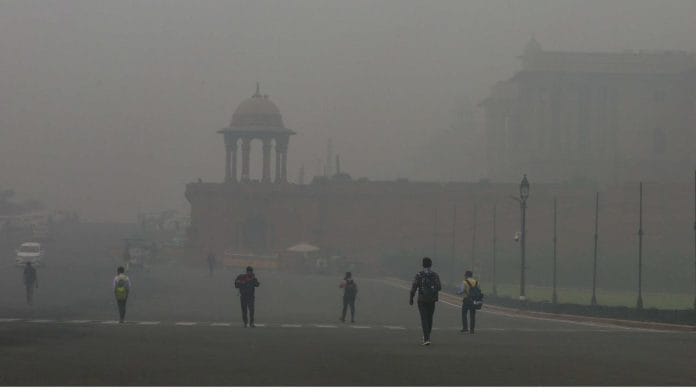
The study also zeroed in on the Delhi-NCR region to explain how the burden of road-transport emissions deaths in Delhi was higher than the rest of the country. In 2024, 9 per cent of India’s total premature deaths from transport emissions and 23 per cent of the total pediatric asthma cases were in Delhi-NCR, even though the region only accounted for 5 per cent of the population.
These deaths and health impacts, which are projected to increase in the future if policies remain the same, were also because of a population demographic shift towards older and more vulnerable populations. In Delhi-NCR, which is one of the hotspots of road-transport emissions, the report explained how population density combined with increased vehicle activity would lead to more people being exposed to these vehicular emissions.
“The burden is starkly uneven. The National Capital Region accounts for nearly a quarter of India’s road-transport-attributable childhood asthma cases,” said Linghzi Jin, Senior Researcher, ICCT and co-author of the study, in a press release. “These are children exposed to traffic pollution during their daily routines.”
ICCT’s study said that their model’s findings indicated the importance of accelerating the clean vehicle transition, not just for environmental reasons but also for health reasons.
Bhatt, speaking to journalists on the sidelines of the report launch, affirmed how Delhi’s EV Policy was a step in the right direction.
“We need national-level targets for electrification of fleets, the way Delhi has done in its EV Policy,” said Bhatt. “This report shows how important it is to move towards clean vehicles, and move fast.”
(Edited by Saptak Datta)