





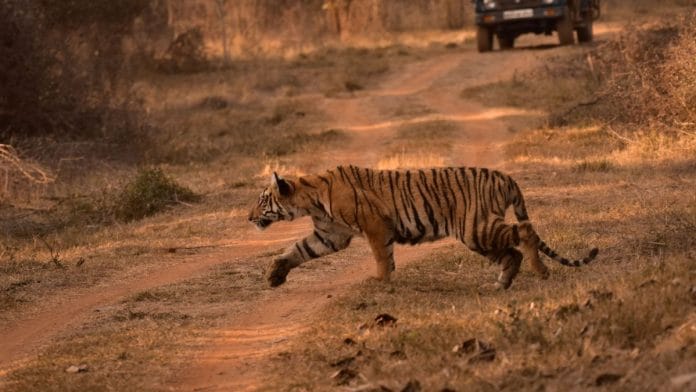


New Delhi: As India marks National Tiger Day on Wednesday, there is much to celebrate. The country is now home to an estimated 3,682 wild tigers, nearly 70 per cent of the world’s population. But even as tiger numbers rise, mortality rates reveal a worrying trend.
According to the National Tiger Conservation Authority (NTCA), 111 tigers have died across the country so far in 2026. Last year, India recorded 166 tiger deaths, up from 126 in 2024.
Madhya Pradesh, often called India’s “Tiger State”, has already reported 45 tiger deaths this year, about 40 per cent of the national total. Last year, the state recorded 55 tiger deaths, meaning this year’s toll is already close to that figure with five months still remaining.
While the number of deaths is likely to increase as the country’s tiger population rises, experts say that India’s conservation challenge is evolving too. It is now important to ensure that the animals also survive.
The NTCA records several causes of tiger deaths, including old age, territorial fights, electrocution, train accidents, poisoning and poaching. While not all deaths are linked to wildlife crime, conservationists say many are preventable.
“Natural deaths happen. It is the unnatural deaths that can be prevented. If tiger numbers are increasing, the responsibility to protect them should also increase,” Ajay Dubey, a wildlife activist from Madhya Pradesh, told ThePrint.
According to the 2022 All India Tiger Estimation (AITE) report, India’s tiger population grew by more than 24 per cent between 2018 and 2022, from 2,967 to 3,682. Madhya Pradesh recorded the highest number of tigers at 785, a figure Dubey hopes will cross 1,000 this year. However, he said the state’s tigers continue to face major threats, from poaching syndicates to shrinking habitats.
“I have seen that the patterns of poaching are increasing across the country. Conviction rates are low and nothing is being done to induce fear in poachers. This is like rolling out a red carpet for them,” Dubey said.
He added that poor surveillance often allows poachers to operate unchecked. In some cases, he claimed, poachers seem to know exactly where tigers are located, suggesting they may even be able to hack CCTV cameras, AI-enabled surveillance systems or GPS collars used to track the animals.
Also read: Not just El Nino. Climate change primary cause of global coral bleaching, says new US study
Tigers, poachers and India’s conservation story
As tiger populations grow, competition for territory is also increasing. Habitat fragmentation and expanding human activity around forests are further intensifying conflict among tigers and between tigers and people.
In response, the Supreme Court issued stricter guidelines for tiger reserves in November 2025. It directed authorities to better regulate activities inside core habitats, reduce night-time traffic on roads passing through reserves, and ensure that qualified full-time officers are in charge.
“So far, the punishment for poaching is about seven years in Madhya Pradesh. We are requesting that it be raised to 15,” Dubey said.
He added that involving local communities in tiger conservation was just as important as stronger law enforcement. Sharing tourism revenue with villagers and improving educational opportunities, he said, would encourage them to report illegal activities.
Despite these concerns, Union Environment, Forest and Climate Change Minister Bhupender Yadav said India’s tiger conservation story goes beyond rising numbers.
“When we talk about tiger reserves and forest conservation, this is not just about tourists coming to see a tiger. It is about understanding the relationship between humans and nature. Our forest conservation story is not just data; it is commitment, compassion and knowledge,” Yadav said at a National Tiger Day event in New Delhi.
Yadav pointed to India’s conservation gains over the past decade, noting that the number of tiger reserves has increased from 47 to 58, while protected areas have grown from 745 to 1,134. He said that when forest officials retire, he tells them their service may be over, but their career is not, urging them to document and share their experiences.
“Nature is here to give you peace. If you cannot find peace in nature, you will find it nowhere,” Yadav added.