


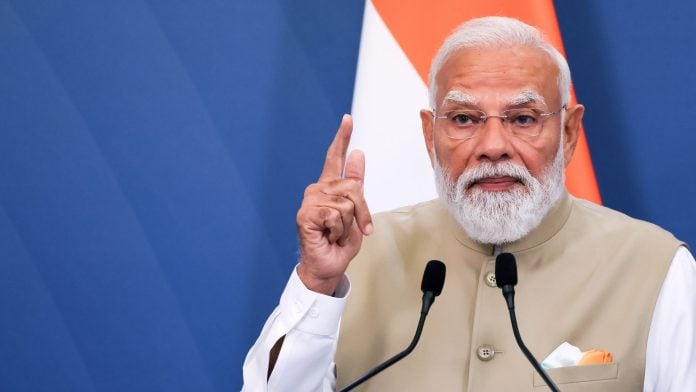
Prime Minister Narendra Modi’s sharp criticism of Indian businesses last week exposed an underlying weakness in the economy’s booming growth story.
Speaking to a room of business executives, Modi criticized companies for failing to invest and boost wages despite government tax cuts and other incentives. The share of manufacturing in India’s gross domestic product has remained at 15% to 17% for about two decades. “Is this your success or your failure?” Modi said.
The unusual rebuke from the prime minister highlights the frustration and concern the government has about the sustainability of growth and job creation. Despite growing at more than 7% a year, India’s economy is failing to absorb the millions of young people who are entering the labor market every year, fueling tensions over unemployment in the country.
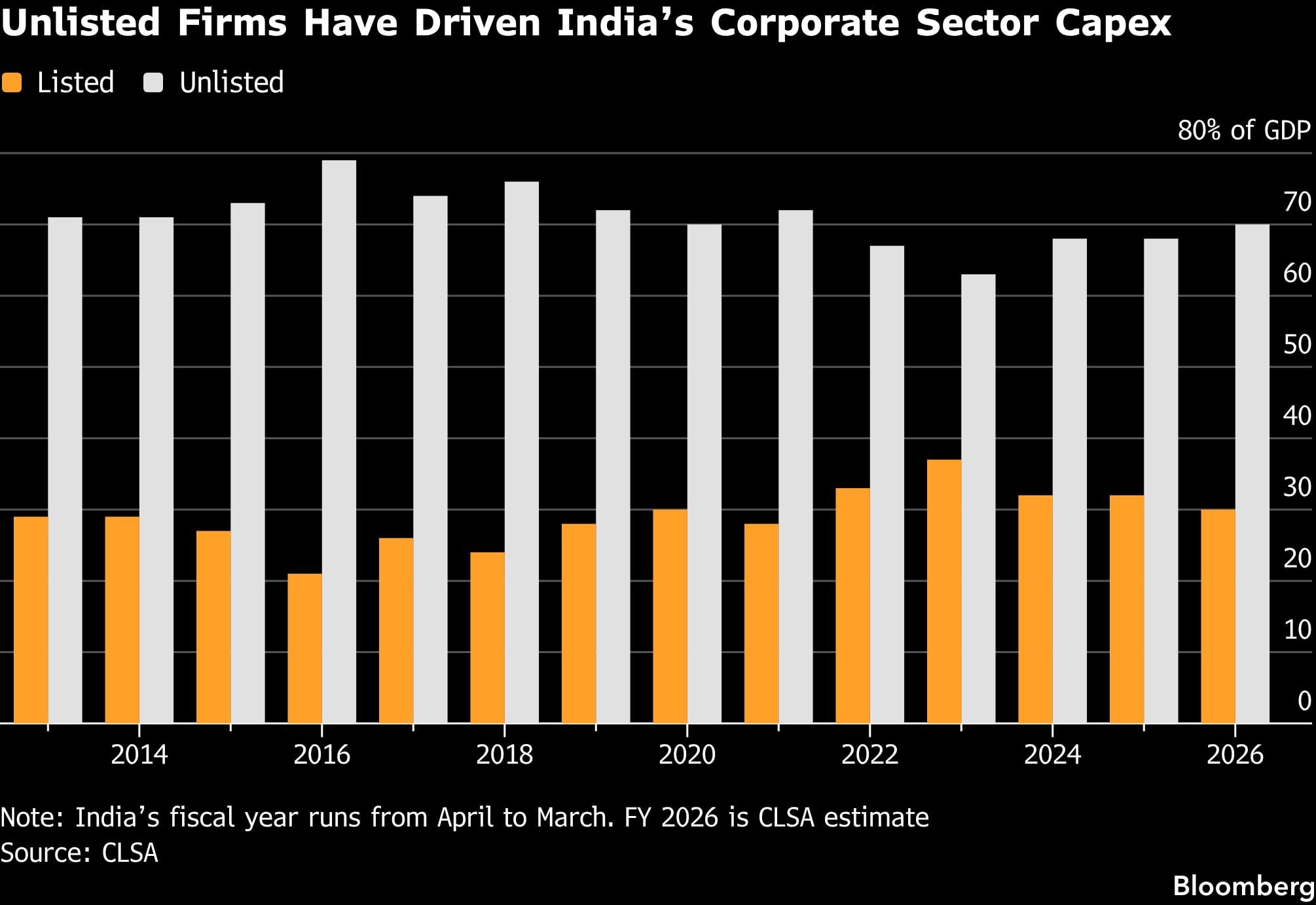
At the heart of the problem appears to be a lack of animal spirits. The corporate sector’s share of total investments has declined to 45%, the lowest in more than two decades and below that of the household sector, according to research from CLSA, a Hong Kong-based based brokerage and investment group.
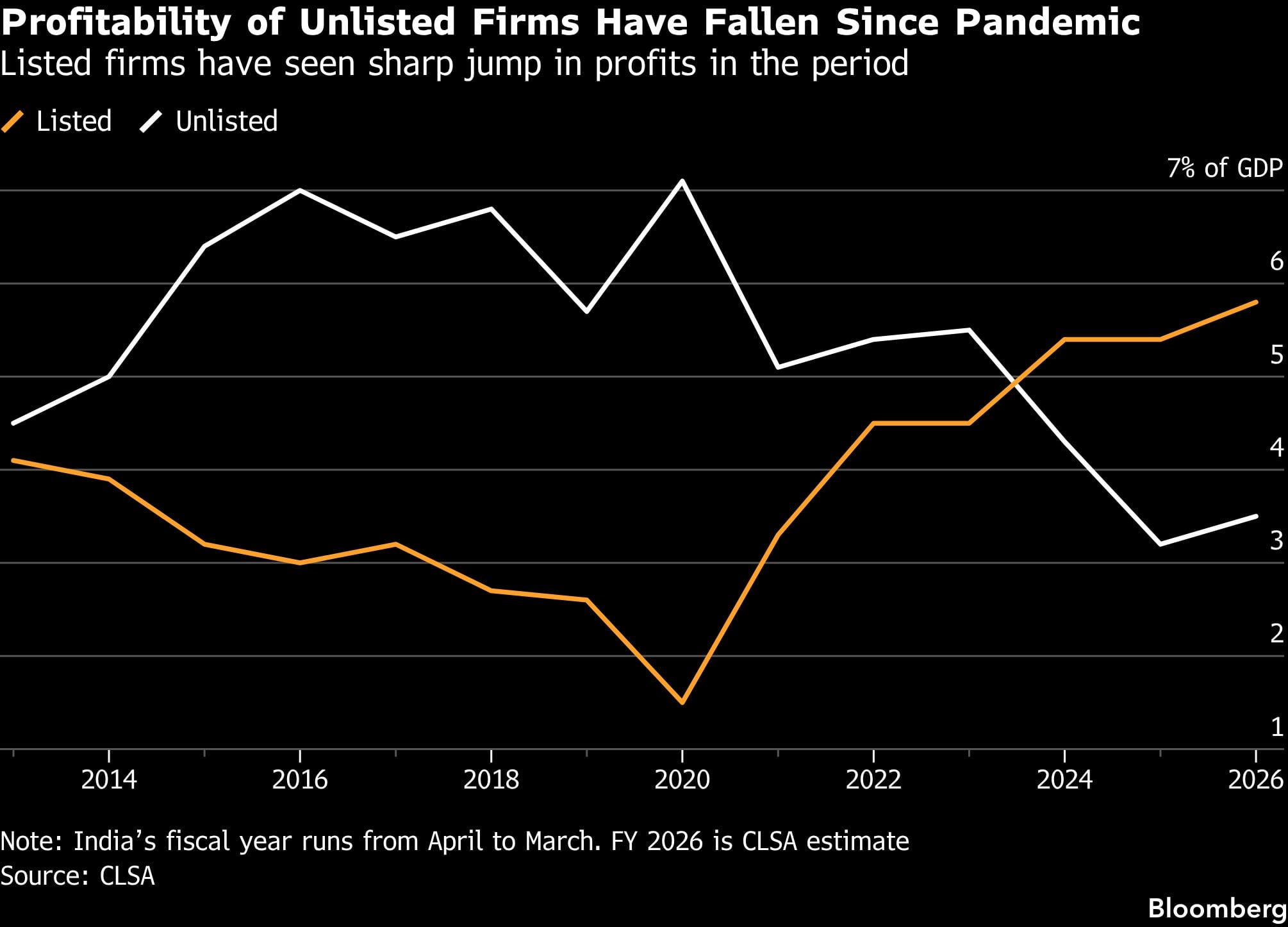
Almost two-thirds of that investment comes from businesses that aren’t publicly listed. Their profitability declined to a 15-year low in the year-ended March 31, the figures show while their debt as a share of GDP is at a seven-year high.
Businesses say there are multiple reasons holding them back from investment and it will take more than tax cuts, government infrastructure and manufacturing incentives to give them a compelling reason to expand.
Pankaj Chadha, chairman of the Engineering Exports Promotion Council said smaller firms still face weak cash flows, uncertain demand, greater regulatory costs and a higher tax burden. K. Srinivasan, secretary general of the Alkali Manufacturers Association of India, pointed to competition from cheap imports and shortages of skilled workers.
“Despite government efforts to skill people, the gap remains between the industry’s need versus availability of skilled workers,” Srinivasan said. “It makes it very difficult for the industry to scale up and grow.”
Rafeeque Ahmed, chairman of Farida Group, one of India’s largest footwear manufacturers and exporters, pointed to a lack of demand as household finances remain under pressure.
Consumers have less room to spend, making it difficult for companies to raise prices — or wages — without losing customers in India’s highly competitive market, he said.
“You look at small loans, gold loans, family loans — the amount is going up and this shows that there is a problem,” Ahmed said. “That needs to be addressed too.”
Surjit Bhalla, who previously served as a member of Modi’s Economic Advisory Council, said India has strengthened two important foundations for growth — its workforce and infrastructure.
“The third component, capital formation, is where we are falling short,” he said. “The main reason is policy uncertainty. If you are an investor, you need to know where economic policy is going.”
Bhalla pointed to delays in updating rules that protect foreign investors, abrupt policy changes and slow progress in cutting red tape. Restrictions on investment from countries that share a land border with India, tougher disclosure requirements for offshore funds and frequent changes to taxes and incentives have also added to investor concerns.
Even so, Modi’s comments to businesses have hit a nerve. The government lowered the basic corporate tax rate by 8 percentage points to 22% in 2019 from 30% in 2014, resulting in an estimated 5.4 trillion rupees ($58.5 billion) of tax savings for firms in the five years to March 2025.
Yet, in that period, investment by non-financial private companies remained flat at 14.1% of GDP, according to CLSA.
Raghuram Rajan, a former governor of the Reserve Bank of India and now a co-chair of the US Federal Reserve Balance Sheet Task Force, said Indian companies lack ambition and are “not looking to conquer the rest of the world.”
“Credit is plentiful, there are skilled people in the country, you have access to international markets,” he said in an interview with Bloomberg TV’s Haslinda Amin on Tuesday. “I think Indian industry needs more ambition, and that hopefully will come.”
Disclaimer: This report is auto generated from the Bloomberg news service. ThePrint holds no responsibility for its content.