





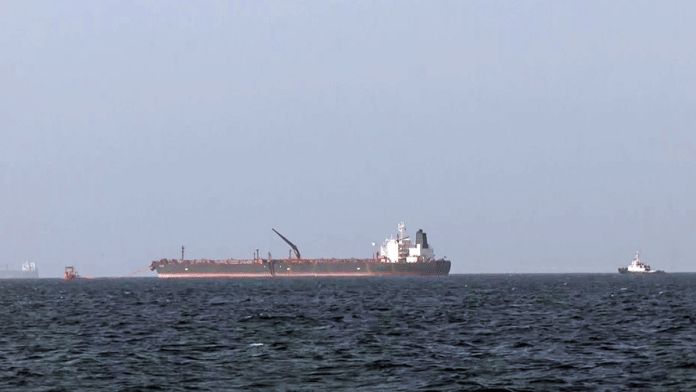

New Delhi: India’s dependence on Russian crude has risen sharply in recent months, with Moscow’s share of supplies increasing from 23 percent in January to about 50 percent in June and July.
Russian crude imports were around 2.6-2.8 million barrels per day (mbpd) in June and July, with the traditional Middle East supplies through the Strait of Hormuz disrupted due to tension between the US and Iran.
In the first half of August, imports from Russia were running at about 1.9 mbpd, and the figure is expected to rise to around 2.0-2.1 mbpd as more cargoes are accounted for by the end of the month.
The growing dependency on Russian crude raises a question – Is India becoming too dependent on one supplier for its oil?
According to experts, the answer is not straightforward.
While Russia has become India’s biggest crude supplier, experts say this is also part of a broader diversification of supplies from the Gulf. However, such a high concentration with one supplier does expose India to sanctions risk, shipping restrictions and possible disruptions at Russian export terminals.
Why Russian oil important for India
Russian crude has generally been available at discounts to Middle Eastern grades, helping offset additional freight costs. But price is not the only reason India continues to buy it.
“India is currently buying Russian oil not only because of price, but because it needs reliable physical supply,” said Abu Dhabi based commodity analyst Natalia Katona, pointing to the difficulty of replacing 2-2.5 mbpd of Russian crude quickly.
Russian crude also avoids the Strait of Hormuz, while Houthi attacks in the Bab el-Mandeb strait at the Red Sea have generally not targeted Russian oil shipments. This has made Russian barrels relatively more secure on a delivered basis.
However, Russian oil is not always the cheapest option. “Its price, relative to Brent, has been extremely volatile, moving between discounts and premiums depending on the delivery period and the availability of competing barrels,” Katona said.
There is also a refinery related reason behind the rise in Russian crude purchases.
Nikhil Dubey, Senior Analyst for oil markets at Kpler, said Russian crude has remained attractive because of its economics, availability and compatibility with Indian refineries.
Russian Urals, he said, offers a product yield that aligns with India’s requirements, particularly its middle-distillate-rich profile.
“A barrel has to work for a refinery both in terms of the product slate as per country’s demand and its landed cost,” Dubey said, adding that Russian crude has often met both conditions for Indian refiners.
This does not mean Russian oil is indispensable.
Indian refineries can process a wide range of crude grades, and the country imported very little Russian oil before 2022.
But replacing the current volumes of Russian oil would be commercially and logistically challenging, particularly when Gulf supplies are facing geopolitical risks.
What happens if India cuts Russian imports
The risks of relying heavily on Russia are greater exposure to sanctions, shipping restrictions, while disruption at Russian export terminals due to Ukrainian drone attacks could affect supplies.
But turning away from Russian oil brings its own risks.
The UAE is a strong alternative because it can ship crude through Fujairah, bypassing the Strait of Hormuz. Venezuela is also now supplying higher volumes to India, with deliveries reaching around 4,00,000 barrels per day in August. Other options include Brazil, the US, and African countries.
But these alternatives could involve longer voyages and higher freight costs which would then result in more Indian money tied up in the crude that is at sea.
As Katona puts it, moving substantially away from Russian oil would mean “higher prices, longer journeys, more expensive freight and greater exposure to Middle Eastern chokepoints”.
Praveen Rai, Director of oil markets at advisory and consulting firm Grant Thornton Bharat, said India’s procurement strategy has already maintained a diversified sourcing portfolio across countries.
“India has consciously maintained a diversified sourcing portfolio spanning the Middle East, Russia, the US, Africa and Latin America, thereby mitigating risks associated with dependence on any single supplier,” Rai said.
He said Indian refiners can recalibrate sourcing if disruptions in Russian oil supply comes from sanctions, logistics or pricing changes. The bigger impact, he added, would likely be on procurement costs rather than energy availability.
India’s refining sector can process a broad range of crude grades, giving refiners flexibility to adapt to changing market conditions, Rai said. The alternative supplies would carry a moderately higher landed costs than discounted Russian barrels.
According to Rai, any shift away from Russia is likely to be gradual and commercially driven.
Diversification is only one part of energy security
The bigger question for India is what happens when supplies are disrupted, regardless of their source.
A wider supplier base does not eliminate the risk of a global oil shock. A major geopolitical disruption can still push up crude prices, freight and import costs.
India, therefore, needs greater emphasis on larger strategic petroleum reserves, alternative ports and supply routes, and infrastructure that can keep crude flowing to refineries when major shipping lanes are disrupted.
It also means increasing domestic oil and gas production to reduce import dependence. Whereas, greater use of electric vehicles, biofuels and renewables can also gradually reduce exposure to crude.
The objective should not be to abruptly stop buying Russian oil, while also not allowing any supplier to become indispensable.
With the energy demand expected to keep growing, oil will remain important to India’s energy mix for years. The challenge for the government is to build enough suppliers, reserves and domestic production capacity so that disruption from Russia —or any other major source—does not become an economic shock.
(Edited by Ajeet Tiwari)
Also read: With crude at $100 again, Russian supplies may cushion India, but cost pressures set to mount