


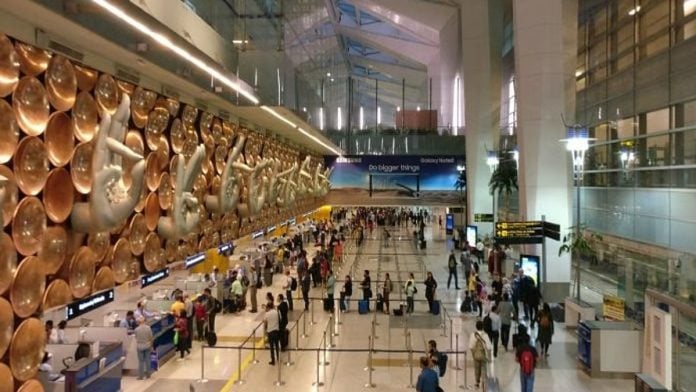
New Delhi: Observations in the arrivals hall at Delhi airport in December—the peak month for foreign visitors in India—reveal a diverse array of arrivals. While there are backpackers and business travellers, a significant proportion comprises families with trolleys laden with gifts, grandmothers searching for familiar faces, and teenagers with American accents and Punjabi surnames.
For a decade, India’s tourism statistics have documented this phenomenon, highlighting an often-overlooked narrative in discussions about declining tourist numbers: Many individuals classified as ‘visitors’ are, in fact, returning home.
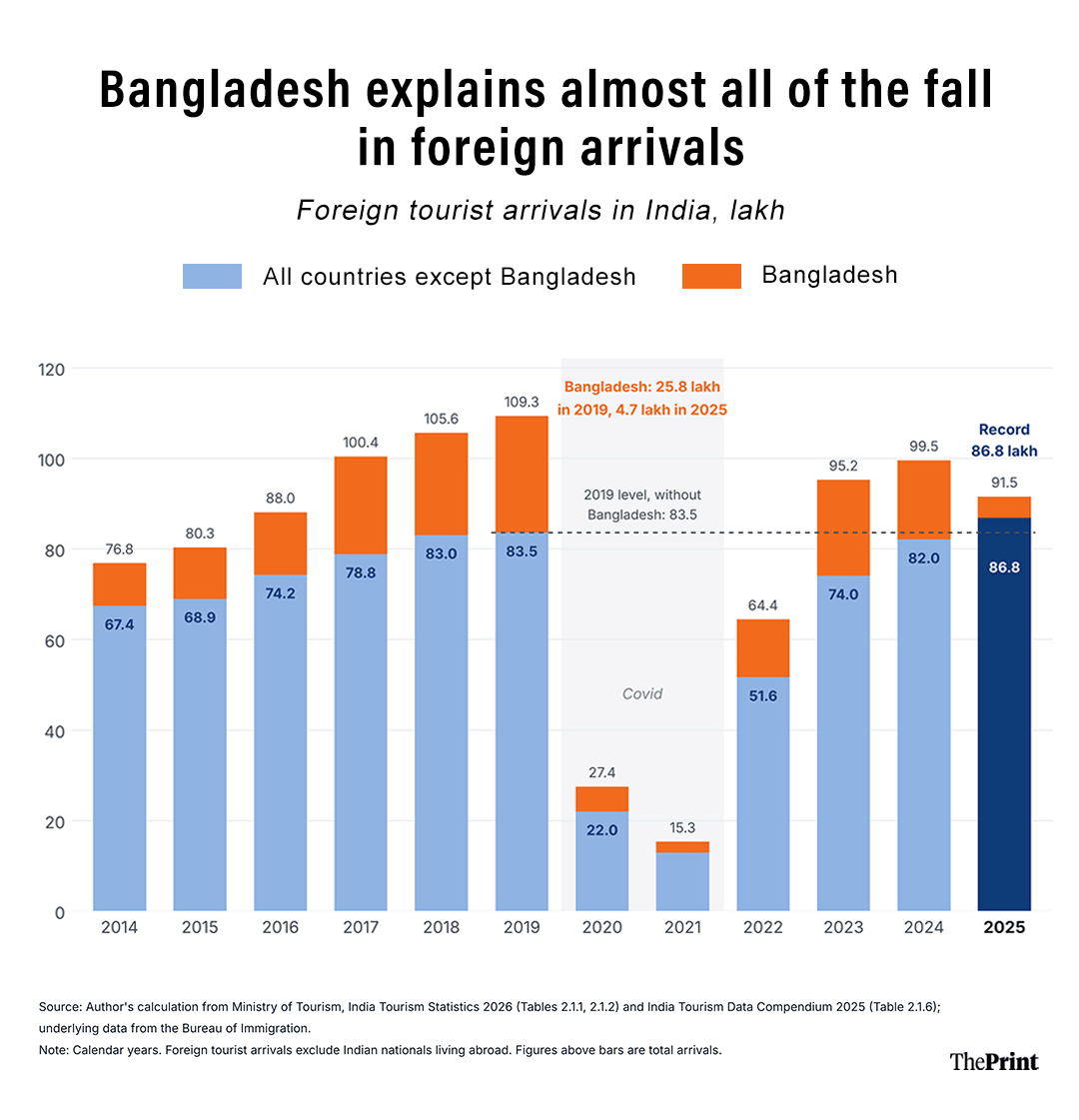
The headline statistics for 2025 were notably disappointing, with foreign tourist arrivals down 8 percent to 9.15 million, from the 10.93 million recorded in 2019. Tourism earnings also fell by 9.5 percent to $31.7 billion. However, a detailed examination of the Ministry of Tourism’s data reveals a more nuanced and intriguing scenario than a mere story of decline.
A neighbour’s absence
The decline in foreign arrivals can be predominantly attributed to a single country. In 2019, Bangladesh was India’s largest source of foreign visitors, with 2.58 million arrivals. However, in 2025, this number fell to 4,70,000, a 73 percent decline in a year, which the Ministry attributes to political turmoil and social unrest in Bangladesh. The Haridaspur land check-post, which previously managed over 10 percent of all foreign arrivals, now processes merely 2 percent.
Excluding Bangladesh, arrivals from other countries increased by 5.8 percent, reaching a record high of 8.68 million and surpassing 2019 figures. The United States and the United Kingdom contributed the most visitors.
Within the data pertaining to Bangladesh, a significant detail emerges. In 2025, 69 percent of Bangladeshi visitors to India sought medical treatment, compared to 28 percent in the previous year. While tourism declined, the influx of patients persisted. This trend highlights India’s prominent role in regional healthcare and highlights a potential vulnerability, as Bangladesh continues to account for nearly two-thirds of India’s medical tourists.
The homecoming economy
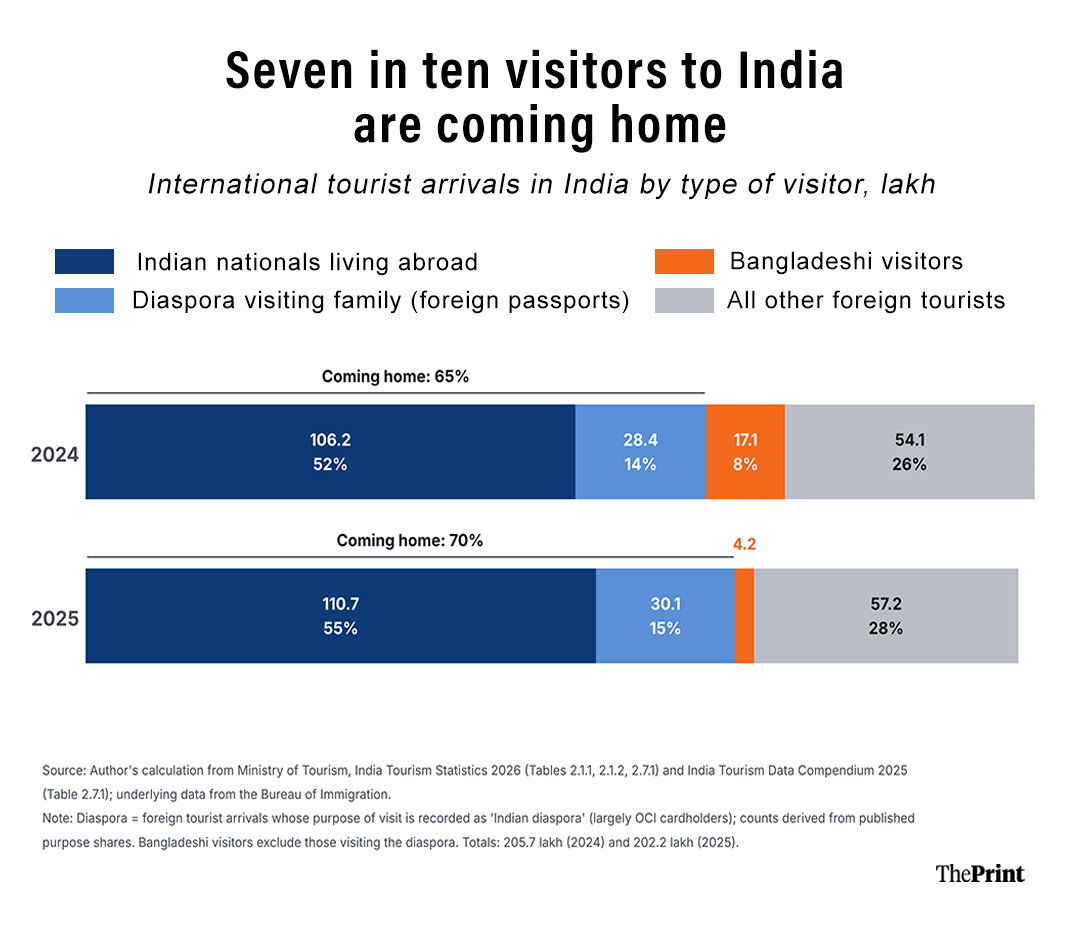
The most remarkable observation is from a category of data that rarely receives media attention. According to the United Nations Tourism’s definition, India includes its nationals residing abroad in the count of international tourist arrivals. In 2025, this group numbered 110.7 lakh, surpassing the total of all foreign tourists combined, and their numbers have more than doubled since 2014, whereas foreign tourist arrivals increased by only 19 percent.
When foreign passport holders visiting family—predominantly OCI cardholders—are considered, the scenario becomes even more pronounced. In 2025, seven out of 10 international arrivals in India were either Indians or individuals of Indian origin, an increase from 65 percent the previous year.
Among visitors from the United States, Canada and Australia, nearly six out of 10 travelled to visit family, and their average stay was significantly longer than that of holidaymakers, averaging 25 days compared to 15 days.
Tourism economists refer to this phenomenon as VFR travel, which stands for visiting friends and relatives. As R. T. Jackson cautioned in 1990, this type of travel is frequently underestimated both in magnitude and economic impact, primarily because it is not typically recorded in hotel registers. India exemplifies this observation, as its tourism economy is significantly characterised by a homecoming economy, rooted in one of the world’s largest diasporas.
This dynamic has dual implications. Family travel is characterised by loyalty and consistency, driven by events such as weddings, festivals, and caring for ageing parents, rather than by transient trends. However, this also implies that the segment of conventional foreign tourists, those without familial connections or medical appointments, is considerably smaller than overall figures might suggest.
Excluding the diaspora and visitors from Bangladesh, this group comprised approximately 5.7 million individuals in 2025, representing a growth of 5.8 percent. Nonetheless, this remains a modest foundation for a nation of India’s size and cultural heritage.
The destinations frequented by conventional tourists are undergoing significant changes, as evidenced by the evolving travel patterns. Currently, three-quarters of international visitors enter India through five major airports, with over one-third arriving via Delhi alone.
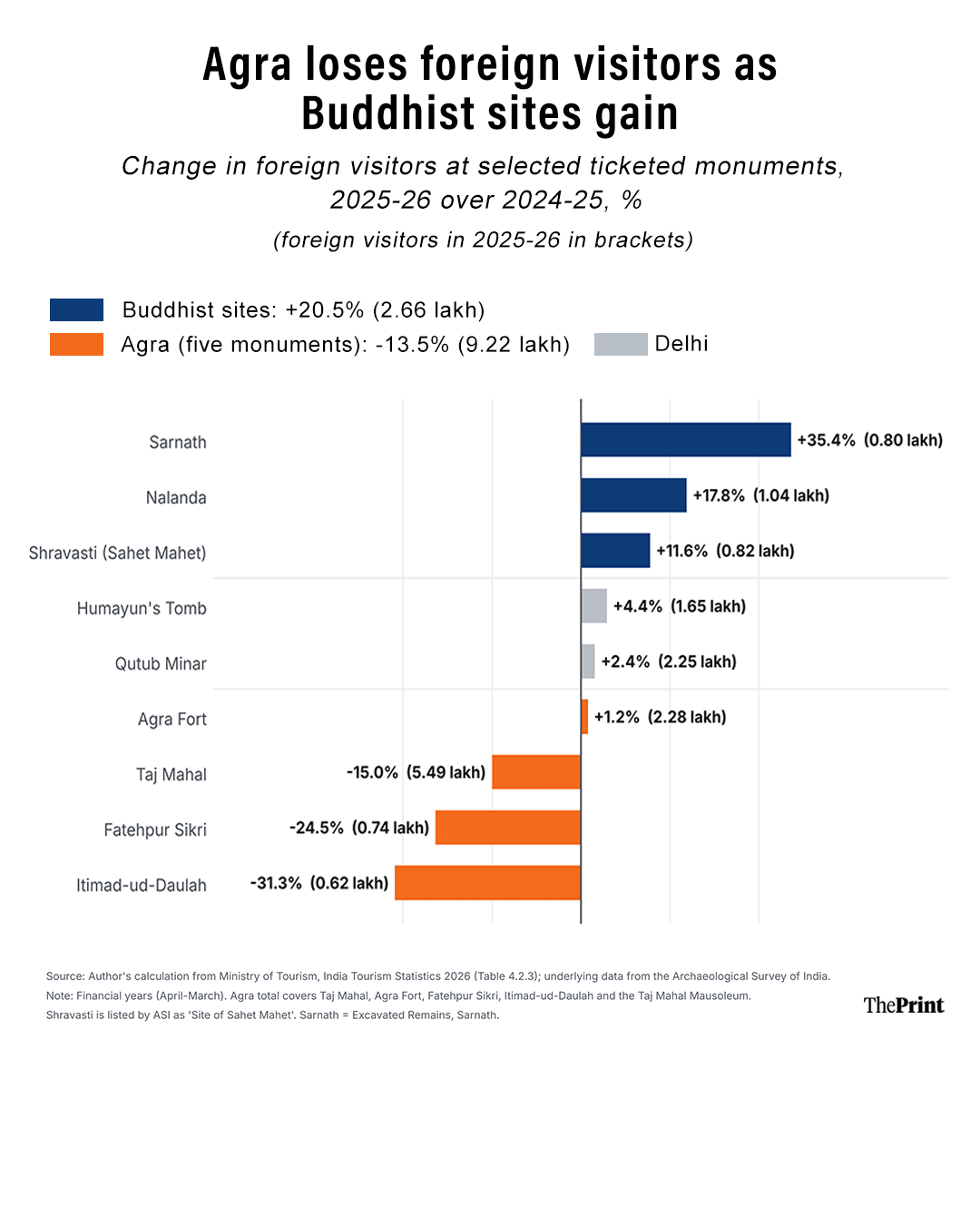
The Taj Mahal continues to be the most popular attraction, drawing 5,50,000 foreign visitors in the year ending March 2026. However, this figure represents a 15 percent decrease from the previous year, and foreign visitors to Agra’s five ticketed monuments declined by 13.5 percent.
In contrast, during the same period, Buddhist sites such as Nalanda, Sarnath, and Shravasti saw a 20 percent increase in foreign visitors, totalling nearly 2,70,000 and surpassing the number of visitors to Agra Fort.
State data, which tracks visits rather than individual visitors, corroborate this trend, showing an increase in foreign visits to Goa, Kerala and Tamil Nadu, while Rajasthan declined. Consequently, the traditional Golden Triangle of Delhi, Agra, and Jaipur no longer encapsulate the full tourist narrative.
When the tourism balance turns
The significance of this issue extends beyond the tourism ministry because tourism, as a service export, generates foreign exchange without the need for physical shipments. This concept was formalised by Jordi Balaguer and Manuel Cantavella-Jordá in 2002 as the tourism-led growth hypothesis. Their research showed that in Spain, consistent revenue from international tourists supports investment, employment, and long-term economic growth.
In terms of this metric, there has been a shift. In 2019, foreign tourists spent $30.7 billion in India, while Indian tourists spent $22.9 billion abroad, resulting in a $7.8 billion surplus. However, by 2025, this had reversed into a $3.8 billion deficit, and India’s share of global tourism receipts fell from 2.05 percent to 1.68 percent.
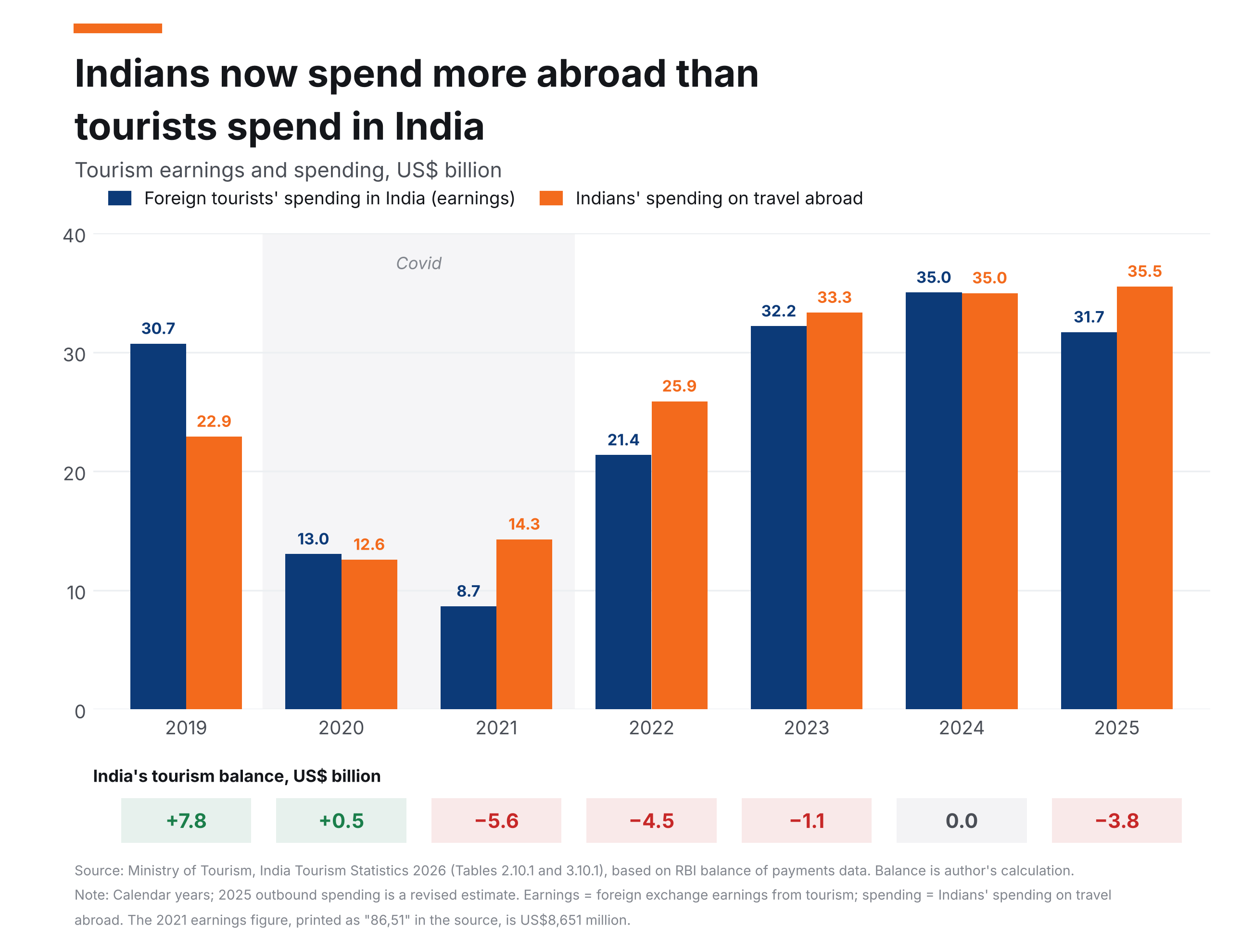
One statistic refuses to fit any reassuring story. Although arrivals from outside Bangladesh increased, earnings decreased by over $3 billion. This discrepancy suggests that either spending by incoming visitors declined, or those who stopped visiting contributed more financially than their numbers indicate. The current data does not clarify this issue, and it is imperative to resolve this question before proclaiming a recovery.
Part of this shift can be attributed to an increase in affluent Indian travellers. Last year, Indians undertook 33 million international trips. Over 2.2 million visited Thailand, while approximately 1,30,000 Thais visited India. Additionally, 6,20,000 Indians travelled to Vietnam, compared to roughly 57,000 Vietnamese visitors to India. India has emerged as a significant source market for tourism in Asia. The critical challenge is whether it can also establish itself as a major destination.
The data offers insights into the areas where this challenge will be addressed. The diaspora may be encouraged to take longer trips beyond Delhi and Agra, with a strategic emphasis on the Buddhist circuit. Medical tourism could increasingly target Africa, where the number of patients increased by nearly 20 percent last year. Additionally, the 5.7 million conventional tourists require more accessible visas, improved connectivity to smaller cities, and sustained global marketing efforts.
India’s tourism narrative in 2025 was neither the decline suggested by headlines nor the success attributed to the absence of a single neighbouring country. Instead, it was the account of a nation whose visitors increasingly comprise its own returning citizens, alongside the more complex task of attracting the global community to do the same.
Bidisha Bhattacharya is ThePrint Consulting Editor (Economics) and an Associate Fellow, Chintan Research Foundation. She tweets @Bidishabh. Views are personal.
(Edited by Viny Mishra)
Also read: Will India’s trade deals reach small exporters? Madhya Pradesh’s FTA helpdesk can tell