



India is snapping up palm oil after New Delhi slashed import duties, prompting refiners in the world’s biggest buyer to replenish depleted inventories ahead of the festival season.
More than 200,000 tons of crude palm oil have been bought in the past week after the government cut taxes on edible oil imports, said Aashish Acharya, vice president at Patanjali Foods Ltd. Inventories held by distributors and other downstream buyers are running low, adding urgency to purchases in time for Diwali, and the wedding season that follows, he added.
The buying spree could provide a fresh boost to the global palm market as supplies at top producers Indonesia and Malaysia remain ample. Malaysian inventories are at their highest in 2026. India typically imports 500,000 to 650,000 tons of palm oil a month. A sustained restocking push by the world’s biggest vegetable-oil importer could quickly absorb excess supply, supporting prices.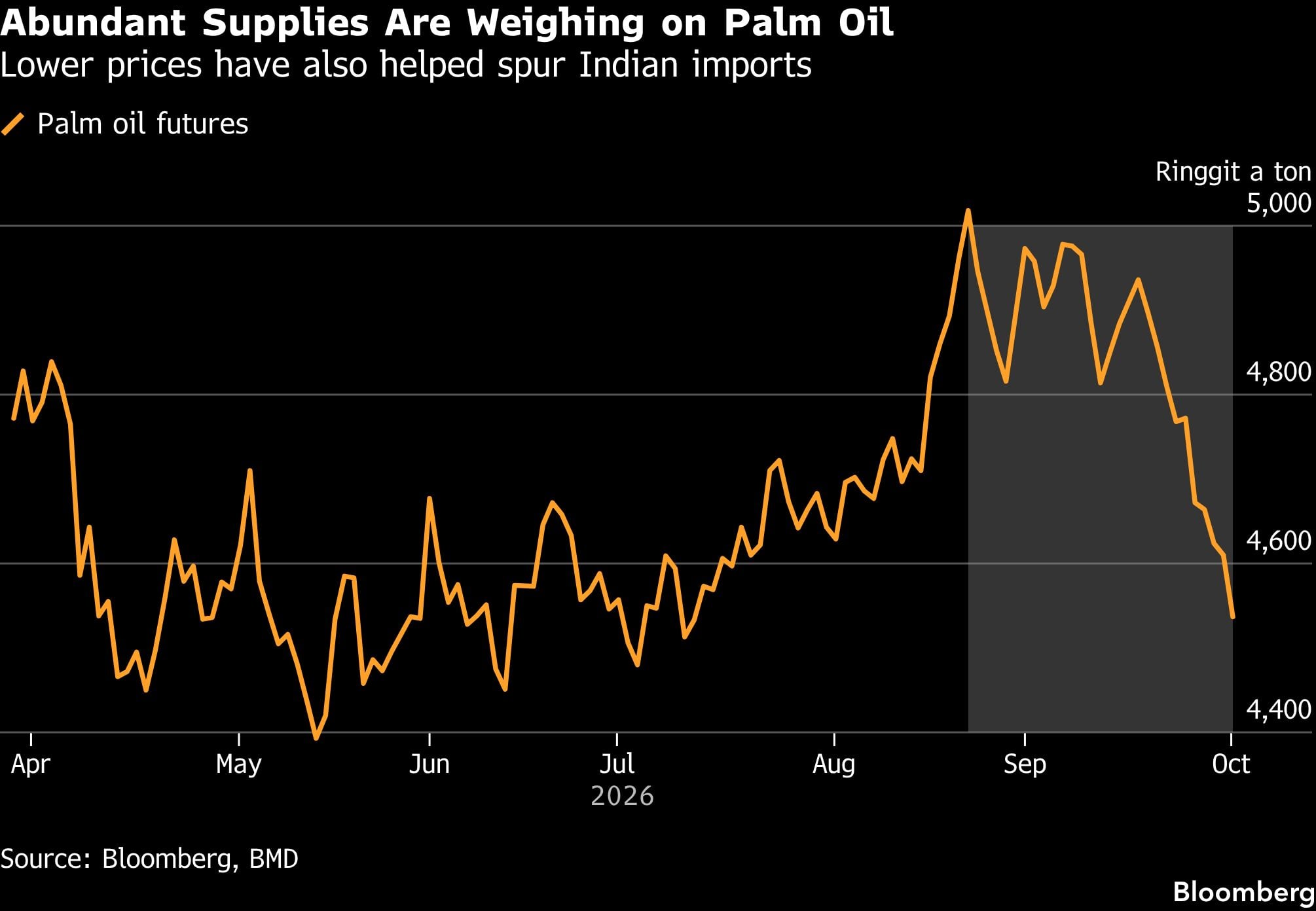
The government last week halved the levy on imports of crude palm and soybean oils to 5%, as part of a broader reduction in taxes on edible oils aimed at containing food costs. India imports about 60% of the vegetable oil it consumes, leaving domestic prices exposed to swings in global markets.
Indian purchases could accelerate if prices fall further and rise to as much as 750,000 tons a month during peak demand, Acharya said. “If prices come down by another $40 a ton or so, India will buy more aggressively.”
Consumption typically rises during the festival season, which starts in September and runs through Diwali in November, as households and restaurants use more cooking oil for fried foods, traditional sweets and other treats.
Bookings have been stronger than usual over the past week, as the duty cut improved palm oil’s appeal and encouraged buyers to lock in festive-period supplies, said Rajesh Modi, a trader at Sprint Exim Pte in Singapore. While India also scrapped import taxes on crude sunflower oil, buyers have favored palm amid uncertainty over Black Sea supplies due to the Russia-Ukraine conflict.
Benchmark palm oil futures in Kuala Lumpur have retreated sharply from an August closing peak of 5,018 ringgit ($1,228) a ton as robust production and weak exports fuel concerns that inventories will swell in the coming months. Prices fell for a fifth day to as low as 4,528 ringgit on Thursday, the lowest intra-day level since July 14.
“Palm is now the cheapest edible oil,” Modi said. “They are looking to buy palm at every price correction.”
Disclaimer: This report is auto generated from the Bloomberg news service. ThePrint holds no responsibility for its content.