



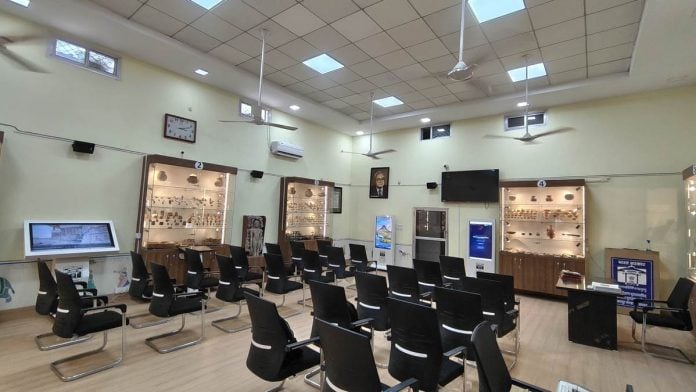
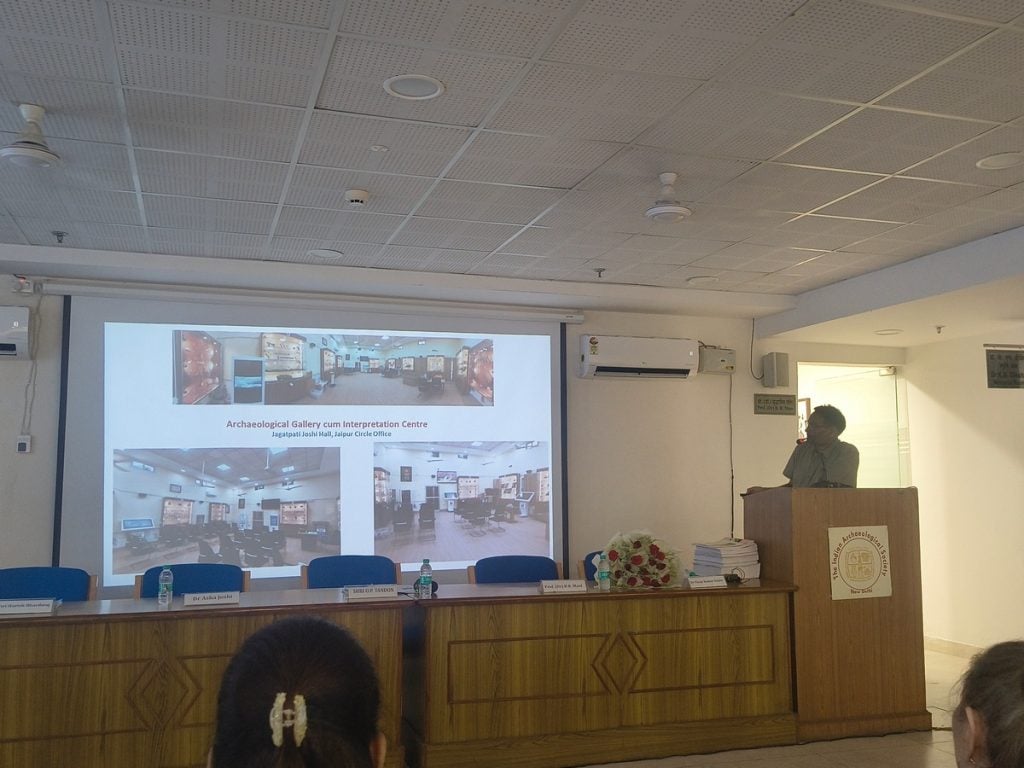
Jaipur: People piled into the Jagatpati Joshi Hall at the Archaeological Survey of India’s Jaipur Circle office on 31 August. But they weren’t there to view artefacts from the excavation of a 5,000-year-old site in Bahaj and other digs, neatly displayed in 12 brightly lit glass showcases at the new museum.
The crowd didn’t even know it was a museum. They had turned up to attend the retirement ceremony of a member of the ASI’s administrative staff, with farewell speeches, tea and samosas.
This is a tale of Jaipur’s newest museum that is curated and ready but never opened to the public. It is the result of ASI officer Vinay Gupta’s spectacular initiative of building a small museum inside the Jaipur office, with the aim of bringing the public closer to objects excavated from the pre-Harappan copper culture sites of Bewan and Ojiyana in recent years.
Money was used from the unspent ASI allocation. Design was developed. Research information was broken into bullet-sized visitor-friendly text next to the artefacts. Vendors were called. It was one man’s labour of love. But the museum, inaugurated in May inside the Jaipur Circle office, has stayed shut since. The ASI bureaucracy said it never gave permission to Gupta for his imaginative endeavour.
Since May, there has been a back-and-forth of red tape, disagreements over permissions, applications and budgets. In the middle of all this, Gupta got transferred out of Jaipur to Meerut after his four-year tenure.
There is no permission granted from the ASI to set up the museum or a gallery. People do whatever they feel like
-Yadubir Singh Rawat, Director General, ASI
“For more than two years, we worked to set up the gallery in a vacant hall at the Jaipur Circle office, where artefacts from Bahaj, Bewan and Ojiyana are displayed,” said Vinay Gupta during the YD Sharma lecture in New Delhi last month, titled Changing Archaeological Scenario of Northern India with Special Reference to Bahaj and Bewan Excavation. “Our aim was to look beyond the traditional limits of an exhibition space, transforming the hall into an active interpretation centre deeply rooted in educational values.”
Gupta declined to speak to ThePrint, saying he is not authorised to talk to the media.
Also Read: ASI’s ghost campus in Noida—grand new Rs 289-cr facility, 15 students, no faculty
Labour of love vs breach of protocol
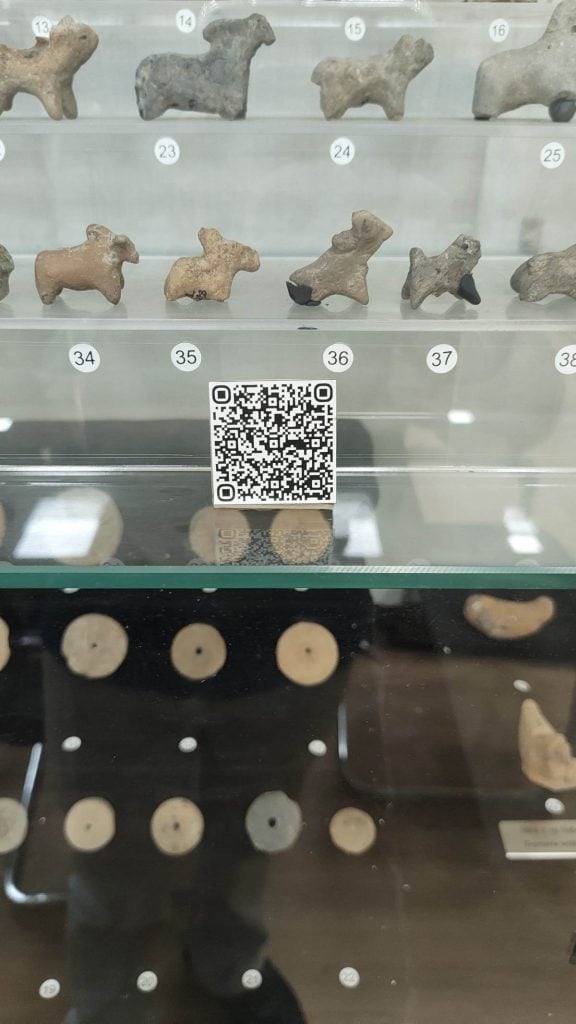
Over the course of more than two years, Gupta went above and beyond his duties to turn the vacant Jaipur hall into a gallery for viewing with fancy touchscreen kiosks, display panels and QR codes to tell visitors details of the artefacts, their dates and where they were unearthed.
Executing this vision was a hands-on job for the archaeologist. He designed the showcases and lighting himself, bought supplies through the government’s GeM portal and roped in carpenters from Jaipur to craft the vitrines. Jaipur Circle officials and students who had worked under him on excavations at Bahaj and Bewan helped put the museum together as well.
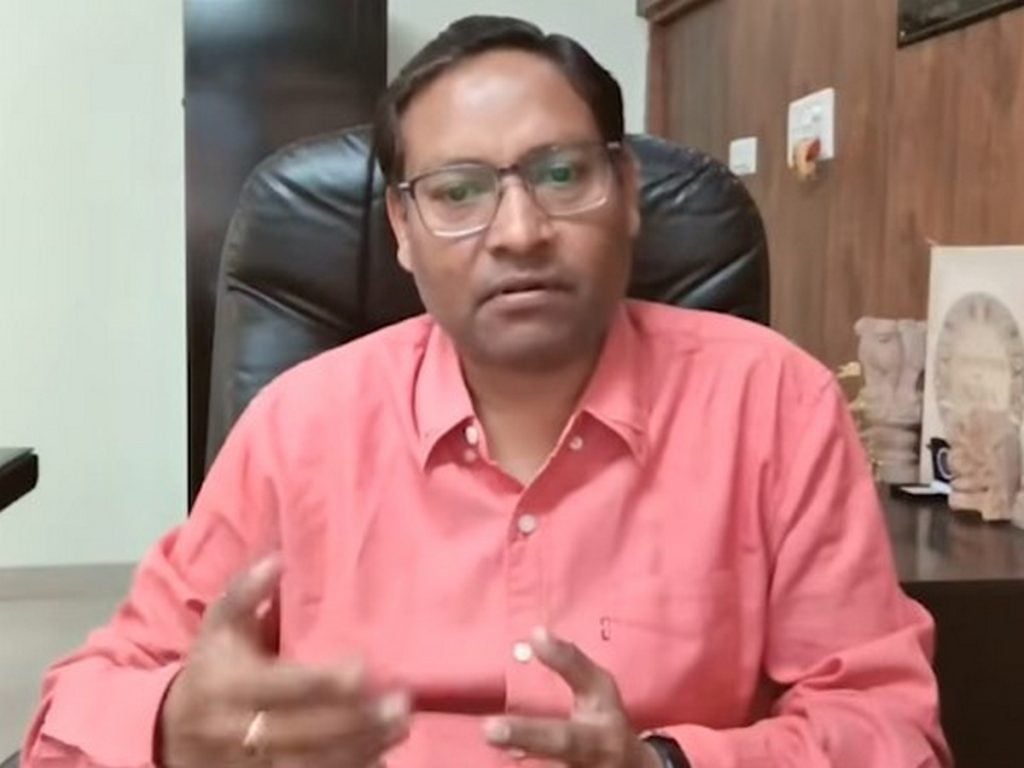
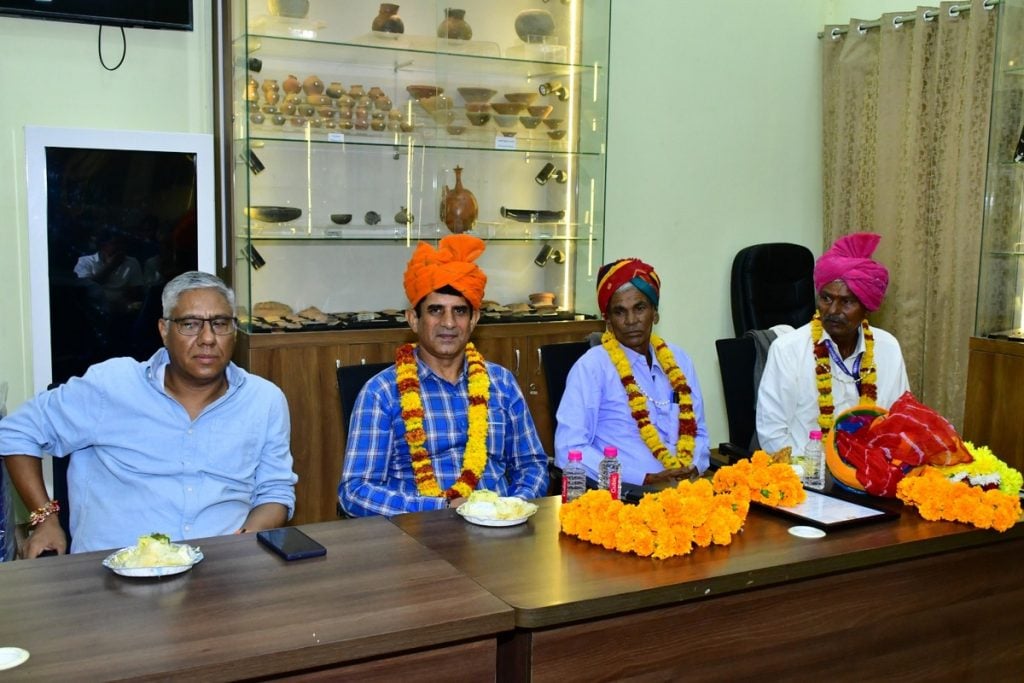
But after everything was ready, no grand ceremony took place. On 8 May, Gupta inaugurated the museum himself, accompanied only by Jaipur Circle officials, Maj Gen (Retd) Rahul Kumar, who is the brother of Union home secretary Govind Mohan, and retired archaeologists BR Meena and SK Sharma. Not a single official from ASI headquarters attended. The public was never let in either.
To the ASI, Gupta’s initiative was not something to be rewarded but a breach of protocol. The ASI headquarters refuses to even recognise the space as a museum or gallery.
Retired archaeologists and museologists told ThePrint that setting up a gallery without going through an authorisation process is unprecedented in the ASI.
The move rankled senior ASI officials and left the brand-new museum trapped between institutional rules and individual initiative.
The ASI’s official line is that the Jaipur hall is essentially a storeroom for excavated artefacts.
“After any excavation we arrange the antiquities and other findings in any available space. It is that. No new museum has been made in Rajasthan. The only two are at Kalibangan and Deeg,” said Nandini Bhattacharya Sahu, Joint Director General and spokesperson for the ASI.
What was meant to bring 1,200 precious archaeological artefacts out of ASI storerooms and closer to the public has now become a dispute over who authorised it. Nearly five months after its inauguration, the gallery remains shut to visitors.
It all boiled down to whether Vinay Gupta sought and was granted permission for the museum.
[Gupta] sets an example on how artefacts should be treated. They are not excavated to lie in dust. No officer before him even tried this. But after his transfer things have changed and no one is keen to open it to the public
-ASI Jaipur Circle staff member
“There is no permission granted from the ASI to set up the museum or a gallery. People do whatever they feel like,” Yadubir Singh Rawat, Director General of the ASI, told ThePrint.
Rawat denied knowledge of the gallery, but Gupta had written to the DG on 24 April, when the museum was already mostly complete.
The subject line of the letter, accessed by ThePrint, was: “Establishment of a new museum cum interpretation centre at Jaipur office.” In it, Gupta informed the DG about the antiquities “under display”, invited Rawat to the inauguration and asked that the culture minister and culture secretary be invited to “dedicate it to the nation and open it for public.”
No formal permission was ever sought, but officials at the Jaipur Circle say the department was aware Gupta was setting up a museum and no one stopped him.
“The DG never responded to the letter,” said an official on condition of anonymity.
Stolen glimpses into a ‘brilliant’ museum
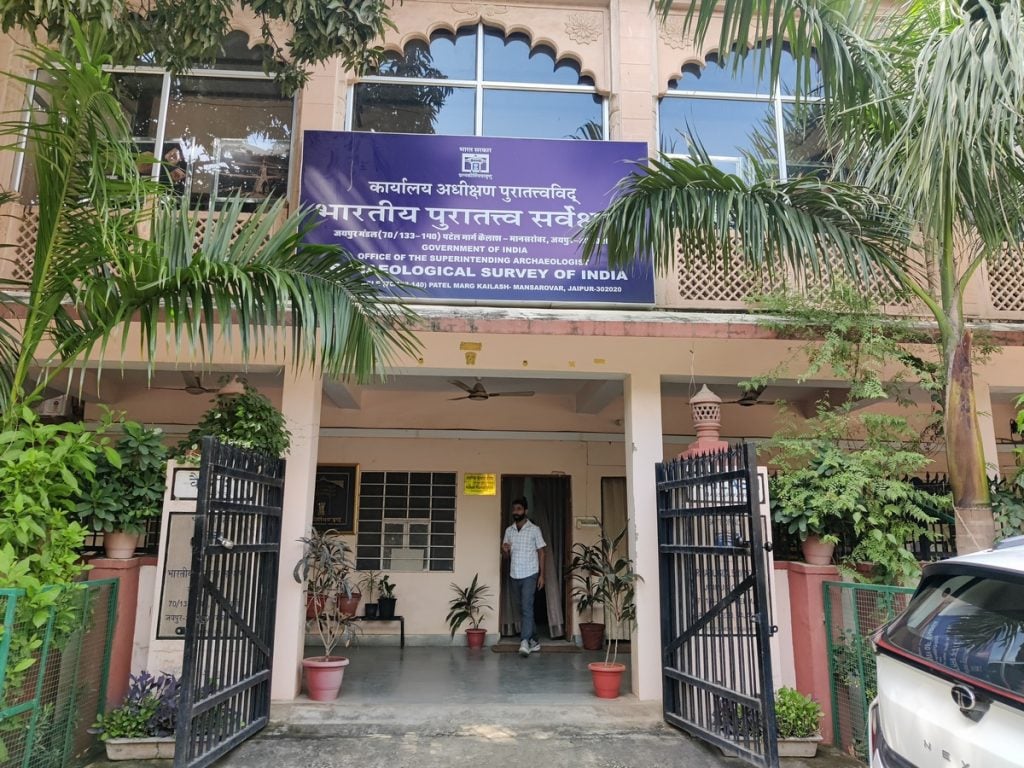
ASI’s Jaipur Circle office is tucked away in the residential lanes of Mansarovar, far removed from the grand forts and monuments the agency is known for protecting.
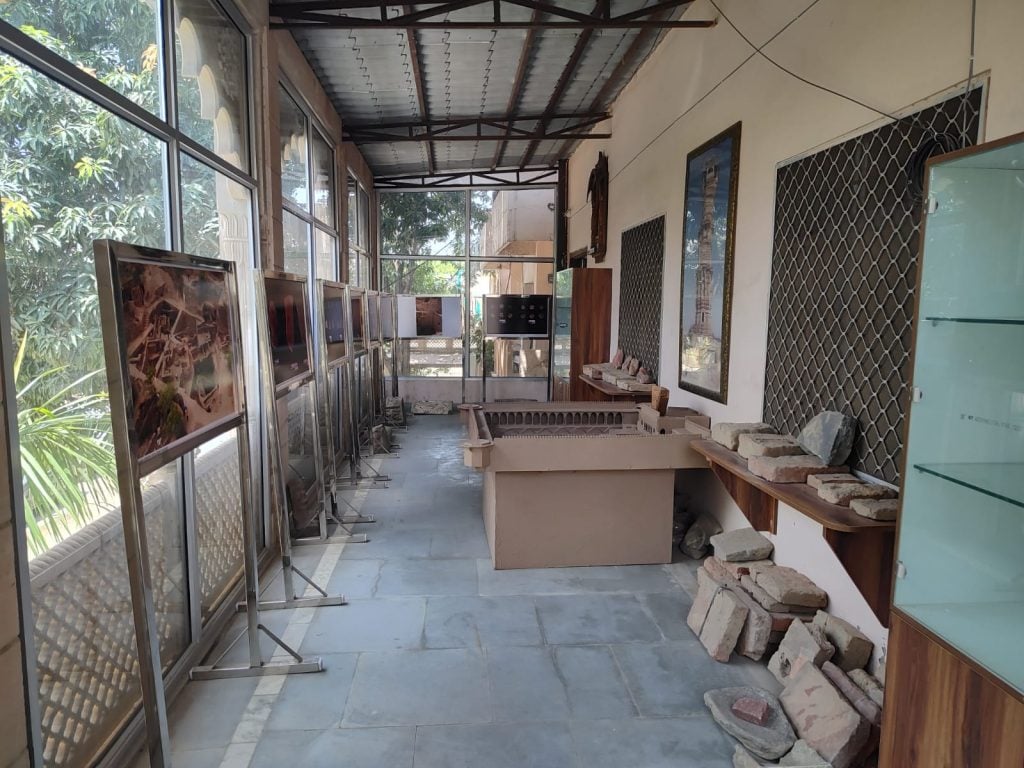
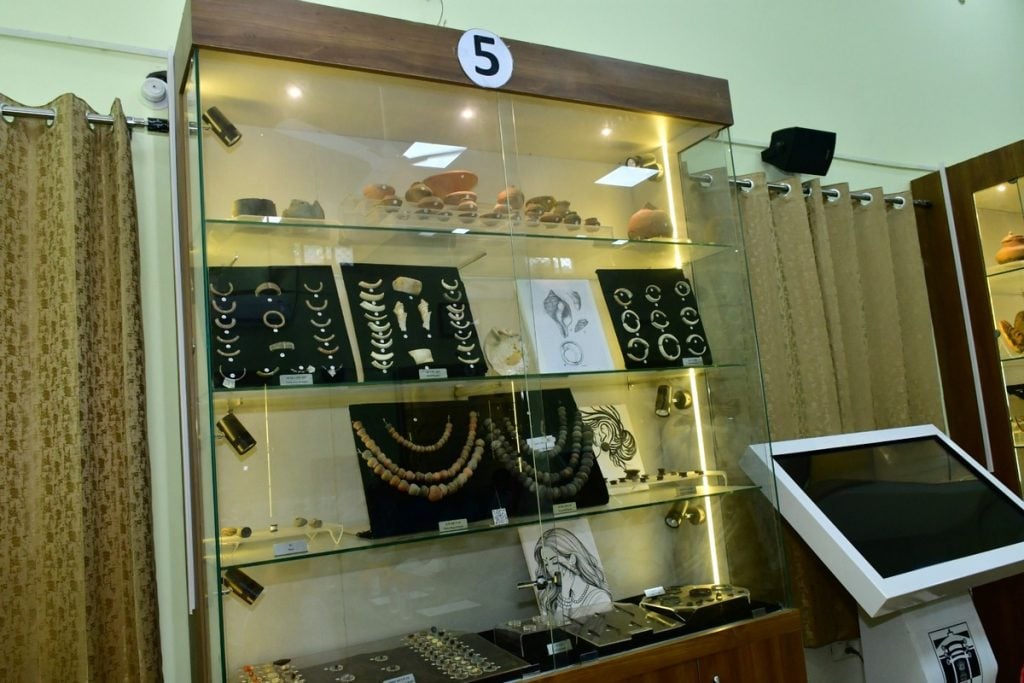
A peep through its glass windows offers passers-by a glimpse of the antiquities discovered by Gupta and his team: Brahmi seals, a Jasper seal, a Kushana seal, semi-precious stones, terracotta figurines of the Navagraha and Ashwini-Kumar, remnants from an ancient furnace, including charcoal.
One showcase brings together pots, bowls, a dish on a stand, a sprinkler and Painted Grey Ware pottery, along with Mauryan, Sunga and Gupta-period pottery. There were initially 10 showcases, but Gupta added two more for antiquities excavated from Ojhiyana in Rajasthan’s Bhilwara, a site he worked on until shortly before his transfer. One of the two is still empty. The gallery also has four 43-inch touchscreens and smaller 23-inch displays, never used.
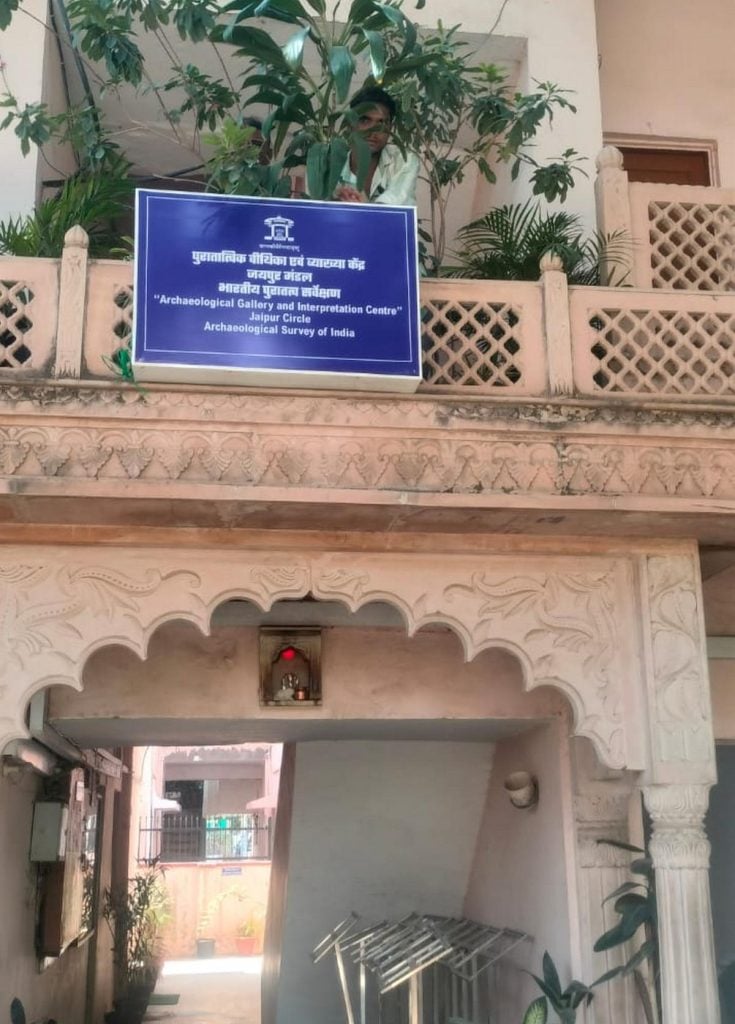
For Mansarovar residents such as Rajesh Meena, the museum is close enough to see but impossible to enter. Even the blue board that identified it as an archaeological gallery is no longer there.
“We can see it only outside. I have tried to visit but the ASI officials said it was not open to the public. Then why has it been built?” asked Meena.
One of the few people to have had a good look inside is Sonya Rhie Mace, Curator of Indian and Southeast Asian Art at the Cleveland Museum of Art. She visited the gallery in January 2026, months before its inauguration.
The objects themselves are thoughtfully displayed with clear didactics and attractive lighting. The team led by Dr Vinay Kumar Gupta is to be congratulated on their brilliant accomplishment.
-Sonya Rhie Mace, Curator of Indian and Southeast Asian Art, Cleveland Museum of Art
“I was stunned to discover the gallery in the offices of the Archaeological Survey of India in Jaipur,” she said. “As a specialist in the pre-Kushan sculpture of Mathura, I found the objects in the gallery revelatory. They demonstrate that the greater Mathura region [Bahaj falls under the wider Braj archaeological region] was a vibrant cosmopolis already by the 600s BCE. Within a well-documented archaeological context, examples of coinage and Brahmi script can be dated centuries earlier than previously recognised.”
Among the pieces that caught her eye were a necklace made of tiny terracotta pots and a “finely hewn ringstone”. The gallery itself impressed her too.
“The objects themselves are thoughtfully displayed with clear didactics and attractive lighting. The team led by Dr Vinay Kumar Gupta is to be congratulated on their brilliant accomplishment,” she said.
Dust to dust
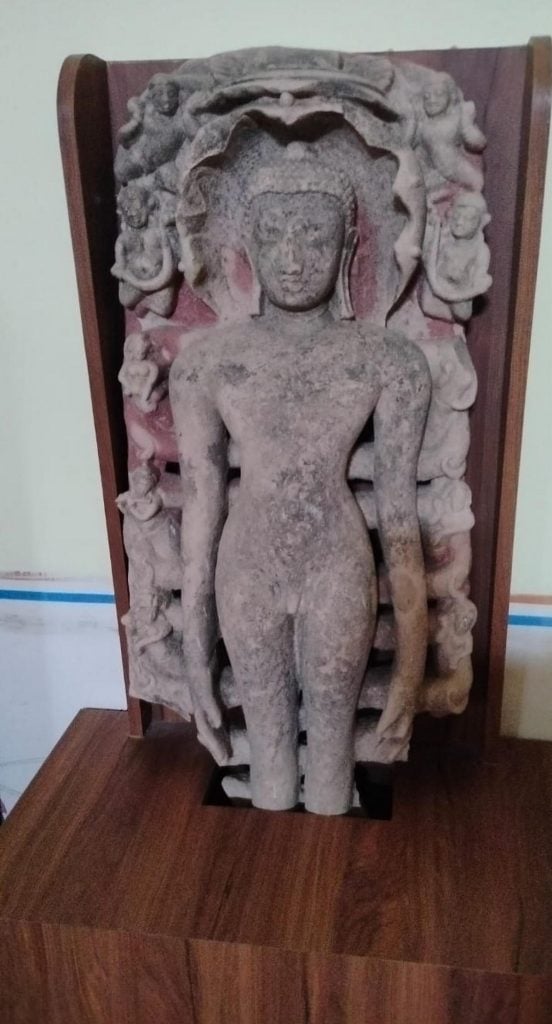
The treasures now displayed at the Jaipur Circle office were once packed away inside dusty iron trunks in a dimly lit storeroom. This is the fate of many objects recovered during excavations: they are brought back to circle offices and never seen by the public.
In his quest to put them in the limelight, Gupta zeroed in on Jagatpati Joshi Hall. Built in 2010 in memory of the eminent archaeologist and former ASI DG, it had been used only occasionally for official events and retirement parties.
But what Gupta saw as a worthy use of available space, other ASI officials regarded as an inappropriate move in a residential area.
“There are set rules within ASI for building museums. It cannot be made through an individual effort. The Jaipur office is in a residential area and does not have the capacity to handle visitors. These points were not considered before it was made,” said a source in the Jaipur Circle.
The Jaipur gallery is also unusual for another reason: there was no separate budget sanctioned for it. According to sources, the money came from unspent funds available with the Jaipur Circle.
At least Rs 22.4 lakh was spent on touchscreen kiosks, showcases, glass covers, carpeting, a sound system and television screens, with additional money going toward lighting and short documentaries. Sources said ASI headquarters was informed about the expenditure.
One staff member at the Jaipur Circle recalled that Gupta worked late into the night to make the gallery project possible.
“He sets an example on how artefacts should be treated. They are not excavated to lie in dust. No officer before him even tried this. But after his transfer things have changed and no one is keen to open it to the public,” said the staff member.
Also Read: Home owners living next to protected monuments can’t build, extend. Files at NMA pile up
Dig to display to limbo
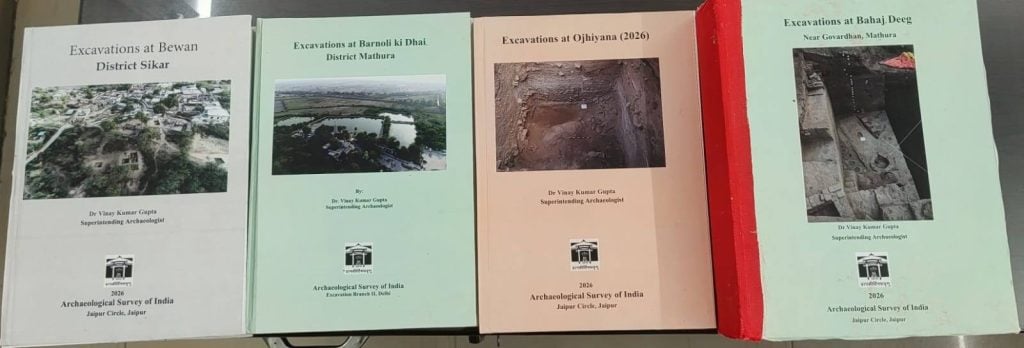
A few months after taking charge of the Jaipur Circle in 2022, Gupta began digging into Rajasthan’s past. At Bewan in Sikar, he launched excavations to trace one of the region’s oldest known cultures. A year later, he moved to Bahaj in Deeg to piece together the historical threads of the Braj region.
He submitted formal excavation reports for both sites to the ASI Director General this year—which is unusually prompt for ASI archaeologists.
This zeal continued beyond the excavation trenches. By February 2024, Gupta was looking for ways to get the finds in front of people. Setting up a gallery required a skill that Gupta and his team did not formally possess: museology. But he and his band of students and interns taught themselves along the way.
“We don’t have museum experts from outside. We designed it ourselves. But one thing was in our mind, the artefacts should be displayed better so that the gallery also looks visually appealing,” recalled an intern who worked with Gupta for around eight months, helping design the displays and catalogue 36 confiscated objects dating to the late medieval period. Other students helped select and catalogue antiquities and write reports. The Jaipur Science Branch cleaned and consolidated the artefacts before display.
Gupta had also seen how museums abroad presented their archaeological collections. In 2012, during a cultural heritage workshop in the US, he had visited the Smithsonian, the Metropolitan Museum of Art and the Field Museum in Chicago, a colleague recalled.
That exposure appears to have influenced the way the Jaipur gallery was conceived. Rather than simply placing antiquities behind glass, the team tried to make the displays more accessible to visitors by using digital kiosks and QR codes.
“The ASI’s role in Jaipur is limited, so we felt that tourists visiting here should have an interactive learning experience. A key feature of this gallery is the installation of display panels that will provide visitors with information about each individual object,” said Gupta in a Doordarshan interview back in May.
The balcony of the hall was lined with field photographs, displays of bricks and heavy stone sculptures collected from excavation sites, to give visitors a sense of the arduous work archaeologists put into unearthing objects and bringing the past alive — the process behind the artefacts.
Before the objects could go on display, the team also worked to create controlled museum conditions in the echoey hall. They installed blinds to block every beam of direct light and worked out how to maintain the right temperature, particularly for objects that had spent centuries underground before being excavated.
After any excavation we arrange the antiquities and other findings in any available space. It is that. No new museum has been made in Rajasthan. The only two are at Kalibangan and Deeg.
-Nandini Bhattacharya Sahu, Joint Director General and spokesperson, ASI
The idea, according to the intern, was not just to enlighten the public but to give researchers an accessible resource.
“Our aim is that scholars use this place for their research. They don’t have to go through catalogues and seek permissions. By displaying these antiquities, they have direct access to them,” the intern said.
While Gupta’s museum has been dismissed by his own organisation, many of his colleagues, seniors and former archaeologists visited the Jaipur gallery informally and appreciated his work.
“Gupta has endeavored to bring this heritage to the public eye, otherwise, these items would have simply remained gathering dust in the storerooms. Such an initiative at the circle office is significant,” said Harphool Singh, who worked with Rajasthan state archaeology department.
Meanwhile, the museum remains in limbo.
Soon after Gupta’s transfer, archaeologist Vinod Singh Rawat took charge of Jaipur Circle. ASI staff in Jaipur said one of his first acts was to remove the inauguration plaque that read: Archaeological Gallery and Interpretation Centre.
(Edited by Asavari Singh)