



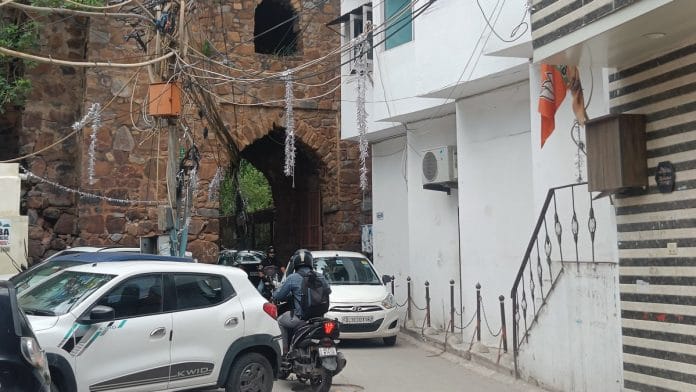
New Delhi: For 12 months, Aggarwal had been trying to get permission to carry out renovation work at his house in Green Park, Delhi. Despite his efforts, he cannot wish away an obstacle. His house is surrounded by several 15th century monuments, including Chhoti Gumti, Badi Gumti and Dadi-Poti tomb, which are protected monuments under the Archaeological Survey of India. In March, however, he thought he was close to a breakthrough.
His application was before the National Monuments Authority (NMA), the central government body that clears construction activities around monuments protected by the Archaeological Survey of India (ASI). Aggarwal was hopeful that the NMA would give the permission. But, to his dismay, the application was rejected.
NMA cited “mismatch of purpose in the proposed work” as the reason for rejection and directed Aggarwal to file afresh. But the process is not as simple as it may seem. For this, Aggarwal must file a fresh application with a competent authority of the Delhi government, which will then forward it to the NMA for approval. His months-long wait to repair his house will have been for nothing.
Fifteen years after it was created to protect India’s monuments while allowing cities to grow around them, NMA is still struggling to keep up with its mandate.
Across India, thousands of property owners, residents, and commercial developers routinely approach the NMA to seek permission for construction in the regulated areas around ASI-protected monuments. It has been a frustrating experience for them, with many of these applications remaining pending for years at a stretch.
NMA’s mandate was to grade and classify all the 3,695 centrally protected monuments; evaluate large development projects in regulated areas; and most importantly, frame heritage bye-laws for each monument to demarcate the prohibited and regulated zones. The body, however, is suffering from a severe staff crisis and is operating with deputation officers. As a result, thousands of construction applications have been held up.
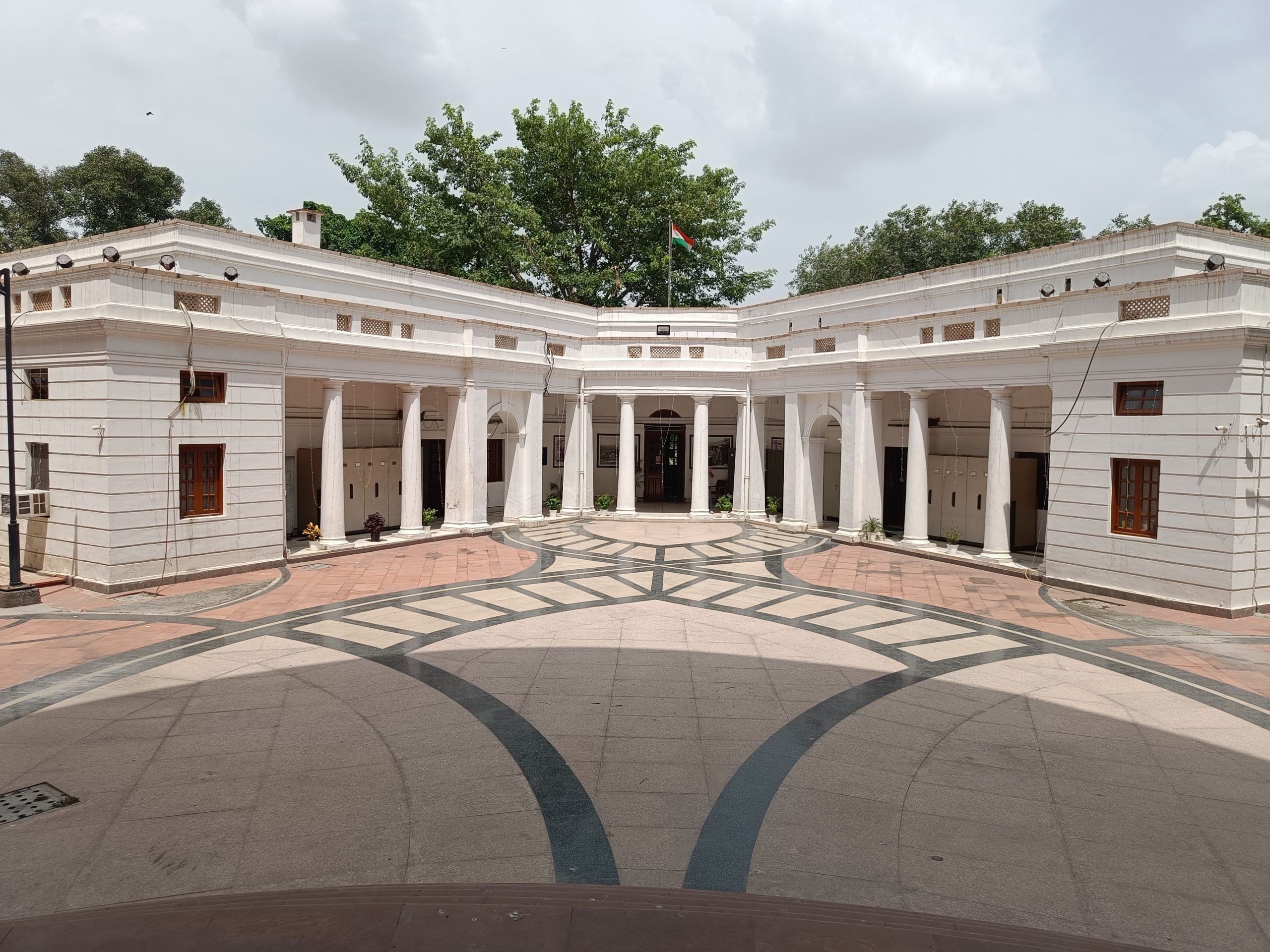
What’s worse, heritage bye-laws — meant to define what can and cannot be built around protected monuments — have been devised for barely a fraction of the nearly 3,700 ASI-protected sites. An overlapping chain of responsibilities with the ASI and state authorities has further led NMA to become a source of delay and uncertainty for people living around protected monuments.
The issue is not simply whether a house gets permission to be built or renovated. It is whether India has a pragmatic system that can protect its monuments without leaving legitimate urban development in regulatory limbo.
The National Monuments Authority
For an authority that sits at the centre of one of the most difficult questions around India’s protected monuments, NMA’s functioning has been underwhelming and tentative.
“NMA was constituted with an aim to check urban expansion and encroachment around the protected monuments. It was tasked with categorising each monument post-survey and framing heritage bye-laws. But NMA has failed to do so,” said Himanshu Prabha Ray, historian and first chairperson of NMA.
The biggest constraint is the staff crunch. NMA currently has 15 main officials, including the Director and Under Secretary, but it requires 61 additional posts.
Ray pointed out two issues with staffing. First, there is a dearth of trained archaeologists; and second, the body is dealing with a severe staff shortage. “Although ASI plans to survey protected monuments and sites, there is a lack of trained archaeologists, who can thoroughly salvage the site,” Ray said.
The challenges highlighted by Ray also found mention in a letter written by NMA Member Secretary Bhaskar Verma on 13 May this year.
“It has emerged that delays are frequently caused due to deferment in scheduling of site inspections and submissions of inspection reports. Such delays result in avoidable pendency, and adversely affect timely disposal of applications,” reads the letter.
ThePrint reached out to NMA Director Colonel Savyasachi Marwaha to ask about the delay in granting approvals to construction applications, and the status of heritage bye-laws. “The National Monuments Authority has not been authorised for direct interaction with the media,” replied Marwaha, who took charge of the body’s daily operations in October 2022.
Professor KK Basa, anthropologist and former ASI Director General, was heading the body until November 2025 but the Chairperson’s position has been vacant since his tenure ended. Senior IAS officer Vandana Jain has taken additional charge of NMA Chairperson since January this year.
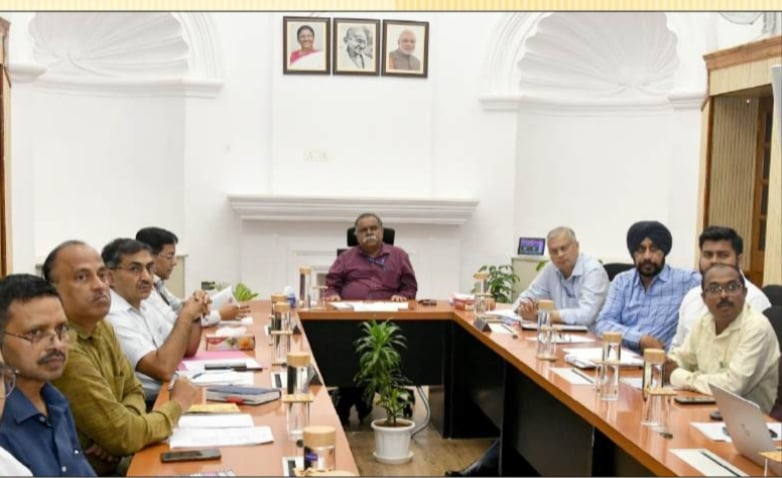
Since Marwaha has taken charge, the number of applications have surged by a staggering 66.1 per cent. According to NMA’s annual report, the body received a total of 1,849 applications in 2023-24, up from 1,113 in 2021-22.
NMA, however, is not a body with limited powers. Being a statutory body, it has powers similar to those of a civil court, including summoning individuals, enforcing their attendance and addressing matters placed before it. NMA was created under the Ancient Monuments and Archaeological Sites and Remains (Amendment and Validation) Act, 2010. Before it came into existence, these responsibilities largely rested with the ASI.
The balancing act
India had barely begun building a new urban landscape after Independence when the tension between expanding cities and old monuments started emerging. The ASI began addressing some of these concerns in the 1960s under then Director General A Ghosh but the effort did not take off.
Three decades later, archaeologist MC Joshi prepared an internal document dealing with permissions for construction around protected monuments. “But it had no legislative validity and was challenged in court. So there was a need for a body to take up these issues. NMA was born out of this need,” said Ray.
Since then, however, the challenge has only become more complicated. India’s cities have exploded, populations have grown and land around protected monuments has become red-hot valuable. What was once an open buffer around a monument can today be a crowded neighbourhood, a commercial street, a slum or a rapidly developing urban pocket.
The question for the NMA, therefore, is not just about allowing or stopping construction. It is about finding a way to keep a monument protected without freezing the lives of people living around it. “With increasing urbanisation and population pressure, there is growing pressure on land around protected monuments. It needs to be managed by balancing the needs,” said Ray.
A long struggle
That balancing act has produced a large volume of work for the body. Over the last 15 years, the NMA has held 530 meetings to dispose of applications. Between 2011 and 2024, it received 19,515 applications, according to its 2023-24 annual report. Of these, 14,663 were given approval for construction activities while 4,852 still remain pending.
Behind each pending application is a property owner waiting to repair their house, a family trying to expand its home, or a project caught within the invisible boundary of a protected monument.
ThePrint earlier reported that Lalit Kumar, a Green Park resident struggled for two years for permission to add a storey to his home as it’s located within 200 metres of protected monuments Chhoti Gumti, Badi Gumti and Dadi Poti Tomb.
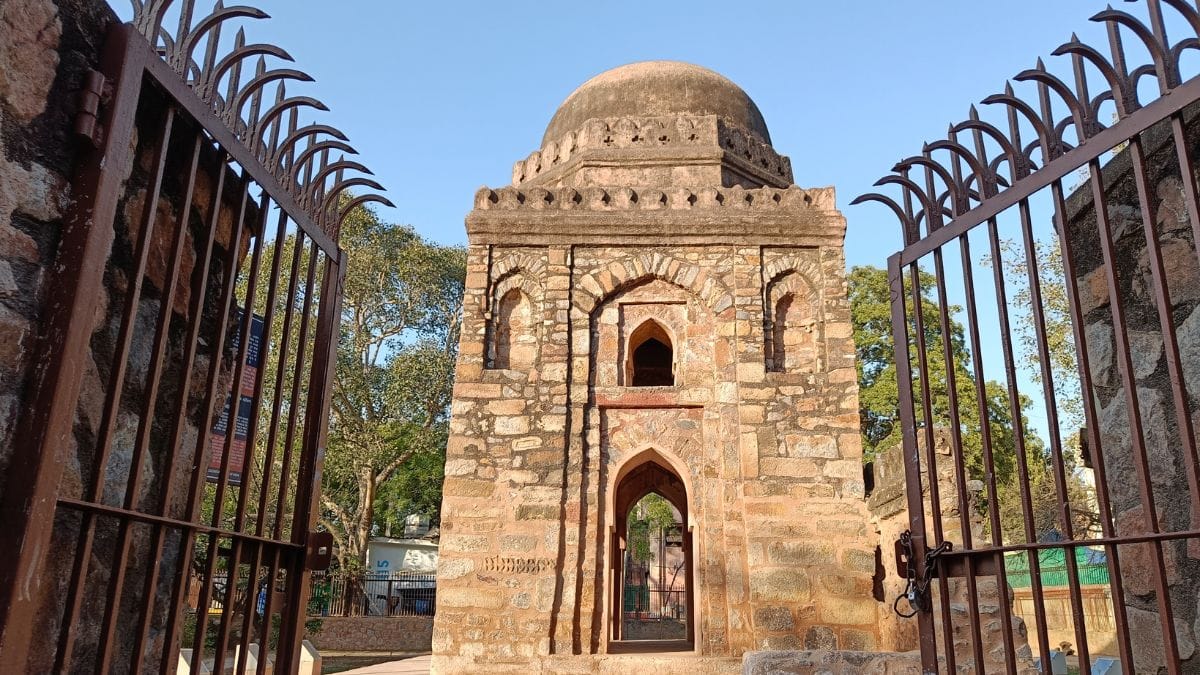
“Green Park is full of monuments and due to this Act, people living in the periphery of 200 metres from any monuments are struggling for any construction or repair work,” said Kumar, president of the Green Park Residents’ Welfare Association.
However, in 2024, Union Culture Minister Gajendra Singh Shekhawat said the government is considering changes to ensure preservation efforts cause minimum interference in people’s lives. The Culture ministry has been considering amendments to the Ancient Monuments and Archaeological Sites and Remains (AMASR_ Act, 1958. But it is still in process.
“The AMASR Act needs several changes. We have given our recommendations and now this will be discussed in Parliament. The Act will be people-centric and made in such a way that the heritage is preserved and people do not face any problems,” Nandini Bhattacharya Sahu, spokesperson and Joint Director General (Monument), ASI earlier told ThePrint.
When the Act was last amended in 2010, former IAS officer Jawahar Sircar was the culture secretary. He recalled that he had objected to the very idea of making an authority for giving permissions for construction.
“I then saw it will lead to harassing common people. How can one authority do all of this and what kind of manpower it will have. It was an over enthusiastic Act which passed in a hurry. This was a sad chapter and now people are suffering as a lot of permissions are pending at NMA and circle offices across India,” said Sircar, adding that the entire thing was misconceived. He pointed out that the list of protected monuments in India has never been pruned.
“The government should review the list of protected monuments, reduce the number and give some to the state government. There is a need to decentralise the burden, else NMA can’t do justice to its work,” said Sircar. He added that Taj Mahal and Kos Minars can’t fall under the same category.
Bibek Debroy, economist and former chairperson of Prime Minister’s Economic Advisory Council (PM-EAC), in 2023 injected the idea of rationalisation of monuments in public debate through an article. More recently, Sanjeev Sanyal, a member of the PM-EAC said the problem with the list is that it contains a large number of minor monuments with no national significance.
In a 2023 report, titled ‘Monuments of National Importance -The Urgent Need for Rationalization,’ PM-EAC described the protected monument’s list as “unwieldy.”
“Scores of minor and insignificant monuments have been declared as Monuments of National Importance (MNI). Therefore, the current list requires immediate attention for drastic rationalisation,” stated the report.
Confusion over Competent Authority
NMA exercises its powers through Competent Authorities but there is another complication: there is no uniform system for deciding who acts as the Competent Authority.
“At some places, the Regional Director of ASI is the competent authority, at other places, it is the municipal commissioner or the head of the state’s archaeology department. Both are already swamped with work,” an official said, requesting anonymity.
The official questioned whether such a system was sustainable.
A 2022 report of the Comptroller and Auditor General of India (CAG) noted that the progress of the NMA in several mandated activities had been slow. One of the biggest concerns was the preparation of heritage bye-laws.
In 2014, five Regional Directors of the ASI were picked to prepare draft bye-laws for NMA’s approval. By January 2022, only five heritage bye-laws, covering 31 protected monuments, had been framed.
There was confusion over jurisdiction. The NMA later told the CAG that the primary responsibility for preparing the bye-laws rested with the ASI as they were to be based on surveys and site plans prepared by ASI officials.
The NMA’s role, it said, was to place these before the Chairperson for approval, and subsequently lay them before Parliament to ensure that the draft bye-laws are brought into the public record.
The CAG, however, was not convinced that the division of responsibility explained the delay. “The fact remains that there have been considerable delays in the preparation of HBL and site-plans,” the report said.
The numbers show how large the gap remains. According to NMA’s website, heritage bye-laws for 171 protected monuments have been laid before Parliament, accounting for barely five percent of India’s 3600 ASI- protected monuments.
ASI vs NMA
After the Act was amended in 2010, it directed NMA to seek help from expert heritage bodies, such as INTACH, while framing heritage bye-laws.
Ray recalled that initially INTACH used Google Maps to map the area. “But the culture ministry was not happy with it and stopped it,” she said. Currently 72 heritage bodies are notified for making HBLs.
For those working within the ASI, the problem is not simply about drafting a document. It begins much earlier — with surveys, maps and the availability of staff.
“The output of NMA is not satisfactory. Despite being a separate body for categorisation and approval of heritage bye-laws, most of the work is still done by ASI — from making site plans to conducting surveys,” said a Superintending Archaeologist posted in North India, requesting anonymity.
The challenge is that ASI itself is struggling with a shortage of staff. Of the 440 sanctioned posts, 191 are vacant, according to a Parliament response. At the circle level, the official said, there is already a shortage of surveyors. That shortage slows down the preparation of site plans, which in turn holds up the entire bye-law process.
“If ASI people have to do most of the work, why is there a need for NMA? It should be disbanded,” the official said.
Former ASI officials, however, see the problem differently. They argue that the amended Act itself has not been implemented properly and that the institutional machinery created to protect monuments needs to be strengthened rather than simply dismantled.
Ramnath Fonia, former Additional Director General of the ASI, said, “NMA is not serious about its working. Encroachment is still taking place near protected monuments, but the NMA is not able to stop it,” Fonia said.
What is needed is a pruned and manageable set of rules to speedily implement the policy and deal with applications of constructions — so that sensitive areas get strict protection, while routine repairs in urbanised areas can be carried out quickly and transparently.
This is where Rajasthan’s Taragarh Hill, where draft rules are finally taking shape, could offer a way forward.
From the Gateway of Taragarh Hill, the city of Ajmer unfolds below — a patchwork of houses, roads and valleys framed by the Aravalli hills. But the view from the historic gateway may soon come with a more clearly defined set of rules about what can and cannot be built around it.
The competent authority — ASI’s Regional Director, Western Region, in this case — has recently prepared the draft heritage bye-laws for the Gateway of Taragarh Hill, a centrally protected monument, and invited objections and suggestions from the public.
The draft gives a detailed picture of the area surrounding the monument and divides the 300-metre zone around it into two parts — a 100-metre prohibited area immediately outside the protected monument and a further 200-metre regulated area. At first glance, there appears to be little to regulate.
“The Prohibited Area comprises no major built-up areas. A portion of the fortification wall of Taragarh Fort still stands, weathered by time, along with some small old structures,” the draft says.
But for thousands of other monuments, the wait continues.
(Edited by Aakriti Handa)