




In episode 1828 of Cut The Clutter, marking one year since the Pahalgam terror attack, ThePrint Editor-in-Chief Shekhar Gupta reflects on ten sharply argued lessons from the tragedy. He argues that such attacks stem from the structural reality of Pakistan as a military-dominated state that sustains its relevance through periodic tensions with India, with Kashmir remaining its central lever, while also highlighting how global focus has shifted from cross-border terrorism to fears of a nuclear flashpoint.
Here is the full transcript edited for clarity:
Exactly one year after the massacre of 25 Hindus selected for their religion in Pahalgam, and one honourable ponywallah, we are now assessing the lessons we have learned. So I will list for you 10 lessons. Also, as I list these lessons for you, you will find a lot of opinion, which is uncharacteristic of Cut The Clutter, but I’m doing it today. So stay warned. That is not the usual spirit of Cut The Clutter, but I’m doing it today. It’s an unusual day. That’s why I am warning you ahead of time.
● Pakistan is a state owned by its army
Point number one. Given the neighborhood in which we live, trouble is always around the corner. We have now seen that there’s a pattern from Pakistan of a big terror attack every few years. I had in a National Interest earlier said that if you go right back to our independence between Pakistan and China, we’ve had a military grade crisis every seven years on an average. This is now becoming shorter. Why?
That’s because of the way Pakistan is constructed as a state. Pakistan is a state owned by its army. It’s a military-owned state. The Army doesn’t just have preeminence there, but they own everything. And they rule everything. They don’t just rule the garrison or the cantonments. They own the economy, business, agriculture. They’ve got this humongous piece of land now where they’re going to carry out corporate farming, and they own diplomacy.
That’s how you see this generally incongruous sight, for 21st century, of a field marshal with his baton in full regalia going from head of state to head of state or foreign ministers to foreign ministers to try and do peacemaking or diplomacy. You don’t see professional diplomats anywhere there. The Pakistani army sees itself in every role. It was like a film star, maybe Kamal Haasan who played 10 roles in one movie.
The Pakistani army sees itself in that role because they want that preeminence, they will keep coming at us because that is the only way that they can sustain this preeminence in the Pakistani system because if they don’t have these periodic tensions, warlike situations with India, then they’ll become the regular humdrum army of a regular country. But Pakistan is not a regular country, its army is not willing to be a regular army, so be prepared the next one is around the corner—that is the first lesson I list one year after Pahalgam.
● Pakistan Army’s ticket to relevance
Number two, Kashmir issue is Pakistan Army’s ticket to relevance.
Number two follows from number one that the Pakistani army will do everything possible to keep its preeminence in Pakistan and the route to that is to provoke tension with India every few years. Then it follows that the Kashmir issue is Pakistani army’s ticket to that relevance. It isn’t making Pakistan the richest, happiest country in this subcontinent or Riyasat-e-Madina. It is to keep the Kashmir issue alive. It’s not even to say we will take Kashmir from India. They obviously know that they cannot. But to keep the Kashmir issue alive. That is their ticket to relevance in their own country which is so vital to them.
● Setback Pakistan Army wants to reverse
Number three. Number three follows from number one and two. August 5, 2019 is a setback that the Pakistan Army wants to reverse. You know what happened then. Article 370 was gone and Jammu and Kashmir became a regular territory in India and all constitutional uncertainty was gone. It is this that Imran Khan demanded that if you want any restoration of normalcy, you have to repeal these amendments. That’s not going to happen. The Pakistani army also knows it.
At the same time, Pakistani army knows that we may not be able to reverse it, but we can use this situation in Kashmir to draw international attention to stop the war over Kashmir, which means use Kashmir as an excuse to create a war-like situation that brings the global powers in because there are so many wars going on in the world right now and nobody wants to be distracted with the possibility of one more, particularly when both sides are nuclear armed.
● Pakistan’s identity
Which brings us to point four, which is that to the extent that it matters to them the Pakistani army now has successfully reversed at least one equation today and that equation is that earlier the global concern in this subcontinent was about cross-border terror that started picking up from 2001 December onwards. Remember within three months of 9/11, the attack on our Parliament took place, that’s when the identification of Pakistan originated-terror became established in the world and it became stronger as time passed and with 26/11, it was fully cemented.
So the global attention on the subcontinent by this time was India becoming the darling of the world. India was a rising economy, stable nation democracy having peaceful changes of government through elections. India was becoming a star and Pakistan was falling far behind and the identification of Pakistan then was with cross-border terrorism.
It was part of this process that successive American presidents also changed their policy towards the subcontinent. Even before the Parliament attack after Kargil, US President Bill Clinton came to the subcontinent because he had also figured that Pakistanis had provoked this at a time when India was trying to make peace with them.
Mr. Vajpayee had just gone to Pakistan on that bus trip and he came to the subcontinent. He made a short stop at Islamabad airport and there he gave a televised address to Pakistanis in which he said maps of the subcontinent can no longer be drawn in blood.
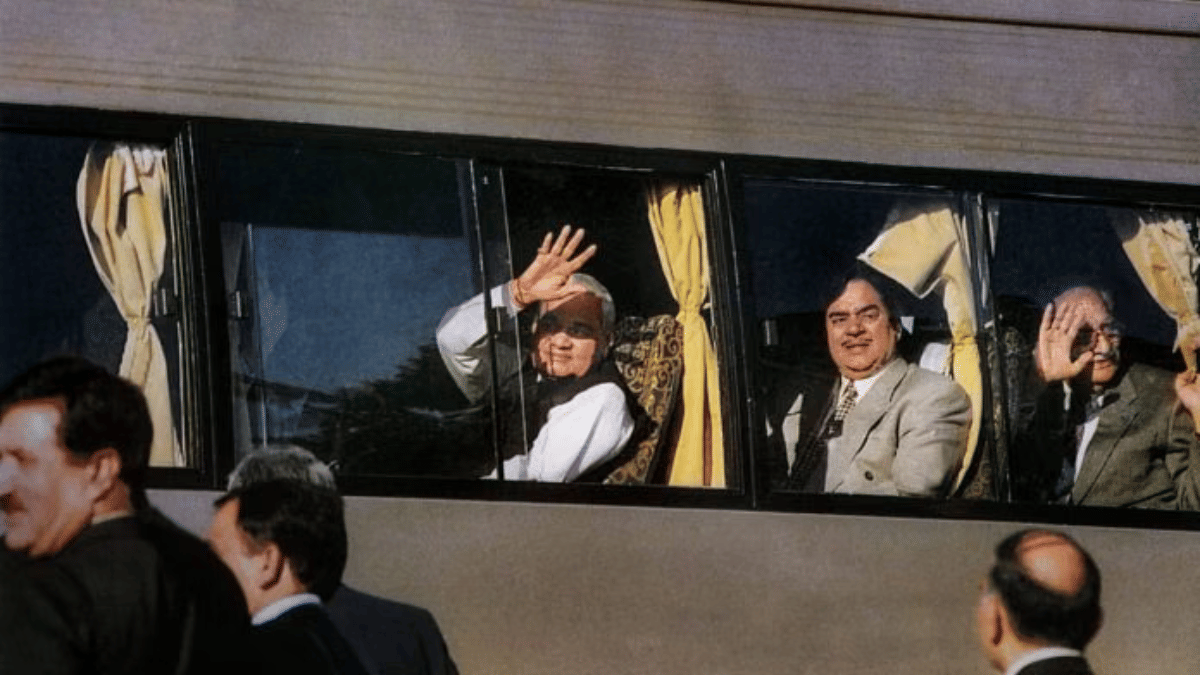
So once again this identification of the subcontinent’s problem solely with cross-border terror started then and then peaked in 2008, that this Pakistani army has been able to reverse now because of what they did in Pahalgam, how India reacted, how Trump then walked into that trap and it also looked like the western world, Europe included, were all wary of another war breaking out in the subcontinent when they were caught in Ukraine at the same time.
So, what exactly is the world worrying about when they look at the subcontinent? The concern over cross-border terrorism has now been translated into concern about a possible nuclear war. So, once again we are back to where we were pre-1999, which means the western world, particularly the Americans, have begun to see once again the subcontinent as a nuclear flash point.
That’s the reason US President Donald Trump keeps on saying again and again Pakistan’s prime minister and Field Marshall keep telling me that I saved up to 30 to 40 million lives in this subcontinent. So, the presumption is that any skirmish and both these countries countries will go and nuke each other. This is a stability that India had won over two decades. That stability has now been reversed to an extent. I hope temporarily but right now that’s an issue.
● Indian response has become predictable
Point number five, Indian response over time has become predictable. Pakistanis have been doing some such thing under different chiefs. Munir has only come in lately but even before that under Bajwa, his predecessor we saw incidents happen like Pulwama, Uri, Pathankot. India’s response increasingly has become predictable. Initially, it was to carry out cross-border strikes, Uri was a much bigger and deeper strike.
But since then, India’s response has been to use air power and what the Pakistanis have done. One, they know that India’s response will be military that is something the prime minister has stated unequivocally, that any terror attack on India will get an immediate response, which means a military response, so Pakistanis know that a response will come but they also know that Indian response will come with a minimized escalation.
For example, this time we attacked only the terror bases. We did not even carry out suppression of enemy air defense. We said we don’t have any war with the Pakistani armed forces. We are only fighting your terrorists. But that gave the Pakistanis the opportunity to hit back at our military. Pakistanis have gamed that process. They know that India does not want too much escalation. India wants to climb up carefully on the escalation ladder and stop at some point because India’s stakes are much higher than theirs.
That is something that India will have to keep in mind going ahead because as I told you in the first point, be prepared, more such things will happen. Maybe they will happen more frequently or at shorter intervals than in the past.
Also Read: How Op Sindoor, West Asia war proved satellites are new instruments of war | Cut The Clutter
● Air power supremacy
Point number six, air power is now central to this predictability. Pakistan plans practices for this. This happened after Pulwama and Pahalgam. Remember the initiative is always with them because they are the ones who will carry out the first strike, as in the first provocation. So, they know that when they will carry out a terror strike, India will respond probably by using the air power, prompting them to prepare to deal with that air power. So they are the ones who’ve got the initiative with them. India is not initiating this. That is why the operation, with which they confronted India after the attack on Balakot by Indian Air Force (IAF), they got 26 fighter aircraft together with AWAC aircraft, tankers, etc.
All of that did not happen in the 24 hours after the Indian attacks or 36 hours within the Indian attacks. This happened because Pakistanis had been rehearsing this for a long time, maybe for several years knowing that one day we’ll carry out such a provocation that India will use its air force and then they had rehearsed everything, these aircraft in a package came across the Line of Control.
They targeted using some vulnerable aircraft normally so that those aircraft could fire from within Pakistani territory standoff weapons, South Africa made H4 weapons, into the brigade headquarters in Rajouri. That would have left the IAF no choice but to counter them. Although the Pakistan aircraft were not in our territory. What were they trying to do? They were trying to lure one odd Indian aircraft and shoot it down so that they can make a big story out of it. So, this is something that they had planned for a long time.
Once again, this time post Pahalgam, Operation Sindoor, they made an educated guess that the IAF will come. They had set up their response chain. Which aircraft will do what? How many will be where? Where will the refuellers be? Where will the AWACS be? And how will the sensor shooter chain be established? So, once again they were sitting back in defence knowing that India will come into attack. Once again, this has become part of our predictability. The lesson is now to think beyond this.
● Flattering Trump
Point number seven. Right now the Pakistani army and establishment are caught up playing with big boys, maybe as supplicants or flatterers because flattery of the western powers has been Pakistan’s most successful national strength since they came into being.
The Pakistani army believes Operation Sindoor enabled it to flatter Trump by saying you brought about the peace and prevented nuclear war and then they signed that letter recommending a Nobel Prize for the US President.
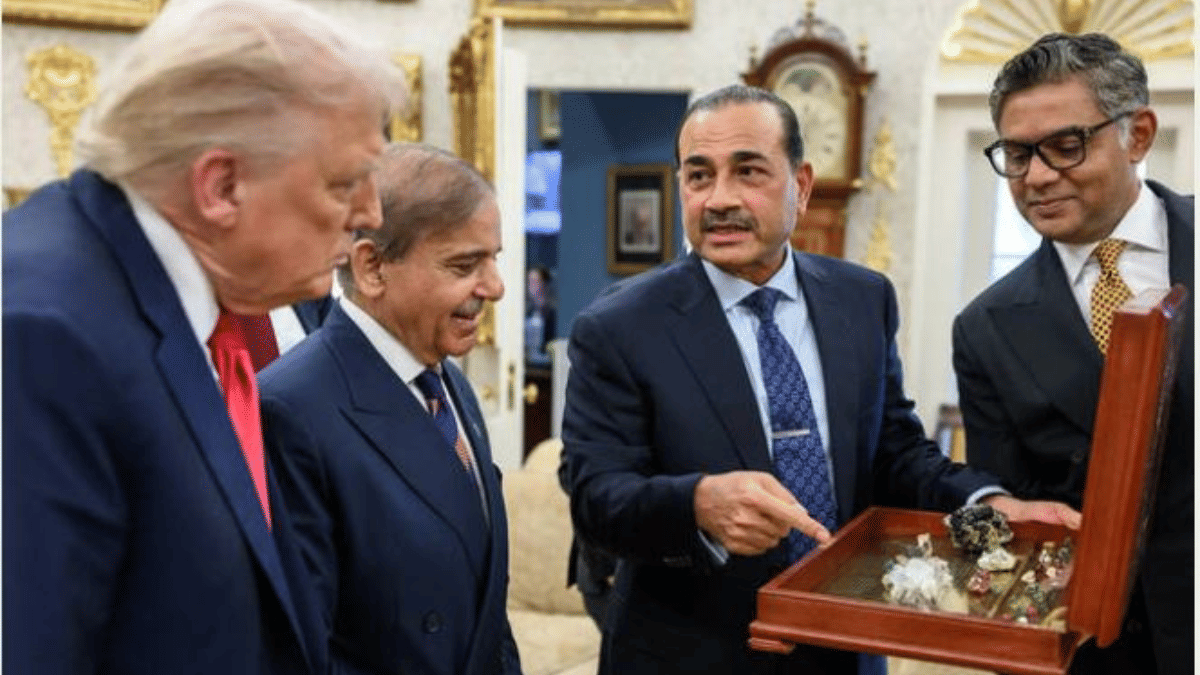
Now any other President would normally have laughed at it saying are you trying to treat me like a child? But Donald Trump is sometimes like a child. You can flatter him like a child, and he seems to have liked it. They’ll be busy with this for some time, just enjoying themselves basking in their rare moment in the sun after many decades.
We don’t know how the Iran situation will go but, at some point, this business will be over, or this issue will be over. And at some point, the Pakistani army will say look we are getting bored also, we are getting irrelevant again, how do we find relevance. Let’s go and do something in India again. When they have to do it, what will they do? Will they stay in Kashmir, or will they come elsewhere—that is lesson number seven, because next time they may not confine themselves to Kashmir and I will explain to you why I will come back to this point in just a little bit.
● Self-congratulation
Meanwhile, for point number eight, let me step aside a little and look at the big picture. When you look at the big picture—the Pakistanis or the Pakistani army when I say Pakistanis today—I mean the Pakistani army, its establishment and its entire support base in all institutions, including the media, because everybody is celebrating victory.
They are all caught up in this almighty self-congratulation that the world is expecting Pakistan to bring about peace. The last time, we gave credit to Donald Trump for saving a world war. Now it is Pakistan’s responsibility. That is the kind of self-importance they have right now. And in this, Pakistani media has also got involved. They’ve got involved because for a long time, they haven’t had that much to celebrate. In the past, at least, they had cricket to celebrate. They also had hockey to celebrate, but they haven’t had that much to celebrate.
I will give you an aside. Late Stephen P. Cohen, the professor used to say that, ‘you Indians will leave Pakistan behind in every area in the course of time except in three areas.‘ And what were the three areas? Cricket, kebab and hockey. The fact is in cricket and hockey now the gap is so wide in India’s favour; I’m not saying that someday Pakistanis will not beat India, but the fact is if you played 20 games, the odds are, today, that maybe at best for Pakistan, the score line will be 2 is to 18.
Now what happens with kebabs—whose kebabs are better? That’s just a matter of an individual’s taste. So I’m not getting into that argument.
The short argument, is the Pakistani media public opinion has had very little to celebrate in a very long time. They were given some notion of propaganda victories in the wake of Operation Sindoor and their own Bunyan-un-Marsoos. But now, the high they have is of a completely different degree altogether. However, this will soon subside and the Pakistani army and establishment will come back to the real realization that they’ve fallen far behind India.
Today, if you look at IMF data, Pakistan’s per capita income is 0.58 compared to India. It’s almost half of India‘s $3,070. India can do a lot better than that. That’s a different point, but $3,070 versus $1,710. Every year that gap will increase for two reasons.
One, India’s growth rate will be at least twice as much as Pakistan’s if not more. That is if Pakistan does manage to grow at 3%. And second, Pakistan’s population growth rate is enormously higher than India’s. This gap will increase in two years from now. Definitely Pakistan’s per capita income will be less than a half of India’s and less than a half of Bangladesh’s; most likely even less than Nepal’s.
Sri Lanka, Maldives and Bhutan are all ahead of us anyway. So if you leave Afghanistan out, Pakistan will become, economically, the sick man of South Asia and that is not the title that the Pakistanis want, and they would want to do something about it. That something will not be to focus back on their economy.
Remember a national security state often is also a national envy state, and when they are hit by envy, what they try to do is not to improve their own lives or their own country or become more competitive—they try to harm the one they envy. That is a normal human tendency. How do you deal with the national security state which is also a national envy state next door to you?
● Kashmir success
That is our point nine. The Kashmir success in India needs to be strengthened, democracy deepened in the union territory. In my view, move towards full statehood in steps.
Moreover, communal relations across the country must remain in good health as Inter-Services Intelligence’s next target may be to give cover to its proxies Lashkar-e-Taiba, Jaish-e-Mohammed by raising an indigenous group as they had done with Indian Mujahideen about 15 years back.
Indian Mujahideen was all-Indian trained outfit by Pakistanis. It had no more than 65 people at their peak. No more than 65 people, and they played havoc with our cities across the country. I will not be surprised if the next one will be something like that because that will then give Pakistan the cover to say, ‘look these are not our people’.
India’s Muslims are unhappy. They are angry. They are victimized. They are frustrated. If they’ve done it, we cannot help it. Of course, they condemn terrorism in all its manifestations and they will leave it at that. That’s a possibility. I’m not saying eventuality yet but that’s a possibility that India has to keep in mind.
● Lessons on the media
And number 10 is two lessons on the media. Number one, domestic TV became a great liability from the Pahalgam attack onwards. Just as during the Kargil war, it was hailed as a force multiplier. Now, they became a brand destroyer, also a strategic liability, because all of India’s true claims also were buried under this nonsensical claims of Karachi having been bombed, there having been a coup in Pakistan, Munir being in jail, etc.
All of that was too nonsensical for anybody to take seriously, but the fact is all of our channels, at least most of our channels, were doing that, and that is what then endured after when you saw American papers, international papers write those long stories on Indian media. About how Indian media plugged ridiculous propaganda.
They were talking about these TV channels, but with the same brush they were painting all of the Indian media and with the same brush, they were also painting all of the Indian case in that 87-hour skirmish. So, that became a liability. India should not allow that to happen again. And the lessons are with us. Kargil had one kind of media. Why? Because that media was allowed to speak the truth. Operation Sindoor had an exactly different kind of media. And, you can see the results that you got.
Point number two, international media by and large reversed its pre-Modi era positioning that instinctively judged Pakistan as a perpetrator of terrorism. Why did it make such a change? This is a dramatic change from being a sympathizer of India over terrorism, also being a fan of India for its growth—for its becoming a tech powerhouse, for its human resources, for its democracy, etc.
How did this view reverse dramatically? There are many things. There is the treatment, the access, the ability to function, the inability to get your story out. All of these things affected India’s relationship with the global media. Some of that’s being rectified. I see that foreign press is now being taken by the armed forces also to see things. The Economist’s defense editor was taken by the northern command. They were also taken to the frontline in Ladakh, including the forward air base of Noma from where he wrote in dispatch. That’s a change and that tells me that the lesson has been learned, that foreign press you may, or may not, like them—but they are important.
While you tell your story to your own audiences at home, your story must be told to the rest of the world also. Because India has a much greater stake in the rest of the world than Pakistan does. That is a very important lesson that needs to be learned. And, looks like to some extent, it’s been learned already.
(Edited by Tony Rai)