



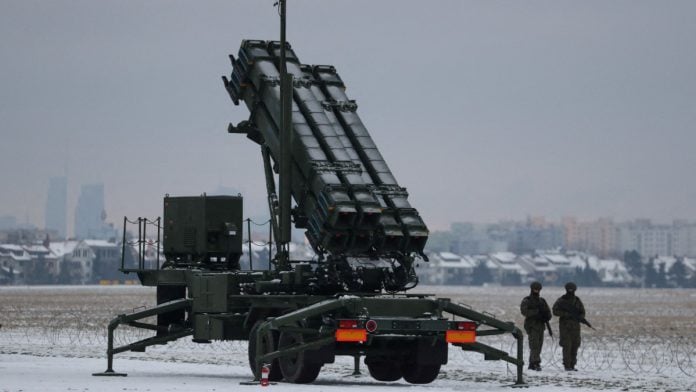
New Delhi: The Trump administration has withheld approval for sending crucial Patriot interceptor missiles to Ukraine, according to a report by The Washington Post report published Tuesday, leaving Kyiv vulnerable to ongoing Russian missile and drone strikes.
This delay comes amid US President Donald Trump’s recent public criticism of Ukraine and a marked change in his stance toward Russia.
Unlike previous debates in Washington over multi-billion-dollar military aid packages funded by US taxpayers, the current bottleneck involves weapons that have already been bought and paid for. European allies and the Ukrainian government have utilised billions in cleared funds through NATO frameworks to secure the interceptors. However, the transfers remain subject to US authorisation.
The bottleneck can be traced to US Secretary of War Pete Hegseth, who has neither formally rejected the transfers nor taken the necessary steps to authorise them. By withholding his signature on essential agreement documents, Hegseth has stalled deliveries without openly announcing a policy shift.
The weapons are being purchased through NATO’s Prioritised Ukraine Requirements List (PURL) framework, which allows European allies to fund the purchase of American military supplies for Kyiv without drawing on US taxpayer funds. Multiple countries including Germany, Norway and the Netherlands have pooled financial resources to purchase American military equipment.
However, since Patriot PAC-2 and PAC-3 interceptors are manufactured in the US by RTX and Lockheed Martin, international partners cannot transfer them without Washington’s approval. This applies to both new factory orders and re-export requests from European inventories.
The delay comes as Ukraine faces a critical shortage of Patriot interceptors.
Ukrainian President Volodymyr Zelenskyy noted that monthly deliveries of the missiles from the US have been throttled to approximately 12 units, or a fourth of the prior supply rate. A Ukrainian official told The Washington Post last Thursday that Kyiv’s reserves had dwindled to just “a couple” of functional interceptors, leaving its air defences critically strained.
Global availability of Patriot interceptors has also come under pressure from ongoing military engagements in West Asia. The Pentagon has signalled to Congress its intention to divert roughly $750 million in partner-provided PURL funding away from Kyiv to replenish depleted US stockpiles of THAAD and Patriot systems.
On Monday, Zelenskyy put out a video appeal to US senators where he talked about the deliberate slowdown of missile shipments being leveraged to discourage Ukrainian drone strikes against Russian oil-refining infrastructure.
These tensions are further compounded by efforts in Washington to soften specific sanctions on Russian fuel exports, highlighting a rift between American energy objectives and Ukraine’s defensive strategy.
Seeking to resolve the deadlock, Zelenskyy announced on his official Telegram channel Tuesday that he had held what he described as a “substantive” and “constructive” call with US Secretary of State Marco Rubio. Beyond the stalled Patriot deliveries, the dialogue touched upon wider security concerns, including a suspension of American early-warning tracking intelligence and bandwidth restrictions affecting Starlink and military Starshield satellite communications.
However, the State Department lacks the regulatory authority to override Pentagon export restrictions. While Rubio kept communication channels open, Washington has continued to press Kyiv towards diplomatic negotiations with Moscow.
The operational impact of the delays has been compounded by Russian attacks on Ukrainian infrastructure. Recent strikes severed electricity access for over 500,000 households across the Kyiv region, underscoring the consequences of Ukraine’s strained air-defence capabilities.
The delays have also prompted political opposition on Capitol Hill, where congressional leaders are questioning the administration’s handling of the situation. During an official press interaction Monday, Representative Rosa DeLauro, Ranking Member of the House Appropriations Committee, criticised Hegseth’s administrative hold, arguing that using bureaucratic procedures to stall shipments undermines confidence among global allies.
This legislative backlash contrasts with Trump’s position on continued aid to Kyiv.
The US President has reiterated his scepticism towards ongoing assistance to Ukraine, telling news outlets that Ukraine has “given nothing to us”, while asserting that withholding weapons transfers could provide leverage to push both nations towards peace talks.
Ashwin Shekhar is an alum of ThePrint School of Journalism, currently interning with ThePrint.
(Edited by Amrtansh Arora)
Also Read: Trump’s diesel deal with Putin shows the limits of US leverage over Ukraine