






New Delhi: The Modi government has, in a significant policy shift, opened up the production of conventional missiles to private players, ending the practice of relying primarily only on state-run defence public sector undertakings (DPSUs) for production contracts.
The move means that DPSUs such as Bharat Dynamics Limited (BDL) will now have to compete with private Indian companies for missile production contracts instead of receiving them on a nomination basis.
This decision opens up a market worth several thousand crores to the private sector while also allowing the defence ministry to diversify and accelerate production, particularly at a time when the armed forces are looking to rapidly build up their missile stocks.
In an important step towards achieving the vision of Aatmanirbharta in the defence sector, Defence Minister Rajnath Singh has approved the transfer of technologies developed by Defence Research and Development Organisation (DRDO) for all conventional missile systems to Indian defence companies for in house production, the Ministry of Defence said in a statement.
“This Transfer of Technology marks an important milestone in promoting greater participation of the domestic industries in the defence ecosystem by enabling them to undertake indigenous production, as per applicable qualifications, certifications and regulatory requirements,” it added.
The provision will enable the transition of missile system development to industrial production, reflecting DRDO’s effort to leverage the capabilities of the Indian industry for the development and manufacture of advanced defence systems, it added.
“The objective is to enhance domestic manufacturing capabilities, strengthen the defence industrial base and create opportunities for the participation of Indian MSMEs and other technology partners in the supply chain,” it further said.
The Ministry said the initiative aims to enhance operational capability, reduce import dependence and increase domestic value addition, while supporting the growth of India’s defence manufacturing sector.
Sources in the defence ministry told ThePrint that the decision covers all conventional missile systems designed and developed by the DRDO, effectively opening their production to private industry, subject to the required qualifications, certifications and regulatory approvals.
“The DRDO will also rope in more private players as design and development-cum-production partners for conventional missiles and not just for transfer of technology,” a source said.
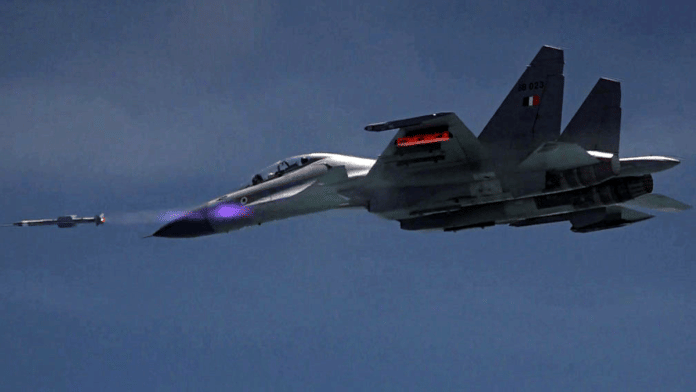
The initial systems likely to see greater private-sector participation include the Astra air-to-air missile and the Pralay quasi-ballistic missile. The opening up of these programmes is significant given the growing demand for both systems. Astra is being inducted as an indigenous beyond-visual-range air-to-air missile, while Pralay is being developed as a conventional precision-strike missile for the Indian armed forces.
The move also marks a further expansion of the private sector’s role in India’s missile industry, which has traditionally been dominated by DRDO for development and DPSUs such as BDL for serial production.
Asked whether the BrahMos missile would also be opened up to private companies, the source said the private sector was already involved in manufacturing components of the missile as well as parts of its launcher.
However, the source added that if there was a requirement to accelerate production of missiles already on order, more private sector companies could be brought into the programme.
The policy shift comes as India seeks to expand its domestic defence manufacturing base and reduce dependence on a limited number of production agencies. For the private sector, the move could translate into a major new opportunity in one of the country’s most strategically important defence segments.
(Edited by Prakhar Agrawal)
Also Read: In 1st visit to J&K, Gor calls UT ‘important part of India’, hints at downgrading travel advisory
Interesting. Use tax payers money to create the missile IP and then provide it to Modi’s cronies for free who in turn will sell back to government again using taxpayers money. If they really wanted to privatise it, open the license to every Indian firm.
Privatization is the only thing which will save us from bureaucracy.