



Ukraine’s defense against Russian attacks depends heavily on US satellites, not only for warning of incoming missiles but also for the communications that keep drones and frontline forces operating.
European nations are trying to catch up with the US in space-based intelligence and connectivity, but still lack many crucial capabilities that underpin Ukrainian combat operations and missile-defense systems.
Kyiv’s reliance on American technology and support reemerged as a vulnerability in mid-October, when President Volodymyr Zelenskyy said Ukraine had not received the usual warning from allies of ballistic missile launches before a deadly attack on the country. Around the same time, sudden restrictions were reported on SpaceX Starlink satellite services used by Ukrainian forces.
Why are US satellites so important for Ukraine?
Starlink — the low-earth orbit commercial satellite communication network established by Elon Musk’s SpaceX — and its military version, Starshield, have come to underpin the Ukrainian armed forces’ command infrastructure after terrestrial communications were badly damaged by Russian strikes early in the war. The ground terminals allow pilots of Ukrainian interceptor drones and mid-range strike drones to control the machines, while the network also allows ground forces to coordinate supplies and movements along the front line.
US military satellites are also vital for Ukraine’s defense against Russian missiles and drones.
No country beside the US can offer near-constant space-based imaging of Europe. Its numerous and powerful spy satellites can provide high-quality images, including video. Via the Space Based Infrared System, or SBIRS, the US also has satellites in geosynchronous orbit, which keeps them over one spot on earth. These are the backbone of US early warning for missiles anywhere on Earth, and there is no equivalent in Europe. The satellites allow for real-time tracking of cruise missiles and other low-flying weapons that might escape detection by ground radar until it’s too late to stop them. This is especially helpful for a military, such as Ukraine’s, that relies on drones, aircraft cannons and other low-tech methods of destroying swarms of mass-produced projectiles.
SBIRS can also detect the launch plumes of ballistic missiles. These missiles travel much faster and higher than other airborne weapons, making them harder to deal with. Knowing when a ballistic missile is fired, its speed and direction is vital for Ukraine’s air-raid warning systems. (An alert — even one that comes a minute or two ahead of the impact — can save lives by giving civilians time to take cover).
That capability also gives Ukraine’s armed forces a greater chance of intercepting and destroying the inbound weapons. It can be harder to knock out a missile at longer range. But a miss at long range still allows time for another shot. If an incoming missile is only noticed at the last minute, a miss at close range blows the final chance to foil a potentially devastating attack.
How were these capabilities disrupted recently?
Ukrainian officials said the US government did not send early warning alerts ahead of some recent Russian ballistic missile attacks on the country.
Ukraine also complained that drones equipped with Starlink terminals were losing connectivity when traveling at speeds above 161 kilometers (100 miles) per hour in Ukraine. The drones often need to travel faster than this to intercept an incoming Russian drone traveling at 400 kilometers per hour, and the restrictions have disrupted drone interceptions and mid-range strikes.
Asked who ordered the change, President Zelenskyy pointed to “the authorities, the White House,” citing “sources” he didn’t identify. A senior US official has said Trump didn’t order any limitations.
How does Europe use its satellites to help Ukraine?
Europe’s militaries have a variety of earth-observation satellites that help Ukrainian forces locate Russian troops, tanks, artillery and military installations and identify ammunition depots, airfields and missile-launch facilities. The Ukrainian military can use that information to strike at those facilities.
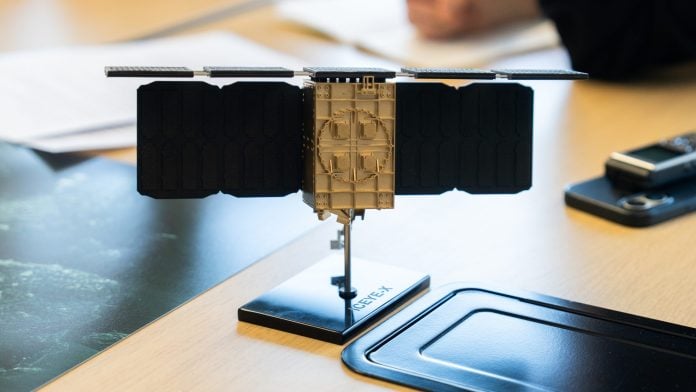
Finland’s ICEYE synthetic-aperture radar satellites can operate at night and see through cloud cover, smoke and haze. French satellite sensors detect thermal radiation and identify human activity that conventional cameras can easily miss.
Germany has paid commercial satellite companies such as US-based Planet Labs for high-resolution imagery for Ukraine, including inside Russian territory. This can provide data for targeting and spotting Russian military movement over time — potentially crucial intelligence that could thwart an attempted attack.
When might Europe close the intelligence gap?
Europe is under heavy pressure to stop relying on the US for its own defense, and military budgets in the region are growing again for the first time since the Cold War. A chunk of that new spending is going toward “strategic enablers” — communications and other systems that have an outsized impact on warfare despite not being weapons. European nations are racing to put more satellites in orbit and get more surveillance aircraft in the air.
The European Union has begun launching the first of nearly 350 Iris2 secure communications satellites. ICEYE recently signed a deal with Nokia to develop a secure communications constellation for European defense and security. Airbus SE has for decades built satellites, and German defense giant Rheinmetall AG has also entered the game, including through a partnership with ICEYE.
The pace of the rollout is limited, however, as the region does not have enough rockets with the power to launch heavy military satellites into orbit. Europe’s only sovereign heavy rocket booster is Ariane 6, which launches about 10 times a year from Kourou in French Guyana on the northern coast of South America. And European governments want to avoid using SpaceX as they prefer to find their own way into orbit.
So could Europe eventually match the US for space-based intelligence?
No existing or currently planned European service could match the scale and capability of Starlink. The closest existing European equivalent is OneWeb, a system of around 600 satellites operated by France’s Eutelsat. Starlink satellites orbit at an altitude of around 550 km, around half that of OneWeb’s network. This makes for shorter signal transmission delays — a crucial factor with time-critical military systems. The 10,000-satellite Starlink network also offers greater data capacity and better ground coverage, and its terminals are smaller so they can be mounted more easily on drones.
When it comes to military observation satellites, there’s no European plan to match the capability of US SBIRS. The US has nearly 250 military satellites in orbit, compared with about 150 for China and about 100 for Russia. Many more are considered dual-use.
Europe as a whole has about 50.
Besides imagery, US satellites can intercept communications and other transmissions — so-called “signals intelligence” that can also be used on the battlefield.
The US Space Force also announced in September that it had placed an operational weapon in orbit, although officials declined to say what sort of system it was.
–With assistance from Michael Nienaber and Volodymyr Verbianyi.
Disclaimer: This report is auto generated from the Bloomberg news service. ThePrint holds no responsibility for its content.