





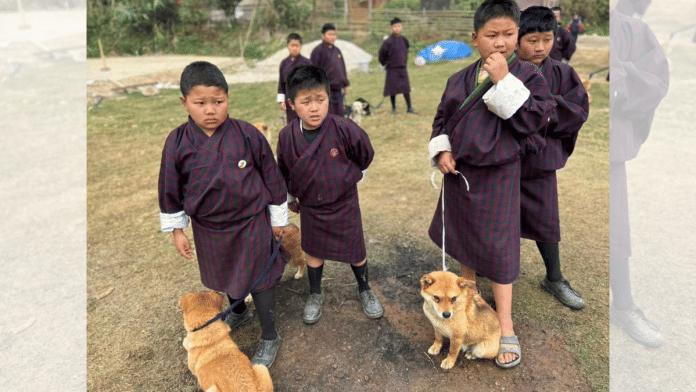

New Delhi: The World Health Organisation (WHO) has validated Bhutan for eliminating dog-transmitted rabies as a public health problem in the country.
The country’s success has been credited to its decade-long One Health approach, which recognises that the health of humans, animals, and ecosystems are interlinked.
With this, Bhutan becomes the first country in the WHO South-East Asia Region to achieve this success.
“Bhutan’s success shows that the health of humans, animals and the environment we share is inextricably linked. By uniting health workers, veterinarians, and communities, Bhutan has shown that the fight against rabies is won not in silos, but through solidarity across all sectors,” WHO Director-General Tedros Adhanom Ghebreyesus said.
🎉 Congratulations #Bhutan on becoming the first country in the WHO South-East Asia Region to eliminate dog-transmitted rabies as a public health problem!
This has been made possible with sustained efforts and investment in a One Health approach — proof that human, animal &… pic.twitter.com/4ZUI25axU5
— World Health Organization South-East Asia (@WHOSEARO) September 4, 2026
The One Health approach promotes the optimisation of human, animal, plant and ecosystem health through coordinated and integrated actions across sectors.
Under this approach, Bhutan has prioritised resource allocation, integrated surveillance, and strategic planning to monitor public health challenges such as rabies.
Animal and human health authorities collaborate to identify potential exposures and, when necessary, conduct joint field investigations under the One Health framework.
Backing the WHO validation, WHO’s representative to Bhutan, Dr Bhupinder Kaur Aulakh said, “Bhutan’s validation is built on years of investment in a One Health approach and in universal health coverage.”
WHO validation procedure
The WHO validation follows a rigorous assessment based on its criteria cited in the WHO Expert Consultation on Rabies for the validation of elimination of dog-mediated human rabies as a public health problem.
A viral disease, Rabies affects one billion people globally. Vaccinating dogs and prompt use of medical treatment—post-exposure prophylaxis (PEP)—stop the virus from reaching the central nervous system after the dog bites, thereby preventing dog-transmitted rabies deaths.
Countries are required to provide rigorous technical evidence of sustained interruption, supported by strong surveillance, laboratory diagnosis, animal vaccination, timely access to post-exposure prophylaxis and preparedness to respond to potential reintroduction.
The Review Group, formed by the WHO with support from the World Organisation for Animal Health (WOAH), conducted a two-phase review from 17 to 22 August in Bhutan.
During the mission, the review team verified evidence on the ground through visits to national, regional and sub-district health facilities, laboratory walk-throughs, review of programme records and information systems, a visit to the Bhutan–India border area, and consultation with programme staff and multisectoral stakeholders.
Bhutan vows to maintain the systems that led to this achievement in collaboration with the Ministries of Health and Agriculture and Livestock, De-suung national volunteer service and local communities. The country received financial assistance from the Bhutan Health Trust Fund (BHTF) and partners, including the Pandemic Fund.