





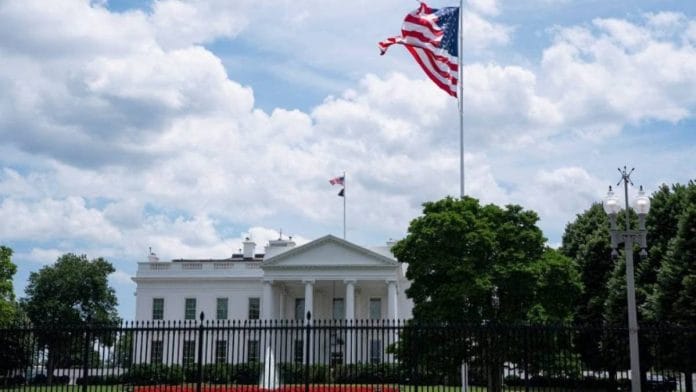



New Delhi: Amid the ongoing conflict between Israel and Iran, which is having a destabilising impact on the global economy, the US Intelligence Community has released its threat assessment for the year 2026.
The report, published Wednesday, analyses the ongoing threats and states what is expected in the future. Interestingly, it mentions that Russia continues to maintain an upper hand in the conflict with Ukraine despite what has been claimed by American and European Union officials in public.
The 2026 Annual Threat Assessment (ATA) further states that China, Russia, Iran, and North Korea view the US as a strategic competitor and potential adversary, perceiving it as a threat to their respective interests and ambitions, and seek to counter and undermine US influence and power through a range of diplomatic, economic and military means.
It adds that China aims to dominate its region and challenge Washington’s leadership, promote its own multilateral and economic influence, and strengthen its military while viewing the US as the main strategic competitor.
“Russia continues to challenge US interests and power, seeking to restore its influence in the former Soviet space, particularly Ukraine,” the report says.
Selective cooperation among China, Russia, Iran and North Korea, driven by the common goal of balancing US efforts and actions and supporting their own strategies, is bolstering the threat that each of them poses to the US, according to the report.
However, the relationships are limited and primarily bilateral, and the concept of “adversary alignment” overstates the depth of cooperation that is currently occurring, it adds.
The main challenger that the US has identified in its threat assessment is China.
The report says that China’s economic support for Russia and Iran and their increasing trade has helped Moscow and Tehran to each withstand US-led international sanctions.
North Korea and Iran’s military support to Russia have helped Moscow in its war against Ukraine, which is in turn bolstered by western support.
“These four countries are likely to continue to look for opportunities to increase their cooperation, although enduring divergent interests as well as concerns over directly confronting the US will constrain the actual scale and scope of their relationships,” the report states.
Also Read: War in West Asia shows India must rethink tech sovereignty
South Asia & Middle East
Pakistan continues to develop increasingly sophisticated missile technology that provides its military the means to develop missile systems with the capability to strike targets beyond South Asia, and if these trends continue, ICBMs (intercontinental ballistic missiles) would threaten the US, the report notes.
Talking about South Asia, the report says that during the past year, South Asia remained a source of enduring security challenges for the US.
It adds that India-Pakistan relations remain a risk for nuclear conflict given past conflicts where these two nuclear states squared off, creating the danger of escalation.
“The terrorist attack last year near Pahalgam, in the Indian Union Territory of Jammu and Kashmir, demonstrated the dangers of terrorist attacks sparking conflict. President (Donald) Trump’s intervention deescalated the most recent nuclear tensions, and we assess that neither country seeks to return to open conflict, but that conditions exist for terrorist actors to continue to create catalysts for crises,” it says.
Talking about the Middle East, the report says that in the current year, conflict and instability will shape security, political, and economic dynamics in a variety of ways. The US-led Operation Epic Fury launched at the end of February is advancing fundamental change in the region that began with Hamas’ attack on Israel on 7 October, 2023, and continued with the 12-Day War, resulting in weakening Iran and its partners and proxies, it adds.
“If the regime survives, Tehran almost certainly will seek to exact revenge for the death of Supreme Leader Ayatollah Ali Khamenei; it still maintains its long-term strategic intent to avenge the death of former IRGC-QF (Islamic Revolutionary Guard Corps-Quds Force) Commander Qasem Soleimani by targeting current and former US officials,” says the report.
(Edited by Nida Fatima Siddiqui)
Also Read: Strait of Hormuz crisis shows limits of US, say Chinese. ‘India most vulnerable’