



Saudi Arabia has a serious problem with Houthi insurgents in its large, mountainous and inhospitable neighbor to the south, Yemen. The Saudis have been fighting there in support of the internationally recognized Yemeni government for more than a decade, but the stubborn Houthi rebels — with enormous support from Iran — continue to threaten Yemen’s stability and attack Saudi Arabia directly.
This vicious civil war has gone on for 12 years, starting with the rebel seizure of the capital, Sanaa, in 2014. Since then, nearly 400,000 people have died in the fighting, and the conflict has only intensified since the Israel-Hamas war began in 2023. The Houthis are now launching frequent long-range strikes on Saudi Arabia, including an attack earlier this month on the international airport in Riyadh that killed a dozen people, including an American, and wounded hundreds.
This is a major threat to the global economy. Yemen sits astride the strategic Bab el-Mandeb Strait, a gateway to the Red Sea and the Suez Canal, through which 12-15% of the world’s shipping passes. Using alternative routes adds significant costs to seaborne goods. And the stakes are even higher for Saudi Arabia itself. With the Strait of Hormuz disrupted, the Red Sea port of Yanbu and the East-West pipeline that feeds it have become the main Saudi export lifeline, and the Houthis have already struck them.
So where should Crown Prince Mohammed bin Salman turn for assistance? The most logical answer, of course, is the United States — but US armed forces are heavily engaged in the war with Iran, and the Trump administration has so far held back from coming to the Saudis’ aid. Given that reality, Saudi Arabia will need to rely more heavily on other partners — starting with Turkey and Pakistan, but also potentially Europe and even Israel.
Fortunately for Riyadh, the kingdom concluded a smart regional defense pact in August with Turkey and Pakistan. These two fellow Sunni nations bring significant military capability to bear should they fulfill the Mecca Defense Pact’s pledge that “an attack on one is an attack on all,” much like NATO’s famous Article 5.
The problem for the Saudis is that the Houthis are dug into difficult terrain. Yemen’s mountains, in which the Houthi movement originated, are home to bases, caves and tunnels that support guerrilla fighters. The Saudis have struggled in mountain warfare against the Houthis — but the Pakistanis have deep experience in it.
During my time with NATO, I marveled at Pakistan’s Frontier Corps and other mountain troops. They have operated extensively in the mountains between Afghanistan and Pakistan, as well as at the “top of the world” in ongoing disputes with India, and have particular expertise in mountain counterinsurgency. Islamabad refused to join the Saudi-led coalition in 2015, when Pakistan’s parliament voted to stay neutral in Yemen. But the new pact should change that calculus. The crown prince would be wise to press the Pakistanis for help.
Another very different form of assistance could come from Turkey, the other member of the new pact. These would be naval forces to help keep the Red Sea open. The Turks operate new, sophisticated frigates and corvettes, and have plenty of experience in these waters. They were very capable members of the coalition NATO put together to combat Somali pirates. Asking Ankara to send a significant flotilla to the Red Sea, based out of Saudi ports on the kingdom’s west coast, would make sense.
The crown prince should also turn north to Europe. While the Europeans have so far stayed out of the war with Iran in the Strait of Hormuz, they have good reasons to support Saudi Arabia against the Houthis. The Suez Canal is a vital chokepoint for European economies, after all. And the European Union could expand its existing Aspides naval mission in the Red Sea, now just a handful of ships with a defensive mandate, to help keep goods flowing and the Suez open.
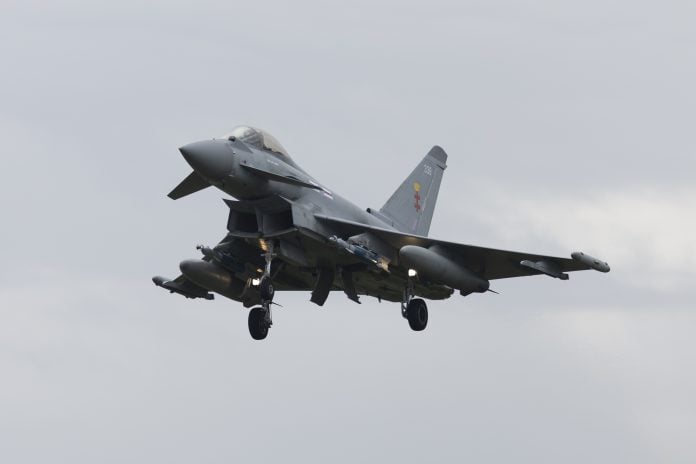
The British are already helping defend Saudi airspace with Sky Sabre air defenses and an RAF tanker to refuel Saudi Typhoons. France is sending troops and air defenses to protect Yanbu, and Greek-operated Patriots have intercepted Iranian missiles over the kingdom. A larger EU naval or air mission could build on that foundation.
Finally, and most controversially, Saudi Arabia could look to Israel. There is already reportedly a level of quiet cooperation between Jerusalem and Riyadh on missile defense, cyber, and special forces. This could be expanded to include naval cooperation coming from Israel’s naval base at Eilat on the Gulf of Aqaba.
The Saudis clearly have their hands full dealing with the Houthis and recently postponed until 2027 their important annual investment conference, the so-called “Davos in the Desert.” They need to get the Houthis back to the negotiating table. Part of doing so will be enlisting outside actors to present a capable front against the Yemeni rebels. The stronger that front turns out to be, the stronger Riyadh’s hand will be when talks resume.
This report is auto generated from the Bloomberg news service. ThePrint holds no responsibility for its content.