



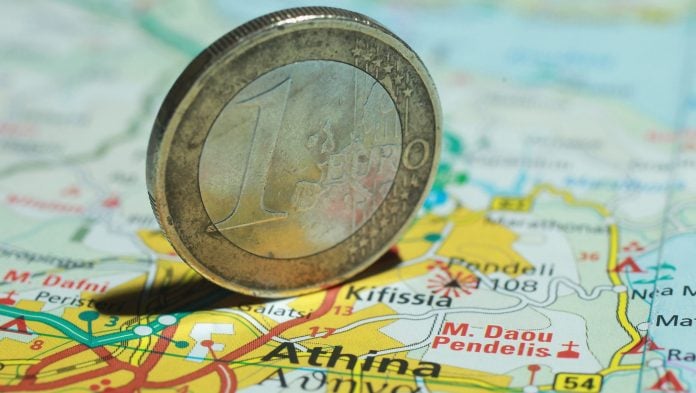
There are two certainties in life: death, and taxes getting the blame whenever rich people leave the UK. Billionaire hedge fund manager Chris Rokos departing for Greece, where he’ll pay just €100,000 ($115,000) a year, is the latest to provoke a flood of recriminations. But these stories — and claims of an exodus of the super-rich from Britain — should be taken with a hefty dose of salt.
While taxation is an important influence on the behavior of individuals and companies, it’s rarely the only — or even decisive — factor in where they locate. And although anecdotes are plentiful, there’s scant evidence that British fiscal changes in recent years have prompted a rush of emigration. Rokos hasn’t said why he’s leaving; but consultants regularly claim that threats of wealth and departure taxes, as well as changes made to the UK’s special deal for non-domiciled residents, have motivated many departures.
However, the data suggest that previous efforts to squeeze more from the rich had a minimal effect on people whose permanent home was already elsewhere. That’s what encouraged the last Conservative administration to propose scrapping the preferential deal for so-called non-doms, which exempted non-UK income and investment gains from taxes, and persuaded the current Labour government to end it from April 2025.
Tax exiles have probably existed for as long as governments have raided personal wealth. In the UK, the peak era for high earners fleeing was the 1960s and 1970s, when the top rates reached nearly 100%. The Rolling Stones, Pink Floyd and David Bowie all left, at least temporarily. The Beatles’ first protest song wasn’t about war or injustice, but Her Majesty’s Revenue and Customs: Taxman.
Some nations make life as painful as possible for leavers by imposing exit charges or other barriers, but Britain for most of its history hasn’t, according to independent tax consultant Dan Neidle. “We’ve always aimed to be attractive to incomers and entrepreneurs who want to build businesses,” he told me. The idea is that successful people and companies will do more for the economy and the public purse.
Among Neidle’s ultra-high-net-worth clients, around 10% are leaving in reaction to the scrapping of non-dom benefits. The biggest problem for many wasn’t the hit to income, but the move to include worldwide assets in inheritance tax, he said. And wealthy potential immigrants to the UK aren’t just weighing the prospect of future tithes on their wealth: “The people I talk to are as much concerned about uncertainty in immigration rules, many are worried they can’t bring their families anymore, and fear of crime,” Neidle told me.
Official numbers show regular inflows and outflows of people claiming non-dom status. The year before it ended, 9,000 non-doms left — maybe to avoid the changes, maybe for other reasons. However, 8,600 newcomers arrived, even though they’d only get the previous, better deal for a year at most.
This turnover is historically consistent. There was a large net outflow during the pandemic in 2020, while a big drop in total non-doms in 2017 and 2018 wasn’t necessarily because of departures; the Conservative government changed the classification rules from April 2017, and British-born non-doms or foreigners who’d spent 15 out the past 20 years in the UK started losing their privileges.
That 2017 change provided a handy opportunity to judge how tax influences migration. Academics from the London School of Economics given troves of confidential, anonymized data by HMRC found that those facing higher charges because of the adjustment were just 0.2% more likely to quit Britain. What’s more, the people in this group likeliest to go were those already paying the least in Britain because most of their income and assets were undeclared offshore.
These studies helped convince policymakers that the regime could be scrapped entirely without causing an exodus. The rich, it turns out, like the UK’s cultural attractions, its schools and health services, and the friends and families they have here. Many are employed in London at better pay than is available in competing financial centers; the City employs more people now than it did before Brexit.
But it’s not only about non-doms. Billionaires like Rokos already get a pretty good tax deal here. Media reports about his exit quoted his tax contribution at £330 million ($446 million) last year, but that number is from a Sunday Times ranking that includes levies paid by his company and employees, as well as personal income and profit charges.
The effective average rates paid by the very rich in Britain are lower than those paid by normal workers on just salaries. The income of the wealthy often includes profit shares or capital gains, which attract lower charges. A 2023 study, again using confidential data, found that those earning more than £500,000 annually paid an average tax rate of 38%; that dropped to 30% or below for those earning more than £3 million. And beneath that, some extremely high earners paid as little as 12%.
Apply a 30% rate to Rokos’s 2025 income of £477 million and he’d have paid only £143 million — and his bill may have been even lower, thanks in part to his nearly £200 million donation to Cambridge University that could have created a nice deduction. Even at £143 million, HMRC would have received less than 0.2% of what it garnered from the top 1% of UK earners – and less than one-tenth of 1% of all UK income tax that year.
Britain shouldn’t try to compete directly with Greece, where Rokos is moving to, or with somewhere like Italy, which also offers a very low flat charge to wealthy incomers. Plenty of rich people want to live in the UK or are held here by their jobs and family; reducing tax bills to a fraction of what they currently pay would be an unnecessary freebie that the country can’t afford.
Sure, there could come a point where elevated tithes prompt more people to seek exile, like those pop stars 50 years ago. But there are many other factors driving the lives and business choices of investors, celebrities and globe-trotting billionaires. The US has one of the most far-reaching tax authorities in the world – and yet the dynamism of its economy and capital markets still attract wealth and talent like nowhere else. Minor panics about a handful of notable emigrants from the UK help no one apart from the industry of advisers who are paid to manage the wealth – and taxes – of the rich.
Disclaimer: This report is auto generated from the Bloomberg news service. ThePrint holds no responsibility for its content.