



Any expansion of Japan’s defense spending will likely be spread over many years and shouldn’t become a source of significant market anxiety in any single year, according to a member of a panel that advises Prime Minister Sanae Takaichi.
“I think this is just a longer-term goal within 10 years, 15 years,” Takuji Aida, chief economist at Credit Agricole, said in an interview with Bloomberg TV on Monday. He said at that pace, it shouldn’t make the market “feel anxiety.”
Aida said Takaichi’s ¥370 trillion ($2.3 trillion) public-private investment plan for strategic sectors, another of her signature policies, is designed to run through 2040, suggesting that higher defense spending would likely follow a similarly long-term framework.
Aida is a member of the premier’s growth strategy panel.
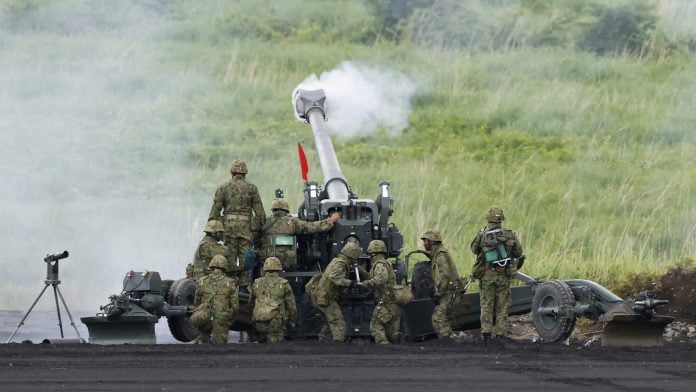
His comments come as investors scrutinize the Takaichi administration’s fiscal management, with defense spending among the key areas in focus. Bloomberg reported earlier this month that Japan is considering a new medium-term target to raise defense spending to 3.5% of gross domestic product over 10 years, broadly in line with targets adopted by NATO members and some other US allies.
Aida said after his TV appearance that Japan could raise defense spending to 3.5% of GDP over 10 to 15 years by combining direct defense outlays with dual-use spending already included in the government’s growth strategy.
Takaichi’s government has been pursuing multiple costly projects, including a 14-year growth strategy and a temporary cut to the food consumption tax, raising questions among investors about how the measures will be financed. Those concerns, combined with a global bond selloff, have put upward pressure on Japanese yields, with the benchmark 10-year yield hovering around 3%, near its highest level in three decades.
“Sanaenomics is not a reflationary policy,” Aida said, echoing remarks Finance Minister Satsuki Katayama made last week. Aida said Sanaenomics is centered on investment aimed at expanding aggregate supply, in contrast with reflationary policies that seek to boost aggregate demand through fiscal stimulus and monetary easing.
“That is totally different,” he said.
On the breakdown of public and private spending under the ¥370 trillion investment plan, Aida said the government plans to provide more details by year-end on the types of investment it expects and the outcomes it aims to achieve.
Separately, Aida said he expects the Bank of Japan’s next rate hike to come in January — a timing that’s a bit later than the prevailing view in the market. He said external factors, including tensions in the Middle East, have accelerated the recent pace of tightening. He expects the BOJ to return to a roughly once-every-six-months pace once those pressures abate.
As widely expected, the central bank raised its policy rate to 1.25% earlier this month, with two of its nine board members dissenting. The dissent by the two Takaichi appointees contributed to yen weakness by giving markets the impression the government was reluctant to see a faster pace of rate hikes.
Aida said the two dissenting votes were important in paving the way for the BOJ to return to a normal pace of rate hikes in the future.
–With assistance from Erica Yokoyama and Adrian Wong.
Disclaimer: This report is auto generated from the Bloomberg news service. ThePrint holds no responsibility for its content.