



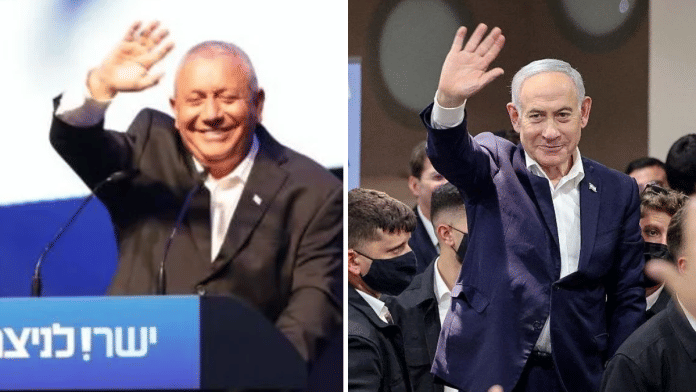
Israeli Prime Minister Benjamin Netanyahu and his allies secured 53 seats in the general election held this week, ahead of the main opposition’s bloc of 48 but short of a majority allowing them to rule without further backing.
Two Arab parties are set to occupy 19 seats in the 120-seat parliament, nearly doubling their parliamentary representation, according to final results released by election officials on Thursday. These parties oppose Netanyahu and it is unclear if the prime minister’s main challenger, Gadi Eisenkot, will agree to cooperate with them to form a government.
Netanyahu’s own Likud won 27 seats, the most of any single party, the final count showed.
Israel President Isaac Herzog must now choose who will get the first chance to form a coalition. If neither Netanyahu nor Eisenkot, who heads Yashar, the largest opposition party, are ultimately able to cross the 61-seat threshold, another election is possible early next year.
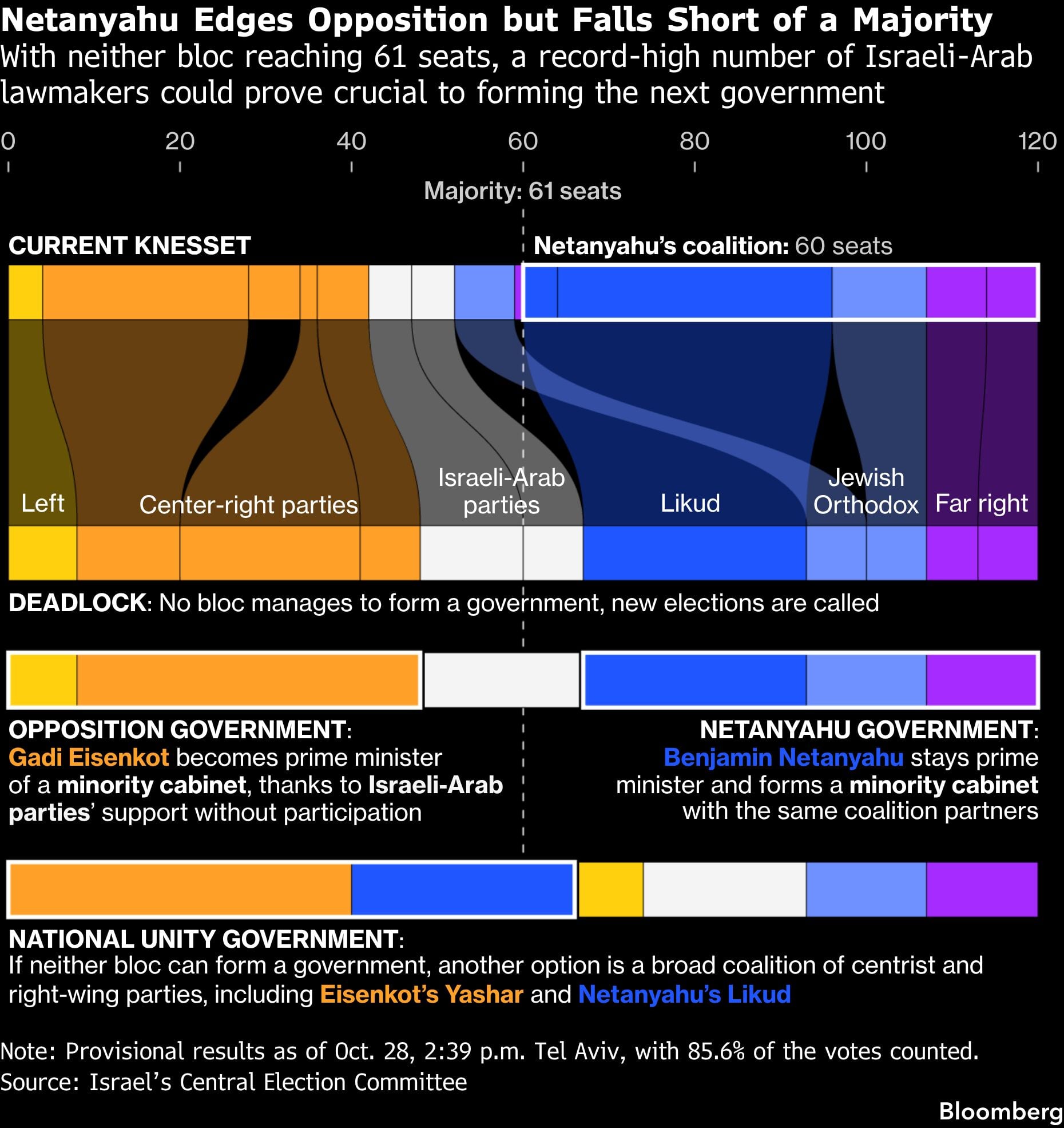
Israel’s election deadlock has set the stage for weeks or months of political horse-trading, with every path to a government likely to require difficult compromises and broken campaign promises.
The results announced on Thursday are subject to review and official numbers will be published next week.
–With assistance from Fares Akram.
Disclaimer: This report is auto generated from the Bloomberg news service. ThePrint holds no responsibility for its content.