



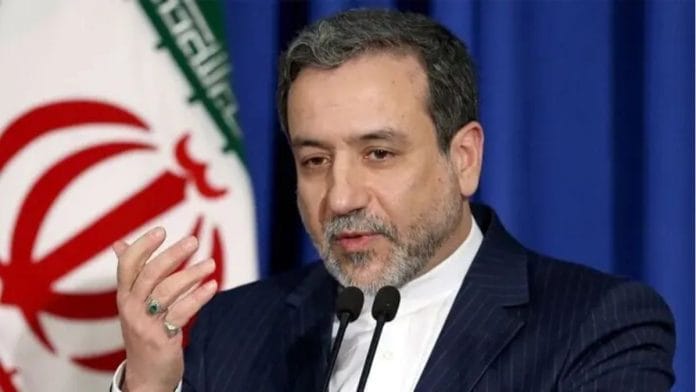
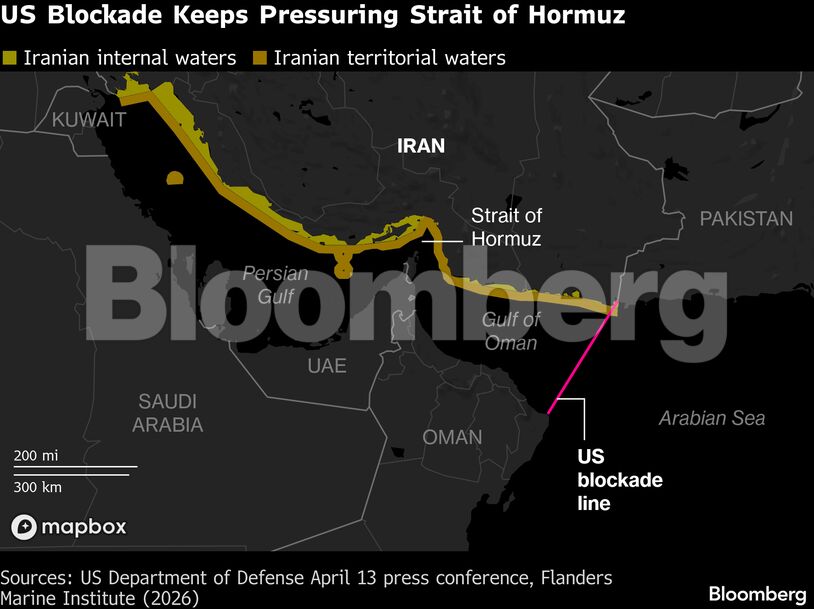
Iran signaled it would accept an interim deal with the US whereby Tehran reopens the Strait of Hormuz in exchange for Washington ending its blockade of Iranian ports, according to Axios.
Iranian media said Sunday that Foreign Minister Abbas Araghchi would convey to the main mediator Pakistan that the war could end if the Americans lift a naval blockade of Iranian ports, agree to new legal framework for the strait and guarantee no future military action against the Islamic Republic. Iran told Pakistan that negotiations over Iran’s nuclear program — a longer-standing issue — could be dealt with later, Axios reported, citing a US official and two people with knowledge of the matter.
The US hasn’t commented on Iran’s idea, though US President Donald Trump acknowledged a new plan from Iran on Saturday. A White House spokesperson said in a statement to Bloomberg that “the United States holds the cards and will only make a deal that puts the American people first, never allowing Iran to have a nuclear weapon.”
An interim deal would echo what many Middle East analysts have said for weeks — that the US and Iran should reopen the strait as soon as possible to lower fuel prices and ease pressure on the global economy, while leaving issues such as Iran’s nuclear program for later talks. Some Persian Gulf Arab and European leaders believe that such negotiations will take at least six months, Bloomberg has reported.
Trump, however, has indicated that Iran’s atomic program must be resolved as part of any agreement and that the blockade will stay in place until then. The White House has said the blockade is putting pressure on Iran to make concessions by choking off its oil exports.
| Latest stories and analysis on the conflict: |
|---|
|
Here is more on the US-Iran talks:
- “We must ensure the rights of the Iranian people after 40 days of resistance and secure the country’s interests,” Iran’s Foreign Minister Abbas Araghchi said on Monday, according to state-run Islamic Republic News Agency.
- Araghchi, who was in Pakistan over the weekend, is set to meet Russian President Vladimir Putin in Saint Petersburg on Monday.
- “There is a high degree of alignment between Iran and Oman” on the future of the strait, Araghchi said, according to IRNA.
- Iran has previously said it wants to toll traffic moving through Hormuz and share the revenue with Oman, which sits across the strait.
- Crude oil pared some gains and Asian stocks extended advances soon after the Axios report. Brent crude was still up 2% to $107.50 a barrel as of 10:05 a.m. in Dubai, extending last week’s rise of 17%.
- Analysts at Goldman Sachs Group Inc. upgraded their fourth quarter forecast for Brent crude to $90 a barrel from $80 per barrel, saying they now see a “normalization” of crude exports from the Persian Gulf by the end of June, versus mid-May previously
- Israeli strikes in southern Lebanon on Sunday killed 14 people, Lebanese state media reported, citing the country’s health ministry. The victims include two children. Trump said Lebanon and Israel, which has waged a conflict against Iran-backed Hezbollah, agreed to extend a ceasefire by three weeks until around mid-May. Yet both Israel and Hezbollah continue to accuse each other of attacks that violate the truce terms.
- Efforts to resume in-person peace talks stumbled again on Friday when Trump canceled a trip to Pakistan by Steve Witkoff and Jared Kushner, two of his main envoys. That was after Araghchi signaled he would not meet American negotiators while there and the Iranian government reiterated that it will not agree to more talks while facing military threats from the US.