





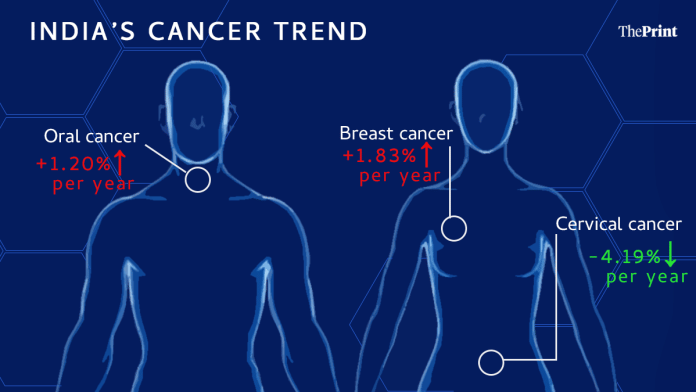

New Delhi: In India, breast cancer and male oral cancer cases rose steadily between 1998 and 2017—unlike in most wealthy G20 countries, where trends show that cases are either plateauing or declining.
At the same time, cervical cancer cases in India fell sharply over the same period, according to a new analysis by scientists at the Indian Council of Medical Research (ICMR), published this month in the Journal of Public Health.
The research, conducted by five scientists at the ICMR-National Institute of Noncommunicable Disease Epidemiology (ICMR-NINE) in Bengaluru—formerly known as the National Centre for Disease Informatics and Research (NCDIR)—examined incidence and mortality trends for breast, cervical, and oral cancers across G20 countries from 1996 to 2020.
The analysis used a method called age-period-cohort analysis, which separates the effect of an ageing population from broader historical trends and generational change—allowing researchers to assess whether cancer risk is genuinely rising, or simply reflecting the fact that a population is growing older.
What the numbers show for India
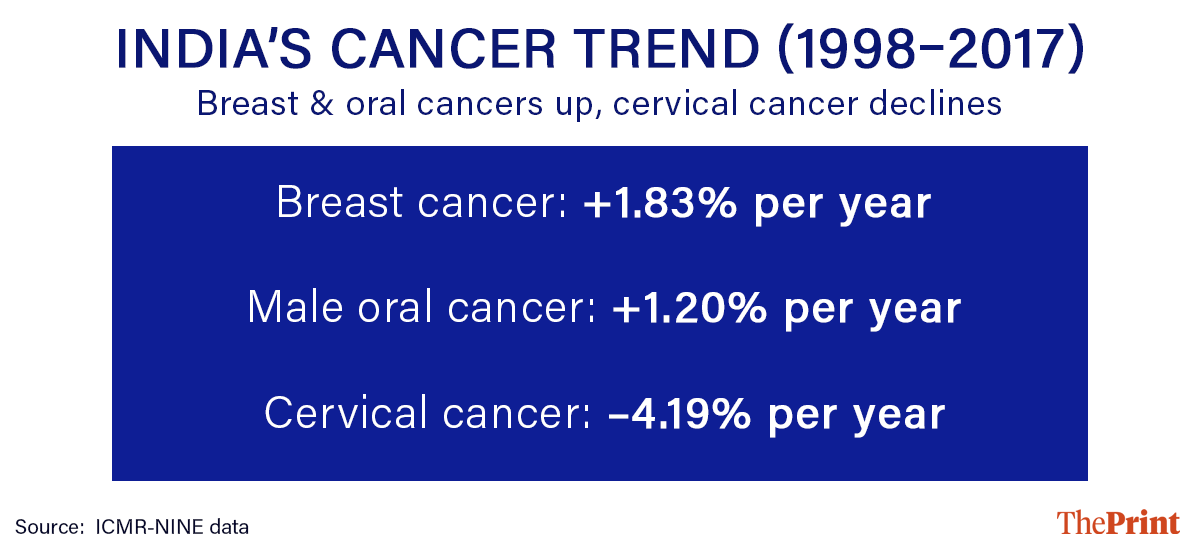
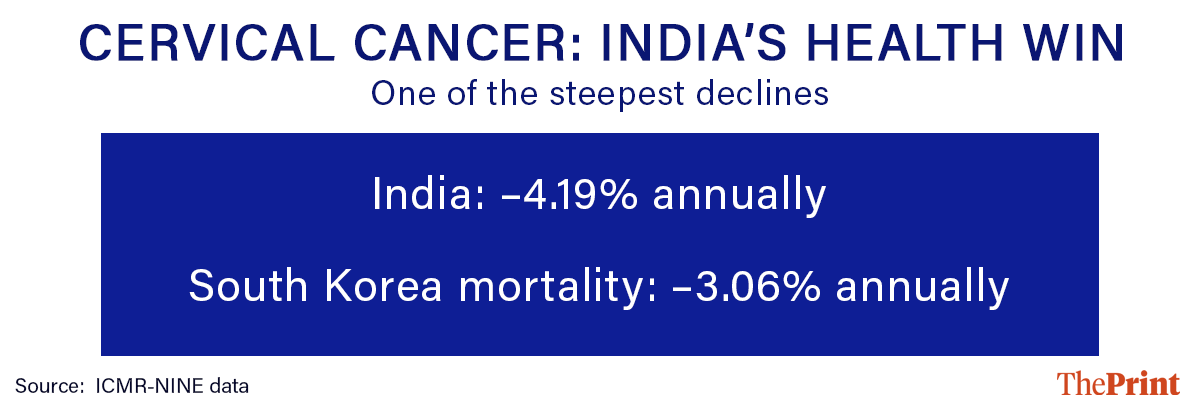
The findings for India are stark. Breast cancer incidence rose at an estimated 1.83 percent per year. Male oral cancer incidence climbed at 1.20 percent annually. Cervical cancer, however, bucked this trend—India recorded a sharp decline of 4.19 percent per year in incidence, one of the steepest drops among all countries studied.
Among high-income countries, trends were more varied. The United States recorded a statistically significant decline of 0.44 percent in breast cancer incidence annually, while Australia, Canada, and France recorded modest increases. Male oral cancer incidence in France fell by 2.75 percent per year—one of the steepest drops in the study.
China showed some of the sharpest rises out of all the countries in the study. Breast cancer incidence in China rose at 2.03 percent per year. Cervical cancer incidence climbed by 6.11 percent annually. Male oral cancer incidence also increased in China at 1.10 percent per year.
Also Read: MIT study answers why some cancer treatments fail. Most tumours have active backdoor pathways
India bucking the G20 trend
The study divided countries by their socio-demographic index, or SDI—a composite measure of income, education, and fertility used as a proxy for overall development. India falls in the lower-middle SDI group.
Across most high-SDI nations, the mortality picture is broadly encouraging. The UK saw breast cancer mortality fall by 2.52 percent annually, Canada by 2.47 percent, and Australia by 2.25 percent. Cervical cancer mortality declined most sharply in South Korea, at 3.06 percent per year.
Male oral cancer mortality dropped by 4.16 percent annually in France. However, not all high-income countries followed this pattern—breast cancer mortality rose in Japan and South Korea, and oral cancer mortality increased in the UK for both men and women.
Since mortality data for India is not available in the dataset, it is not possible to say how the rising incidence is translating into deaths.
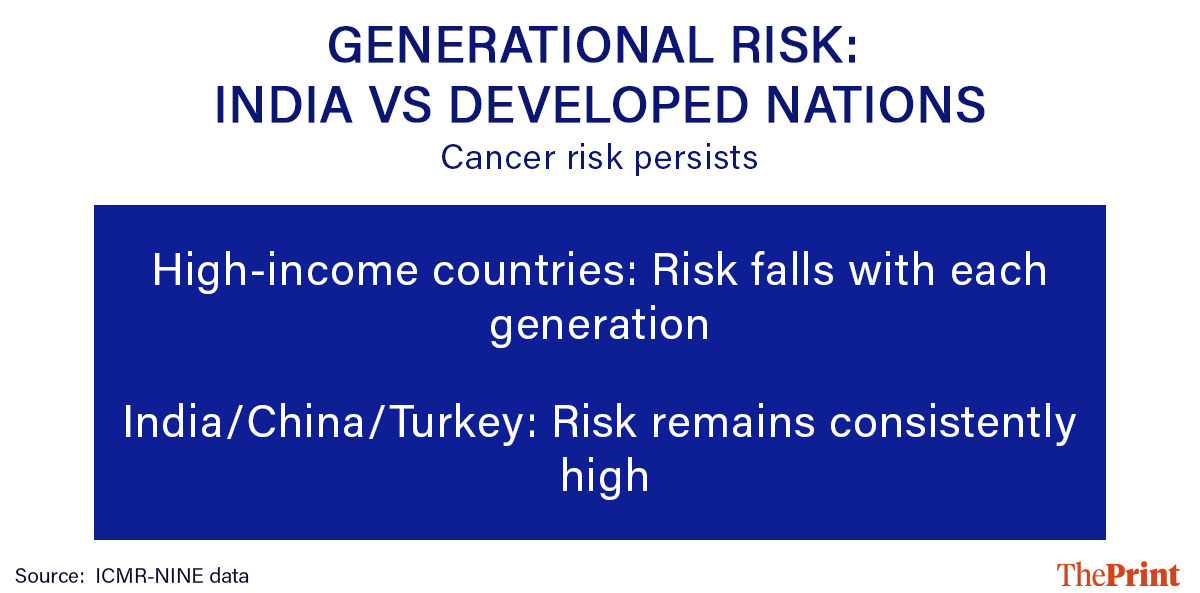
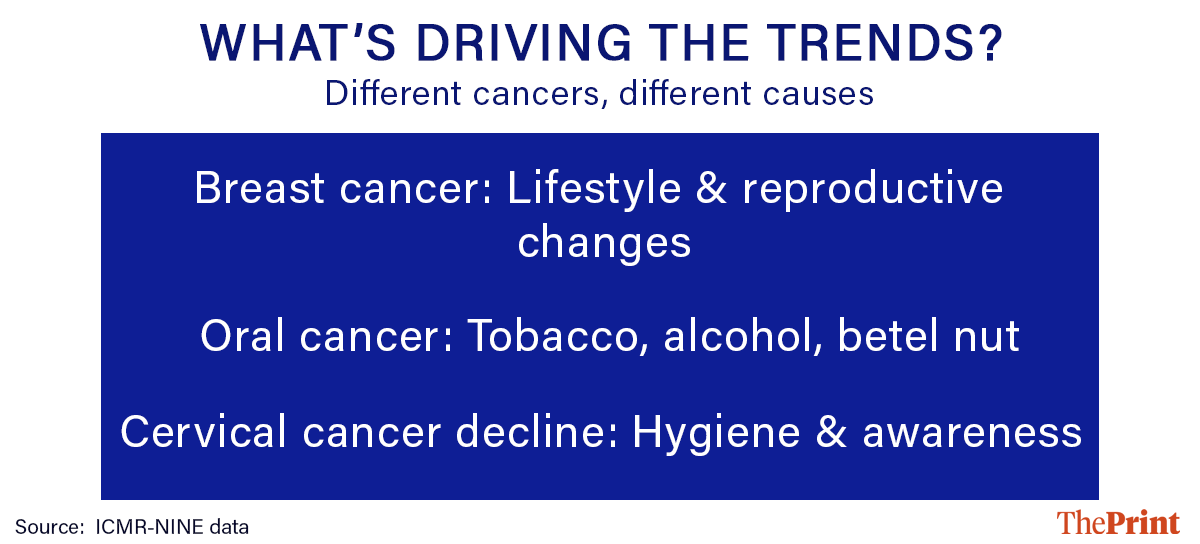
The cohort analysis also shows that persistently high cancer risks are being maintained across generations in India—unlike in high-income countries, where each successive generation tends to face lower risk. The authors noted that in India, China and Turkey, persistently high risks were maintained across cohorts, reflecting the continued prevalence of smokeless tobacco, betel quid, and alcohol.
Oral cancer: Tobacco problem that isn’t going away
Oral cancer is the cancer most distinctively shaped by India’s specific risk landscape. The study identifies tobacco use, alcohol intake, Human Papillomavirus (HPV) infection, and betel nut chewing as the primary drivers, and notes directly that oral cancer poses a considerable public health challenge in India. Since the majority of cases are diagnosed at advanced stages, early detection is critical.
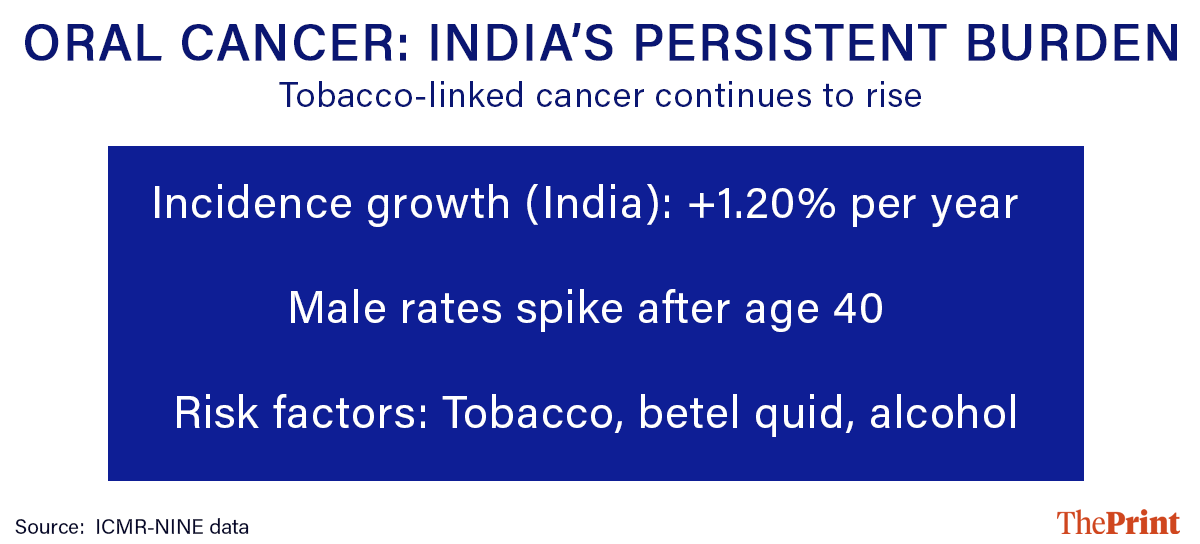
The age pattern in India is particularly telling. Male and female oral cancer incidence rates run roughly parallel until about age 40, after which male rates accelerate sharply.
Dr Anita Nath, corresponding author of the study and Scientist-F at ICMR-NINE, told ThePrint, “For oral cancer, the burden remains strongly associated with persistent exposure to established risk factors such as tobacco use (especially smokeless), and betel quid chewing.”
Breast cancer and lifestyle shifts
The rise in breast cancer incidence in India mirrors a pattern now visible across several developing economies. The study links it to the increasing adoption of what it describes as “westernised” lifestyles—including smoking, alcohol consumption, and obesity—alongside hormonal and reproductive shifts such as earlier onset of menstruation, delayed childbearing, and shorter durations of breastfeeding.
“The increasing incidence of both breast and oral cancers in India is best understood as the result of a combination of changing risk exposures and improvements in detection. For breast cancer, the rise is closely linked to broader socioeconomic and lifestyle transitions,” Dr Nath explained.
Among all G20 nations with available incidence data, South Korea recorded the steepest breast cancer rise at 5.07 percent per year, followed by Turkey at 2.42 percent, China at 2.03 percent, and India at 1.83 percent.
Also Read: India’s breast cancer burden has increased five-fold since 1990. Global tally may triple by 2050
Cervical cancer: A rare success—and what it teaches
The sharpest contrast in India’s cancer data is on cervical cancer. While breast and oral cancers are rising, cervical cancer has declined—and the study’s authors say this contrast holds lessons for policymakers.
Dr Nath attributed the decline to a combination of factors. “Cervical cancer in India demonstrates a significant decline in incidence over decades. This progress is likely due to a combination of increased awareness, improvements in hygiene and reproductive health,” she told ThePrint.
The Union government recently launched its first nationwide HPV vaccination programme, offering free vaccination to around 1.15 crore 14-year-old girls across states and Union Territories. The single-dose programme uses Gardasil-4, which protects against HPV types 16 and 18—the strains responsible for most cervical cancers.
The authors called for accelerated HPV vaccination, organised screening programmes, and efforts to reduce urban-rural and socioeconomic inequities for cervical cancer. For oral cancer, they recommended comprehensive tobacco and alcohol control policies and targeted screening in high-risk groups. For breast cancer, they called for expanding affordable screening—mammography in cities and ultrasound in more resource-limited settings.
“Given their influence, G20 countries can play a pivotal role in reducing inequities and advancing global cancer prevention,” the authors wrote.
“The immediate response should be balanced and comprehensive: Strengthening cancer surveillance systems to include robust mortality and stage data, scaling up prevention efforts such as tobacco and alcohol control, lifestyle interventions, and expanding early detection and treatment services,” Dr Nath said.
The data for the study were drawn from the Global Cancer Observatory. Incidence trends were analysed for 11 countries—Argentina, China, Germany, India, Italy, South Korea, Australia, Canada, France, Turkey, and the United States—covering 1998 to 2017, with South Korea’s data available from 2003 onwards. Mortality trends were examined for a different set of 12 countries—Argentina, Australia, Brazil, Canada, France, Germany, Italy, Japan, Mexico, South Korea, the United Kingdom, and the United States—spanning 1996 to 2020. India was not among the countries with available mortality data.
(Edited by Viny Mishra)
Also read: India saw yearly jump of 28,000 cancer cases and 15,000 deaths since 2021, govt tells Parliament