





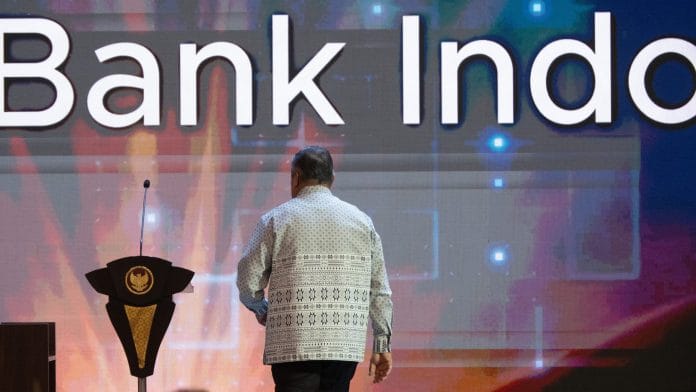


Investors have been losing faith in Prabowonomics for most of this year. The shock resignation of Indonesia’s central bank governor is the latest in a series of blows to their confidence.
The departure of Perry Warjiyo for unspecified “personal reasons” removes one of the nation’s most respected policymakers at a time when Indonesia can ill afford it, and reinforces concerns that President Prabowo Subianto is weakening the institutions that have helped underpin trust in Southeast Asia’s largest economy. He will now have to move quickly to show that that political influence won’t cloud economic policymaking or undermine Bank Indonesia’s independence.
So far, the prospects remain dim. Warjiyo spent more than four decades as a central banker, earning a reputation as a steady hand and a credible steward of monetary policy. His departure comes when the country is already facing multiple challenges from high-profile corruption scandals, the rising cost of living, and higher fuel prices as the war in Iran drags on.
The rupiah, stocks and bonds fell on the news, deepening a financial rout in recent months as investors became disenchanted by Prabowo’s nationalistic economic agenda, which includes an unrealistic pledge to push growth to 8% largely through higher public spending. But that ambition hasn’t been backed by a coherent strategy. Instead, a haphazard approach to governance has battered the currency, which has fallen to record lows.
We may never know the exact details behind Warjiyo’s decision to leave, but investors won’t wait around. They’ve withdrawn billions from the stock market as concerns have grown over the president’s top-down approach. That nervousness is now visible in the domestic economy. On a recent trip through Jakarta airport, a business traveler told me how she was questioned by customs officials about the amount of foreign currency she was taking out of the country. This may be an isolated case, but it reflects a growing anxiety that Indonesians are looking for ways to move money abroad.
Senior Deputy Governor Destry Damayanti, who is taking over as acting governor, should provide some much-needed continuity. She is an experienced policymaker, well-known to markets, and is unlikely to make any abrupt changes in the near term. But that may not be enough if investors conclude Prabowo is putting politics ahead of sound economic management.
Those concerns are not without merit. There had already been signs that relations between the central bank and the presidential palace were becoming strained. Earlier this year, as the rupiah came under pressure, Warjiyo was summoned to the palace for a rare meeting ahead of the central bank’s rate decision. Officials described the discussions as efforts to synchronize fiscal and monetary policy. But it came just hours before the interest-rate announcement, prompting questions about the relationship between an independent central bank and an increasingly interventionist administration.
In a crisis, you need respected policymakers, yet Prabowo’s government keeps rewarding mediocre loyalists. Last September’s dismissal of Finance Minister Sri Mulyani Indrawati was the first of several mistakes, as my colleague Daniel Moss and I have written. The elevation of his nephew Thomas Djiwandono to deputy central bank governor in January hardly helped to reassure investors. Reports that members of the president’s inner circle — or even family — could play a larger role in monetary policymaking have added to those concerns.
Mulyani was replaced by Purbaya Yudhi Sadewa, who lacks her international standing. He publicly rebuked a Citigroup Inc. economist for expressing concerns about the country’s fiscal outlook and has brushed aside criticism from foreign investors, an unnecessarily combative approach at a critical time.
Jakarta insiders tell me that the president — a former special forces commander — is accustomed to having his orders followed and doesn’t like hearing that his ideas won’t work. But that way of doing business is dangerously out of touch with the problems on the ground, and means that he could be hearing too few dissenting voices.
Prabowo still has time to change course. He needs to restore confidence that economic institutions are free from political interference. That means appointing a governor with unquestioned credentials, empowering rather than sidelining them, and welcoming dissent rather than dismissing it. An added boost would be to bring in experts of international repute who can court investors and regain their trust.
Warjiyo’s resignation is just the latest in a long series of moves that are hollowing out Indonesia’s credibility. It’s time Prabowo listens, before investors lose the little faith they have left.
Disclaimer: This report is auto generated from the Bloomberg news service. ThePrint holds no responsibility for its content.